
• KZT/USD = 0.00210
  • TJS/USD = 0.10810
  • UZS/USD = 0.00008
  • TMT/USD = 0.29850
  • KZT/USD = 0.00210
  • TJS/USD = 0.10810
  • UZS/USD = 0.00008
  • TMT/USD = 0.29850
  • KZT/USD = 0.00210
  • TJS/USD = 0.10810
  • UZS/USD = 0.00008
  • TMT/USD = 0.29850
  • KZT/USD = 0.00210
  • TJS/USD = 0.10810
  • UZS/USD = 0.00008
  • TMT/USD = 0.29850
  • KZT/USD = 0.00210
  • TJS/USD = 0.10810
  • UZS/USD = 0.00008
  • TMT/USD = 0.29850
  • KZT/USD = 0.00210
  • TJS/USD = 0.10810
  • UZS/USD = 0.00008
  • TMT/USD = 0.29850
  • KZT/USD = 0.00210
  • TJS/USD = 0.10810
  • UZS/USD = 0.00008
  • TMT/USD = 0.29850
  • KZT/USD = 0.00210
  • TJS/USD = 0.10810
  • UZS/USD = 0.00008
  • TMT/USD = 0.29850

Viewing results 1 - 6 of 2

Opinion: The Specter Is Back – A Kazakh Warning to America

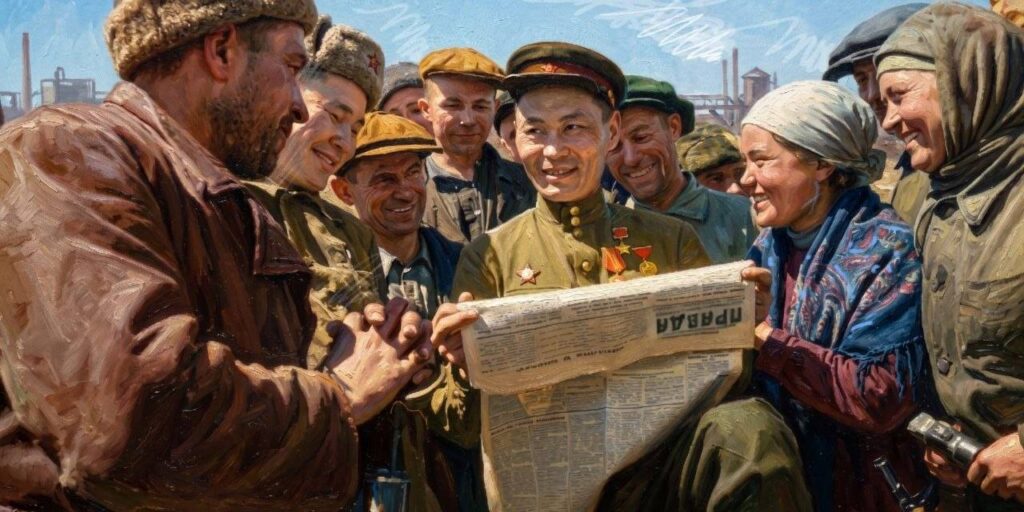
I was educated and began my career under Soviet communism in Kazakhstan. For many Americans, communism may sound like a policy argument. For us, it is also family memory — famine, confiscation, repression, camps and fear, all justified in the language of equality and justice. When communism returns to the American political debate, people from Kazakhstan listen carefully. “A specter is haunting Europe, the specter of communism.” That is how The Communist Manifesto by Karl Marx and Friedrich Engels began in 1848. Nearly two centuries later, the specter has not disappeared. It has changed its vocabulary, its political costumes and its geography. But the old temptation remains. It promises justice by concentrating power. In late June, U.S. President Donald Trump warned that communism was the greatest threat to the United States, greater, he said, than World War I, World War II, Pearl Harbor, or September 11. His language was characteristically blunt. Critics were right to say that democratic socialism is not the same thing as Soviet communism, and that the word “communist” should not be used carelessly in ordinary partisan debate. Still, the historical concern behind the warning should not be dismissed. Not every welfare program is communism. Not every democratic socialist is a Bolshevik. Every modern state helps its citizens in some form. The real question is when help becomes control. When does compassion become coercion? When does the state begin claiming the right to decide prices, property, production, speech and moral legitimacy in the name of “the people”? People who lived under communism know the danger. Why a Kazakh Voice Belongs in This Debate For an outside observer, it may seem strange that socialism and communism are again being debated in the United States, the stronghold of advanced capitalism, as Soviet theorists once described it. Yet the explanation is not mysterious. Congressional elections are approaching. Recent primary victories by candidates who identify with democratic socialism have brought these questions back into mainstream American politics. Of course, this does not mean the United States is on the eve of a Bolshevik revolution. America has elections, courts, private property, constitutional limits, and a free press. The Soviet Union had none of these in any meaningful sense. That distinction should be kept clear. But the first words of any political movement should be taken seriously. The early promises are usually humane. They speak of fairness, dignity, affordability, workers, tenants, food, and peace. Only later does society discover how much power must be handed to the state to make those promises real. The Democratic Socialists of America describes itself as the largest socialist organization in the United States and says working people should run “both the economy and society democratically” to meet human needs rather than profits. To many Americans, that may sound compassionate. To those of us trained in Marxist-Leninist doctrine, it also sounds familiar. I am not a political scientist or a specialist in party-building. I am simply a person who, because of my age, studied under the communists and...

Weaponizing the Past: Russian Commentators Invoke Famine in Attacks on Kazakhstan

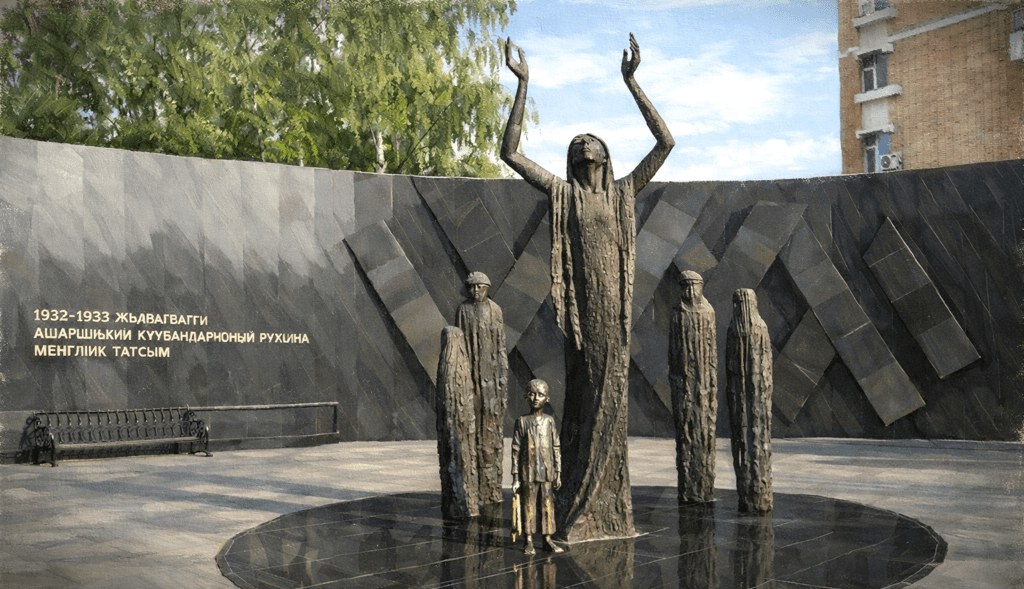
The concept of a “besieged fortress,” adopted by the Kremlin in the second half of the 2010s, increasingly conflicts with Russia’s earlier foreign policy doctrine, under which post-Soviet states were expected to remain within Moscow’s sphere of influence. That doctrine relied on alliances across the post-Soviet space, with Central Asia often described as an area of privileged interest. By contrast, the “besieged fortress” narrative assumes encirclement by enemies and frames external communication less in diplomatic than in military terms. Russia’s full-scale invasion of Ukraine, officially termed a “special military operation” by Moscow, has now lasted longer than the Soviet Union’s involvement in World War II, undermining earlier assumptions that some post-Soviet economies would remain dependent on Russian loans and access to the Russian market. In the integration sphere, Kazakh political analyst Marat Shibutov has argued that Russia is effectively “reducing its participation in the EAEU by reinstating permanent customs controls on the borders with Kazakhstan and Belarus.” Such assessments reflect growing debate within the region over the future of integration mechanisms. At the same time, segments of the Russian media space have adopted increasingly confrontational rhetoric toward Kazakhstan. In recent weeks, television host Vladimir Solovyov suggested the possibility of extending a “special military operation” to Central Asia, remarks that triggered strong reactions in Kazakhstan. Political commentator Dmitry Verkhoturov followed with statements directed specifically at Astana, invoking the sensitive historical subject of Asharshylyk, the term used in Kazakhstan for the famine of the early 1930s that followed forced collectivization under Joseph Stalin. In Ukraine, the same period is referred to as the Holodomor and is recognized there as a genocide. Kazakhstan’s official terminology does not classify the famine in those terms. Last year, the inscription on a memorial in Astana dedicated to the victims of collectivization was revised. The earlier wording referred to “victims of the Holodomor,” while the updated plaque reads “victims of the famine of 1932-1933.” The change was widely interpreted as aligning the memorial with Kazakhstan’s established historical framing. Despite this, Verkhoturov warned that further public discussion of Asharshylyk could be dangerous for Kazakhstan “from the point of view of statehood,” suggesting that such debates might escalate into armed confrontation. He also stated that Kazakhstan was “too weak and small” to oppose Russia, remarks that were widely perceived in Kazakhstan as dismissive and offensive. Particular outrage was sparked by comments contrasting Ukrainians and Kazakhs, "for us, Ukrainians are very close relatives, they are practically our own people. And yet, yes, they have brought us to a situation where we have started to fight them, while Kazakhs are not quite our own people for Russians. Yes, you can be friends with them and all that, but they are still distant people, and, as they say, they will be beaten more willingly and, it seems, more harshly than the Ukrainians," the Russian political scientist said. Kazakh political analyst Gaziz Abishev characterized the comparison as “hard-to-hide racism.” He argued that the tragedy of the famine is not exclusively a Kazakh or...