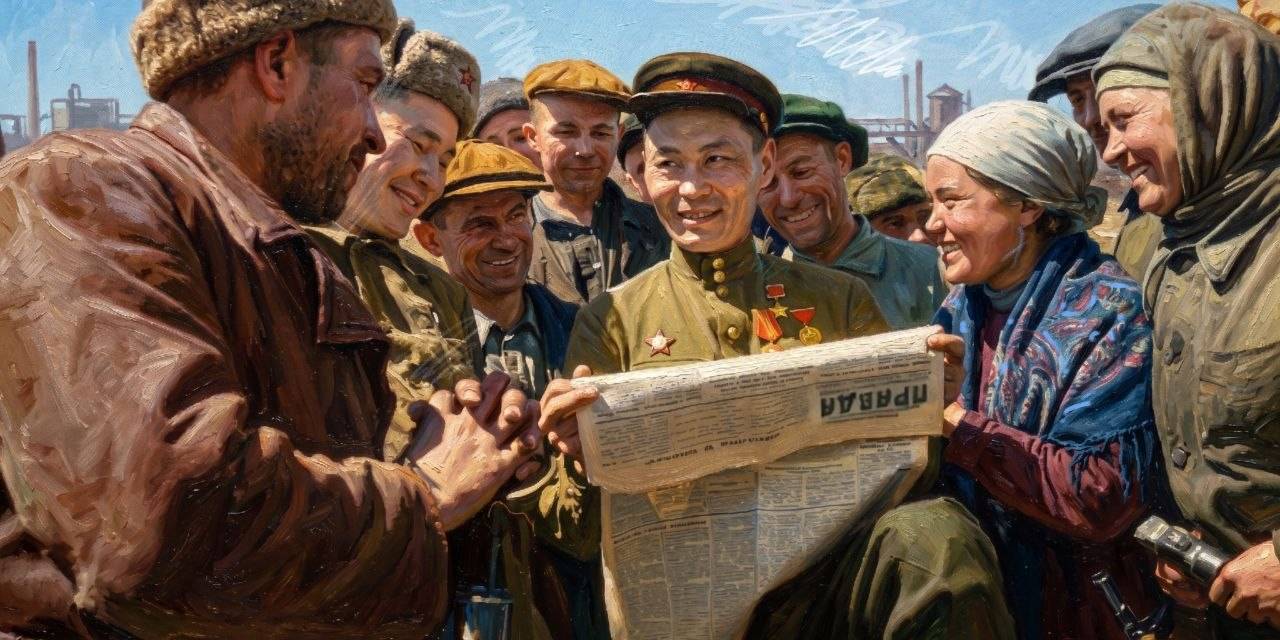
I was educated and began my career under Soviet communism in Kazakhstan. For many Americans, communism may sound like a policy argument. For us, it is also family memory — famine, confiscation, repression, camps and fear, all justified in the language of equality and justice.
When communism returns to the American political debate, people from Kazakhstan listen carefully.
“A specter is haunting Europe, the specter of communism.” That is how The Communist Manifesto by Karl Marx and Friedrich Engels began in 1848. Nearly two centuries later, the specter has not disappeared. It has changed its vocabulary, its political costumes and its geography. But the old temptation remains. It promises justice by concentrating power.
In late June, U.S. President Donald Trump warned that communism was the greatest threat to the United States, greater, he said, than World War I, World War II, Pearl Harbor, or September 11. His language was characteristically blunt. Critics were right to say that democratic socialism is not the same thing as Soviet communism, and that the word “communist” should not be used carelessly in ordinary partisan debate.
Still, the historical concern behind the warning should not be dismissed.
Not every welfare program is communism. Not every democratic socialist is a Bolshevik. Every modern state helps its citizens in some form. The real question is when help becomes control. When does compassion become coercion? When does the state begin claiming the right to decide prices, property, production, speech and moral legitimacy in the name of “the people”?
People who lived under communism know the danger.
Why a Kazakh Voice Belongs in This Debate
For an outside observer, it may seem strange that socialism and communism are again being debated in the United States, the stronghold of advanced capitalism, as Soviet theorists once described it. Yet the explanation is not mysterious. Congressional elections are approaching. Recent primary victories by candidates who identify with democratic socialism have brought these questions back into mainstream American politics.
Of course, this does not mean the United States is on the eve of a Bolshevik revolution. America has elections, courts, private property, constitutional limits, and a free press. The Soviet Union had none of these in any meaningful sense. That distinction should be kept clear.
But the first words of any political movement should be taken seriously. The early promises are usually humane. They speak of fairness, dignity, affordability, workers, tenants, food, and peace. Only later does society discover how much power must be handed to the state to make those promises real.
The Democratic Socialists of America describes itself as the largest socialist organization in the United States and says working people should run “both the economy and society democratically” to meet human needs rather than profits. To many Americans, that may sound compassionate. To those of us trained in Marxist-Leninist doctrine, it also sounds familiar.
I am not a political scientist or a specialist in party-building. I am simply a person who, because of my age, studied under the communists and even had time to work at the newspaper of the Communist Youth League of Kazakhstan. The newspaper was called Leninskaya Smena, literally “Lenin’s Successors.”
In those years, we spent five years at the institute studying the history of the Communist Party of the Soviet Union, historical materialism, dialectical materialism, and other subjects built around the principle of party-mindedness.
Party-mindedness was not a casual idea. It meant that a scholar, journalist, artist or public figure was expected to defend the interests of a specific class or social group as defined by the party. It meant subordinating one’s work, views and judgments to the ideology and goals of the ruling party.
Communist systems did not begin by announcing that they would create prison camps. They began by saying they alone represented the workers, the poor, the exploited and the future. Once a party claims exclusive moral ownership of “the people,” disagreement becomes selfishness, privilege, sabotage, or betrayal.
In Kazakhstan, terms such as “kulak,” “bai,” “enemy of the people” and “nationalist” were not merely insults. They became instruments of confiscation, arrest, and sometimes death.
I should say at the outset that I was never a member of the Communist Party, or any other party. My father wanted me to join. He used to say, “If you remain nonpartisan, you’ll never become a leader.” I did not follow his advice. Ironically, I became a manager only after the Soviet Union collapsed.
The Promise and the Mechanism
According to Marxist-Leninist theory, the communist socio-economic system consists of three stages. First comes the transition from capitalism to socialism. Socialism is the lower phase. Full communism is the higher phase. At least, that is what we were taught.
Under socialism, the guiding principle was, “From each according to his ability, to each according to his work.” Labor was the measure for receiving material benefits. Once the economy reached a more advanced stage, the era of communism would begin, guided by another principle. “From each according to his ability, to each according to his needs.” Goods would be distributed according to genuine human need.
Perhaps the most remarkable element of this theory was that the state itself was expected to disappear. Public consciousness would become so advanced that there would no longer be a need for coercive institutions.
That remained theory. But this was precisely where the power of the communist idea lay. The danger was not that it sounded cruel. The danger was that it sounded moral. Who can oppose justice? Who can oppose food, housing, peace, or dignity?
The problem was that someone had to decide what people needed, what they deserved, which property was legitimate, which profit was immoral, and which class had to surrender power. That “someone” was always the party and the state.
At the beginning of the twentieth century, the Bolshevik promises were powerful because they spoke to real suffering. “Peace to the peoples, land to the peasants, factories to the workers” appealed to the largely poor and exhausted population of the Russian Empire. The slogans were not foolish. They were effective because they met people where they were — tired of war, poverty, hierarchy, and insecurity.
Today’s American debate should be viewed through that lens. Socialist rhetoric gains strength because it speaks to real problems — high rent, medical costs, student debt, food prices, inequality, and fear of technological displacement. The Bolsheviks also spoke to real suffering. The mistake is to assume that because the grievance is real, the proposed concentration of power is safe.
Old Logic in a New Language
Americans should not imagine that socialism always arrives wearing the same clothes. In one century, it promised land to peasants and factories to workers. In another, it may promise public ownership of artificial intelligence, government control over rents, taxpayer-supported grocery stores, free services, and a new economic order.
The vocabulary changes. The central question does not. How much private life and private property must be transferred to political control?
Senator Bernie Sanders’s American AI Sovereign Wealth Fund Act would give the public a direct ownership stake in the largest American AI companies through a one-time 50% tax on the stock of those companies. The fund would also use voting shares to influence corporate decisions. This is not merely a higher tax rate. It is a claim that a commanding sector of the future economy should be partly transferred into public ownership.
In New York City, Mayor Zohran Mamdani’s rent-freeze victory affects about one million rent-stabilized apartments, where roughly a quarter of New Yorkers live. His administration has also advanced a public grocery initiative, with one store planned for each borough and $70 million in capital funds allocated for five sites. The city says the model will use city-owned land and public support for overhead costs, while a private operator manages daily operations.
One can defend these measures as affordability policy. But a person from Kazakhstan recognizes the underlying logic. Strategic industries are too important for private ownership. Prices are too important for markets. Food is too important for ordinary commerce. Therefore, the state must step in.
Even outside the self-described socialist movement, the language of public ownership is spreading. California Governor Gavin Newsom has called for a national billionaire tax and a federal public equity fund so Americans can hold stakes in major AI companies. That is not communism. But it shows how quickly the language of public ownership can move from ideological movements into mainstream policy debate.
Again, the question is not whether government should help citizens. The question is whether the state begins to treat markets, property and private enterprise not as parts of a free society, but as obstacles to be politically disciplined.
What Kazakhstan Paid
In Kazakhstan, communism arrived not as a seminar but as a forced redesign of life itself. Moscow’s collectivization campaign confiscated livestock, broke the nomadic economy, and forced pastoral people into an ideological agricultural model that did not fit the steppe. The result was Asharshylyk, the famine of 1931 to 1933. More than 1.5 million people died by some estimates, roughly one-third of the Kazakh population.
This was not an abstract failure of economic management. For a pastoral society, livestock was not just wealth. It was survival, culture, and identity. When the state destroyed that foundation, it destroyed a way of life.
My own family was not spared. My parents often spoke about the famine of the early 1930s. Both my father’s and my mother’s families included people who were officially labeled “enemies of the people.” Only my maternal grandfather survived the labor camps in Siberia and was eventually able to return home.
Soviet repression also decapitated Kazakhstan’s national elite. During the Great Terror, Alash leaders, writers, educators and officials were arrested or executed. In 1937 alone, nearly 105,000 people were arrested in Kazakhstan, and about 22,000 were sentenced to be executed. The state did not merely punish opponents but removed the people who could have led Kazakhstan’s political, cultural and intellectual future.
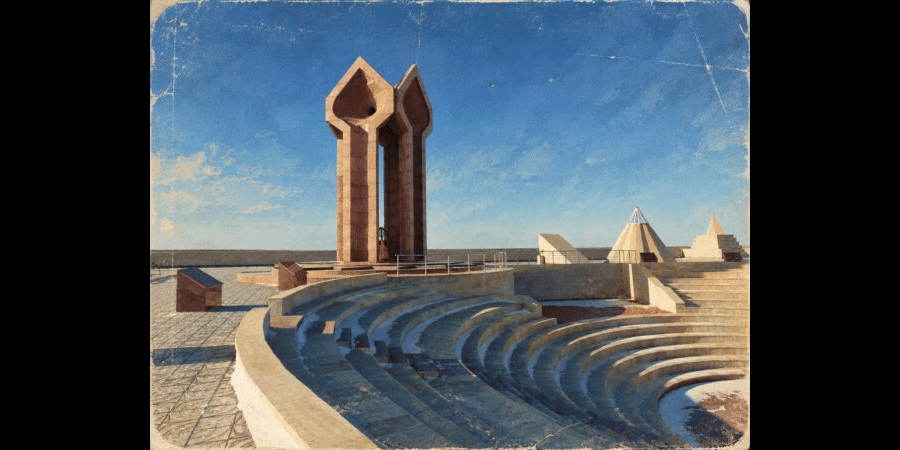
Kazakhstan also became a geography of punishment. Karlag, ALZHIR, Steplag and other camps were located on Kazakh soil. Karlag eventually covered more than 1.7 million hectares and held more than one million prisoners over nearly three decades. ALZHIR imprisoned women, many of them not for what they had done, but because they were wives or relatives of men accused of political crimes. Nearly 18,000 women passed through ALZHIR from 1938 to 1953.
The damage was demographic as well as political. After famine, deportations, war, and Soviet migration policy, Kazakhs became a minority in their own republic. By the 1959 census, Kazakhs represented only about 30% of the population of Kazakhstan. A people had become a minority in their own homeland.
That memory has become part of my family’s history. I have passed it on to my sons, and I hope they will one day pass it on to their own children.
The Achievements and the Cost
Communism was not without achievements, and those deserve acknowledgment. The Soviet system expanded education, mobilized labor, industrialized quickly, and created powerful state institutions. It could build, organize, and command on a vast scale.
The Soviet Semashko healthcare model was also one of the most influential attempts to create a universal, state-funded system of medical care. Its original vision was comprehensive care, available to everyone free of charge and organized as a unified state service. Yet access, quality, funding and implementation varied sharply, especially outside favored urban and industrial areas.
This balance should be kept in mind. The Soviet system could produce visible results. That is precisely why the temptation remains. Centralized power can build a factory, open a school, distribute goods and mobilize a country quickly.
But the same power that builds a factory can also close a newspaper, confiscate a herd, exile a family, erase a national elite or poison a landscape.
The problem is not that communism never works. The problem is what it costs when it does.
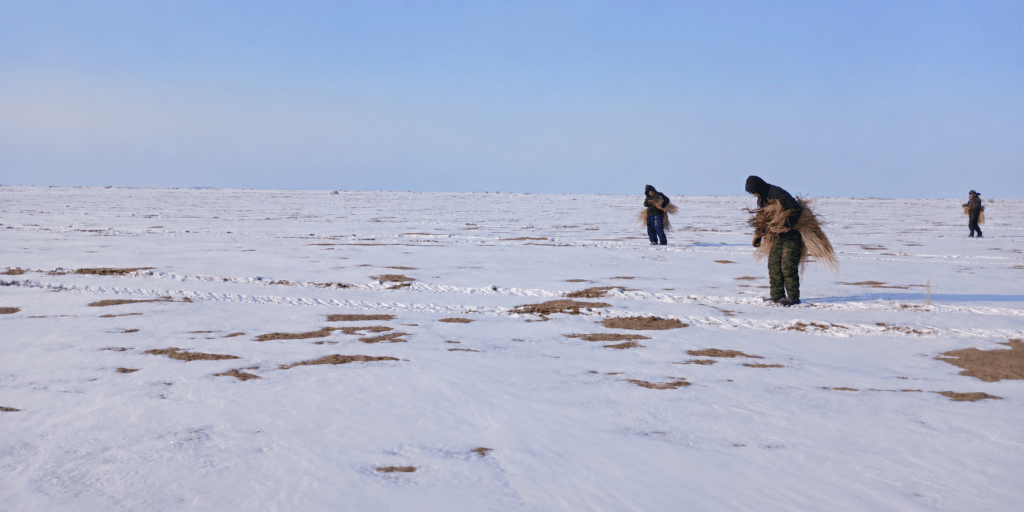
Kazakhstan’s environment still carries that cost. The Virgin Lands campaign brought short-term grain production, but reliance on single-crop cultivation damaged soil fertility, and inadequate anti-erosion measures left millions of tons of soil blowing away. The Soviet diversion of the Syr Darya and Amu Darya rivers to support cotton and other crops devastated the Aral Sea, once one of the largest lakes in the world.
This is what central planning often failed to understand. It confused control with competence. It believed that because the state could command, it could know. But no central plan can understand every farm, every family, every price, every local condition and every human motive. When reality contradicted ideology, ideology usually won. The people paid the price.
China offers a different but useful comparison. In a recent speech marking the Communist Party’s 105th anniversary, Xi Jinping praised the party’s history and urged it to build a modern socialist China while staying true to its basic theory, line and policy. That is an important nuance. China’s Communist Party kept the Leninist principle of party supremacy while allowing markets, private enterprise and foreign investment to expand far beyond the Soviet model. Its flexibility helped produce extraordinary growth. But it also shows that communism can change its economic methods while preserving its central political premise, that the party remains the final judge of history, national interest and permissible dissent.
The Real Warning
The lesson from Kazakhstan’s experience is broader than any single country or period. The danger begins when an ideology claims a monopoly on justice and gives the state power to decide who speaks for the people, who owns property, who may dissent, and who must be punished in the name of progress.
Any system that claims one party, one class, one theory or one state agency can embody the will of the people will eventually have to silence some of the people. It may begin with speeches about justice. It may begin with promises of lower prices, free goods, public ownership and dignity for working people. But if the mechanism is the concentration of power, the end is rarely humane.
Communism is, in the end, another expression of humanity’s old dream of universal justice and shared prosperity. In that sense, it resembles a secular religion. It promises a better world, identifies the guilty, sanctifies the struggle, and asks people to believe that a new human being will emerge once the old order is destroyed.
That dream is powerful because human suffering is real. Rent is too high. Food is expensive. Healthcare can be unaffordable. Technology may displace workers. Inequality can corrode trust. These are not imaginary problems.
But the Kazakh warning is simple. A real grievance does not make every remedy safe.
The Soviet experiment taught us that the most dangerous politics often speaks in the language of compassion. It promises dignity, but demands obedience. It promises equality, but creates privilege for the party. It promises liberation, but turns disagreement into treason. It promises abundance, but begins by deciding who must surrender property, speech and power.
The word “communism” should not be used carelessly. Not every welfare program is communism. But when political movements speak seriously about public ownership of major industries, state control over prices, government-directed commerce and class-based moral authority, those of us who lived with the consequences have a duty to speak plainly.
Kazakhstan has already paid for these experiments once. Americans should not treat them as new.