


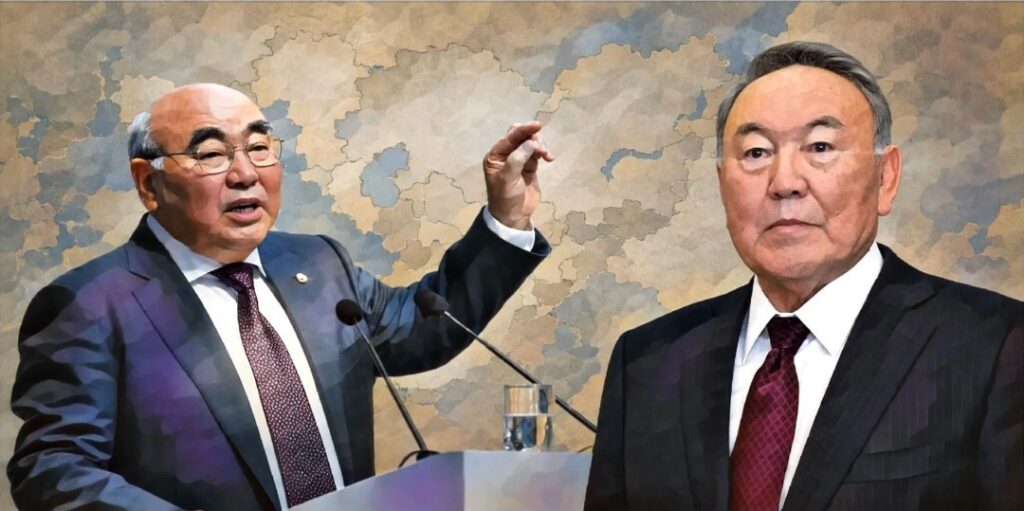
What Do Former Presidents Do? From Akayev to Nazarbayev, the Fates of Central Asia’s Ex-Leaders
Central Asia has produced remarkably few former presidents who simply retired from public life. In Kyrgyzstan, former leaders have been driven from office, prosecuted, imprisoned, or forced into exile. Kazakhstan’s Nursultan Nazarbayev has followed a different path, largely withdrawing from public view after losing much of his political influence. Elsewhere, some of the region’s founding presidents died in office, leaving no post-presidential career to examine. The Times of Central Asia has previously examined how political succession has developed across the region. The fate of leaders after they leave office reveals another side of that political tradition. The architect of Kyrgyzstan’s early post-Soviet political model was its first president, Askar Akayev, who remained in office until 2005. Akayev introduced democratic institutions in Kyrgyzstan, but gradually tightened the pressure on his opponents as his presidency progressed. His rule was badly shaken by the Aksy shootings in 2002, which followed the prosecution of opposition lawmaker Azimbek Beknazarov and a territorial dispute with China. Akayev’s government had agreed to transfer disputed border territory to China, a decision fiercely criticized by the opposition. In March 2002, demonstrators in southern Kyrgyzstan demanded Akayev’s impeachment. Security forces opened fire during the unrest, killing several people. The shootings became one of the defining political crises of his presidency. In a 2003 referendum, Akayev significantly strengthened presidential powers at parliament’s expense. Economic hardship, unemployment, widespread corruption, and allegations of fraud in the 2005 parliamentary elections eventually helped trigger the Tulip Revolution in March of that year. Akayev had to flee, with rumors at the time claiming that he was smuggled out in the trunk of an official car, wrapped in a carpet. Criminal cases involving corruption were opened against him and members of his family in Kyrgyzstan. The authorities repeatedly sought his extradition from Russia, but were unsuccessful. After leaving Kyrgyzstan, Akayev lived in Moscow and taught at Moscow State University. In 2006, he became a foreign member of the Russian Academy of Sciences. In August 2021, Akayev reappeared in Bishkek. He unexpectedly flew into the country and was immediately questioned as part of the criminal investigation into corruption surrounding the Kumtor gold mine. Afterward, he said he had come to Bishkek for a week and was prepared to assist investigators. “I came to speak honestly and sincerely about how we built Kumtor, why we built it, and what mistakes may have been made. The investigation will continue,” he said. In 2023, Kyrgyzstan’s Prosecutor General’s Office announced that the criminal prosecution of Akayev had been terminated because the statute of limitations had expired. Tajikistan’s former president Rahmon Nabiyev was also forced from power. The former Soviet politician lost power amid the country’s civil war in 1992. He died at his home in Khujand the following year, at the age of 62, reportedly from a heart attack. According to his wife, Nabiyev spent his final months in Khujand in conditions resembling house arrest and received a pension of just five rubles. While Tajikistan did not repeat the experiment of violently...
