
• KGS/USD = 0.01143 -0%
  • KZT/USD = 0.00198 -0%
  • TJS/USD = 0.10899 0.93%
  • UZS/USD = 0.00008 0%
  • TMT/USD = 0.28490 -0.28%
  • KGS/USD = 0.01143 -0%
  • KZT/USD = 0.00198 -0%
  • TJS/USD = 0.10899 0.93%
  • UZS/USD = 0.00008 0%
  • TMT/USD = 0.28490 -0.28%
  • KGS/USD = 0.01143 -0%
  • KZT/USD = 0.00198 -0%
  • TJS/USD = 0.10899 0.93%
  • UZS/USD = 0.00008 0%
  • TMT/USD = 0.28490 -0.28%
  • KGS/USD = 0.01143 -0%
  • KZT/USD = 0.00198 -0%
  • TJS/USD = 0.10899 0.93%
  • UZS/USD = 0.00008 0%
  • TMT/USD = 0.28490 -0.28%
  • KGS/USD = 0.01143 -0%
  • KZT/USD = 0.00198 -0%
  • TJS/USD = 0.10899 0.93%
  • UZS/USD = 0.00008 0%
  • TMT/USD = 0.28490 -0.28%
  • KGS/USD = 0.01143 -0%
  • KZT/USD = 0.00198 -0%
  • TJS/USD = 0.10899 0.93%
  • UZS/USD = 0.00008 0%
  • TMT/USD = 0.28490 -0.28%
  • KGS/USD = 0.01143 -0%
  • KZT/USD = 0.00198 -0%
  • TJS/USD = 0.10899 0.93%
  • UZS/USD = 0.00008 0%
  • TMT/USD = 0.28490 -0.28%
  • KGS/USD = 0.01143 -0%
  • KZT/USD = 0.00198 -0%
  • TJS/USD = 0.10899 0.93%
  • UZS/USD = 0.00008 0%
  • TMT/USD = 0.28490 -0.28%
07 December 2025

Viewing results 1 - 6 of 6

Astana Renews Call for Nuclear Dialogue, Global Security Reform

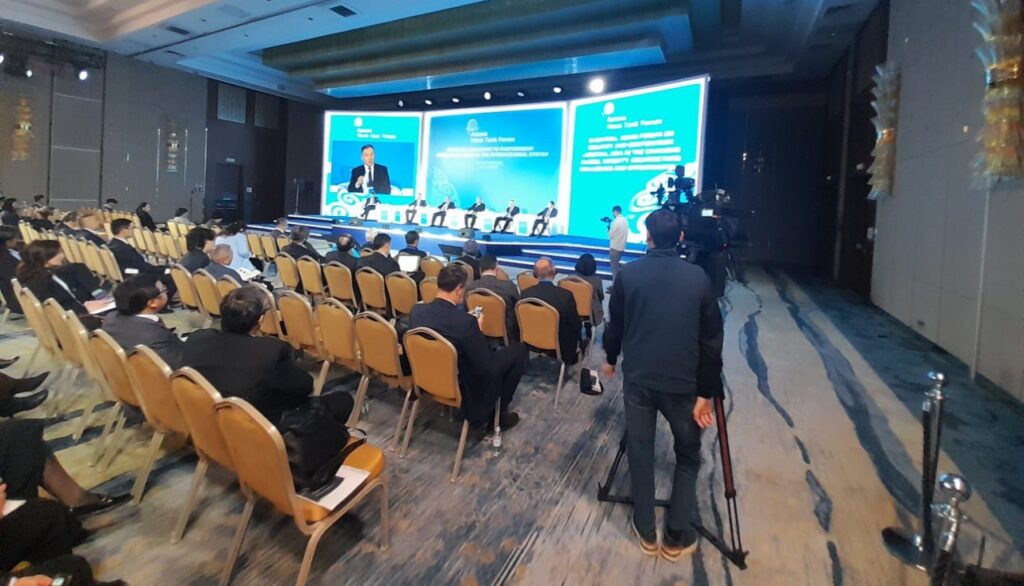
Kazakhstan has reiterated its call for the resumption of high-level dialogue among nuclear powers and a renewed focus on multilateralism to bolster global security. The appeal was made by First Deputy Foreign Minister Yerzhan Ashikbayev during the Astana Think Tank Forum 2025, held on the theme “From Polarization to Partnership: Restoring Trust in the International System.” Ashikbayev reaffirmed Kazakhstan’s support for forming a unified Euro-Atlantic and Eurasian security community and its commitment to contributing to a new international order. “We call for the resumption of dialogue between nuclear powers and a scaling up of multilateral efforts to reduce the threat of weapons of mass destruction. Kazakhstan is committed to making a world without nuclear weapons the key goal of the 21st century,” he said. The forum gathered around 40 international experts from 20 countries, including diplomats, researchers, and heads of leading think tanks. UN Reform and Regional Equity Ashikbayev called for reforming the UN Security Council to ensure broader, more equitable representation for countries in Asia, Africa, and Latin America. He also highlighted the growing role of “middle powers” in fostering trust and regional stability. “We advocate strict adherence to the UN Charter and a modernized institutional architecture that reflects today’s global challenges, not outdated procedures. Sovereignty, territorial integrity, and peaceful conflict resolution must be upheld universally,” he said. He proposed a new global security framework based on “regional stability as the foundation for global peace,” grounded in international law and multilateral cooperation. Digital Sovereignty and AI Governance In addressing the implications of emerging technologies, Ashikbayev stressed the need for a global regulatory framework for artificial intelligence. “Access to AI must be fair, inclusive, and non-discriminatory. This is not just a technological issue, it’s about digital sovereignty and equitable global development,” he said, affirming Kazakhstan’s readiness to participate in shaping international AI standards. Environmental Diplomacy and Climate Strategy Ashikbayev also emphasized environmental priorities, urging greater international involvement in addressing ecological challenges and protecting shared water resources in the Aral and Caspian Seas. He noted that Kazakhstan plays an active role in the global climate agenda and will host a regional climate summit in Astana in 2026 to advance collective environmental strategies in Central Asia. “Kazakhstan is pursuing carbon neutrality by 2060 through pragmatic steps, including economic diversification and a balanced energy approach. We are expanding renewables while ensuring energy security through traditional sectors,” he said. The Rise of Middle Powers Ashikbayev underscored the rising influence of middle powers in today’s fragmented geopolitical landscape, positioning them as vital mediators and conveners of dialogue. Charles Maclean, founder and managing director of Borderless Consulting Group, echoed this view. “While the spotlight is often on great powers, middle powers are emerging as drivers of constructive reform. Kazakhstan’s growing role and the presence of its leadership on global platforms reflect this new leadership model,” he said. As previously reported by The Times of Central Asia, independent studies by Institut Montaigne (France) and the Institute for Security and International Studies (Germany) have both identified Kazakhstan as...

Kazakhstan Proposes ‘Expert Alliance’ to Reform Global Governance

Zhandos Shaimardanov, director of the Kazakhstan Institute for Strategic Studies (KazISS) under the President of the Republic of Kazakhstan, has called for the formation of an international network of think tanks to act as an intellectual capacity for reforming the global governance architecture. He said the proposal stems from lessons learned in regional cooperation efforts across Central Asia. Speaking at the session “Central Asia in the Changing Architecture of Global Security: Challenges and Opportunities” during the Astana Think Tank Forum 2025, Shaimardanov said the world is experiencing a period of geopolitical flux. The old global rules no longer function effectively, while new norms have yet to take shape. “History is giving our region a chance to show leadership,” he said. “Central Asia is realizing its agency and unity, ready to formulate collective responses to global challenges and offer a positive agenda. Trust and mutual respect have made us resilient, and now this political capital must be transformed into institutional resources.” Shaimardanov stressed that the existing global security architecture is in crisis, with mechanisms such as the UN Security Council and arms control frameworks losing effectiveness. “In September, at the UN General Assembly, the President of Kazakhstan rightly observed that serious violations of international law have become the new norm. This is a sign that global institutions need intellectual renewal. When multilateral mechanisms fail, it is the regions that retain the potential for agreement,” he said. From Regional Unity to Global Contribution Shaimardanov recalled that at the sixth Consultative Meeting of the Heads of State of Central Asia, held in Astana last August, regional leaders adopted the "Central Asia 2040" concept, which sets out a long-term vision for cooperation across the region. “Now is the time not just to implement this document without slogans,” he said, “but to present this regional experience to the broader world.” He said that Central Asia’s cooperative model could help redefine the principles of global governance. As a bloc of “middle powers,” the region can offer a constructive and non-hegemonic voice. “In this context, Kazakhstan proposes creating an expert alliance of middle powers, a global network of think tanks and institutions that could help rethink international systems,” Shaimardanov said. He suggested that such a body could cooperate with international organizations, including the United Nations, to develop joint strategies on security, sustainable development, and institutional accountability. “Central Asia can not only adapt to new realities but also offer new ideas that security can be built not on fear but on trust,” he said. Focus Areas: Digital Trust, Water Security, Human Capital Shaimardanov noted that an expert network would help Central Asian countries coordinate on key development challenges, including digitalization, water management, and innovation. He highlighted the example of Kazakh startup Higgsfield AI, which recently achieved unicorn status with a valuation exceeding $1 billion. The company developed a generative AI tool that creates videos from text prompts. “This is a major milestone not only for Kazakhstan but for the entire region,” he said. “It reflects Central Asia’s growing...