• KGS/USD = 0.01144 0%
  • KZT/USD = 0.00213 0%
  • TJS/USD = 0.10699 0%
  • UZS/USD = 0.00008 0%
  • TMT/USD = 0.28571 0%
  • KGS/USD = 0.01144 0%
  • KZT/USD = 0.00213 0%
  • TJS/USD = 0.10699 0%
  • UZS/USD = 0.00008 0%
  • TMT/USD = 0.28571 0%
  • KGS/USD = 0.01144 0%
  • KZT/USD = 0.00213 0%
  • TJS/USD = 0.10699 0%
  • UZS/USD = 0.00008 0%
  • TMT/USD = 0.28571 0%
  • KGS/USD = 0.01144 0%
  • KZT/USD = 0.00213 0%
  • TJS/USD = 0.10699 0%
  • UZS/USD = 0.00008 0%
  • TMT/USD = 0.28571 0%
  • KGS/USD = 0.01144 0%
  • KZT/USD = 0.00213 0%
  • TJS/USD = 0.10699 0%
  • UZS/USD = 0.00008 0%
  • TMT/USD = 0.28571 0%
  • KGS/USD = 0.01144 0%
  • KZT/USD = 0.00213 0%
  • TJS/USD = 0.10699 0%
  • UZS/USD = 0.00008 0%
  • TMT/USD = 0.28571 0%
  • KGS/USD = 0.01144 0%
  • KZT/USD = 0.00213 0%
  • TJS/USD = 0.10699 0%
  • UZS/USD = 0.00008 0%
  • TMT/USD = 0.28571 0%
  • KGS/USD = 0.01144 0%
  • KZT/USD = 0.00213 0%
  • TJS/USD = 0.10699 0%
  • UZS/USD = 0.00008 0%
  • TMT/USD = 0.28571 0%

Viewing results 1 - 6 of 33

Kazakhstan Crash: In Air and on Ground, Some Did What They Could

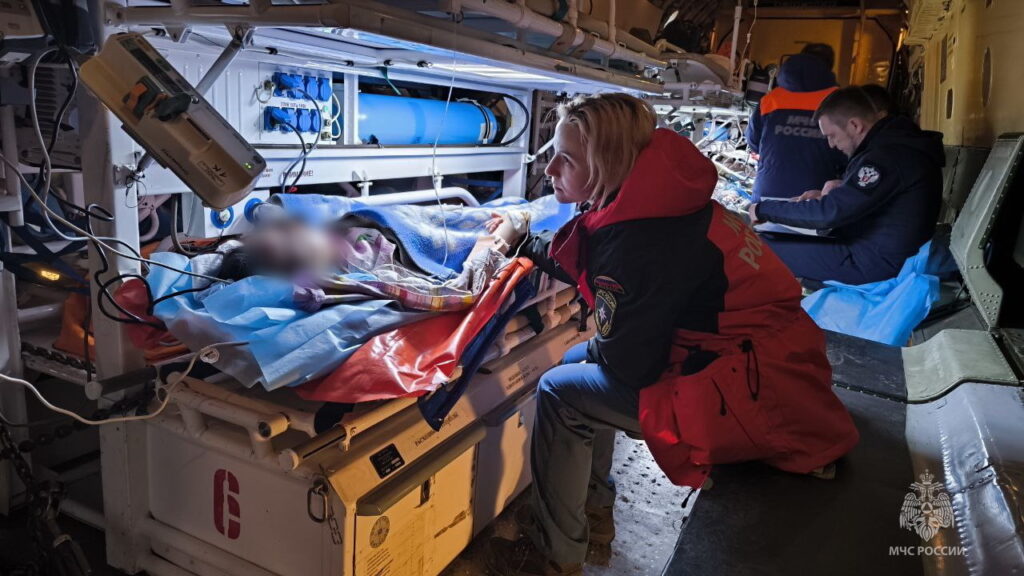
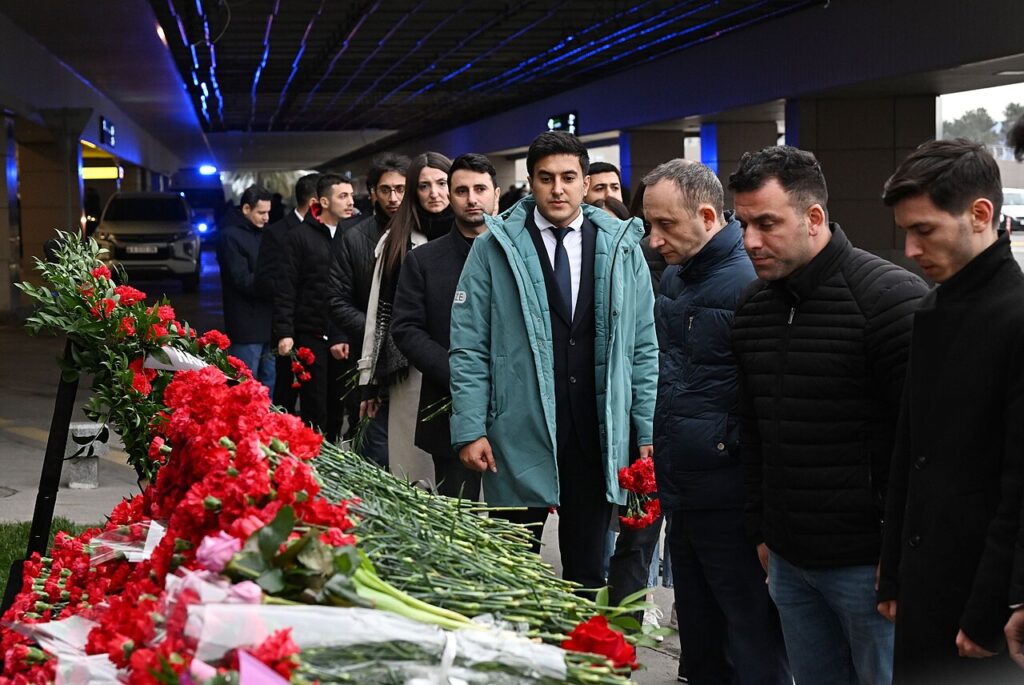
When an Azerbaijan Airlines passenger plane crashed in Kazakhstan on Dec. 25, Junior Sgt. Nurlan Botagarin reacted quickly. He raced to the wreckage in his car and frantically pushed past debris into the fuselage to help survivors. “The rear part of the plane had overturned, and the people inside were tangled together, unable to get out,” the Kazakh military serviceman said. “At that moment, I broke through the obstructing parts and equipment of the plane and entered inside. I started rescuing the passengers.” Was Botagarin a hero for what he did, possibly risking his own life in the event of an additional explosion and fire while he was scrambling through the wreckage of Flight J2-8243? Some people say yes. He doesn’t think so. Heroes or not, some people showed courage and compassion on the day of the Embraer 190 plane crash that killed 38 people and left 29 survivors in Aktau, Kazakhstan, marking a bright spot in the fog of grief and international intrigue over how the disaster unfolded. Azerbaijan says the plane was accidentally hit by Russian ground fire before its planned landing in Russia-controlled Chechnya; President Vladimir Putin of Russia, which is at war with Ukraine, has apologized without confirming Azerbaijan’s account. Kazakhstan is leading the investigation. The human loss in such a calamity and the alleged responsibility of any perpetrators can overshadow the exemplary conduct of some of those involved in the moment. But here are some of the people who did what they could and will be remembered for it:   THE FLIGHT CREW: Capt. Igor Kshnyakin, co-pilot Aleksandr Kalyaninov and flight attendant Hokuma Aliyeva died in the crash. Aviation analysts say the pilots’ struggle to steer the badly damaged aircraft hundreds of kilometers across the Caspian Sea to a landing on flat terrain near Aktau airport was critical to the survival of some of those aboard as well as the likelihood that what exactly happened will be learned in the investigation. Kazakhstan sent the plane’s flight recorders to Brazil, where Embraer aircraft are made, for assessment. The cockpit voice recordings, if they are released, will reveal more to the world about the desperate efforts of the pilots to control the plane and get their passengers to safety. “This particular aircraft is equipped with a recorder that captures two hours of crew and aircraft activity. The investigation will have a nearly complete picture of events,” said Talgat Lastaev, Kazakhstan’s vice transport minister. He was quoted by the Kazinform news agency. At a ceremony in Baku, the three crewmembers who died were awarded with the title "National Hero of Azerbaijan." Two surviving flight attendants, Zulfugar Asadov and Aydan Rahimli, also received honors. “I must specifically acknowledge the female crew members. They themselves were in a state of stress, but look how humanely they acted to calm the passengers and prevent chaos inside the plane,” Azerbaijan’s President Ilham Aliyev said. In a video taken by a passenger, a flight attendant is heard trying to assure people on the plane...

Kazakhstan Transfers Flight Recorders to Brazil for Further Investigation

The Azerbaijan Airlines plane crash near the Kazakh city of Aktau continues to dominate media discussions in Azerbaijan, Kazakhstan, and Russia. Public attention has centered on statements from Azerbaijan’s leader, Ilham Aliyev, who appears dissatisfied with Vladimir Putin’s vague apologies, as well as on the actions of Kazakh President Kassym-Jomart Tokayev, who faces the delicate challenge of conducting an investigation that satisfies both Baku and Moscow. Tensions between Baku and Moscow have escalated, with both sides imposing mutual migration restrictions. Russians are now limited to 90 days per year in Azerbaijan, while Russia has enacted asymmetric measures against Azerbaijani citizens. Amid this backdrop, Kassym-Jomart Tokayev has taken personal control of the aviation accident investigation, which includes collaboration with specialists from both Azerbaijan and Russia. On the evening of Sunday, December 29, the Commission on Aviation Incident Investigation, led by Kazakhstan’s Minister of Transport, Marat Karabayev, announced its decision to send the flight data recorder (black box) to Brazil's Center for Investigation and Prevention of Aeronautical Accidents (CENIPA). Brazil is also the manufacturer of the Embraer aircraft involved in the crash. According to the Kazakh authorities, the decision complies with the standards of Annex 13 of the Chicago Convention, which assigns responsibility for decoding flight recorders to the investigating country and allows it to select the location for the task. Kazakhstan, a member of the International Civil Aviation Organization (ICAO) since 1992, made the decision in alignment with this framework. The commission emphasized that CENIPA possesses the necessary technical expertise, certified laboratories, and specialized equipment for decoding the flight data recorders. Kazakh analyst Gaziz Abishev interprets the decision as a potential response to external pressure on Kazakhstan, though officials deny any such influence. According to Abishev, the rhetoric from Azerbaijan’s leadership reflects a lack of mutual understanding with Moscow, suggesting covert attempts to sway the investigation. “In this context, Kazakhstan’s decision to transfer the black box to CENIPA represents a principled step aimed at neutralizing pressure and ensuring an impartial decoding process that instills confidence in the international community,” Abishev stated. A similar view is held by Aydos Sarym, a deputy in Kazakhstan's Mazhilis. “This is, in essence, a ‘Solomonic’ decision, as Azerbaijan is the aggrieved party, with the majority of victims being its citizens. President Aliyev has repeatedly emphasized Russia’s culpability in the tragedy and expressed distrust toward certain CIS institutions that have investigated past international incidents. To guarantee full transparency and objectivity, the decryption process has been entrusted to Brazil. This move seeks to accurately determine the cause of the tragedy and establish accountability while ensuring the investigation’s conclusions are accepted by all parties,” Sarym commented. Azat Peruashev, leader of the parliamentary party Ak Zhol, also voiced support for the decision. He praised it as a testament to Tokayev’s diplomatic skill, describing him as a “high-class diplomat capable of finding balanced solutions in the most challenging situations.” Peruashev highlighted the advantages of shifting the investigation to a neutral and unbiased venue, allowing the manufacturer to confirm whether the crash...

Questions Mount After Azeri Plane Crash with Focus on Russian Air Defenses

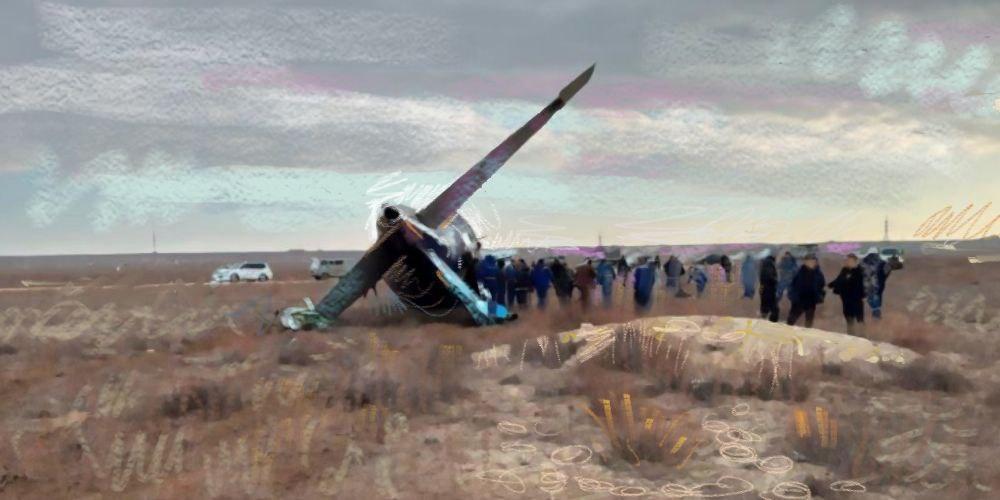
On December 25, an Azerbaijani Embraer 190 aircraft operating a Baku-Grozny flight made a hard emergency landing near the city of Aktau, Kazakhstan. The aircraft, carrying five crew members and 62 passengers, suffered devastating consequences. Both pilots were killed, along with 36 passengers. Additionally, 29 people, including three children, were hospitalized. The aircraft disintegrated on impact, and a fire engulfed its midsection. Initial reports suggested a bird strike, but alternative theories have since emerged. Kazakhstan’s Ministry of Emergency Situations detailed the timeline: at 11:02 Astana time, the crew issued a distress signal while flying over the Caspian Sea. By 11:37, the plane made a hard landing in the steppe near Aktau. Before official rescue teams arrived, employees of a local energy company working nearby provided critical first aid and captured the first videos of the crash. They managed to pull 15 passengers from the wreckage of the tail section. Specialized rescue teams and medics, stationed at Aktau airport in anticipation of the emergency landing, arrived promptly thereafter. According to Nurdaulet Kilybay, Akim of Mangystau Region, "22 ambulance teams and six units from the Center for Disaster Medicine worked at the crash site." The regional multidisciplinary hospital had prepared “30 surgical and trauma beds, along with 10 intensive care beds” for victims. Speculations and Investigations Journalists questioned Bozumbayev during the briefing about theories which are currently circulating, including those suggesting air defense involvement. The official avoided drawing conclusions, stating: "It is impossible to establish even a preliminary cause because there are specialists for this. They will carry out work. Then it will be clear. I can't speak now. I watched what people are posting... While [the plane] fell to the ground, and turned over, a lot of things could have happened. So, I am far from reaching conclusions." Speculation on Russian Telegram channels has posited that perforations in the aircraft’s tail section resemble shelling damage. One theory links the crash to Ukrainian drone (UAV) raids over Grozny, suggesting that air defense systems mistakenly targeted the plane. The Telegram channel VChK-OGPU claimed that "Initially, the aircraft appears to have fallen victim to UAV jammers that were operating at the time because of a drone attack. As soon as the airliner started to descend for landing, its GPS stopped working and the dispatcher lost 'radar contact.' The pilot could not land the plane in such conditions and decided to fly to Baku. When he began to turn around to do so, there was an explosion nearby — all indications are that the plane was hit by air defense equipment." The report further alleges that the strike occurred over Chechnya’s Naursky District, home to military units equipped with air defense systems. Kazakh officials stressed the need for patience, as forensic and aviation experts work to analyze the wreckage and flight data, with Bozumbayev emphasizing that “An interdepartmental investigative and operational group has been set up. Both forensic experts and experts from our Aviation Administration, who investigate such air incidents, came with me. As part...

What Happened Over Russia? Probe Into Fatal AZAL Crash in Kazakhstan Begins

Investigators into the crash of an Azerbaijan Airlines plane in Kazakhstan that killed 38 people are trying to determine what caused the aircraft to divert from its planned landing in Grozny, the capital of Russia-controlled Chechnya. The Embraer 190 passenger plane, which was carrying 62 passengers and five crewmembers, crashed on Wednesday three kilometers from the airport at Aktau, a city on the Caspian Sea in southwestern Kazakhstan. The plane had been heading from the Azerbaijani capital of Baku to Grozny, but eventually declared an emergency and headed to Aktau, about 440 kilometers to the east and across the Caspian, for reasons that have yet to be clarified. “Even a preliminary cause cannot be established because there are specialists for that. They will carry out their work. Only after that it will be clear. I can't say anything at this point,” said Kazakh Deputy Prime Minister Kanat Bozumbayev, according to the state Kazinform news agency. “I saw what people posted... While it was falling to the ground, it was flipping over, many things could have happened. Therefore, I am far from making any conclusions.” Russia’s state-run news agency Tass initially reported that fog in Grozny caused Flight J28243 to divert to Makhachkala, the capital of the Russian territory of Dagestan, and then to Aktau. RIA Novosti, another Russian state-owned media outlet, cited Russian aviation authorities as saying the plane diverted because of a collision with birds. However, some aviation and military analysts have paid particular attention to a video showing numerous small holes on part of the fuselage wreckage, and there is speculation that air defense systems may have fired on the plane; Chechen officials have reported shooting down drones from Ukraine, which is at war with Russia. Bozumbayev, the Kazakh minister, was asked about the possibility that the aircraft was fired on, and said that final results of the investigation will be announced after all evidence is examined, reported the Azeri Press Agency, or APA. The prosecutor general’s office in Kazakhstan has opened a criminal case and the country’s chief transport prosecutor visited the scene as a member of a government commission. Kazakh media reported that the flight recorder had been found. Video and images released by Kazakhstan’s Ministry of Emergency Situations showed rescue teams converging in vehicles and on foot on the flaming plane wreckage in a flat expanse of land near Aktau. One vehicle trained a water hose on the flames. Debris from the plane was scattered in the area. Emergency responders were able to pull survivors from the crumpled, partly intact fuselage. Some video appearing on social media showed a survivor limping out of the wreckage while another passenger who had been rescued was unable to walk because of apparent leg injuries. Another unverified video also shows a passenger purportedly praying on the plane in the minutes before the crash. News of the crash came as Russian President Vladimir Putin hosted a meeting in St. Petersburg for leaders of the Commonwealth of Independent States, a regional...

Dozens Survive Azerbaijan Airlines Plane Crash in Kazakhstan

A passenger plane from Azerbaijan Airlines has crashed near Aktau, Kazakhstan, while en route from Baku to Grozny in Chechnya. Authorities and locals were left shaken but relieved as more than 30 people survived the incident. The aircraft was carrying 62 passengers and five crew members. The accident occurred during an emergency landing attempt after the plane experienced difficulties mid-flight. Initial investigations point to potential mechanical failure as the cause. Emergency response teams were quickly dispatched to the scene, providing medical aid to the injured. Survivors suffered injuries ranging from minor cuts to more serious trauma, with ongoing efforts to transfer them to nearby hospitals for further treatment. Eyewitnesses described the crash site as alarming, with significant damage to the plane’s fuselage and debris strewn across the area. “It’s incredible that so many made it out alive,” shared a local who assisted in the rescue efforts. Kazakhstan’s Ministry of Emergency Situations praised the actions of first responders for minimizing casualties. Rescue and recovery operations continue, with the crash site cordoned off to aid the investigation. Azerbaijan Airlines, meanwhile, has activated its crisis management plan, collaborating with Kazakh authorities to assist passengers and their families. “We are deeply relieved that lives were spared, and we fully support ongoing inquiries into this tragedy,” said a spokesperson for the airline. The Civil Aviation Committee in Kazakhstan announced plans for a detailed investigation, beginning with the retrieval and analysis of the plane’s black box. Azerbaijan Airlines has also temporarily grounded similar aircraft as a precautionary measure. The accident has led to renewed attention on air safety protocols in the region, underscoring the critical need for stringent maintenance and monitoring. At the same time, the survival of so many passengers has been regarded as extraordinary, with their accounts serving as a reminder of resilience and the importance of emergency readiness. [caption id="attachment_26965" align="aligncenter" width="465"] Image: VK Tula News Feed[/caption] Online footage from the Azerbaijani airline AZAL crash site reveals damage to the fuselage which certain reports have stated appears consistent with the impact patterns of air defense missile shrapnel. The veracity of these reports have yet to be verified. The authorities are expected to provide further updates on the investigation and the conditions of the injured in the coming days.