• KGS/USD = 0.01144 0%
  • KZT/USD = 0.00210 0%
  • TJS/USD = 0.10563 0%
  • UZS/USD = 0.00008 0%
  • TMT/USD = 0.28530 0%
  • KGS/USD = 0.01144 0%
  • KZT/USD = 0.00210 0%
  • TJS/USD = 0.10563 0%
  • UZS/USD = 0.00008 0%
  • TMT/USD = 0.28530 0%
  • KGS/USD = 0.01144 0%
  • KZT/USD = 0.00210 0%
  • TJS/USD = 0.10563 0%
  • UZS/USD = 0.00008 0%
  • TMT/USD = 0.28530 0%
  • KGS/USD = 0.01144 0%
  • KZT/USD = 0.00210 0%
  • TJS/USD = 0.10563 0%
  • UZS/USD = 0.00008 0%
  • TMT/USD = 0.28530 0%
  • KGS/USD = 0.01144 0%
  • KZT/USD = 0.00210 0%
  • TJS/USD = 0.10563 0%
  • UZS/USD = 0.00008 0%
  • TMT/USD = 0.28530 0%
  • KGS/USD = 0.01144 0%
  • KZT/USD = 0.00210 0%
  • TJS/USD = 0.10563 0%
  • UZS/USD = 0.00008 0%
  • TMT/USD = 0.28530 0%
  • KGS/USD = 0.01144 0%
  • KZT/USD = 0.00210 0%
  • TJS/USD = 0.10563 0%
  • UZS/USD = 0.00008 0%
  • TMT/USD = 0.28530 0%
  • KGS/USD = 0.01144 0%
  • KZT/USD = 0.00210 0%
  • TJS/USD = 0.10563 0%
  • UZS/USD = 0.00008 0%
  • TMT/USD = 0.28530 0%

Viewing results 1 - 6 of 4

Istanbul Strait Rail Project to Boost Trade Along Trans-Caspian Transport Route

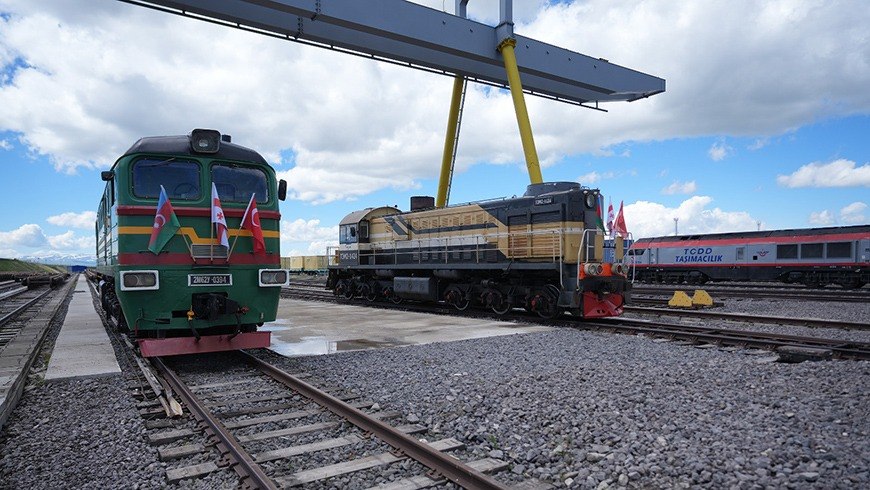
On March 31, the World Bank approved a $2 billion loan for the Istanbul North Rail Crossing Project (INRAIL), aimed at strengthening railway connectivity across the Istanbul Strait (Bosphorus) and reinforcing Türkiye’s role as a key logistics hub linking Europe, Asia, and the Middle East. With the Baku-Tbilisi-Kars railway, Turkey serves as a key node in the Trans-Caspian International Transport Route (TITR), also known as the Middle Corridor. The route connects China and Europe via Kazakhstan, the Caspian Sea, the South Caucasus, and Turkey. Turkey's major rail corridors passing through Istanbul, including the Middle Corridor, the Iraq Development Road, and the Turkey-EU corridor, are essential for international trade but currently face a significant bottleneck at the Bosphorus. INRAIL will involve the construction of a 127-kilometer electrified, high-capacity railway line providing a new overland rail crossing of the strait. The project will utilize the rail-ready Yavuz Sultan Selim Bridge and bypass central Istanbul, increasing both freight and passenger capacity while reducing logistics costs and improving reliability across national and intercontinental transport corridors, including the TITR. Once operational, rail freight capacity across the Bosphorus is expected to increase from approximately 3 million tons per year to as much as 50 million tons, significantly improving transit times, reliability, and predictability for freight operators. “By removing a critical rail bottleneck at the Istanbul Strait and enhancing the resilience and efficiency of rail infrastructure, Turkey is boosting its competitiveness and reinforcing its role as a logistics hub,” said Humberto Lopez, World Bank Country Director for Turkey. “INRAIL will also generate benefits for the wider region by connecting to international corridors such as the Middle Corridor and the Development Road, facilitating trade between Europe, Central Asia, and the Gulf.” The project aligns with Kazakhstan and Türkiye’s broader efforts to develop the Middle Corridor. In July 2025, Kazakhstan’s national railway operator, Kazakhstan Temir Zholy (KTZ), and TCDD Taşımacılık A.Ş. signed a cooperation agreement to enhance freight transportation along the TITR. The agreement aims to improve the route’s efficiency and competitiveness by launching regular rail services between Kazakhstan and Turkey, increasing freight volumes along the Baku-Tbilisi-Kars railway, and expanding cargo flows between China and Europe. KTZ has also held discussions with Mersin International Port, part of PSA International, on expanding cooperation to strengthen the Middle Corridor and develop more efficient multimodal logistics links between Asia and Europe. KTZ Chairman Talgat Aldybergenov reaffirmed both sides’ commitment to ensuring stable freight volumes and highlighted Mersin’s role as a strategic transshipment hub for the corridor. To further strengthen the logistics chain, Kazakhstan has proposed leveraging the potential of KPMC, a joint venture between KTZ and PSA International, which is already involved in developing multimodal services along the Xi’an-Istanbul route.

Opinion: Washington Meeting and the Shifting Geopolitics of the Caspian

The Washington meeting between Armenia and Azerbaijan, hosted by President Donald Trump on August 8, 2025, may go down as a pivotal moment in the geopolitics of the Caspian and the wider Eurasian space. While on the surface the talks aimed to normalize relations between the two South Caucasus neighbors, the ripple effects extend far beyond bilateral reconciliation. For Azerbaijan, the meeting is not only about ending three decades of conflict with Armenia but also about positioning itself as a central bridge linking the Caspian Basin, Central Asia, and even Europe. The Caspian region has always been a security crossroads, where energy interests, military presence, and trade routes overlap. Russia’s war in Ukraine, the Iran-Israel conflict, and shifting Western engagement have made the region more volatile. In this context, a potential Armenia-Azerbaijan settlement offers a chance to stabilize the South Caucasus - the natural gateway between the Caspian and Europe. For Azerbaijan, peace with Armenia would solidify its position in the region where Baku has promoted several important transregional projects such as the Baku-Tbilisi-Ceyhan oil pipeline, the Southern Gas Corridor, and the Baku-Tbilisi-Kars railway. Azerbaijan is heavily investing in the development of the Caspian trade routes, energy infrastructure, and regional connectivity projects such as the Middle Corridor. Stability in the South Caucasus also makes it harder for external actors to exploit divisions - an especially significant factor given the previous attempt to exploit Armenia against Azerbaijan and Türkiye. That strategy brought no tangible results to Armenia, which remained regionally isolated and dependent on Russia. After the military defeats in 2020 and 2023, the Armenian leadership realized that peace and respect for the principle of territorial integrity is a much greater opportunity for the country rather than an irredentist project, which Prime Minister Nikol Pashinyan dubbed “mythical.” At the same time, a peace framework reduces the risk of military escalation spilling into the Caspian region. Naval modernization efforts by Russia and Iran in recent years have heightened anxieties. In short, normalization indirectly enhances Azerbaijan’s capacity to act as a stabilizing actor within the Caspian basin. Increasingly, Iran has also spoken about peace and cooperation, especially with Azerbaijan. Relations were tense a few years ago, but the incumbent President, Masud Pezeshkian, questioned the strategy employed previously by the Iranian clerics regarding Azerbaijan, which failed to gain any benefits. Perhaps the most significant geopolitical dividend for Azerbaijan lies eastward, across the Caspian. The Central Asian states - Kazakhstan, Uzbekistan, Turkmenistan, Kyrgyzstan, and Tajikistan - have long sought secure, diversified links to Europe. Russia’s war has made northern routes through its territory unreliable, while instability in the Red Sea undermines the traditional supply route. That leaves the Trans-Caspian link through Azerbaijan as promising. The Washington meeting, by promoting the peace agenda, reassures Central Asian partners that Baku is a reliable hub. Azerbaijan, Kazakhstan, and Uzbekistan signed an MOU about the transfer of alternative energy sources to Europe through another potential project – a Black Sea electricity cable from Georgia to Romania and Hungary. Azerbaijan...