• KZT/USD = 0.00219
  • TJS/USD = 0.10810
  • UZS/USD = 0.00009
  • TMT/USD = 0.29850
  • KZT/USD = 0.00219
  • TJS/USD = 0.10810
  • UZS/USD = 0.00009
  • TMT/USD = 0.29850
  • KZT/USD = 0.00219
  • TJS/USD = 0.10810
  • UZS/USD = 0.00009
  • TMT/USD = 0.29850
  • KZT/USD = 0.00219
  • TJS/USD = 0.10810
  • UZS/USD = 0.00009
  • TMT/USD = 0.29850
  • KZT/USD = 0.00219
  • TJS/USD = 0.10810
  • UZS/USD = 0.00009
  • TMT/USD = 0.29850
  • KZT/USD = 0.00219
  • TJS/USD = 0.10810
  • UZS/USD = 0.00009
  • TMT/USD = 0.29850
  • KZT/USD = 0.00219
  • TJS/USD = 0.10810
  • UZS/USD = 0.00009
  • TMT/USD = 0.29850
  • KZT/USD = 0.00219
  • TJS/USD = 0.10810
  • UZS/USD = 0.00009
  • TMT/USD = 0.29850
05 September 2026

Viewing results 1 - 6 of 196

Kazakhstan’s Central Bank Governor: Navigating the “New Global Map”

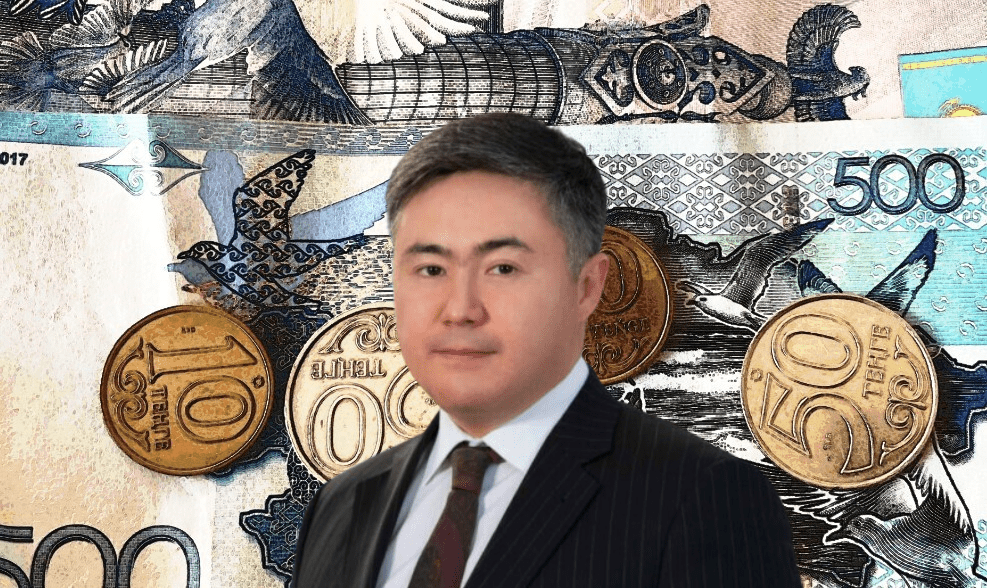
Gov. Timur Suleimenov of the National Bank of Kazakhstan spoke about U.S. tariffs, financial uncertainty, reforms and declining oil prices on Wednesday at the spring meetings in Washington of the World Bank Group and the International Monetary Fund. Here are some of Suleimenov’s key comments in a conversation with Jihad Azour, director of the IMF’s Middle East and Central Asia department: Consumer lending and regulation in Kazakhstan: Due to advances in digitizing financial services, Suleimenov said, “consumer lending became easy for the banks because they're all interlinked to the government databases, they have developed their own databases. So checking a consumer, a potential consumer, and deciding whether or not to go ahead with the loan takes minutes. And therefore everyone can go online and in a couple of weeks get, I don't know, $1,000 microcredit or something like that. That led to proliferation of consumer lending. It grew in last five years, it grew at about 30%. Well, nominal wages grew at about 10-12%. So it's not sustainable and that's why we decided that we're doing something. Our part as macroprudential regulator and our colleagues at the Agency for Oversight, they're doing their part in terms of prudential regulation as well.” U.S. Tariffs: “Now, of course, we're in a completely different setup with tariffs, reshaping global economy, supply chains, investment flows. And I think everyone is yet to find their place on this new global map. In terms of trade with the United States, we have $4.2 billion in trade and most of it is in strategic goods when it comes to U.S. imports from Kazakhstan, therefore it is exempted. But the key element is of course oil prices, global economic turmoil, of course the decrease in oil prices for oil-producing countries. Very important, 50% of our exports is oil, 35-33% of our fiscal revenues is oil. So anything that relates to oil production or oil price affects public finances and overall economic performance of the country. But we are ready, we of course as the situation was unfolding, we have our plan B and plan C. I believe many countries do have the same plan and I think we all should. It's very difficult to predict how this thing plays out.” Navigating Uncertainty “Sometimes times of crisis call for very difficult reforms. But all the stakeholders should be on the same page. Sometimes, you know, things like stability are better than development. They prevail. And therefore, it is for the governments and central banks to sit down together and see what the priorities are, the common national interests, national economic interests, whether it's difficult reforms, whether it's just maintaining stability. Well, in Kazakhstan, I think we're ready for more radical reforms that we're currently implementing. But again, let's be honest, being a petroleum state, oil producing state, makes it much, much more difficult. Because when you have 30% of your GDP in coffers in the national fund… it is very difficult to sell the reforms to the public, to the parliaments, because they're saying, guys, you're sitting on cash. The cash is invested normally, elsewhere, not into the local economy, which is the right way,...

National Bank of Kazakhstan to Launch Digital Investment and Gold Coins

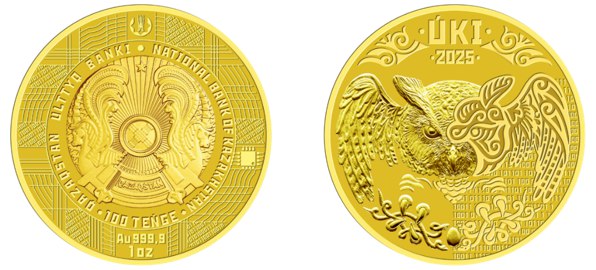
The National Bank of Kazakhstan has announced the launch of the Gold Coin project, a digital investment coin, starting March 17. The coin’s value is pegged to 1/20 of a troy ounce of gold, fluctuating based on global gold prices. According to the National Bank, the Gold Coin project aims to offer Kazakhstani citizens an alternative investment tool, integrating digital assets with modern financial technology. One unit of the Gold Coin corresponds to 1/20 of a troy ounce of gold (with one troy ounce equaling 31.1035 grams). The coin’s value will be determined by the price of gold, as set by the London Bullion Market Association (LBMA), and the official exchange rate of the tenge against the U.S. dollar on the preceding day of a transaction. As of the evening of March 13, the price of gold on the London Stock Exchange stood at $2,924.80 per troy ounce. “The new investment instrument will be available through the Tabys mobile application of the Astana International Exchange (AIX), part of the Astana International Financial Centre (AIFC). Users will be able to buy, sell, and gift Gold Coins online. Additionally, holders who accumulate 20 units of Gold Coin can exchange them for a physical ÚKI gold investment coin at National Bank branches nationwide. The ÚKI coin will be introduced into circulation on March 17, 2025,” the National Bank stated in a press release​. The ÚKI gold coin was unveiled in February 2025 at the World Money Fair in Berlin, the world's largest numismatic event. The fair gathers central banks, mints, coin production companies, designers, and numismatic publishers. Kazakhstan’s National Bank presented the ÚKI coin, which is made of 99.99% pure gold (Au 999.9), weighs 31.1 grams, and has a face value of 100 tenge. The coin will also be available for purchase via the Tabys application​. At the end of 2024, the National Bank of Kazakhstan issued commemorative collector coins, including S. Nurmagambetov. 100 JYL from the “Outstanding Events and People” series and Alexander the Great from the “Great Commanders” series. The first coin, honoring Kazakhstan’s first Minister of Defense and national hero Sagadat Nurmagambetov, is made of cupronickel (MN 25), weighs 15 grams, has a face value of 200 tenge, and was minted in a quantity of 5,000. The Alexander the Great coin is made of sterling silver, weighs 31.1 grams, has a face value of 1,000 tenge (approximately $2), and was issued in a limited run of 2,000 copies​. As previously reported by The Times of Central Asia, Kazakhstan began issuing coins with inscriptions in its new Latin-based alphabet in 2019​.

Kyrgyzstan Pushes to Lift U.S. Sanctions on Keremet Bank

The National Bank of Kyrgyzstan is negotiating with the U.S. Treasury Department to lift sanctions imposed on Keremet Bank, according to National Bank Chairman Melis Turgunbaev. The U.S. authorities sanctioned Keremet Bank over alleged ties to Promsvyazbank, a Russian financial institution under sanctions​. In response, the National Bank of Kyrgyzstan has formally petitioned for the sanctions to be lifted. Efforts to Lift Sanctions “We have submitted a formal request, provided the necessary information, and are actively engaging with U.S. officials. Typically, cases like this are reviewed within 30 to 45 days. Sanctions on Keremet Bank are set to take effect on March 1, and we are doing everything possible to reverse this decision before then,” Turgunbaev stated. According to him, this window allows the bank to manage its international assets and keep clients informed. Keremet Bank’s Response Keremet Bank has welcomed the government’s efforts to challenge the sanctions. “The bank operates in full compliance with national and international laws, adhering to principles of transparency and responsibility. We have submitted an appeal to OFAC (the U.S. Office of Foreign Assets Control) disputing the allegations against us,” the bank told The Times of Central Asia. Growing Time Pressure and UK Sanctions Despite optimism from Kyrgyz authorities, time is running short for a resolution. Keremet Bank has warned its clients that Visa payment cards issued by the bank will stop working on February 28​. In a further setback, the United Kingdom has also imposed sanctions on Keremet Bank, designating it as a foreign financial institution supporting Russia. Previously, the National Bank of Kyrgyzstan instructed commercial banks to tighten control over financial transactions in response to increased enforcement by OFAC.

Securing Central Asia’s Future: EBRD’s Regional Head on the Fight for Water Sustainability

Every fourth inhabitant of Central Asia, home to more than 83 million people, does not have regular access to safe drinking water. The region spans more than four million square kilometers, and over 15% of its territory is covered by the Karakum and Kyzylkum deserts, as well as waterless places such as the Ustyurt Plateau (similar in size to the United Kingdom), which stretches across Kazakhstan, Uzbekistan, and Turkmenistan. The extreme heat common to Central Asia in summer makes water a precious resource. To make matters worse, irresponsible human activity, particularly wasteful water use for irrigation, has led to one of the most devastating ecological catastrophes globally. The Aral Sea, where up to 60,000 tonnes of fish were caught annually only 30 years ago, has practically ceased to exist. Most of Central Asia’s freshwater intake relies on glacial melts affected by global warming.  The World Resources Institute forecast in its 2023 Aqueduct Water Risk Atlas that an additional one billion people globally will live with extremely high water stress by 2050. This will disrupt economies and agricultural production. Most Central Asian countries will be severely affected. While the European Bank for Reconstruction and Development (EBRD) cannot reverse the global warming process or tackle its impacts alone, it can certainly contribute to climate change mitigation efforts, securing better water access, and promoting its rational use. There is frequently no water supply or water treatment infrastructure in rural areas of the regions where it invests.  Most municipal water supply and treatment utilities across Central Asia have not seen much investment or refurbishment over the last 30 years. The EBRD has been working to address this issue, and many of its investment projects are already impacting people’s lives. [caption id="attachment_29070" align="aligncenter" width="1600"] Image: EBRD[/caption] In Kazakhstan, the Bank’s work with Vodnye Resoursy Marketing (VRM)/Shymkent water company, the country’s only privately owned municipal water utility, perfectly illustrates why the EBRD is such a strong advocate of private-sector involvement in the provision of municipal services. Over many years, we have enjoyed excellent cooperation with this company, which has translated into high-quality water supply services for more than 1.2 million residents of Shymkent. It has become a benchmark for the region for its effective and efficient operations. Thanks to VRM’s efforts, with 1.2 million residents, Shymkent became the first city in Kazakhstan to install a water meter for every consumer. User habits have changed: personal daily water consumption has decreased from 456 liters 27 years ago to 150 liters. The water savings achieved during this period will enable Shymkent to meet the needs of its population for another 20 years.  The EBRD started working with VRM in 2009 and has financed five projects totaling €60 million. With the Bank’s financial assistance, VRM has introduced an automated network monitoring system, improved power supply at twelve pumping stations, constructed eleven electrical substations, and built a European Union standards-compliant biogas facility (the only one of its kind in Central Asia), which helps VRM to meet all of its thermal...

Three Banks in Kazakhstan Resume Issuing Cards to Non-Residents

The Kazakh banks Halyk Bank, Kaspi Bank, and VTB Bank have resumed issuing payment cards to non-residents. According to official statements from the banks, Halyk Bank and Kaspi Bank now allow non-residents to open accounts under certain conditions. Halyk Bank requires a residence permit, while Kaspi Bank offers its Kaspi Gold card to citizens of the Eurasian Economic Union (EAEU) and foreigners with a residence permit in Kazakhstan. Meanwhile, VTB Bank (Kazakhstan) has resumed issuing Mir payment system cards to non-residents. The bank has adjusted its procedures to comply with new regulatory requirements, setting a standard validity period of 12 months. However, diplomats and non-resident investors are eligible for extended card validity of up to three years. Other banks, including Eurasian Bank, Nurbank, and Home Credit Bank, have yet to resume card issuance for non-residents after previously suspending the service. Earlier, Kazakhstan’s Agency for Regulation and Development of the Financial Market (ARFM) introduced restrictions on the validity period of payment cards for non-residents and limited the number of cards that a single individual can obtain.  However, exemptions apply to entrepreneurs, diplomats, and investors. As of January 1, 2025, Halyk Bank remains the largest bank in Kazakhstan by assets, followed by Kaspi Bank in second place. VTB Bank ranks 19th out of 21 financial institutions in the country.

Are Registry Errors Behind Migrants’ Bank Account Freezes in Russia?

Dozens of migrants in Russia have complained that they were wrongfully included in the newly launched Register of Controlled Persons, leading to blocked bank accounts, detentions at the border, and job dismissals, according to human rights activist Valentina Chupik. During the first two days of the registry's operation, 31 people sought Chupik's assistance: 13 were citizens of Kyrgyzstan, eight from Tajikistan, seven from Uzbekistan, and one each from Armenia, Azerbaijan, and Turkmenistan. Among them were three holders of Russian residence permits and one with a temporary residence permit. All claim they were added to the list without justification. The majority - 17 people - discovered their inclusion in the register through blocked bank accounts, with 12 of them clients of T-Bank. Four were notified by police following their detention, another four were denied entry at the Russian border, and one individual lost their job. Interviews with those affected revealed no valid reasons for their inclusion in the registry, except for four cases where there might have been formal grounds for entry bans. However, none of these migrants had received prior notification. In addition, five had previously faced unlawful restrictions: three were expelled, one was stripped of a residence permit, and another was banned from entry - though all these decisions were later overturned. Chupik advised migrants to withdraw their money from Russian banks immediately, warning that indiscriminate entries into the registry put their finances at risk. “Since they enter the register indiscriminately, I advise you to withdraw all your funds and send them home, leaving only the necessary minimum,” she said. Baza, a Telegram channel linked to Russian law enforcement agencies, also reported the mass blocking of hundreds of foreign nationals' accounts. Additionally, human rights activist Alexander Kim stated that refusals to provide state services, including migration registration, have become increasingly common. The Register of Controlled Persons was launched in summer 2024 following the adoption of a law on the expulsion of foreign citizens. The move came amid an anti-migrant crackdown that intensified after the Crocus City Hall terrorist attack. Foreign nationals included in the register face deportation and lose the right to register businesses and property in Russia.