• KGS/USD = 0.01144 0%
  • KZT/USD = 0.00205 0%
  • TJS/USD = 0.10784 0%
  • UZS/USD = 0.00008 0%
  • TMT/USD = 0.28490 0%
  • KGS/USD = 0.01144 0%
  • KZT/USD = 0.00205 0%
  • TJS/USD = 0.10784 0%
  • UZS/USD = 0.00008 0%
  • TMT/USD = 0.28490 0%
  • KGS/USD = 0.01144 0%
  • KZT/USD = 0.00205 0%
  • TJS/USD = 0.10784 0%
  • UZS/USD = 0.00008 0%
  • TMT/USD = 0.28490 0%
  • KGS/USD = 0.01144 0%
  • KZT/USD = 0.00205 0%
  • TJS/USD = 0.10784 0%
  • UZS/USD = 0.00008 0%
  • TMT/USD = 0.28490 0%
  • KGS/USD = 0.01144 0%
  • KZT/USD = 0.00205 0%
  • TJS/USD = 0.10784 0%
  • UZS/USD = 0.00008 0%
  • TMT/USD = 0.28490 0%
  • KGS/USD = 0.01144 0%
  • KZT/USD = 0.00205 0%
  • TJS/USD = 0.10784 0%
  • UZS/USD = 0.00008 0%
  • TMT/USD = 0.28490 0%
  • KGS/USD = 0.01144 0%
  • KZT/USD = 0.00205 0%
  • TJS/USD = 0.10784 0%
  • UZS/USD = 0.00008 0%
  • TMT/USD = 0.28490 0%
  • KGS/USD = 0.01144 0%
  • KZT/USD = 0.00205 0%
  • TJS/USD = 0.10784 0%
  • UZS/USD = 0.00008 0%
  • TMT/USD = 0.28490 0%

Viewing results 1 - 6 of 229

Kyrgyz Lending Surges 55% as Consumer Demand Fuels Growth

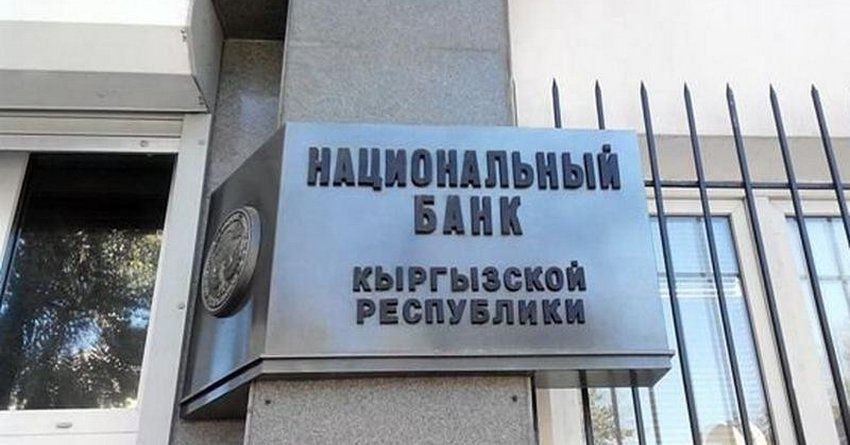
From January to May 2025, the volume of new loans issued by commercial banks in Kyrgyzstan rose by 55 percent, according to the Eurasian Development Bank’s (EDB) June macroeconomic forecast. The sharpest increase was recorded in consumer lending, which more than doubled during the period, rising by 2.1 times. As a result, the total loan portfolio of the Kyrgyz banking sector grew by nearly one-third. “High lending rates are supporting domestic demand: retail trade and public catering increased by 25.3 percent during the first five months of the year. Consumer activity will continue to drive economic growth,” the EDB report  states. Similar findings were previously released by the National Bank of the Kyrgyz Republic (NBKR), though with some differences in specific figures. According to the NBKR, net profits of Kyrgyz banks from January to May totaled 12 billion som (approximately 137 million USD). The overall loan portfolio reached 404 billion som (around 4.6 billion USD), with overdue loans amounting to 7.3 billion som (83.5 million USD), or 1.8 percent of the total. The deposit base also showed strong growth: citizens deposited roughly 700 billion som (8 billion USD), reflecting a 17.7 percent increase since the start of the year. Efforts to reduce dollarization have also shown progress. The share of foreign currency assets in banks’ loan portfolios fell by 1.5 percentage points to 18.5 percent. Meanwhile, the proportion of household deposits held in foreign currency declined by 4.6 percentage points to 38.4 percent. According to EDB analysts, several key factors are driving Kyrgyzstan’s economic momentum. These include rising global gold prices, strong domestic consumption, and increased investment. Based on these trends, the bank has revised its 2025 GDP growth forecast for Kyrgyzstan upward by 1.6 percentage points. The country’s economy is now projected to grow by 10.3 percent this year.

Kyrgyzstan Moves to Join Chinese Banking Payment System

Kyrgyz Finance Minister Almaz Baketaev and National Bank Chairman Melis Turghanbaev met with Chinese Finance Minister Lan Fuan in Beijing to discuss expanding financial and economic cooperation between the two countries. A key outcome of the meeting was an agreement to establish a financial infrastructure for cross-border settlements and to deepen interbank cooperation. Among the proposals discussed was the connection of Kyrgyz state banks to China’s Cross-Border Interbank Payment System (CIPS), an alternative to the international SWIFT system, along with the opening of correspondent accounts in Chinese financial institutions. “This step will create a secure and stable channel for bilateral settlements in yuan, reduce transaction costs, and decrease dependence on settlements through third currencies,” noted the Kyrgyz Ministry of Finance. Toward Deeper Financial Integration Kyrgyz officials also expressed interest in acquiring or establishing a licensed payment organization in China. Such a move could streamline financial transactions with Chinese companies and individuals and connect Kyrgyzstan more directly to China's national payment systems. This would significantly enhance opportunities for Kyrgyz businesses operating in or with the Chinese market. Baketaev reaffirmed Kyrgyzstan’s commitment to maintaining a systematic dialogue with the People's Bank of China and the National Financial Regulatory Administration. The Kyrgyz delegation also participated in a meeting of finance ministers and central bank governors from member states of the Shanghai Cooperation Organization (SCO), reinforcing the regional dimension of Kyrgyzstan’s financial diplomacy.

Kyrgyz Bank Launches Loan Self-Limitation to Fight Fraud and Boost Cybersecurity

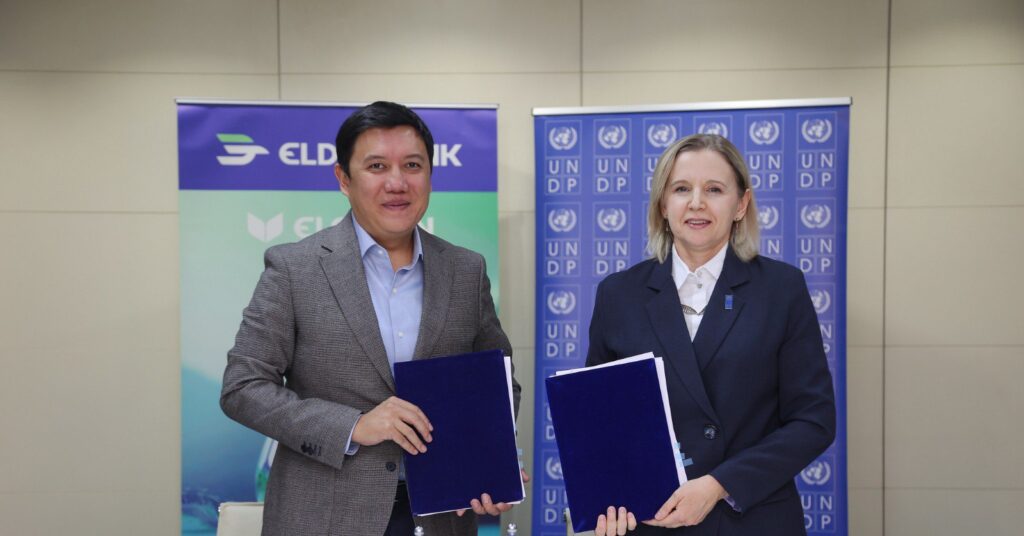
For the first time in Kyrgyzstan’s financial market, a state-owned bank has introduced a self-limitation service on loans, aiming to strengthen cybersecurity and protect citizens from financial fraud. A New Step Toward Cybersecurity According to the Union of Banks of Kyrgyzstan, Eldik Bank, a state-owned institution, has launched a digital self-limitation service for its clients. The bank believes the mechanism could significantly enhance cybersecurity across the entire banking sector, especially if commercial and other state banks adopt the initiative as well. Earlier, the National Bank of the Kyrgyz Republic (NBKR) had started examining international experiences regarding self-prohibition of online loans and the feasibility of implementing such a practice domestically. The NBKR notes that a self-ban mechanism could not only shield customers from fraud but also encourage more informed decision-making when applying for loans. The Union of Banks of Kyrgyzstan has called on the wider banking community to collaborate on this initiative, advocating for a shared database of clients who have opted to limit their access to new loans. Learning from Regional Experiences In an interview with The Times of Central Asia, Anvar Abdraev, President of the Union of Banks of Kyrgyzstan, explained that the move was motivated largely by a global rise in banking fraud. “Russia and Kazakhstan have already introduced such a service in their banks. Statistics in these countries show that a large number of financially literate people use this service, probably because of the recent increase in bank fraud around the world,” Abdraev said. He added that promoting financial literacy and offering additional protective mechanisms is becoming a crucial component of banking policy across the region. Legislative Efforts Underway The mechanism is currently being actively promoted within Kyrgyzstan’s parliament. A draft bill to formalize the introduction of self-limitation on loans has been submitted for public discussion. “The Union of Banks is also participating in the discussions and is part of the working group drafting the legislation,” Abdraev said. “We aim to create a comprehensive digital platform where, alongside self-limitation, additional customer protection mechanisms would be operational.”

Kazakhstan’s Central Bank Governor: Navigating the “New Global Map”

Gov. Timur Suleimenov of the National Bank of Kazakhstan spoke about U.S. tariffs, financial uncertainty, reforms and declining oil prices on Wednesday at the spring meetings in Washington of the World Bank Group and the International Monetary Fund. Here are some of Suleimenov’s key comments in a conversation with Jihad Azour, director of the IMF’s Middle East and Central Asia department: Consumer lending and regulation in Kazakhstan: Due to advances in digitizing financial services, Suleimenov said, “consumer lending became easy for the banks because they're all interlinked to the government databases, they have developed their own databases. So checking a consumer, a potential consumer, and deciding whether or not to go ahead with the loan takes minutes. And therefore everyone can go online and in a couple of weeks get, I don't know, $1,000 microcredit or something like that. That led to proliferation of consumer lending. It grew in last five years, it grew at about 30%. Well, nominal wages grew at about 10-12%. So it's not sustainable and that's why we decided that we're doing something. Our part as macroprudential regulator and our colleagues at the Agency for Oversight, they're doing their part in terms of prudential regulation as well.” U.S. Tariffs: “Now, of course, we're in a completely different setup with tariffs, reshaping global economy, supply chains, investment flows. And I think everyone is yet to find their place on this new global map. In terms of trade with the United States, we have $4.2 billion in trade and most of it is in strategic goods when it comes to U.S. imports from Kazakhstan, therefore it is exempted. But the key element is of course oil prices, global economic turmoil, of course the decrease in oil prices for oil-producing countries. Very important, 50% of our exports is oil, 35-33% of our fiscal revenues is oil. So anything that relates to oil production or oil price affects public finances and overall economic performance of the country. But we are ready, we of course as the situation was unfolding, we have our plan B and plan C. I believe many countries do have the same plan and I think we all should. It's very difficult to predict how this thing plays out.” Navigating Uncertainty “Sometimes times of crisis call for very difficult reforms. But all the stakeholders should be on the same page. Sometimes, you know, things like stability are better than development. They prevail. And therefore, it is for the governments and central banks to sit down together and see what the priorities are, the common national interests, national economic interests, whether it's difficult reforms, whether it's just maintaining stability. Well, in Kazakhstan, I think we're ready for more radical reforms that we're currently implementing. But again, let's be honest, being a petroleum state, oil producing state, makes it much, much more difficult. Because when you have 30% of your GDP in coffers in the national fund… it is very difficult to sell the reforms to the public, to the parliaments, because they're saying, guys, you're sitting on cash. The cash is invested normally, elsewhere, not into the local economy, which is the right way,...

National Bank of Kazakhstan to Launch Digital Investment and Gold Coins

The National Bank of Kazakhstan has announced the launch of the Gold Coin project, a digital investment coin, starting March 17. The coin’s value is pegged to 1/20 of a troy ounce of gold, fluctuating based on global gold prices. According to the National Bank, the Gold Coin project aims to offer Kazakhstani citizens an alternative investment tool, integrating digital assets with modern financial technology. One unit of the Gold Coin corresponds to 1/20 of a troy ounce of gold (with one troy ounce equaling 31.1035 grams). The coin’s value will be determined by the price of gold, as set by the London Bullion Market Association (LBMA), and the official exchange rate of the tenge against the U.S. dollar on the preceding day of a transaction. As of the evening of March 13, the price of gold on the London Stock Exchange stood at $2,924.80 per troy ounce. “The new investment instrument will be available through the Tabys mobile application of the Astana International Exchange (AIX), part of the Astana International Financial Centre (AIFC). Users will be able to buy, sell, and gift Gold Coins online. Additionally, holders who accumulate 20 units of Gold Coin can exchange them for a physical ÚKI gold investment coin at National Bank branches nationwide. The ÚKI coin will be introduced into circulation on March 17, 2025,” the National Bank stated in a press release​. The ÚKI gold coin was unveiled in February 2025 at the World Money Fair in Berlin, the world's largest numismatic event. The fair gathers central banks, mints, coin production companies, designers, and numismatic publishers. Kazakhstan’s National Bank presented the ÚKI coin, which is made of 99.99% pure gold (Au 999.9), weighs 31.1 grams, and has a face value of 100 tenge. The coin will also be available for purchase via the Tabys application​. At the end of 2024, the National Bank of Kazakhstan issued commemorative collector coins, including S. Nurmagambetov. 100 JYL from the “Outstanding Events and People” series and Alexander the Great from the “Great Commanders” series. The first coin, honoring Kazakhstan’s first Minister of Defense and national hero Sagadat Nurmagambetov, is made of cupronickel (MN 25), weighs 15 grams, has a face value of 200 tenge, and was minted in a quantity of 5,000. The Alexander the Great coin is made of sterling silver, weighs 31.1 grams, has a face value of 1,000 tenge (approximately $2), and was issued in a limited run of 2,000 copies​. As previously reported by The Times of Central Asia, Kazakhstan began issuing coins with inscriptions in its new Latin-based alphabet in 2019​.

Kyrgyzstan Pushes to Lift U.S. Sanctions on Keremet Bank

The National Bank of Kyrgyzstan is negotiating with the U.S. Treasury Department to lift sanctions imposed on Keremet Bank, according to National Bank Chairman Melis Turgunbaev. The U.S. authorities sanctioned Keremet Bank over alleged ties to Promsvyazbank, a Russian financial institution under sanctions​. In response, the National Bank of Kyrgyzstan has formally petitioned for the sanctions to be lifted. Efforts to Lift Sanctions “We have submitted a formal request, provided the necessary information, and are actively engaging with U.S. officials. Typically, cases like this are reviewed within 30 to 45 days. Sanctions on Keremet Bank are set to take effect on March 1, and we are doing everything possible to reverse this decision before then,” Turgunbaev stated. According to him, this window allows the bank to manage its international assets and keep clients informed. Keremet Bank’s Response Keremet Bank has welcomed the government’s efforts to challenge the sanctions. “The bank operates in full compliance with national and international laws, adhering to principles of transparency and responsibility. We have submitted an appeal to OFAC (the U.S. Office of Foreign Assets Control) disputing the allegations against us,” the bank told The Times of Central Asia. Growing Time Pressure and UK Sanctions Despite optimism from Kyrgyz authorities, time is running short for a resolution. Keremet Bank has warned its clients that Visa payment cards issued by the bank will stop working on February 28​. In a further setback, the United Kingdom has also imposed sanctions on Keremet Bank, designating it as a foreign financial institution supporting Russia. Previously, the National Bank of Kyrgyzstan instructed commercial banks to tighten control over financial transactions in response to increased enforcement by OFAC.