


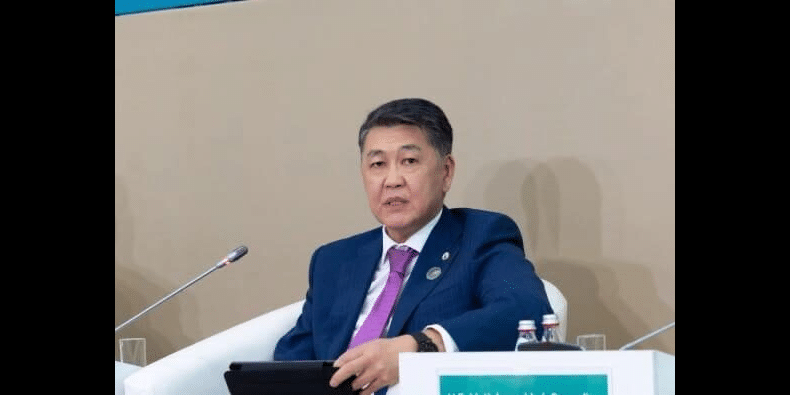
Interview: Berik Aryn on Kazakhstan’s Role in a Regional Food Reserve
Kazakhstan could anchor a Central Asian food reserve intended to help participating countries respond to shortages without giving up control of their national stocks. The proposal comes from the Astana-based Islamic Organization for Food Security (IOFS), an institution affiliated with the Organization of Islamic Cooperation (OIC). Rather than establish a single supranational stockpile, it would connect existing national reserves through agreed rules for monitoring supplies and releasing food during a crisis. Food security is closely tied to water in Central Asia, where irrigation depends on rivers shared across borders. The five states are already seeking an agreement on regional water management, while climate change is making supplies less predictable. IOFS Director General Berik Aryn, who has led the organization since April 2024, was previously Kazakhstan’s ambassador to Saudi Arabia and permanent representative to the OIC. In an interview with The Times of Central Asia, he explains what must happen before the reserve becomes operational, why Kazakhstan is central to the plan, and how international support for Afghanistan could move from emergency aid toward agricultural recovery. TCA: During periods of severe water scarcity, how should Central Asian states reconcile the competing demands of agriculture, energy, and ecosystems? Should food security guide interstate decisions on water allocation? Berik Aryn: Food security is a fundamental pillar of regional stability and human dignity, and IOFS firmly believes it must be recognized as a core criterion in interstate water allocation decisions, particularly during periods of acute scarcity. However, in the complex landscape of Central Asia, food security cannot be treated in isolation. It is part of an inseparable water-energy-food-ecosystem nexus. To reconcile these competing demands during severe droughts, regional mechanisms must move away from zero-sum competition over water volumes. Instead, the focus must shift toward mutual optimization, safeguarding basic human needs, protecting vital ecological flows, and honoring energy requirements through holistic, cross-sectoral cooperation. To achieve this reconciliation in practice, Central Asian states would benefit from a formal, data-driven regional drought management framework. IOFS advocates for a strategy in which water allocation during crises is guided by real-time hydrological data, transparent information exchange, and joint seasonal forecasting. Rather than asking nations to compromise on their development goals, the solution lies in maximizing water productivity. By investing in modern transboundary irrigation infrastructure, broadly deploying water-saving technologies, including drip irrigation, adopting digital precision agriculture, and transitioning to high-yield, drought-resistant crops, the region can significantly reduce water losses. Headquartered in Astana, IOFS stands ready to mobilize international green investment and facilitate technology transfers to help Central Asian states transform water challenges into a shared opportunity for long-term food security and climate resilience. TCA: IOFS has developed a model for regional food reserves and is considering a pilot involving Central Asian and other OIC states. How close is the initiative to implementation, and what obstacles remain? Aryn: The establishment of the OIC Regional Food Security Reserve represents a flagship institutional milestone for IOFS and is aimed at developing a more flexible and interconnected regional mechanism for responding to food crises....
