Viewing results 1 - 6 of 5
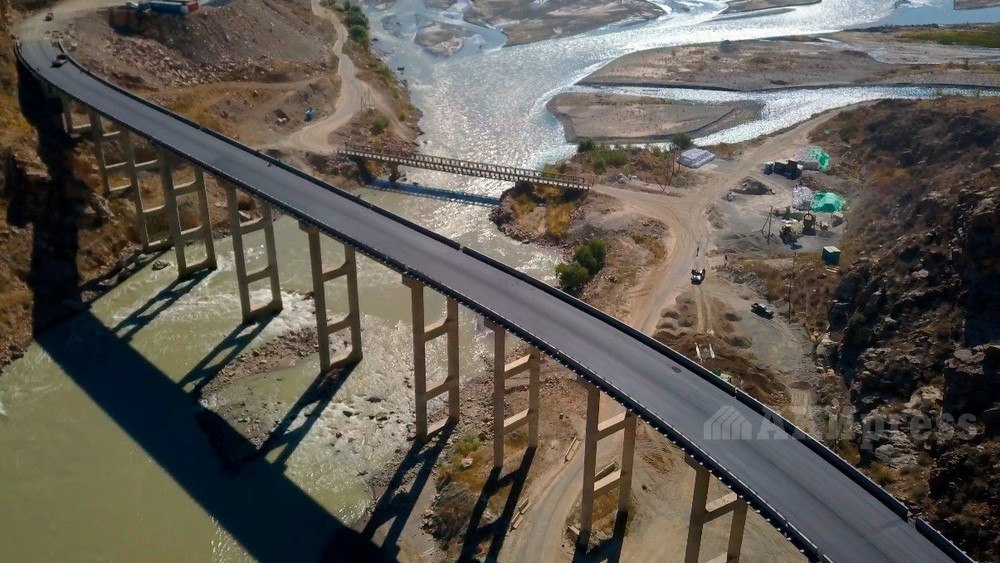
Kyrgyzstan’s alternative North-South highway will be open to traffic from June to November 2026, the Ministry of Transport and Communications has announced. Preparatory work for the seasonal opening is currently underway, including the implementation of additional safety measures. The long-anticipated 433-kilometer highway is a strategic transport corridor linking Balykchy in the Issyk-Kul Region with Jalal-Abad in southern Kyrgyzstan. Approximately 200 kilometers of the route pass through areas where no roads previously existed. Key engineering achievements along the route include Kyrgyzstan’s longest tunnel, located at the Kok-Art mountain pass, and two major overpass bridges. Once operational, the highway is expected to reduce travel time between Jalal-Abad and Balykchy from 13 hours to just six. Currently, the only route connecting Kyrgyzstan’s northern and southern regions is the Bishkek-Osh highway. The new North-South corridor is expected to improve both passenger and freight transportation between the regions, particularly given the absence of a direct railway connection. Construction of the North-South highway began in 2014, but the opening has been repeatedly postponed. The highway is expected to become fully operational year-round in 2028, according to Minister of Transport and Communications Talantbek Soltobaev. He said that in 2026 the highway would only operate during the summer season. “Until we resolve safety issues, we will be closing the highway for the winter,” the minister said, referring to the need to eliminate risks associated with rockfalls, avalanches and other natural hazards along certain sections of the road.
Construction has begun on a 750-meter tunnel along Kyrgyzstan’s vital Bishkek–Osh highway, the country’s only overland route connecting the northern and southern regions. The project marks a major step in modernizing national transport infrastructure and improving safety in an area prone to rockfalls, landslides, and harsh weather conditions. The tunnel is being built at the 400-kilometer mark of the highway by Japan’s Takenaka Civil Engineering & Construction Co., using advanced Japanese technologies designed to meet the region’s complex geological challenges. A formal groundbreaking ceremony took place on June 19, attended by Kyrgyz Transport and Communications Minister Absattar Syrgabayev and Japanese Ambassador to Kyrgyzstan Hideki Goda. Minister Syrgabayev described the tunnel as a key solution to the dangers posed by the mountainous terrain. “In this area, the risks are high. A tunnel is the safest and most reliable solution,” he said. Stretching 655 kilometers, the Bishkek–Osh highway runs through the regions of Chui, Talas, Jalal-Abad, and Osh, linking the capital with the country’s second-largest city. It plays a crucial role in both domestic mobility and regional trade, forming part of international corridors that connect Kyrgyzstan with Kazakhstan, Uzbekistan, Tajikistan, and China. The tunnel reflects the government’s continued efforts to strengthen the safety and reliability of one of its most important infrastructure assets.
Kyrgyzstan’s Ministry of Transport and Communications has signed a contract with Japan’s Takenaka Civil Engineering Co. for the construction of a 750-meter tunnel along the critical Bishkek-Osh highway. The project will be carried out at the highway’s 400-kilometer mark and is scheduled to begin in June 2025. The signing ceremony on April 15 was attended by Kyrgyz Transport and Communications Minister Absattar Syrgabayev, Japanese Ambassador to Kyrgyzstan Hideki Goda, and Kawamoto Hiroyuki, Permanent Representative of the Japan International Cooperation Agency (JICA) in Kyrgyzstan. Minister Syrgabayev expressed gratitude to the Japanese government and JICA for their ongoing support in developing Kyrgyzstan’s transport infrastructure. Strategic Significance The Bishkek-Osh highway is the only overland route linking Kyrgyzstan’s north and south, making it vital to the country’s economic, social, and political cohesion. The 655-kilometer artery cuts through four western regions, Chui, Talas, Jalal-Abad, and Osh, connecting the capital Bishkek with Osh, the country’s second-largest city. In addition to its domestic role, the Bishkek-Osh highway is a key part of several international transport corridors, linking Kyrgyzstan to Kazakhstan, Uzbekistan, Tajikistan, and China. Enhancing the reliability and safety of this route is a top infrastructure priority for the Kyrgyz government. Delays to Alternative Route As reported by The Times of Central Asia, Kyrgyz authorities have postponed the opening of the long-anticipated North-South alternative highway to 2026. Originally set for completion in May 2025, the 433-kilometer project has been delayed to allow for additional infrastructure development.