


Central Asian Fintech Turns to Cross-Border Payments and AI as Investors Seek Returns
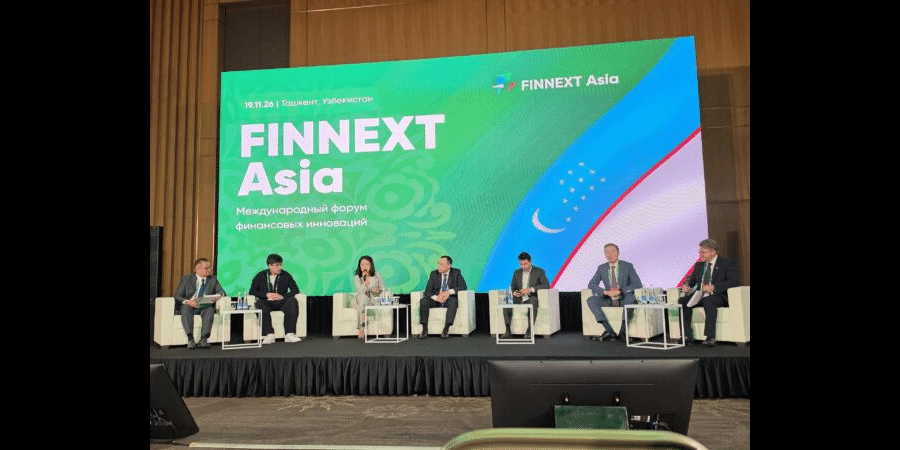
Central Asian financial technology companies are seeking to connect national payment systems and bring AI into banking. Those plans require regulatory coordination and computing infrastructure that remains in short supply. Investors, meanwhile, want evidence that the businesses can generate sustainable returns. These issues were discussed at the third international FINNEXT Asia forum, held in Tashkent on November 19. Connecting Central Asia’s Payment Systems Growing cross-border trade and travel, including tourism and labor migration, are increasing demand for faster, less expensive money transfers. “I do not believe that Central Asia needs to create a single regional payment system. Each country already has its own infrastructure, experience and specific market requirements. A more practical approach would be to connect existing national systems while allowing them to retain their independence,” said Alexey Maslov, advisor to the chairman of the management board of Uzbekistan’s national payment system, HUMO. [caption id="attachment_61335" align="aligncenter" width="1536"] Alexey Maslov of Uzbekistan’s HUMO National Payment System, right.[/caption] Such connections would require coordination among central banks, governments, financial institutions, and payment system operators. They would need to agree on currency settlements and consumer protection, with common rules for resolving disputes. “The main objective should be to make cross-border payments as simple, fast and convenient as domestic transactions,” Maslov said. Connecting national systems could reduce reliance on intermediaries and lower transaction costs. But Maslov stressed that customers must also understand exchange rates and fees. “Public trust in payment infrastructure depends on the reliable protection of funds and personal data, effective fraud prevention and transparent procedures for resolving disputes,” he said. In a separate interview, he identified financial fraud as a major challenge for Uzbekistan’s payment industry. Regulators and the industry, including professional associations, “need to combine forces to make sure that we do our best to fight fraud,” he said. Maslov cautioned against treating regional integration as a reason to abandon international payment networks. “The more options countries have, the more resilient and flexible their financial infrastructure becomes,” he added. He cited payment links in Southeast Asia, including Singapore’s connections with Thailand and Malaysia, that allow travelers to use familiar banking applications and quick response (QR) codes abroad. The European Union’s Single Euro Payments Area, meanwhile, demonstrates how common rules can support payment integration without requiring countries to build identical banking infrastructure. HUMO’s partnership with Alipay+ now works in both directions. Users of participating international wallets can make QR payments in Uzbekistan, while HUMO cardholders can access payment services abroad. In August 2026, HUMO signed an agreement with NPCI International Payments Limited, the international arm of the National Payments Corporation of India, to develop cross-border QR payments. The proposed connection would allow Indian users to pay in Uzbekistan through applications supporting the Unified Payments Interface. Through cooperation with Kazakhstan’s Halyk Bank, HUMO cardholders can now pay at participating businesses using the bank’s terminals. According to Maslov, the central banks of Kazakhstan, Kyrgyzstan, Tajikistan, Uzbekistan, and Azerbaijan have agreed to establish a working group on cross-border QR payments. HUMO cards are also accepted...
