
• KGS/USD = 0.01144 0%
  • KZT/USD = 0.00205 0%
  • TJS/USD = 0.10608 0.19%
  • UZS/USD = 0.00008 0%
  • TMT/USD = 0.28490 0%
  • KGS/USD = 0.01144 0%
  • KZT/USD = 0.00205 0%
  • TJS/USD = 0.10608 0.19%
  • UZS/USD = 0.00008 0%
  • TMT/USD = 0.28490 0%
  • KGS/USD = 0.01144 0%
  • KZT/USD = 0.00205 0%
  • TJS/USD = 0.10608 0.19%
  • UZS/USD = 0.00008 0%
  • TMT/USD = 0.28490 0%
  • KGS/USD = 0.01144 0%
  • KZT/USD = 0.00205 0%
  • TJS/USD = 0.10608 0.19%
  • UZS/USD = 0.00008 0%
  • TMT/USD = 0.28490 0%
  • KGS/USD = 0.01144 0%
  • KZT/USD = 0.00205 0%
  • TJS/USD = 0.10608 0.19%
  • UZS/USD = 0.00008 0%
  • TMT/USD = 0.28490 0%
  • KGS/USD = 0.01144 0%
  • KZT/USD = 0.00205 0%
  • TJS/USD = 0.10608 0.19%
  • UZS/USD = 0.00008 0%
  • TMT/USD = 0.28490 0%
  • KGS/USD = 0.01144 0%
  • KZT/USD = 0.00205 0%
  • TJS/USD = 0.10608 0.19%
  • UZS/USD = 0.00008 0%
  • TMT/USD = 0.28490 0%
  • KGS/USD = 0.01144 0%
  • KZT/USD = 0.00205 0%
  • TJS/USD = 0.10608 0.19%
  • UZS/USD = 0.00008 0%
  • TMT/USD = 0.28490 0%
18 February 2026

Viewing results 1 - 6 of 10

Kazakh Chamber of Entrepreneurs Encourages Businesses to Launch Production Facilities in Prisons

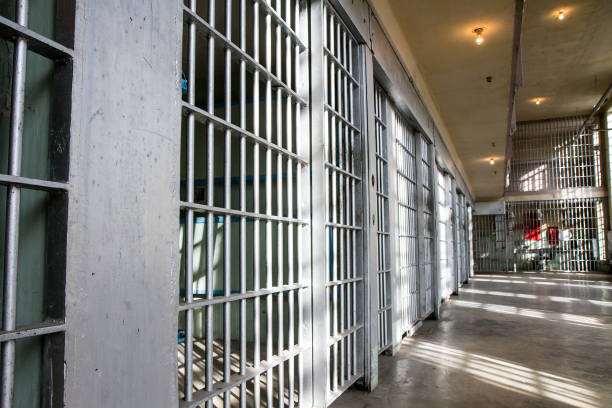
Kazakhstan’s National Chamber of Entrepreneurs "Atameken" and the Committee of the Penal System (CES) under the Ministry of Internal Affairs have discussed the potential for establishing private production facilities inside the country’s correctional institutions. The initiative was presented during a meeting organized by Atameken, Kazakhstan’s largest business association, representing 1.4 million members across 203 industry associations. The discussion focused on practical mechanisms for facilitating business engagement with correctional institutions. “It is important for businesses to understand the real opportunities and economic benefits of working with correctional facilities. The Chamber is prepared to support projects at every stage, offering both advisory and organizational assistance,” said Almat Askar, Managing Director of the Manufacturing Industry Department at Atameken. According to Askar, Atameken is working with government agencies to develop mechanisms that encourage businesses to create jobs for inmates and set up production facilities within the industrial zones of correctional facilities. Guldana Sharipova, Head of the Convict Labor Organization Department at the CES, noted that legislative amendments offering incentives for businesses are already in progress. “We are interested in companies not only launching operations within correctional facilities but also in hiring convicts to work outside the colonies,” she said. According to the World Prison Population List, Kazakhstan ranked 89th out of 222 countries in 2024 in terms of the number of prisoners per 100,000 population. Approximately 35,000 individuals are held in 78 correctional institutions nationwide. Of these, about 23,000 are eligible to work, yet only slightly more than 12,000 are officially employed. Currently, 280 private enterprises operate within the industrial zones of correctional institutions, employing 5,000 inmates. These facilities manufacture products ranging from workwear and building materials to furniture, souvenirs, and consumer goods. This initiative comes alongside broader efforts by the Kazakh government to improve the business climate, including a recent reduction in inspections of private enterprises.


Kazakhstan Factories Under Strain as Costs Bite, Economy Shows Mixed Signals

Kazakhstan’s manufacturing sector slipped further in August, with the latest Purchasing Managers’ Index (PMI) falling to 47.9. That was down from 49.9 in July and 49.7 in June, keeping the index below the neutral 50 mark for a third straight month. It also marked the sharpest deterioration in manufacturing activity since March 2022, according to S&P Global and Freedom Holding Corp. From Highs to Lows The striking downturn comes on the heels of a banner year. In December 2024, the PMI reached a record 53.9, capping 11 straight months of expansion. Buoyed by post-pandemic recovery and government support, manufacturing output grew by 6.8% in 2024, the fastest pace since 2011, helping push GDP growth to 5%. But momentum cooled as 2025 began. The PMI slipped to 51.5 in January, reflecting slower expansion after the year-end surge. By June and July, it hovered just under 50, signaling stagnation. Seasonal shutdowns for repairs in August contributed to weaker output, but analysts say the slide points to deeper structural pressures. [caption id="attachment_36026" align="aligncenter" width="1600"] Kazakhstan’s PMI peaked at 53.9 in December 2024 but slid steadily through 2025, falling into contraction territory below 50 by mid-year and hitting 47.9 in August — the sharpest deterioration since March 2022.[/caption] Orders Dry Up, Costs Rise The August report revealed broad-based weaknesses. New orders fell for the first time in 19 months, ending a growth streak that began in early 2024. The decline reflected lower demand from both domestic and export markets. With fewer orders, factories scaled back staffing and cut input purchases. At the same time, costs surged. A weak tenge and fuel inflation made imports more expensive, while logistics delays lengthened supplier delivery times. These pressures forced firms to raise output prices at a faster pace, risking competitiveness. “August saw another sharp decline in business activity in Kazakhstan’s manufacturing sector,” said Yerlan Abdikarimov of Freedom Finance Global, which partners with S&P on the survey. He cited weak demand, volatile commodity markets, rising costs, and currency and tax pressures. Taxes have indeed become a burden. A new code passed in mid-2025 raised the extraction royalties on metals, hitting downstream metallurgy. Inflation stood at 12.2% in August 2025, with the National Bank keeping its policy rate high at 16.5% in a bid to tame prices. That leaves financing costly for businesses, resulting in squeezed margins and thinning confidence. The August survey showed business confidence at its lowest since 2021. While firms still expect growth over the next year, their optimism is increasingly cautious. Industry Responses and Government Initiatives Some executives see hope in the government’s industrial policy. A $400 million cotton-to-textile cluster is under construction with Chinese partners in Turkestan, aiming to process domestic cotton into textiles at scale. Officials say the project, due to start production by late 2025, will create thousands of jobs and expand exports. Light industries, such as textiles and apparel, posted strong growth in the first half of 2025, with clothing up about 5.6% and textiles 5.7% according to official data. Chemicals...

Kazakhstan Faces Turbulence as External Pressures Mount

Kazakhstan, Central Asia’s largest economy, is facing a convergence of pressures that President Kassym-Jomart Tokayev and National Bank Chairman Timur Suleimenov must now manage simultaneously, from currency depreciation and geopolitical turmoil to volatile oil markets and contentious fiscal reforms, that are testing its economic resilience. Geopolitical Pressures Escalate By mid-2025, it had become increasingly apparent that Kazakhstan has limited capacity to influence global geopolitical dynamics. Like many “middle powers,” the country must adapt to the actions of larger states, whose unpredictable decisions continue to exert downward pressure on the tenge and fuel inflation. On July 28, U.S. President Donald Trump shortened a previously issued 50-day ultimatum to Russian President Vladimir Putin, giving him just 10-12 days to agree to a peace deal with Ukraine. This development added to the mounting uncertainty already impacting Kazakhstan’s economy. As previously reported by The Times of Central Asia, analysts warn that Trump’s secondary sanctions, 100% tariffs targeting Russia’s trading partners, could potentially be extended to Kazakhstan and other Central Asian economies. Though Kazakhstan is not among Russia’s largest trading partners, its economic links to Moscow are still substantial. The country relies heavily on imports from Russia, including electricity, gasoline, food, and medicine. Adding to the pressure, on July 7, Trump announced a 25% tariff on Kazakhstani goods, effective August 1, 2025. While $1.8 billion of Kazakhstan’s $2 billion in exports to the U.S. (mostly oil, metals, and rare earth elements) are exempt, the move has nonetheless rattled Kazakhstan’s already fragile industrial sector and spooked investors. Oil price instability, largely driven by Western efforts to curtail Russian exports, also poses a major risk. Oil revenues make up the bulk of Kazakhstan’s export income and are a key source of budget financing. Further complicating matters, new Russian restrictions require foreign tankers to obtain Federal Security Service (FSB) approval before accessing key Black Sea ports. This affects the Caspian Pipeline Consortium (CPC), which handles more than 80% of Kazakhstan’s oil exports and is partly owned by U.S. firms Chevron and ExxonMobil. Reuters estimates the new rules could disrupt over 2% of global oil supply. Tenge Hits Historic Low As of July 28, the tenge dropped to a record low of 544.87 per U.S. dollar. The depreciation is driving up the cost of imports, an acute problem in an import-dependent economy, pushing more families to spend over half their income on food. Companies with debt obligations in U.S. dollars are also seeing their liabilities grow, worsening the investment climate and prompting firms to scale back on planned expansions. Central Bank Warns Against Intervention National Bank Chairman Timur Suleimenov cautioned against government intervention in currency markets, a position supported by President Kassym-Jomart Tokayev, who has repeatedly cautioned against short-term administrative measures that can destabilize the economy. Suleimenov noted that past attempts to control the exchange rate led to abrupt and damaging devaluations. Suleimenov attributed the tenge’s vulnerability to rising fiscal injections and an 18% increase in the money supply, stressing that without parallel growth in GDP and industrial output,...

Kazakhstan’s Youth Face Barriers to Entrepreneurship

A recent analysis by the analytical portal Ranking.kz reveals a concerning stagnation in youth entrepreneurship in Kazakhstan. Despite government rhetoric promoting innovation and small business, the number of young individual entrepreneurs has remained nearly flat over the past two years. Youth Entrepreneurship by the Numbers As of the end of Q1 2025, Kazakhstan recorded 736,100 individual entrepreneurs (IE) under the age of 35. Of these, 698,900 are active. The growth rate over two years is just 0.2%, signaling stagnation rather than progress. The decline in young entrepreneurs' share of the total business landscape underscores this trend. In 2023, they made up 50.9% of all active IEs; by 2025, that figure dropped to 47.3%. According to the National Statistics Bureau, today’s young entrepreneur in Kazakhstan is more likely to be a woman (55.4%) than a man (44.6%). Urban residents dominate the demographic, comprising about 75.3% of the total, while rural entrepreneurs represent only 24.7%. Sectoral Growth and Decline Trade remains the leading sector for young entrepreneurs, employing 303,300 individuals, though it saw no growth over the past year. The most significant expansion occurred in transportation and logistics, which grew by 90.1% to 49,700 entrepreneurs. Construction also showed positive movement, with a 10.7% increase, totaling 21,000 entrepreneurs. In contrast, other sectors experienced contraction: agriculture dropped by 25.1%, manufacturing by 11.9%, and real estate by 2.8%. These declines suggest a shift away from traditionally accessible sectors for new entrepreneurs. Geographically, growth was concentrated in major urban centers. Almaty leads with 121,200 active young entrepreneurs, followed by Astana (89,500) and Shymkent (62,100). Modest gains were also observed in the Almaty, Kostanay, Pavlodar, and North Kazakhstan regions. The Ulytau region registered the lowest number, with just 6,700 young individual entrepreneurs. Barriers to Growth The Atameken National Chamber of Entrepreneurs' 2024 "Business Climate" rating provides insight into regional variations in the ease of doing business. Entrepreneurs in Shymkent, Kyzylorda, and Ulytau reported the most favorable conditions. Conversely, Astana, Pavlodar, and North Kazakhstan ranked lowest. Key challenges cited by entrepreneurs include: High tax burdens (44% of respondents) Excessive bureaucracy and a complex licensing system (43.1%) Frequent inspections by regulatory authorities (42.4%) Corruption, especially in land allocation and public procurement These issues are reflected in the National Bank's 2025 Q1 business sentiment survey, where 31.4% of respondents cited taxes as the primary obstacle, while 30% pointed to broader economic conditions and high competition. Despite a vibrant and youthful potential workforce, Kazakhstan’s business environment continues to present structural challenges that deter innovation and sustainable growth. Addressing these barriers will be critical if the country is to harness its demographic dividend and support the next generation of entrepreneurs.
