• KGS/USD = 0.01143 0%
  • KZT/USD = 0.00213 0%
  • TJS/USD = 0.10593 0.47%
  • UZS/USD = 0.00008 0%
  • TMT/USD = 0.28571 0%
  • KGS/USD = 0.01143 0%
  • KZT/USD = 0.00213 0%
  • TJS/USD = 0.10593 0.47%
  • UZS/USD = 0.00008 0%
  • TMT/USD = 0.28571 0%
  • KGS/USD = 0.01143 0%
  • KZT/USD = 0.00213 0%
  • TJS/USD = 0.10593 0.47%
  • UZS/USD = 0.00008 0%
  • TMT/USD = 0.28571 0%
  • KGS/USD = 0.01143 0%
  • KZT/USD = 0.00213 0%
  • TJS/USD = 0.10593 0.47%
  • UZS/USD = 0.00008 0%
  • TMT/USD = 0.28571 0%
  • KGS/USD = 0.01143 0%
  • KZT/USD = 0.00213 0%
  • TJS/USD = 0.10593 0.47%
  • UZS/USD = 0.00008 0%
  • TMT/USD = 0.28571 0%
  • KGS/USD = 0.01143 0%
  • KZT/USD = 0.00213 0%
  • TJS/USD = 0.10593 0.47%
  • UZS/USD = 0.00008 0%
  • TMT/USD = 0.28571 0%
  • KGS/USD = 0.01143 0%
  • KZT/USD = 0.00213 0%
  • TJS/USD = 0.10593 0.47%
  • UZS/USD = 0.00008 0%
  • TMT/USD = 0.28571 0%
  • KGS/USD = 0.01143 0%
  • KZT/USD = 0.00213 0%
  • TJS/USD = 0.10593 0.47%
  • UZS/USD = 0.00008 0%
  • TMT/USD = 0.28571 0%

Viewing results 1 - 6 of 45

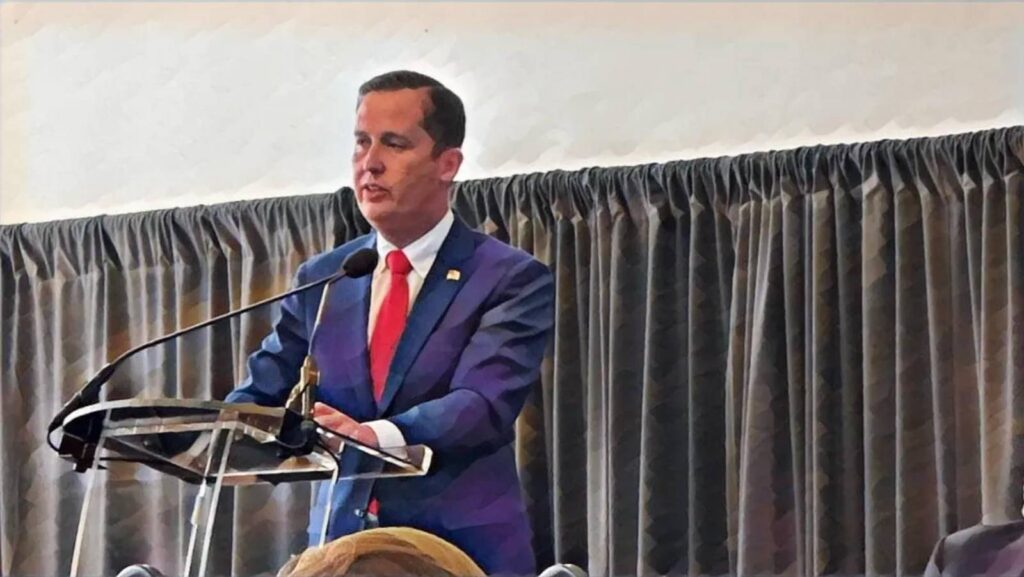
Sen. Daines: Central Asia Key to U.S. Strategic and Economic Future

Washington, D.C., November 6, 2025 — At the 10th-anniversary forum of the C5+1 platform — which brings together the United States and the five Central Asian nations (Kazakhstan, Kyrgyzstan, Tajikistan, Turkmenistan, and Uzbekistan) — ministers from the C5 countries and leading business figures from the region and the United States gathered to mark a decade of cooperation. The event was co-hosted by the U.S. Department of State and the U.S. Department of Commerce, underscoring Washington’s growing focus on regional economic and strategic engagement. U.S. officials played key roles throughout the program. Senator Steve Daines chaired a high-level panel discussion alongside Sergio Gor, U.S. Special Envoy for South and Central Asian Affairs; S. Paul Kapur, Assistant Secretary of State for South and Central Asian Affairs; Howard Lutnick, Secretary of Commerce; Christopher Landau, Deputy Secretary of State; William Nitt, Under Secretary of Commerce; and Richard Grenell, Special Presidential Envoy. During the forum’s investment-focused “Deal Zone,” Daines underscored what he described as Central Asia’s growing role in U.S. foreign policy, energy security, and technology supply chains — calling the region “one of the world’s great opportunities for the future.” His remarks reflected both optimism and a sense of urgency about expanding ties. “There are few parts of the world that offer the opportunity that Central Asia does,” he said. “Closer ties between our nations can bring greater economic opportunity to millions of people and secure some of the West’s most vulnerable supply chains.” According to Daines, the United States has already made significant progress through initiatives such as the C5+1 platform, the appointment of a Special Envoy for Central Asia, and the Critical Minerals Dialogue, alongside expanded trade missions and commercial partnerships. Together, he said, these efforts “provide the necessary forums through which the United States and Central Asia can build the capacity and trust necessary for long-term cooperation.” The tenth anniversary also served as a platform for outlining the economic and strategic priorities that will define the next phase of U.S.–Central Asia engagement. Central Asia’s Resource Potential Daines highlighted what he described as the region’s abundant resources — saying the five Central Asian nations “represent over 31 billion barrels of oil reserves, 250 trillion cubic feet of gas reserves, and over 40 percent of global uranium production.” “As we look to a new day for Europe, one wherein the continent is not dependent on a bellicose adversary for energy supplies,” he said, “Central Asian nations can be the partners of the future — providing consistent flows of resources necessary for baseload power without the concern that those energy imports will be weaponized.” He added that, even years after Russia’s invasion of Ukraine, the U.S. continues to import uranium from Russia, which he called a practice with “profound national security implications.” Central Asia, by contrast, “could provide a more reliable source of the element necessary to the development of artificial intelligence, data-centers, and other energy-intensive industries.” Critical Minerals and the Tech Economy Daines also emphasized the region’s strategic role in the global technology...

The Deal Zone: U.S. Secretary of Commerce Howard Lutnick Unveils Economic Agreements with Central Asia at C5+1 Summit

WASHINGTON, D.C. — November 2025 — The United States and Central Asian nations announced a record series of trade and investment agreements at the 10th-anniversary C5+1 Summit, signaling a new phase of cooperation in energy, infrastructure, technology, and artificial intelligence. The high-profile event at the Department of Commerce brought together ministers, ambassadors, and business leaders from across the region. Secretary of Commerce Howard Lutnick said the initiatives reflect Washington’s renewed commitment to long-term regional growth and partnership. “We’re advancing a clear strategy, which is reciprocal trade and strategic investment … the Department of Commerce is helping America and Central Asian firms connect, invest and grow together.” On digital investment, Lutnick said: “If you want to invest in digital, you know, America is going to be open for business. We are open for our great allies to be able to buy our best chips and have them in country, which is a complete change from the prior Biden administration. So if the country has the proper set of digital laws, we will then encourage our great companies to invest digitally in the C5+1 and grow digitally there.” He also described the C5+1 as central to U.S. engagement: “The C5+1 platform is a cornerstone of that strategy" and "We’re proud to see your new initiatives taking shape for energy diversification, logistics modernization, [and] emerging partnerships across the trans Caspian corridor.” The event then moved into the “Deal Zone,” where close to twenty agreements across the region were announced. The Times of Central Asia attended the ceremony and reports below the deals as they were introduced on stage. “These are not abstract projects. They are real investments, creating real jobs, extending connectivity and strengthening resilience from the Caspian all the way to California.” The deals, as announced in sequence during the session, are listed below.   Kazakhstan: Boeing with Air Astana Airlines — Purchase of up to 15 Boeing 787 Dreamliners, opening new North American routes representing Air Astana’s historical largest order. Cove Capital with the Government of Kazkhstan — $1 billion investment to develop the largest known untapped tungsten deposit in the world valued at more than $80 billion. Leidos with KazAero — Modernization of national air-traffic-control systems using Skyline X ATMS technology as well as to facilitate the deployment, testing and training of staff of all their air traffic control centers. John Deere and the Government of Kazakhstan — $3–5 billion agricultural-equipment agreement. 60% involves tractors and seeding equipment manufactured in Iowa, Illinois, and North Dakota. Citigroup with KTZ Locomotives + U.S. EXIM Bank — $1.6 billion export-credit financing for locomotive procurement. This was a follow up to the agreement signed at the recent United National General Assembly meeting, the largest ever locomotive deal in the history of the world. Colorado School of Mines, Education Testing Service, Arizona State University with the Kazakhstan Ministry of Science and Higher Education — Supporting the establishment of a university. The project will substantially contribute to the development of professional engineers and geoscientists with critical...

C5+1: Diplomats and Executives Define Investment Path

Before the historic White House meetings on November 6 between President Trump and the five Central Asian presidents, U.S. and regional diplomats and business leaders met at the Kennedy Center on the occasion of the C5+1 Business Forum, hosted by the U.S. Department of State, to launch a new chapter of cooperation, with a focus on strengthening commercial and investment ties in energy, finance, and manufacturing. Deputy Secretary of State Christopher Landau, who moderated the panel discussion, said economic engagement is returning to the center of U.S. foreign policy. “The purpose of foreign policy is to increase the prosperity of the American people by finding opportunities for mutually beneficial economic and commercial interchange,” he said. Executives from Chevron, Citi, Freedom Holding, and Uzbekistan’s UzAvtosanoat described how decades of partnership  had demonstrated the wisdom of making strategic investments in the region. These partnerships continue to reshape  the economic and financial landscape for the better.  Participants highlighted Central Asia’s economic stability, solid reserves, and consistent policies, and were confident in faster growth to be driven by increased capital flows and by regional projects like Kazakhstan’s Tengiz oil expansion. Both sides promised to translate diplomacy into dealmaking. Landau further noted that under President Trump and Secretary of State Marco Rubio, the State Department has elevated commercial diplomacy to a core mission. He stressed that mutual respect, win-win agreements, and consistent engagement are key to driving results. Central Asians have waited decades for this: action, not talk. Two-way trade and investment are now front and center. Chevron Points to Long-Term Energy Investment Chevron Corp. Chief Executive Mike Wirth said the company’s 30-year presence in Kazakhstan remains one of its largest international operations. Chevron was the first major U.S. investor to enter the country after independence and is now the biggest foreign investor. The US$ 48 billion Future Growth Project at Kazakhstan’s Tengiz oilfield, co-managed by Chevron and 50%-partner Tengizchevroil LLP, is up and running with expansion underway. “Our history is really founded on relationships and trust,” Wirth said. “The most enduring aspect of it (our work) is the respect and love that our American employees have for the culture and people of Kazakhstan.” He said more than 500 Kazakh employees have trained in Chevron operations worldwide, many of whom now hold senior roles in government and industry. Citi Expands Access to Global Capital Citi’s Managing Director Stephanie von Friedeburg outlined the bank’s activities in Central Asia, where it began operations more than three decades ago. Citi now serves about 800 corporate clients across the region, supporting private companies, governments and state-owned enterprises with strategic planning, capital issuance, and risk management services. The bank has arranged Eurobond sales for the Kyrgyz Republic and Tajikistan and handled more than US$40 billion in fundraising for Kazakhstan since 2014. In Uzbekistan, Citi has supported 19 capital-market transactions and advised the government on improving its credit rating. “We help countries understand how rating agencies look at them (and) how to improve their ratings,” von Friedeburg said. “That allows them...

Daines, Gor, Meredov Launch C5+1 Talks on Next-Gen U.S.–Central Asia Ties

Washington, D.C. — The United States and the five nations of Central Asia – Kazakhstan, Kyrgyzstan, Tajikistan, Turkmenistan and Uzbekistan – marked a decade of partnership on Thursday with an opening panel at the C5+1 Tenth Anniversary Business Conference hosted by the U.S. Department of State. U.S. Senator Steve Daines (Montana), Sergio Gor, the newly appointed U.S. Special Envoy for South and Central Asia and Ambassador to India and Rashid Meredov, Turkmenistan’s Foreign Minister kicked things off with a bold forward-looking vision centered on deeper economic cooperation, net two-way investment flows, and a bolstered U.S. commitment to the region. Held at the Kennedy Center’s REACH campus, the session brought together senior U.S. officials, and Central Asian leaders and private sector companies to deepen a decade of growing cooperation, building on Trump’s transactional approach and first term achievements. Celebrating a Decade of Cooperation U.S. Senator Steve Daines, who moderated the session, not only praised the C5+1 platform’s record of achievements since 2015 but went further. He called the anniversary “a momentous occasion for our nations” to move forward in friendship and a sense of pragmatism, anchored in growing commerce, new investments, cultural exchange, and security cooperation. Daines emphasized that relations with the C5 countries are “vitally important for our national security and prosperity,” adding that the event aimed to pave the way for stronger, results-driven partnerships. Turning to the next speaker, Ambassador Sergio Gor, Daines offered unusually personal remarks, describing him as “truly one of the closest confidants of President Trump.” He noted that “Mr. Gor’s nomination demonstrates President Trump and his administration’s commitment to fostering closer ties between all of our nations.” Daines expressed eagerness to work with  “Sergio and the rest of President Trump’s team” to build upon the successes of previous US-Central Asian relations. U.S. Envoy Stresses Renewed Engagement In his address, Ambassador Sergio Gor,  underscored the administration’s renewed commitment to the region. He recounted that he and Deputy Secretary of State Christopher Landau had visited Kazakhstan and Uzbekistan just last week, praising the hospitality and partnership shown by both governments. Gor extended his appreciation to Kazakhstan, which he noted had “recently become a sponsor of the Kennedy Center,” and thanked Ambassador Richard Grenell for hosting the forum. Gor emphasized that “this President is making this partnership a top priority,” adding that the focus on the five Central Asian nations “is something that has been ignored in past administrations.” According to Gor, President Trump “has made a commitment and has instructed every individual here within the U.S. government to make sure [Central Asia] gets the priority that it deserves.” He emphasized the need to ramp up energy cooperation, open new trade avenues, and secure supply chains for critical minerals. “We are committed to further developing Central Asia’s vast mineral wealth and advancing critical-mineral security,” Gor underscoring C5+1’s shift from dialogue to deliverables and mutual cooperation. He also previewed the White House leaders’ meeting and dinner scheduled for later in the day, noting that several “historic deals” in commerce...

Tokayev Secures $17B in U.S. Deals, Trump Hints at Kazakhstan Visit

The summit between the leaders of the United States and the five countries of Central Asia was the primary focus of Kazakh President Kassym-Jomart Tokayev’s visit to Washington. But even before the summit began, the Kazakh delegation secured a series of high-level meetings with U.S. political leaders and business executives, culminating in the signing of 29 bilateral agreements, valued at approximately $17 billion. Tokayev’s program in Washington began with meetings with Secretary of State Marco Rubio, Secretary of Commerce Howard Lutnick, and U.S. Special Representative for South and Central Asia Sergio Gor. Kazakhstan, Tokayev noted, maintains active political ties with the United States at multiple levels, and remains committed to a constructive dialogue to deepen its multifaceted cooperation with Washington. During the meeting, Kazakhstan and the United States signed a memorandum of understanding on cooperation in the field of critical minerals. The document was signed by Kazakhstan’s Minister of Industry and Construction, Yersayin Nagaspayev, and U.S. Secretary of Commerce Howard Lutnick. The agreement took immediate shape: Tau-Ken Samruk, a subsidiary of the sovereign wealth fund Samruk-Kazyna, and U.S. based Cove Capital agreed to jointly develop tungsten deposits in Kazakhstan’s Karaganda region. The investment is expected to total around $1.1 billion. Preparatory work on a final feasibility study for one of the projects is already underway. Kazakhstan’s tungsten reserves, estimated at 410,000 tons, are among the largest in the world. Tokayev later met with U.S. Representatives Jimmy Panetta, Carol Miller, Bill Huizenga, and Sydney Kamlager-Dove. Tokayev highlighted the role of the U.S. - Kazakhstan Friendship Group, chaired by Panetta, in deepening political dialogue, boosting economic ties, and strengthening bilateral relations. During the meeting, it was noted that the U.S. is one of Kazakhstan’s largest economic partners, accounting for $100 billion in cumulative investment, roughly 80% of all investment in Central Asia. Tokayev invited U.S. lawmakers to visit Kazakhstan to foster further cooperation. A similar invitation was extended to Senator Steve Daines, whom Tokayev described as “a true friend of Kazakhstan.” The senator is set to receive the Order of Dostyk (Friendship), First Class, for his contributions to bilateral relations. The Kazakh president also met with Chevron Chair and CEO Michael Wirth and Chaboy Leiko, President for the CIS and Central Asia at John Deere. Tokayev praised Chevron’s long-standing role in Kazakhstan’s oil and gas sector, including its projects at the Tengiz and Karachaganak fields. He confirmed Kazakhstan’s commitment to ongoing cooperation. John Deere was also lauded for its decision to localize production of agricultural machinery through a partnership with AgromashHolding KZ. Since production began in May, over 290 units have been assembled, with another 100 expected by year’s end. John Deere has signed a $2.5 billion strategic partnership agreement with Kazakhstan to produce at least 3,000 agricultural machines over five years. The agreement includes plans to establish at least three service centers and develop a workforce training system. Separately, Kazakhstan’s national carrier, Air Astana, signed a contract with Boeing for the purchase of up to 15 Boeing 787-9 Dreamliner aircraft. According...

From Washington to Samarkand: Mirziyoyev Proposes Hosting Next C5+1 Summit

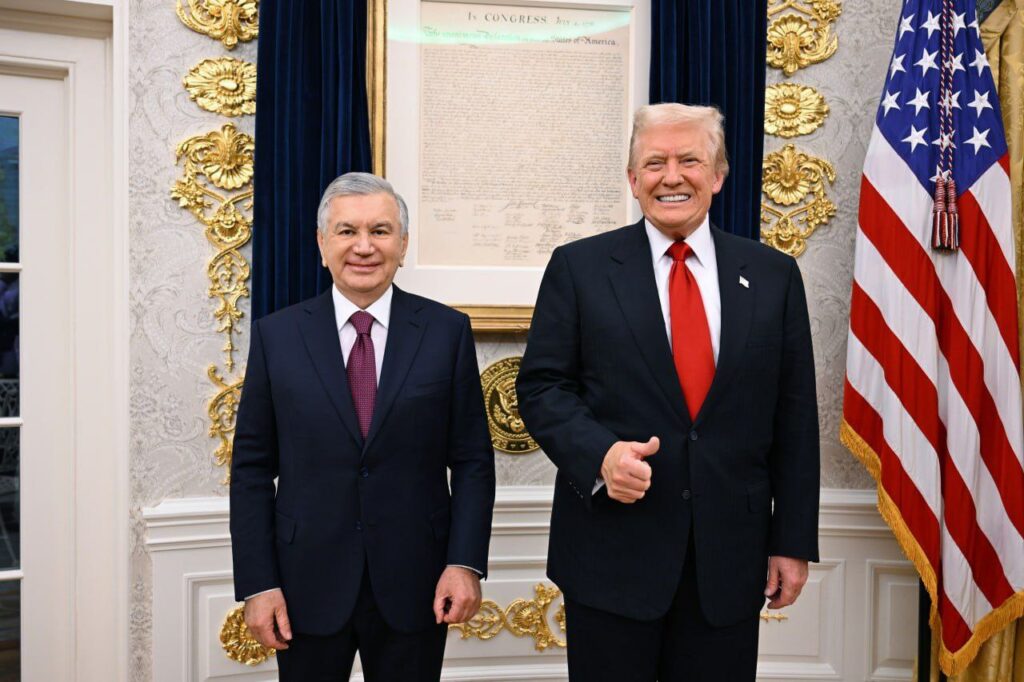
Uzbekistan's President Shavkat Mirziyoyev has been participating in the U.S.-Central Asia Summit in Washington, D.C., this week. Mirziyoyev was received at Andrews Air Force Base by U.S. Deputy Secretary of State Christopher Landau, American-Uzbek Chamber of Commerce Chairperson Carolyn Lamm, and other officials. The visit included high-level bilateral meetings and participation in the C5+1 summit alongside Central Asian leaders. On November 5, Mirziyoyev met with U.S. Representatives Bill Huizenga, Carol Miller, and Sydney Kamlager-Dove. The two sides discussed strengthening the strategic partnership and expanding interparliamentary cooperation. The Uzbek delegation highlighted the active role of the Congressional Caucus on Uzbekistan, which organizes annual “Uzbekistan Days” in the U.S. House of Representatives. That same day, the Mirziyoyev also met Senator Steve Daines, co-chair of the Central Asia Caucus in the U.S. Senate. According to the Uzbek presidential press service, both sides noted the “unprecedented level” of bilateral cooperation, including a surge in trade and joint projects involving American companies. They emphasized the importance of congressional support in implementing recently signed agreements, many of which have reached record volumes. The two sides also agreed to organize a business delegation from Montana to Uzbekistan. [caption id="attachment_38893" align="aligncenter" width="300"] @president.uz[/caption] On November 6, Mirziyoyev held a series of business-focused meetings. He met with John Jovanovic, head of the U.S. Export-Import Bank (Eximbank), to discuss financing major projects in energy, critical minerals, transport, agriculture, IT, and other sectors. Special attention was given to Eximbank’s potential role in modernizing Uzbekistan’s aircraft fleet and supplying Boeing aircraft. Both parties agreed to develop a long-term cooperation plan. Later that day, Mirziyoyev met with Ben Black, CEO of the U.S. International Development Finance Corporation (DFC), which mobilizes private capital for global development initiatives. According to the Uzbek side, discussions focused on energy, critical minerals, finance, transport, agriculture, and IT. The two sides agreed to accelerate the creation of a joint investment platform to support priority projects and small businesses. Uzbekistan also proposed opening a DFC regional office in Tashkent. Mirziyoyev also held talks with Shilpan Amin, global executive director of General Motors International. The discussion centered on long-term cooperation in the automotive sector. Over the past five years, GM has produced 1.6 million vehicles in Uzbekistan, which has become Chevrolet’s second-largest market after the United States and now leads sales in Central Asia and the CIS. Mirziyoyev then met with U.S. Secretary of Commerce Howard Lutnick. They discussed trade, investment, and joint economic projects. According to the Uzbek presidential press service, bilateral trade turnover has quadrupled in recent years, nearing $1 billion. Over 300 American companies are now operating in Uzbekistan. The sides noted expanding cooperation in agriculture, including contracts for soybean and cotton supplies and the introduction of U.S. drip irrigation technologies. At the conclusion of his business program, Mirziyoyev met with representatives of leading American companies, investment funds, and financial institutions. He emphasized that trade turnover with the United States had increased fourfold in eight years and outlined priority cooperation areas, including energy, critical minerals, transport infrastructure, and...