


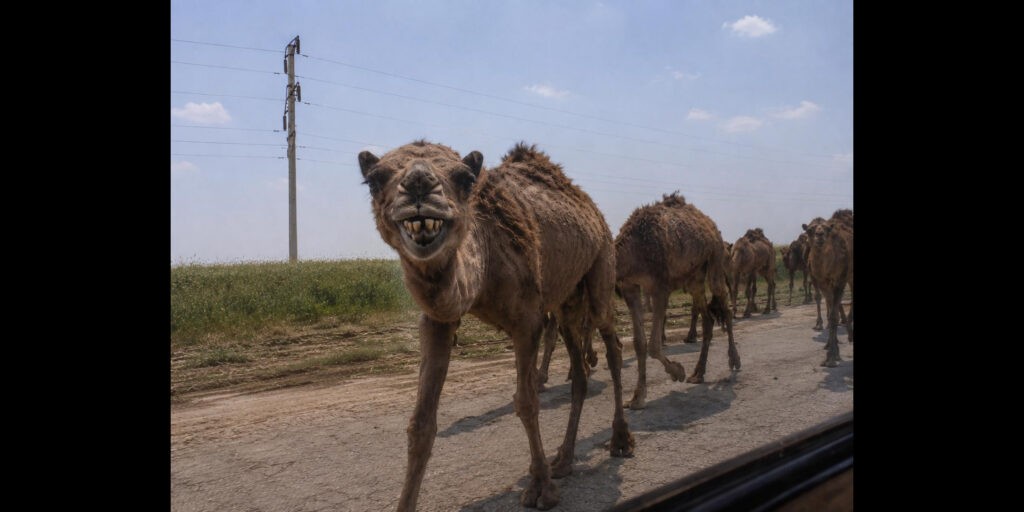
Camel Farming Expands Across Central Asia as Climate Pressures Mount
Camels are gaining renewed economic importance in Central Asia as farmers seek new markets for their milk and governments look for livestock better suited to increasingly dry conditions. In Kazakhstan, camel numbers are rising and producers are developing markets for shubat, a fermented camel milk drink, and powdered camel milk. Uzbekistan, meanwhile, has begun working with the Food and Agriculture Organization of the United Nations (FAO) to develop camel husbandry in arid areas. Kazakhstan has more than 322,000 camels, according to government figures for 2026, an increase of 2.4% from the previous year. Most are raised in the vast arid lands in the west and south of the country. Camels are also an important part of Turkmenistan’s livestock sector. The herd numbered about 345,000 animals in 2020. Bactrian camels have traditionally dominated Kazakhstan’s camel herd. They can withstand sharp fluctuations between extreme heat and severe cold. Over the past two decades, Kazakhstan has also seen an increase in one-humped Arvana camels, a breed of Turkmen origin known for high milk productivity. In Turkmenistan, the Arvana is the mainstay of the industry. These camels can produce milk even when grazing on sparse desert pastures, feeding on salt-tolerant vegetation and bitter wormwood that are of little use to many other types of livestock. Milk Brings in the Money Milk offers camel farmers a product that can be sold throughout the year and increasingly processed into higher-value goods. A female Kazakh Bactrian camel can produce up to about 1,750 liters of milk annually, although yields vary considerably between breeds and farming systems. The main product on the domestic market is shubat, but larger producers have also begun processing camel milk for markets far beyond the communities where it is produced. One of the most prominent examples is Daulet-Beket LLP in the Almaty region. When a camel-milk processing plant opened there in 2021, the farm had around 5,000 camels and was producing up to five tons of shubat a day. The plant was designed to produce as much as 30 tons of powdered camel milk a month, with products being shipped to Russia and China. Smaller farms show how strong local demand can also sustain the industry. The Suleymanov family in the Almaty region started with two camels. By the time they were profiled in 2021, their herd had grown to around 70 animals. Sixteen were being milked each day, producing 52 to 53 liters. The family said customers frequently bought their shubat before it even reached Almaty. Camel Farming in Turkmenistan Turkmen state media has also highlighted privately run camel farms. A 2024 report said farmer Serdarkuli Berdyliev in Ahal province kept 320 camels, including 140 females. Average milk yields were around six liters a day. Information about private agriculture in Turkmenistan largely comes through tightly controlled state media. Camel milk production continues to feature in official coverage alongside the country’s long-established herding traditions. Camel wool remains a marketable product, although its market is much smaller than that for milk. In Turkmenistan, it...
