• KGS/USD = 0.01144 0%
  • KZT/USD = 0.00205 0%
  • TJS/USD = 0.10731 0%
  • UZS/USD = 0.00008 0%
  • TMT/USD = 0.28490 0%
  • KGS/USD = 0.01144 0%
  • KZT/USD = 0.00205 0%
  • TJS/USD = 0.10731 0%
  • UZS/USD = 0.00008 0%
  • TMT/USD = 0.28490 0%
  • KGS/USD = 0.01144 0%
  • KZT/USD = 0.00205 0%
  • TJS/USD = 0.10731 0%
  • UZS/USD = 0.00008 0%
  • TMT/USD = 0.28490 0%
  • KGS/USD = 0.01144 0%
  • KZT/USD = 0.00205 0%
  • TJS/USD = 0.10731 0%
  • UZS/USD = 0.00008 0%
  • TMT/USD = 0.28490 0%
  • KGS/USD = 0.01144 0%
  • KZT/USD = 0.00205 0%
  • TJS/USD = 0.10731 0%
  • UZS/USD = 0.00008 0%
  • TMT/USD = 0.28490 0%
  • KGS/USD = 0.01144 0%
  • KZT/USD = 0.00205 0%
  • TJS/USD = 0.10731 0%
  • UZS/USD = 0.00008 0%
  • TMT/USD = 0.28490 0%
  • KGS/USD = 0.01144 0%
  • KZT/USD = 0.00205 0%
  • TJS/USD = 0.10731 0%
  • UZS/USD = 0.00008 0%
  • TMT/USD = 0.28490 0%
  • KGS/USD = 0.01144 0%
  • KZT/USD = 0.00205 0%
  • TJS/USD = 0.10731 0%
  • UZS/USD = 0.00008 0%
  • TMT/USD = 0.28490 0%

Viewing results 1 - 6 of 12

Kazakhstan’s Auto Market Enters an Era of Industrial Warfare

In 2026, Kazakhstan’s automotive market is undergoing a fundamental transformation. The era of unregulated gray-market imports is coming to an end, while large corporate players are replacing independent importers. The government is deliberately changing the rules of the game by introducing strict tax and administrative barriers to unofficial vehicle imports. Chinese automakers are the main beneficiaries of these changes, rapidly displacing traditional Western brands. For local industrial groups, deep localization is no longer optional but has become a prerequisite for survival, triggering competition for exclusive contracts with Chinese manufacturers and access to government incentives. Legislative Barriers For many years, private imports accounted for a significant share of the market. At their peak in 2023, more than 60% of cars were imported through gray-market schemes. However, new administrative measures are making this model economically unviable. First, a strict quantitative limit has been introduced: an individual may now import only one car per year. Second, importing cars older than three years has become financially prohibitive. The base rate for initial registration has risen to $4,250, while recycling fees have increased and a 15% customs duty applies. Third, technical requirements have been tightened. Vehicles must now comply with the Euro-5 standard, possess a Vehicle Design Safety Certificate (VDS), and be equipped with an emergency call system (EVAK). At the same time, importing vehicles less than three years old is permitted only for legal entities holding a Vehicle Type Approval (VTA) certificate. Additionally, the cancellation of VAT exemptions has stripped independent dealers of their price advantage. As a result, gray imports have declined steadily. They accounted for about 35% of the market in the first half of 2025 and approximately 30% by the end of the year. In 2026, China exerted additional pressure. From January 1, the so-called “180-day rule” took effect: vehicles registered for less than six months cannot be exported without the manufacturer’s permission. This has significantly complicated re-export schemes and slowed capital turnover. Consequently, the gray market has been largely paralysed, and retail sales have shifted under the control of official distributors. The Dominance of Chinese Brands The decline in gray imports has coincided with a broader global realignment of supply chains. Chinese automakers have been the primary beneficiaries. According to the Kazakhstan Automobile Union, by March 2026 Chinese brands had captured more than 40% of the domestic market. Six brands, Chery, Jetour, Changan, Haval, Geely and JAC, now rank among the top ten in sales. They are steadily displacing traditional leaders. A telling example is Toyota, which has fallen to tenth place after losing nearly 60% of its sales year on year. Meanwhile, the electric and hybrid segment is expanding rapidly: sales of China’s BYD have surged by almost 800%. This growth is driven not only by competitive pricing and technological innovation but also by large-scale investment in dealer infrastructure. Under current conditions, Western and Japanese brands appear unlikely to regain their former positions in the near term. Capitalisation in Service and Logistics The shift to a corporate model requires...

Kazakhstan Produced Over 171,000 Vehicles in 2025, Setting Industry Record

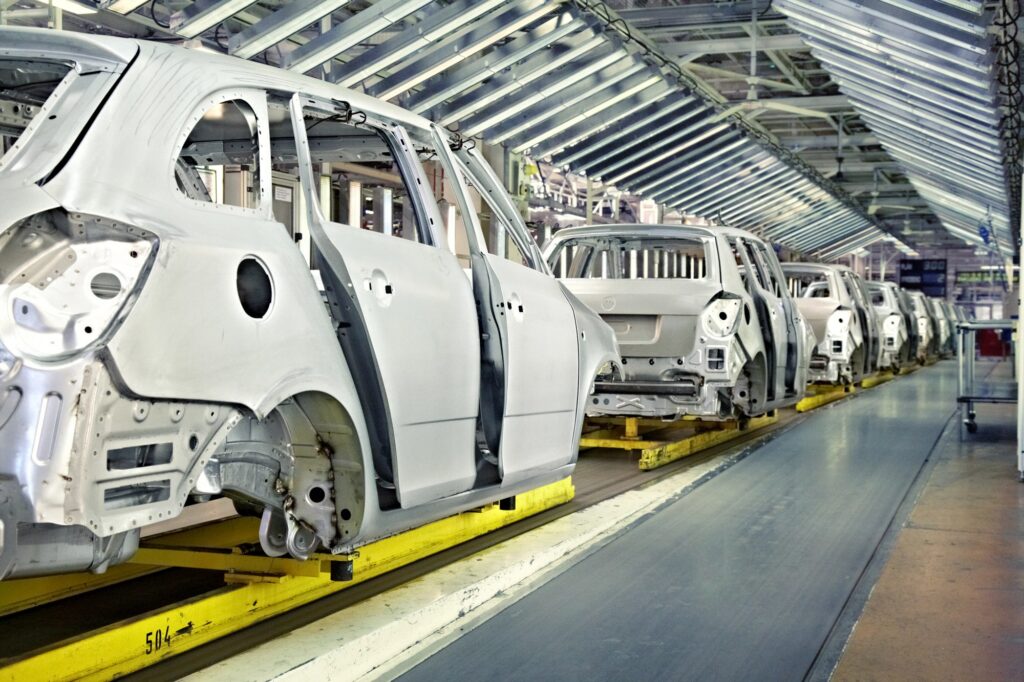
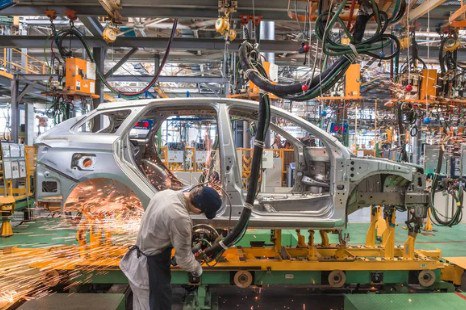
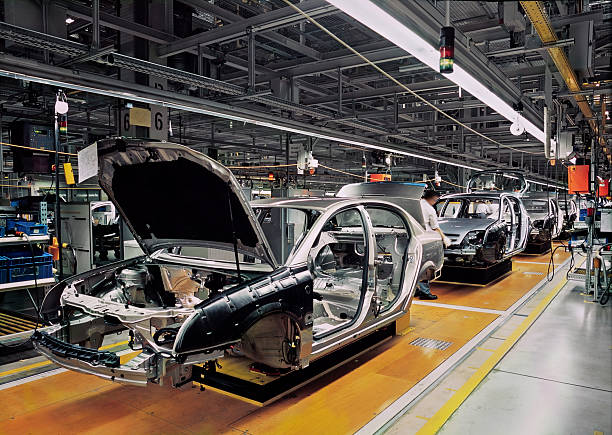
Kazakhstan’s automotive industry achieved record production levels in 2025, manufacturing more than 171,000 vehicles, an increase of nearly 18% compared to 2024. According to the Kazakhstan Automobile Union (KAU), a total of 171,144 vehicles, including passenger cars, buses, and trucks, were produced in 2025, with an estimated value exceeding $4.5 billion. By contrast, 145,290 vehicles were produced in 2024, valued at approximately $3.7 billion. “Last year's results were the best in the history of Kazakhstan’s automotive industry. By the end of 2025, the sector accounted for about 8% of the total manufacturing industry and held a dominant 41.7% share within the mechanical engineering sector,” the KAU stated. Investments in the sector topped $224 million in 2025, funding modernization of existing facilities, procurement of new equipment, and the launch of component manufacturing enterprises. New production facilities launched in Almaty and Kostanay, Astana Motors Manufacturing Kazakhstan and Kia Qazaqstan, contributed to job growth. Employment in the sector rose to 11,153 workers. Passenger cars continued to dominate production, with output rising 19% to 158,944 units in 2025. Commercial vehicle production (trucks and buses) reached 12,200 units, up 8% from the previous year. The Allur plant in Kostanay (SaryarkaAvtoProm) produced 92,100 passenger cars and trucks, up 1.8% year-on-year. The Kia Qazaqstan plant, which began operations in Kostanay in late 2025, produced 2,885 vehicles in just three months. Hyundai Trans Kazakhstan in Almaty increased production by 14.6%, manufacturing 52,040 passenger cars. Meanwhile, the new Astana Motors Manufacturing Kazakhstan plant in Almaty produced 15,180 cars within four months of launch. In Semey, SemAZ manufactured 3,728 commercial vehicles, down 5.3% from the previous year. In the town of Saran in Karaganda region, QazTehna boosted output by 69.1%, producing 2,665 commercial vehicles. KAMAZ Engineering in Kokshetau produced 1,426 trucks, a 6.4% decline. Hyundai Trans Almaty produced 754 commercial vehicles, and Daewoo Bus Kazakhstan in Semey assembled 341 buses. Uralskagromash produced 25 units of specialized equipment. “We are seeing growing confidence among auto component manufacturers, an influx of new investment, and the strengthening of Kazakh-made cars in the domestic market. Looking ahead, the priorities will be increasing localization and expanding the production base,” said Anar Makasheva, president of the QAO. As previously reported by The Times of Central Asia, the production record was already surpassed by December 1, 2025.

Kazakhstan’s Automotive Industry Approaches $4 Billion by End of 2025

Kazakhstan’s automotive industry posted record-breaking results in the first 11 months of 2025, with total production valued at nearly $4 billion, already exceeding the full-year total for 2024 by approximately $251 million. According to official data from the Bureau of National Statistics, the industry reached its highest monthly output in November, producing 22,580 units of automotive equipment valued at around $601 million. This marked a 25.5% year-on-year increase in production volume. A record number of passenger cars, trucks, buses, trailers, and specialized vehicles were manufactured during the month. In total, from January through November, Kazakhstan produced 146,163 vehicles worth approximately $3.9 billion, 15.7% more than during the same period in 2024. While physical output remained comparable to previous years, the increase in the total value of production, surpassing $3.6 billion in 2024 and $3.4 billion in 2023, indicates rising added value and growing complexity in domestic manufacturing processes. Automotive production accounted for 41.7% of Kazakhstan’s overall machine-building sector during the first 11 months of 2025, up from the previous year. According to the Kazakhstan Automobile Union (KAS), Allur, based in the Kostanay region, remained the industry leader with more than 79,000 vehicles produced during the reporting period. Southern Kazakhstan also saw strong growth, with over 48,000 cars assembled at the Hyundai Trans Kazakhstan and Hyundai Trans Almaty plants, up 26.7% year-on-year. In the Karaganda region, QazTehna expanded commercial vehicle output by more than 50%. However, production declined in eastern Kazakhstan, particularly in Semey, underscoring regional disparities in industry development. The Chevrolet Cobalt, Hyundai Tucson, Kia Sportage, Hyundai Mufasa, and Hyundai Elantra were the top models produced, and also ranked among the most popular vehicles on the domestic market. The production surge coincided with a revival in consumer demand. As previously reported by The Times of Central Asia, Kazakhstan set a new car sales record in November 2025, further supporting high factory utilization across the country.

KIA Qazaqstan Car Factory Launched in Kostanay

A new car assembly plant owned by KIA Motors Corporation has officially launched operations in northern Kazakhstan. Once fully operational, the KIA Qazaqstan facility will be capable of producing up to 70,000 vehicles annually. President Kassym-Jomart Tokayev inaugurated the plant via teleconference. The decision to construct the plant in the Kostanay region was made in 2023. Located in the Kostanay industrial zone, the facility occupies nearly 63 hectares. More than $245 million has been invested in the project, which has created 1,500 jobs. The primary markets for the vehicles will include Kazakhstan, other Central Asian countries, and member states of the Eurasian Economic Union. Speaking during the Astana-Kostanay teleconference, President Tokayev highlighted the strategic importance of the new plant to Kazakhstan’s machine-building sector. He noted that KIA Sportage production had already begun in Kostanay two years earlier, and that this new phase, launched under an agreement with KIA Corporation, marks the start of full-scale vehicle manufacturing. Tokayev thanked KIA Corporation President Ho-Sung Song and the company for their cooperation, emphasizing the value of high localization in production. He stressed that increasing the share of domestically sourced components is vital for Kazakhstan’s industrial development. Experts estimate that each job at the plant will create up to five or six additional jobs in logistics, services, and infrastructure. “This is not just a linear expansion, but a major step toward creating a full-fledged industrial cluster, where small and medium-sized enterprises will have real opportunities to grow,” Tokayev said. “This approach will strengthen the industrial capacity not only of the Kostanay region, but of the entire country. I am confident that the KIA plant will become a new growth point for Kazakhstan’s automotive industry.” He added that the plant's launch will support the renewal of Kazakhstan’s vehicle fleet and contribute to improved road safety. In 2024, the machine-building sector attracted over $540 million in investment, 2.5 times more than in 2023. Since the beginning of 2025, $331 million has already been invested in the industry. Last year, Kazakhstan produced over 145,000 vehicles, with assembly facilities operating in Astana, Almaty, Semey, Uralsk, Kokshetau, Kostanay, and Saran. The sector currently employs more than 10,000 people. “The launch of KIA Qazaqstan will give a powerful boost to the technological modernization of the entire industry. In the future, the company will be able to manufacture new car models and enter foreign markets with products that meet international standards. Kazakhstan is ready to contribute to the development of the global automotive industry,” Tokayev concluded. As previously reported by The Times of Central Asia, between January and July 2025, Kazakhstan produced 83,200 vehicles worth $21.4 billion, an increase of 16.7% compared to the same period last year.