• KGS/USD = 0.01144 0%
  • KZT/USD = 0.00191 -0%
  • TJS/USD = 0.10838 0.37%
  • UZS/USD = 0.00008 0%
  • TMT/USD = 0.28571 0.28%
  • KGS/USD = 0.01144 0%
  • KZT/USD = 0.00191 -0%
  • TJS/USD = 0.10838 0.37%
  • UZS/USD = 0.00008 0%
  • TMT/USD = 0.28571 0.28%
  • KGS/USD = 0.01144 0%
  • KZT/USD = 0.00191 -0%
  • TJS/USD = 0.10838 0.37%
  • UZS/USD = 0.00008 0%
  • TMT/USD = 0.28571 0.28%
  • KGS/USD = 0.01144 0%
  • KZT/USD = 0.00191 -0%
  • TJS/USD = 0.10838 0.37%
  • UZS/USD = 0.00008 0%
  • TMT/USD = 0.28571 0.28%
  • KGS/USD = 0.01144 0%
  • KZT/USD = 0.00191 -0%
  • TJS/USD = 0.10838 0.37%
  • UZS/USD = 0.00008 0%
  • TMT/USD = 0.28571 0.28%
  • KGS/USD = 0.01144 0%
  • KZT/USD = 0.00191 -0%
  • TJS/USD = 0.10838 0.37%
  • UZS/USD = 0.00008 0%
  • TMT/USD = 0.28571 0.28%
  • KGS/USD = 0.01144 0%
  • KZT/USD = 0.00191 -0%
  • TJS/USD = 0.10838 0.37%
  • UZS/USD = 0.00008 0%
  • TMT/USD = 0.28571 0.28%
  • KGS/USD = 0.01144 0%
  • KZT/USD = 0.00191 -0%
  • TJS/USD = 0.10838 0.37%
  • UZS/USD = 0.00008 0%
  • TMT/USD = 0.28571 0.28%
11 November 2025

Viewing results 1 - 6 of 11

Škoda Group Plans Joint Venture to Assemble Railway Vehicles in Uzbekistan

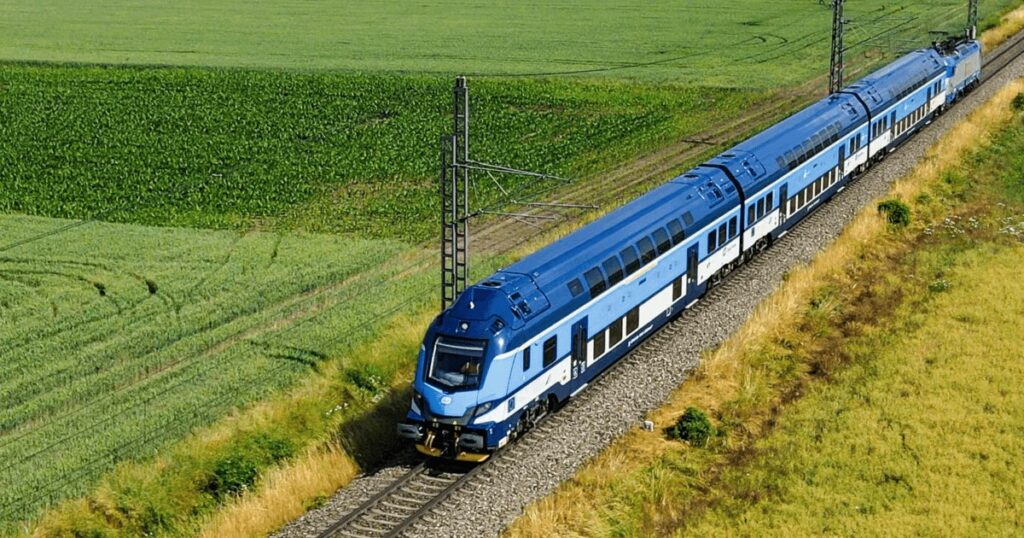
Czech manufacturer Škoda Group has announced plans to establish a joint venture in Uzbekistan to assemble railway transport vehicles, according to a statement from the company’s press service. The initiative was unveiled during President Shavkat Mirziyoyev’s official visit to Belgium on October 24, where he held a roundtable meeting with top European business leaders. Among the participants was Škoda Group CEO Petr Novotný, who described Central Asia as a highly promising market. Novotný presented the company’s strategic roadmap for entering Uzbekistan, backed by support from the European Commission and the European Investment Bank. The proposed joint venture will focus on three key areas: assembling railway vehicles under local conditions, providing long-term maintenance and repair services, and launching a Škoda Academy to train and upskill Uzbek specialists. “Each of the three areas represents a concrete step toward fulfilling the new Enhanced Partnership and Cooperation Agreement and the European Global Gateway strategy. We consider Uzbekistan to be a country opening up to new investments from European business partners. It has long been in our sights in terms of our strategic ambitions. We therefore very much welcome the opportunity to contribute to the development of sustainable transport, education, and technological modernization in the local market,” Novotný said. Škoda emphasized that the project aligns with Uzbekistan’s national goals to modernize its transport infrastructure and deepen partnerships with European industry. The company said that high-level discussions in Brussels underscored the strong potential for European technology and expertise to support the sustainable transformation of Uzbekistan’s railway sector.

Kazakhstan’s Automotive Industry Boosts Revenues by Over 50% in July

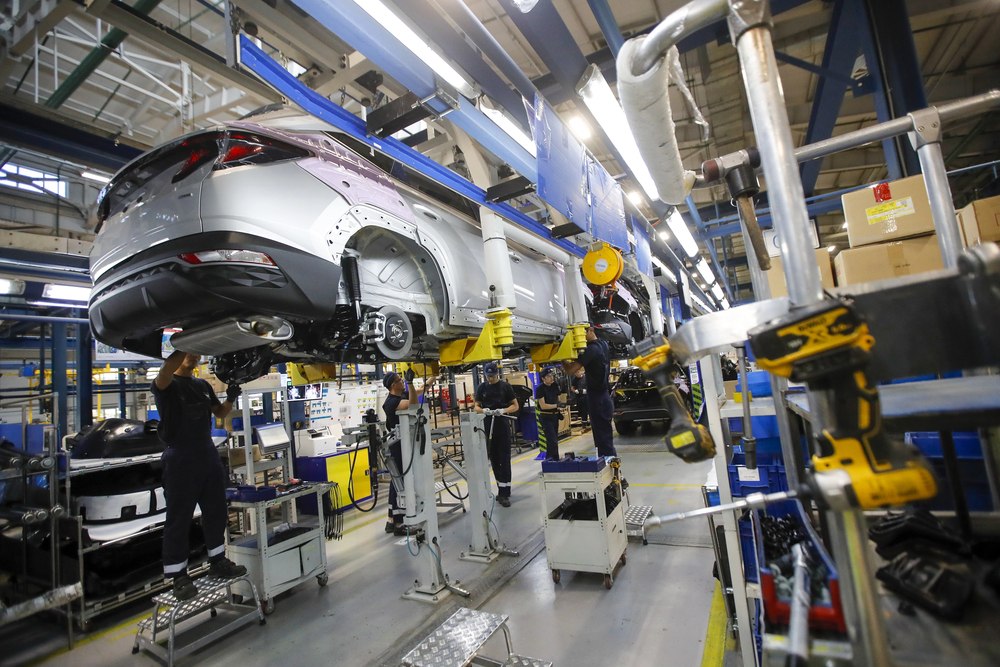
Kazakhstan’s automotive industry posted strong growth in July 2025, producing 11,700 vehicles valued at KZT 164.9 billion ($305.3 million), according to the Kazakhstan Automobile Union. This represents a 50.1% increase in production volume compared to July 2024. Data from the National Statistics Bureau shows that in July 2024, the country produced 7,800 vehicles worth KZT 100.9 billion ($186.8 million). Over the past year, the industry has not only expanded output but also significantly boosted revenue. From January to July 2025, Kazakhstan produced 83,200 vehicles valued at KZT 1.16 trillion ($21.4 billion), marking a 16.7% year-on-year increase. The automotive sector now accounts for 40.7% of the national engineering industry. Passenger cars led the growth, with 75,400 units produced, up 19% from the same period last year. Bus production also saw a 5.5% uptick, totaling more than 1,300 units. In contrast, truck output declined by 10.5% to 4,100 vehicles. Manufacturers also turned out 1,900 trailers and semi-trailers, along with 453 special-purpose vehicles. Regional Breakdown Kostanay remains the top manufacturing hub, producing 45,700 vehicles, a 6.9% increase, at Allur’s facilities. In Almaty, the Hyundai Trans Kazakhstan and Hyundai Trans Almaty plants reported a record 41.8% increase, assembling 31,200 vehicles. Production trends varied in other regions: Semey: Down 17.5% (2,400 units) Karaganda region (QazTehna): Up 28.1% Kokshetau (KAMAZ-Engineering): Up 34.6% Top Brands and Models The most produced brands from January to July were: Hyundai: 30,800 units Chevrolet: 16,500 Kia: 14,800 Jetour: 7,100 Jac: 5,600 Leading models included the Chevrolet Cobalt (13,600 units), Hyundai Tucson (11,900), Kia Sportage (nearly 7,000), Hyundai Elantra (4,900), and Hyundai Mufasa (4,600). Anar Makasheva, President of the Kazakhstani Automobile Union, credited the industry's progress to the expertise of more than 8,000 specialists: “The growth in production strengthens the position of the domestic automotive industry and opens up new opportunities for enterprises.” She also announced the upcoming launch of two new plants: the multi-brand Astana Motors Manufacturing Kazakhstan facility in Almaty and a new KIA production line in Kostanay. Together, these projects are expected to create over 5,000 jobs. As previously reported by The Times of Central Asia, Kazakhstan set a record for car sales in 2024. Domestic automotive production is projected to reach approximately 150,000 vehicles in 2025.

Kazakhstan’s Tax Cut on Old Vehicles Sparks Debate

Kazakhstan will implement an updated Tax Code beginning January 1, 2026, following its signing on July 18. Among the most debated changes is the revision of the transport tax for vehicles over 10 years old. Under the new code, owners of cars aged 11 to 20 years will receive a 30% tax discount, while those with vehicles older than 21 years will benefit from a 50% reduction. The decision stands in contrast to recent trends of increasing the overall tax burden. Yet experts warn that behind the populist optics lie significant environmental and road safety risks. A Political Gesture Ahead of Elections? Tax consultant Aidar Masatbaev views the reform as more political than economic in nature. “People complained that the tax on old cars was too high. Apparently, the advocates of a softer tax policy prevailed,” he said in an interview with inbusiness.kz. Masatbaev added that the measure is unlikely to meaningfully reduce the cost of car ownership. Instead, factors like rising fuel prices and declining real incomes play a more critical role. “The problem is that most people cannot afford to buy a new car,” he noted. Technical and Environmental Risks According to official statistics, more than 80% of Kazakhstan’s vehicle fleet comprises cars over 10 years old. Of these, over 2.2 million vehicles are more than 20 years old. These aging cars not only lag in efficiency but also pose serious safety risks. “Old cars are becoming a source of increased danger. Their consumables are more expensive, and the desire to save on repairs leads to risks on the roads,” Masatbaev warned. He cautioned that offering tax incentives could further entrench the use of obsolete, potentially unsafe vehicles. Additionally, the secondary car market lacks transparency. Many transactions go unregistered, reducing the effectiveness of fiscal measures and minimizing the impact of tax relief on state revenues. Masatbaev also questioned proposals to increase taxes on old vehicles, arguing that such moves would only heighten public dissatisfaction and strain the tax system. He recommended automating debt collection to improve efficiency, but acknowledged this could erode public trust in the tax authority. Kazakhstan’s Aging Car Fleet, by the Numbers According to Ranking.kz, in May 2025, Kazakhstan had 5.34 million registered passenger vehicles, an 11.4% increase from the previous year. Two-thirds, approximately 3.54 million cars, were more than 10 years old. While the share of aging vehicles has slightly declined (from 70.3% in April 2023 to 68.3% in April 2024), the number of cars aged 10-20 years rose 12.4% to 1.27 million. Vehicles over 20 years old now number 2.27 million, a 5.7% increase. The highest concentrations of old cars are found in the Almaty region (449,600), Almaty city (355,200), Karaganda (237,300), Zhambyl (236,200), Turkestan (235,000), and East Kazakhstan (220,100). Zhambyl holds the highest percentage of cars over 10 years old at 83%, followed by Zhetysu (79.3%) and Almaty (78.4%). While tax breaks may offer temporary relief to car owners, analysts argue that without a comprehensive strategy for renewing the vehicle fleet, promoting...

Proton Plans to Launch Electric Vehicle Production in Kazakhstan

Malaysian automotive manufacturer Proton Holdings Berhad is exploring the possibility of launching electric vehicle (EV) production in Kazakhstan. The announcement followed a meeting between Proton representatives and Yersayin Nagaspayev, Kazakhstan’s Minister of Industry and Construction. Proton, Malaysia’s largest automotive group, began operations in 1985 by producing cars under license from Mitsubishi. Since the late 1990s, the company has developed its own models, including the e.MAS line of electric vehicles, which it now proposes to localize in Kazakhstan. “The company presented plans to produce electric cars under the e.MAS brand. Discussions focused on potential production sites, export opportunities, and ensuring compliance with the technical and environmental standards of the Eurasian Economic Union (EAEU),” the Ministry of Industry and Construction reported. Following the meeting, the parties agreed to establish a joint working group tasked with developing a roadmap for localizing production and launching joint investment projects. Kazakhstan’s Growing Automotive Sector Minister Nagaspayev highlighted that more than 134,000 passenger cars were produced in Kazakhstan in 2024. Major international brands, including KIA, Hyundai, Chevrolet, JAC, and Jetour, are already manufacturing in the country. In 2025, two new automotive plants are scheduled to open in Almaty and Kostanay, with a combined annual capacity of up to 190,000 vehicles. The EV segment is currently the fastest-growing portion of the Kazakh automotive market. According to the Association of the Automobile Industry of Kazakhstan (AKAB), the number of registered electric vehicles grew from about 1,500 in early 2023 to 3,200 by the end of that year. As of May 2025, that figure has surged to 9,400. This rapid growth is attributed in part to a government policy introduced in 2023 that exempts citizens from import duties and taxes on one electric vehicle per person, valid through the end of 2025. Analysts also cite rising oil prices and the expansion of EV charging infrastructure as key drivers of demand. As previously reported by The Times of Central Asia, Kazakhstan is on track to produce approximately 150,000 vehicles in 2025, a record for the country.

Kazakhstan’s Automotive Industry to Produce Nearly 150,000 Vehicles in 2025

Kazakhstan's automotive industry is projected to manufacture approximately 149,000 vehicles in 2025, according to government forecasts. This figure represents a 5% increase over 2024, when the country produced 134,000 vehicles. "This year, the automotive industry is expected to increase domestic car production to 149,000 units, or 5% more than in 2024," the government stated. The growth is being driven by several new car assembly projects initiated in 2025, including the construction of the Astana Motors Manufacturing Kazakhstan multi-brand plant in Almaty. Located in Kazakhstan’s largest city, the Almaty facility will begin assembling Chinese automotive brands such as Chery, Haval, and Changan. The project has attracted investments totaling KZT 202 billion (approximately USD 397.3 million) and is expected to produce up to 120,000 cars annually while creating more than 3,600 jobs. The development is also expected to stimulate related industries, particularly in auto parts manufacturing. Meanwhile, in Kostanay, the construction of a new KIA Kazakhstan plant is underway. With a projected capacity of 70,000 vehicles per year, the project has received KZT 90 billion (USD 177 million) in investment and will employ around 1,500 workers. According to the Kazakhstan Automobile Union, 33,100 new vehicles were produced nationwide in the first quarter of 2025. Of these, 18,000 were assembled in Kostanay, 12,900 in Almaty, and the remainder in Semey, the Karaganda Region, Kokshetau, and other locations. In a sign of the sector’s vertical development, the Almaty Autoparts Production enterprise has commenced operations in the city’s industrial zone. It will manufacture up to 100,000 car seat sets annually for Hyundai vehicles. The government's report underscores the role of state policy in advancing Kazakhstan’s machine-building industry, particularly through the formation of investment clusters. “Of the 17 major projects that form the industrial backbone of the economy, nine are overseen by the Ministry of Industry and Construction,” the report noted. The government’s focus on investment and localization is bearing fruit. In 2023, KZT 115 billion (USD 226 million) was invested in machine building, a figure that more than doubled in 2024 to KZT 282 billion (USD 554 million). Currently, over 4,000 enterprises are active in Kazakhstan’s machine-building sector. These include 66 large companies, 105 medium-sized firms, and 3,998 small businesses. As previously reported by The Times of Central Asia, the country set a new record for new car sales in 2024.

Car Multimedia System Plant Launched in Almaty

The opening ceremony of the Kazakhstan Mobility Engineering Plant took place on October 30 in Almaty, Kazakhstan’s largest city. The new production facility is part of Astana Motors, Kazakhstan’s major automobile distribution and manufacturing company. In April last year, Astana Motors signed a memorandum of cooperation with South Korea’s Motrex Co Ltd., receiving the right to produce multimedia devices in Kazakhstan using the Korean partner's technology. The plant was launched in September 2024, and the first batch of its audio and video multimedia systems has already been delivered to the Hyundai Trans Kazakhstan plant for installation on Tucson and Elantra cars. Speaking at the opening ceremony, Minister of Industry and Construction of Kazakhstan, Kanat Sharlapayev, emphasized that multimedia systems are high-precision production requiring first-class specialists' competencies in digital technologies. “Our key goal is to create a production cycle with a high share of [production] localization [inside Kazakhstan]. And we will make maximum use of domestic raw materials and components. That is why Kazakhstan Mobility Engineering is important for the country.” Motrex CEO Junseon Kim also stressed the importance of local production: "Our goal is to closely cooperate with our partners to increase local production of components and leadership in the assembly of multimedia devices. The partnership will allow us to respond quickly to local needs, create jobs, and support Kazakhstan's economic growth." The Kazakhstan Mobility Engineering plant is part of the Astana Motors Engineering Technopark, constructed in the Industrial Zone of Almaty to produce automobile components. The technopark will also open a car seat manufacturing plant, a rubber and plastic products manufacturing plant, and a logistics hub. Its products will be supplied to the Hyundai Trans Kazakhstan plant and other automobile plants in Kazakhstan. Astana Motors has also signed a memorandum with Sanico Electronics, a South Korean manufacturer, to obtain the right to produce motherboards and cases for multimedia systems. In other news, Kazakhstan’s national company, Kazakh Invest, and KIA Qazaqstan discussed projects to produce original South Korean auto components for KIA cars in Kazakhstan. The parties considered cooperating with South Korean companies SJG Sejong and Seoyon E-Hwa, the original manufacturers of seats, bumpers, mufflers, and other components for KIA cars. Representatives of the companies expressed interest in implementing investment projects in Kazakhstan, emphasizing the strategic importance of localizing the production of automotive components in the country. A full-cycle plant to produce KIA cars is currently under construction in Kazakhstan’s Kostanay. The new plant will cost about $200 million and have a production capacity of 70,000 vehicles annually. This project is KIA's first direct investment in a joint venture to construct a plant outside Korea. At a government meeting on October 29, Minister of Industry and Construction Sharlapayev said that from January to September 2024, Kazakhstan produced more than 82,000 cars.