
• KZT/USD = 0.00227
  • TJS/USD = 0.10820
  • UZS/USD = 0.00009
  • TMT/USD = 0.29850
  • KZT/USD = 0.00227
  • TJS/USD = 0.10820
  • UZS/USD = 0.00009
  • TMT/USD = 0.29850
  • KZT/USD = 0.00227
  • TJS/USD = 0.10820
  • UZS/USD = 0.00009
  • TMT/USD = 0.29850
  • KZT/USD = 0.00227
  • TJS/USD = 0.10820
  • UZS/USD = 0.00009
  • TMT/USD = 0.29850
  • KZT/USD = 0.00227
  • TJS/USD = 0.10820
  • UZS/USD = 0.00009
  • TMT/USD = 0.29850
  • KZT/USD = 0.00227
  • TJS/USD = 0.10820
  • UZS/USD = 0.00009
  • TMT/USD = 0.29850
  • KZT/USD = 0.00227
  • TJS/USD = 0.10820
  • UZS/USD = 0.00009
  • TMT/USD = 0.29850
  • KZT/USD = 0.00227
  • TJS/USD = 0.10820
  • UZS/USD = 0.00009
  • TMT/USD = 0.29850
30 September 2026

Viewing results 1 - 6 of 2

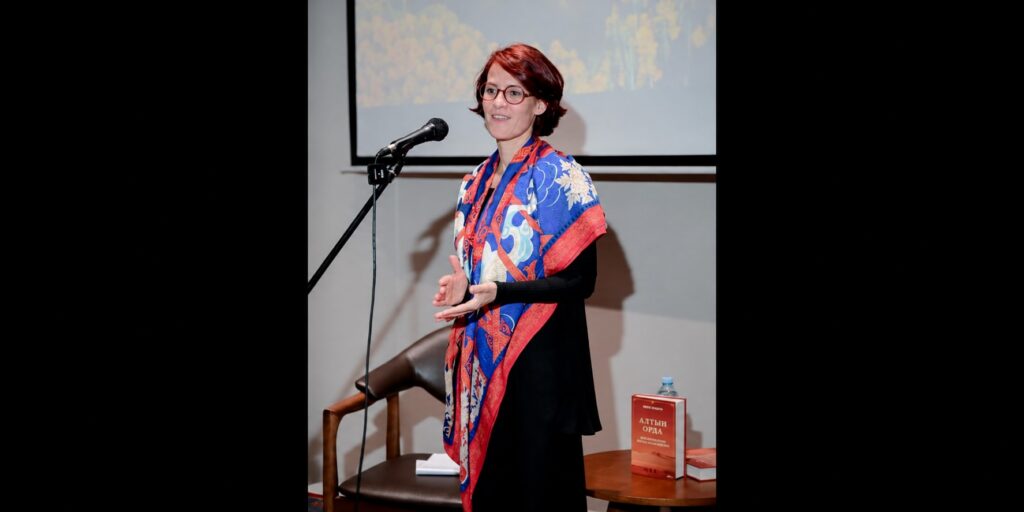
How the Golden Horde Changed Eurasia: An Interview With Marie Favereau

French historian Marie Favereau, a professor of medieval history at Paris Nanterre University, has spent more than two decades studying the Golden Horde and its place in Eurasian history. The Horde developed from territories assigned to Jochi, Genghis Khan’s eldest son. Her book, The Horde: How the Mongols Changed the World, challenges the familiar image of nomadic societies as forces of destruction. It describes a sophisticated political system in which nomadic rulers built and restored cities while maintaining complex economic and diplomatic relations. Favereau visited Kazakhstan for the launch of the book’s Kazakh translation, published by Steppe & World Publishing with support from the French Embassy. The 1,000-copy edition was presented at the National Academy of Sciences in Almaty and at Maqsut Narikbayev University in Astana. At Cassackia Art Space in Astana, Favereau spoke with The Times of Central Asia about why she views the movement of the Horde’s political center toward Central Asia as adaptation rather than decline and how new research is changing perceptions of its legacy in Kazakhstan. She describes Jochi as a figure who changed the Mongol Empire’s geopolitical order, while portraying the relationship between Golden Horde ruler Tokhtamysh and the Central Asian conqueror Timur, also known as Tamerlane, as more complicated than a simple conflict. TCA: How did you begin researching the Golden Horde? Marie Favereau: I started in Paris when I was a student. I was preparing my master’s thesis during my third year at the Sorbonne, one of the main universities in Paris. At that time, I suddenly learned about the Golden Horde, and it immediately caught my interest. I was studying several languages. I was learning Arabic, I already knew some Russian, and I had also started learning Turkish. So I thought, “Wow, this is a topic for me.” However, there were very few books available in French, so it was quite difficult to conduct research. My supervisor told me that I needed to travel to other countries because there was not enough material available in France. For my master’s thesis, I studied the sources of the Golden Horde, as well as Soviet scholarship and the way the Golden Horde was presented in Soviet historical works. That was the very beginning. It was more than twenty years ago. Since then, I have continued to discover new research interests, new sources, and new questions, and I am still working on the subject today. TCA: What difficulties did you encounter when working with historical sources? Favereau: There were several difficulties. One was language, and another was the different writing systems and scripts used in the sources. There was also a lack of academic supervision. When I was doing my master’s degree, I did not have someone who could consistently guide me in this field. Another challenge was that I had never been to Central Asia. I knew very little about the region. At that time, I did not have a clear image of the area in my mind, so I felt that I needed to travel there. But...

Berlin Archive Reveals Rare Records of Uzbekistan’s Past

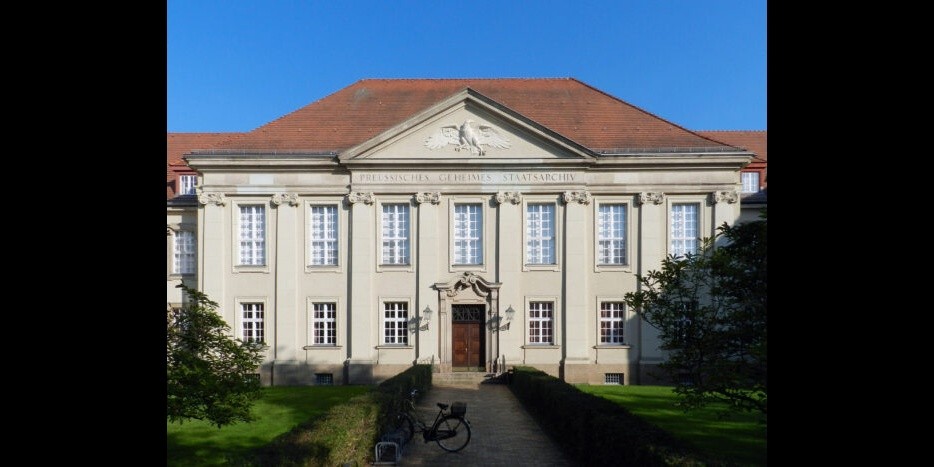
A centuries-old archive in Berlin holds documents on Central Asia from two pivotal periods: the Russian Empire’s expansion into Turkestan in the second half of the 19th century and the first decades of Soviet rule. The materials include diplomatic correspondence and German accounts of the Turkestan-Siberian Railway. Other papers concern Soviet policies toward nomadic communities and a student from Tashkent who lived in Germany in the early 1930s. The materials are held by the Prussian Secret State Archives (Geheimes Staatsarchiv Preußischer Kulturbesitz, GStA PK) in Berlin. Muhayyo Isakova, a senior researcher at the National Archive of Uzbekistan, identified documents concerning present-day Uzbekistan and neighboring territories. Despite its name, GStA PK is a public archive. Its origins date to the 13th century, and it has occupied its purpose-built home in Berlin’s Dahlem district since 1924. One of the earliest groups of documents dates to 1865, when the Russian Empire was expanding into Central Asia. Russian forces captured Tashkent in June of that year. In 1867, the city became the capital of the newly established Turkestan Governor-Generalship. The archive preserves official correspondence involving Karl Hermann von Thile, then an undersecretary in the Prussian Foreign Ministry.. The documents describe political developments in Turkestan and related diplomatic affairs, offering a Prussian perspective on Russia’s expansion into Central Asia. Other materials date from the early Soviet period. German publicist and researcher Georg Cleinow traveled through Central Asia in 1928 and 1929. He visited Tashkent and Bukhara before continuing through Semirechye to Alma-Ata. Cleinow paid particular attention to the Turkestan-Siberian Railway, a major infrastructure project of the early Soviet period. His reports addressed the railway’s geopolitical significance and Soviet policies to settle nomadic communities. They also covered land and water reforms and national-territorial delimitation. Cleinow later examined the railway in his book Roter Imperialismus: Eine Studie über die Verkehrsprobleme der Sowjetunion, published in Berlin by Julius Springer in 1931. Two sections deal directly with the railway, including Die Turksib als soziales Experiment (The Turksib as a Social Experiment). The papers of German Orientalist Carl Heinrich Becker, who was Prussia’s minister of culture, contain correspondence about Vali Kayum Khan, a Tashkent native who came to Germany to study in 1922. One letter, dated March 30, 1933, was written by Becker’s son Walter shortly after his father’s death. It says Kayum Khan had previously received Becker’s support but was left in serious financial difficulty after the Nazis came to power. Walter Becker sought funding for Kayum Khan and explored how he might continue his education outside Germany. The letter mentions an appeal to Stephen Duggan, a founder of the Institute of International Education, for help arranging further study in the United States. Kayum Khan’s activities during World War II make the 1933 letter especially notable: he worked with Nazi Germany and led the United States Turkestan Committee. The correspondence offers a little-known view of Central Asia’s connections with German academic circles in the 1920s and 1930s. Alongside the 19th-century diplomatic reports, Cleinow’s papers show how German officials and researchers viewed the region during two different...