• KZT/USD = 0.00219
  • TJS/USD = 0.10860
  • UZS/USD = 0.00008
  • TMT/USD = 0.29850
  • KZT/USD = 0.00219
  • TJS/USD = 0.10860
  • UZS/USD = 0.00008
  • TMT/USD = 0.29850
  • KZT/USD = 0.00219
  • TJS/USD = 0.10860
  • UZS/USD = 0.00008
  • TMT/USD = 0.29850
  • KZT/USD = 0.00219
  • TJS/USD = 0.10860
  • UZS/USD = 0.00008
  • TMT/USD = 0.29850
  • KZT/USD = 0.00219
  • TJS/USD = 0.10860
  • UZS/USD = 0.00008
  • TMT/USD = 0.29850
  • KZT/USD = 0.00219
  • TJS/USD = 0.10860
  • UZS/USD = 0.00008
  • TMT/USD = 0.29850
  • KZT/USD = 0.00219
  • TJS/USD = 0.10860
  • UZS/USD = 0.00008
  • TMT/USD = 0.29850
  • KZT/USD = 0.00219
  • TJS/USD = 0.10860
  • UZS/USD = 0.00008
  • TMT/USD = 0.29850
20 November 2026

Viewing results 1 - 6 of 3

Kazakhstan Uses AI-Quryltai to Draft Child Safety Bill

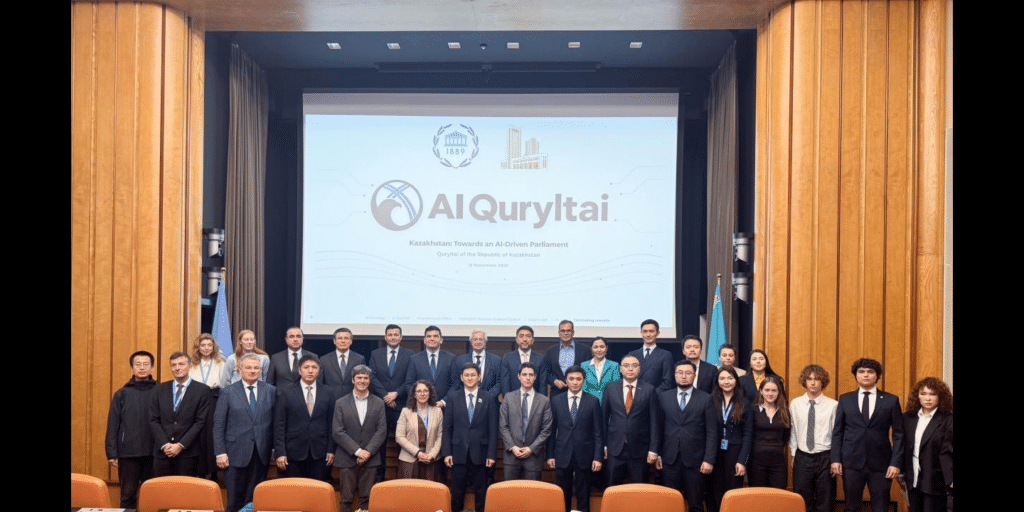
Lawmakers in the Kurultai, Kazakhstan’s parliament, drafted legislation with AI assistance for the first time, Deputy Speaker Dinara Zakiyeva said on November 16. They used the AI-Quryltai platform to prepare the bill “On Children’s Digital and Information Safety.” It would require digital platforms to offer parental controls and restrict children’s access to unlabeled or unverified games and apps. The platform helped lawmakers analyze public submissions and feedback from parents and experts, as well as review how other countries protect children online. Zakiyeva said its model trained for legal analysis draws on a database of more than 800,000 laws and regulations. Lawmakers used it to check proposed changes against existing rules and identify potential conflicts. They drafted more than 120 amendments while working on the bill. Zakiyeva did not specify how many were based on AI suggestions. Lawmakers reviewed and refined every suggestion from the platform with help from outside lawyers and digital safety specialists, according to the Kurultai’s press service. Yekaterina Smyshlyayeva, who heads the Kurultai’s AI lab, said parliament also plans to use the platform to assess the likely effects of proposed rules and track how they are applied once adopted. A few days before Zakiyeva’s announcement, a delegation from Kazakhstan presented AI-Quryltai in Geneva alongside parliament’s 2027–2029 Digital Transformation Strategy. The platform builds on e-Quryltai, parliament’s existing digital system, and is also designed to prepare briefings for lawmakers and parliamentary staff. It is still in a pilot phase, with the AI lab testing individual features. Kazakhstan already uses AI to review applications for targeted social assistance. The system analyzes photos and videos of applicants’ homes and makes recommendations about whether a household needs assistance. On October 16, the government said it had used the technology to process more than 183,000 applications. Final decisions on benefits still follow the standard process. Separately, Kazakhstan’s Ministry of Justice nnounced plans in October 2025 for an AI assistant to help draft laws and regulations. The ministry said the tool would review legal practices in other countries and flag provisions that might conflict with the Constitution.


Kazakhstan’s Child Online Safety Bill Proposes Restrictions on Games and Apps

Kazakhstan is proposing mandatory government checks for online games and apps before children can download them. A new bill would also restrict online shopping by minors. Dinara Zakiyeva, deputy speaker of the Kurultai, Kazakhstan’s parliament, outlined the bill, “On Children’s Digital and Information Safety,” at a parliamentary session with government officials on November 16, 2026. Platforms would have to label their games and apps with information about potentially risky features. A game’s description, for example, would have to say whether players can message each other or make in-game purchases. All digital platforms would be required to offer parental controls and filter the content children can access. Unlabeled or unverified games and apps would be hidden from children. The bill calls for monitoring of online platforms to ensure they comply with the new requirements. If a digital product poses a threat to children, authorities could require its removal or block access to it. Platform owners could be held liable for violations. For purchases by children on online marketplaces, Zakiyeva’s published remarks did not specify what the rules would require of retailers or how they would be enforced. The bill also proposes photo identification cards for children. Zakiyeva said the cards would verify children’s identities and help protect their rights online. Her remarks did not explain how individual websites or apps would use the cards. The 2018 Law on the Protection of Children from Information Harmful to Their Health and Development establishes six age categories for content. It also provides for measures to limit children’s online access to material prohibited for minors. However, websites other than online publications are exempt from its requirement to display age-rating labels. The proposed legislation would add mandatory government checks for digital products, including games and apps. The Children of Kazakhstan Concept for 2026–2030, which the government approved on January 29, 2026, calls for updating the law. It envisages special SIM cards registered to children that would automatically restrict access to entertainment content at night. The government also plans to recommend that mobile carriers include parental controls in their service plans. For the 2023 Kazakhstan Kids Online study, the United Nations Children’s Fund and Kazakhstan’s Ministry of Education surveyed 1,201 children ages 9 to 17 across all regions of the country. Nearly half (46%) said they first went online between the ages of 5 and 8. Among children ages 9 and 10, 60% reported having their own accounts on social media and gaming platforms, as did 66% of children ages 11 and 12. Most of these profiles were publicly visible. Zakiyeva said this was the first bill drafted with the help of AI-Quryltai, an AI platform developed in Kazakhstan. Lawmakers used it to analyze feedback from parents and international approaches to protecting children online. The system drew on a database of more than 800,000 laws and regulations. Its proposals were reviewed and revised by lawmakers working with lawyers and digital safety specialists. More than 120 amendments were drafted during work on the bill, Zakiyeva said. It is...

Uzbekistan Weighs Social Media Restrictions for Children Under 16

Uzbekistan is considering introducing legal restrictions on social media use by children under the age of 16, adding its name to a growing list of Central Asian countries debating how to protect minors in the digital age. According to Gazeta.uz, the proposal was announced by Minister of Preschool and School Education E’zozxon Karimova following an event at the ministry on June 26. Speaking to the publication, Karimova said discussions had already taken place with members of parliament and the Senate, and that a draft law could soon be prepared for public consultation. “We are currently thinking about this issue. We have discussed it with our deputies and senators. We want to prepare a draft law and submit it for public discussion. I believe we should also have such regulations,” Karimova said. The proposal comes as governments across the region grapple with concerns over children’s exposure to harmful online content, cyberbullying, and excessive screen time. Karimova stressed that the objective is not to remove smartphones from children’s lives but to encourage responsible use through legal safeguards and stronger enforcement. “We live in the age of technology. We cannot simply take phones away from our children. Of course, they need them. But there should also be a culture and limits to their use,” she said. She noted that Uzbekistan already requires students to leave their phones before entering school and has rules governing student behavior. However, she acknowledged that enforcement remains inconsistent. “These rules work in some places and not in others. We now want to strengthen enforcement and legally restrict children under the age of 16 from using social media,” Karimova added. The debate mirrors similar discussions elsewhere in Central Asia. Earlier this year, The Times of Central Asia reported that Kazakhstan was considering legislative amendments to prohibit children under 16 from registering on social media platforms, while exempting messaging services. Lawmakers in Kazakhstan say the proposals are intended to shield children from harmful content, including violence and pornography, while reducing cyberbullying. According to Kazakhstani officials, approximately 200 cases of bullying and cyberbullying involving children had already been recorded in 2025, prompting calls for tighter regulation. The government has also been exploring age verification mechanisms, including SIM card registration for younger users, alongside expanded digital literacy education in schools. A similar debate emerged in neighboring Tajikistan last year. As previously reported by The Times of Central Asia, lawmakers proposed banning social media access for children under 14 and requiring written parental consent for teenagers aged 14 to 17. While supporters argued that stricter controls were necessary to protect children from harmful online content, critics maintained that digital literacy, parental involvement, and education would be more effective than blanket restrictions. Uzbekistan has not yet published a draft law, and Karimova indicated that any proposal would first undergo public discussion before being submitted for legislative consideration.
