
• KGS/USD = 0.01144 0%
  • KZT/USD = 0.00200 0%
  • TJS/USD = 0.10528 -0.19%
  • UZS/USD = 0.00008 0%
  • TMT/USD = 0.28571 0%
  • KGS/USD = 0.01144 0%
  • KZT/USD = 0.00200 0%
  • TJS/USD = 0.10528 -0.19%
  • UZS/USD = 0.00008 0%
  • TMT/USD = 0.28571 0%
  • KGS/USD = 0.01144 0%
  • KZT/USD = 0.00200 0%
  • TJS/USD = 0.10528 -0.19%
  • UZS/USD = 0.00008 0%
  • TMT/USD = 0.28571 0%
  • KGS/USD = 0.01144 0%
  • KZT/USD = 0.00200 0%
  • TJS/USD = 0.10528 -0.19%
  • UZS/USD = 0.00008 0%
  • TMT/USD = 0.28571 0%
  • KGS/USD = 0.01144 0%
  • KZT/USD = 0.00200 0%
  • TJS/USD = 0.10528 -0.19%
  • UZS/USD = 0.00008 0%
  • TMT/USD = 0.28571 0%
  • KGS/USD = 0.01144 0%
  • KZT/USD = 0.00200 0%
  • TJS/USD = 0.10528 -0.19%
  • UZS/USD = 0.00008 0%
  • TMT/USD = 0.28571 0%
  • KGS/USD = 0.01144 0%
  • KZT/USD = 0.00200 0%
  • TJS/USD = 0.10528 -0.19%
  • UZS/USD = 0.00008 0%
  • TMT/USD = 0.28571 0%
  • KGS/USD = 0.01144 0%
  • KZT/USD = 0.00200 0%
  • TJS/USD = 0.10528 -0.19%
  • UZS/USD = 0.00008 0%
  • TMT/USD = 0.28571 0%
26 February 2026

Viewing results 1 - 6 of 2

Kazakhstan Looks East: What’s at Stake at the SCO Summit in China?

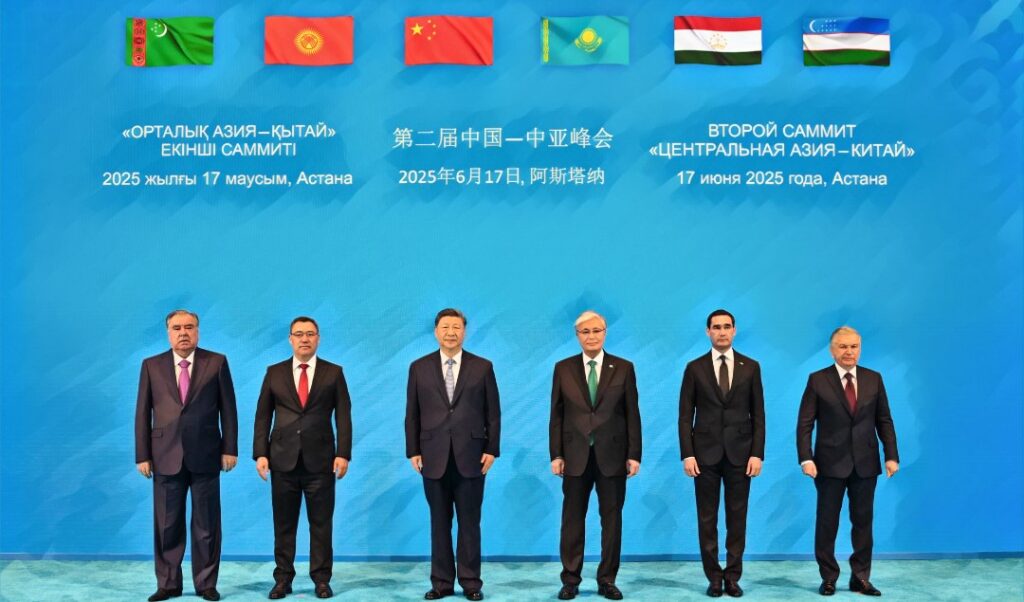
On Saturday, Kazakhstan’s President, Kassym-Jomart Tokayev, along with other Central Asian leaders, will travel to China for the Shanghai Cooperation Organization (SCO) summit. The visit comes amid China’s accelerating influence in the region, highlighting the summit’s growing geopolitical significance. Four Strategic Days in China Tokayev will visit China from August 30 to September 3 at the invitation of President Xi Jinping. High-level talks are planned, during which the two leaders will discuss deepening the Kazakh-Chinese strategic partnership. Tokayev will also attend the SCO Plus summit in Tianjin from August 31 to September 1. On September 2, he will speak at a meeting of the Kazakhstan-China Business Council in Beijing and hold talks with the heads of major Chinese companies. On September 3, he will take part in commemorations marking the 80th anniversary of Victory in World War II. Who Will Attend the Tianjin Summit? This year’s gathering marks the 25th anniversary of the SCO. Leaders from over 20 countries and representatives from ten international organizations are expected to participate. The SCO currently includes ten member states: Kazakhstan, China, Kyrgyzstan, Belarus, India, Iran, Pakistan, Russia, Tajikistan, and Uzbekistan. Particular attention is focused on Indian Prime Minister Narendra Modi, whose visit to China will be his first in seven years. Russian President Vladimir Putin also plans to attend. Leaders from Turkey, Malaysia, Indonesia, Mongolia, Azerbaijan, Armenia, Turkmenistan, and several other countries are also expected. According to China’s Foreign Ministry, this will be the largest SCO summit since the organization’s inception. Why Tianjin? A Strategic Choice Chinese analysts describe Tianjin as a strategic hub for the Belt and Road Initiative. They note its position where sea and land routes converge, the starting point of the China-Mongolia-Russia corridor, and a key link in the New Eurasian Land Bridge connecting China, Central Asia, and Europe. Its advanced infrastructure, experience in hosting international events, and open policies are seen as transforming it into a “super-hub.” Tianjin has long contributed to SCO activities, particularly through the “Lu Ban Workshop” international education initiative. Currently, ten such workshops operate across SCO countries, training skilled technical personnel in fields aligned with labor market demands. Analysts' Perspectives Western analysts quoted by Reuters say the summit will project a message of “Global South solidarity” and offer Russia an opportunity to achieve a “diplomatic coup” amid ongoing sanctions. “Xi Jinping will want to use the summit to demonstrate how the American-led international order is weakening,” said Eric Olander, editor-in-chief of The China-Global South Project. “It’s a moment to show that all the White House’s efforts since January to counter China, Iran, Russia, and now India have not had the desired impact.” China's Expanding Role in Central Asia On June 16-17, President Xi Jinping visited Kazakhstan, where leaders of the five Central Asian states, Kazakhstan, Kyrgyzstan, Uzbekistan, Tajikistan, and Turkmenistan, signed the Astana Declaration at the second China-Central Asia summit. They also concluded an agreement on eternal good-neighborliness, friendship, and cooperation. In total, over 35 memoranda worth more than $17 billion were signed. According...


Opinion – Storm Clouds Over Kazakhstan: Oil Slump and Global Risks Threaten Economic Stability

The persistent decline in Brent crude prices is the latest sign of a looming 'perfect storm' for Kazakhstan’s economy, the largest in Central Asia. With the mining sector comprising nearly half of its GDP and oil as a cornerstone resource, the nation’s economic stability is facing a cascade of potential shocks. Oil Prices and Budget Vulnerability Kazakhstan is grappling with significant economic headwinds amid forecasts of a global recession and declining energy prices. In April 2025, OPEC+, including Kazakhstan, unexpectedly agreed to raise oil production by 411,000 barrels per day, pushing prices below $65 per barrel. Given the country's reliance on hydrocarbon exports, such price drops jeopardize state revenues. Analysts say Kazakhstan needs oil prices to remain above $42.30 per barrel in 2025 to maintain fiscal stability. However, the threat extends beyond oil. As energy journalist Oleg Chervinsky noted on his Telegram channel, global commodity prices across the board are falling, a signal that recession is imminent. “The bad news for Kazakhstan is that prices are dropping not only for oil but for all raw materials,” Chervinsky wrote. “JP Morgan estimates the global recession probability at 60%. Even though oil and gas are exempt from Donald Trump’s new tariffs, the broader protectionist policies could fuel inflation, curb growth, and escalate trade tensions”. Trump's Trade War and Kazakhstan President Donald Trump’s sweeping tariffs are designed to limit low-cost imports and incentivize domestic production. Kazakhstan has been hit with a 27% tariff, the highest among the Central Asian nations. Its strategic location within China’s Belt and Road Initiative positions it as a potential re-export hub, prompting higher trade scrutiny. Kazakhstan’s Ministry of Trade and Integration has downplayed the immediate economic impact, noting that U.S.-bound exports account for less than 5% of total trade, and the country still holds a $1 billion trade surplus with the U.S. While the direct fallout may be limited, the broader implications of a global trade war could severely strain Kazakhstan’s economy. If a global recession takes hold, demand for Kazakhstan’s key exports, oil, uranium, and metals, will drop, dragging prices down further. Currency Pressures and Investor Retreat With shrinking export revenues, the tenge faces devaluation, leading to inflation, rising import costs, and weakened consumer purchasing power. In addition, recessions typically dampen foreign direct investment, especially in emerging markets like Kazakhstan, where perceived risk grows amid uncertainty. The China Factor The U.S.-China trade conflict is another critical variable. Trump’s strategy aims to undercut Beijing’s economic strength, but for Kazakhstan, China is its largest trading partner, representing over 15% of foreign trade. A slowdown in China would reduce demand for Kazakhstani raw materials and transit services. Such a downturn could also jeopardize President Kassym-Jomart Tokayev’s ambition to establish Kazakhstan as a vital trade corridor between China and Europe. While the Belt and Road Initiative is unlikely to collapse, reduced cargo flows would strain state revenues. China is also the primary buyer of Kazakhstan’s copper, aluminum, and ferroalloys. Any industrial slowdown there immediately impacts Kazakhstan's export volumes. Converging Risks Taken...