• KZT/USD = 0.00215
  • TJS/USD = 0.10810
  • UZS/USD = 0.00008
  • TMT/USD = 0.29850
  • KZT/USD = 0.00215
  • TJS/USD = 0.10810
  • UZS/USD = 0.00008
  • TMT/USD = 0.29850
  • KZT/USD = 0.00215
  • TJS/USD = 0.10810
  • UZS/USD = 0.00008
  • TMT/USD = 0.29850
  • KZT/USD = 0.00215
  • TJS/USD = 0.10810
  • UZS/USD = 0.00008
  • TMT/USD = 0.29850
  • KZT/USD = 0.00215
  • TJS/USD = 0.10810
  • UZS/USD = 0.00008
  • TMT/USD = 0.29850
  • KZT/USD = 0.00215
  • TJS/USD = 0.10810
  • UZS/USD = 0.00008
  • TMT/USD = 0.29850
  • KZT/USD = 0.00215
  • TJS/USD = 0.10810
  • UZS/USD = 0.00008
  • TMT/USD = 0.29850
  • KZT/USD = 0.00215
  • TJS/USD = 0.10810
  • UZS/USD = 0.00008
  • TMT/USD = 0.29850
13 August 2026

Viewing results 1 - 6 of 13

Independence Day, SCO Summit and World Nomad Games Converge in Bishkek

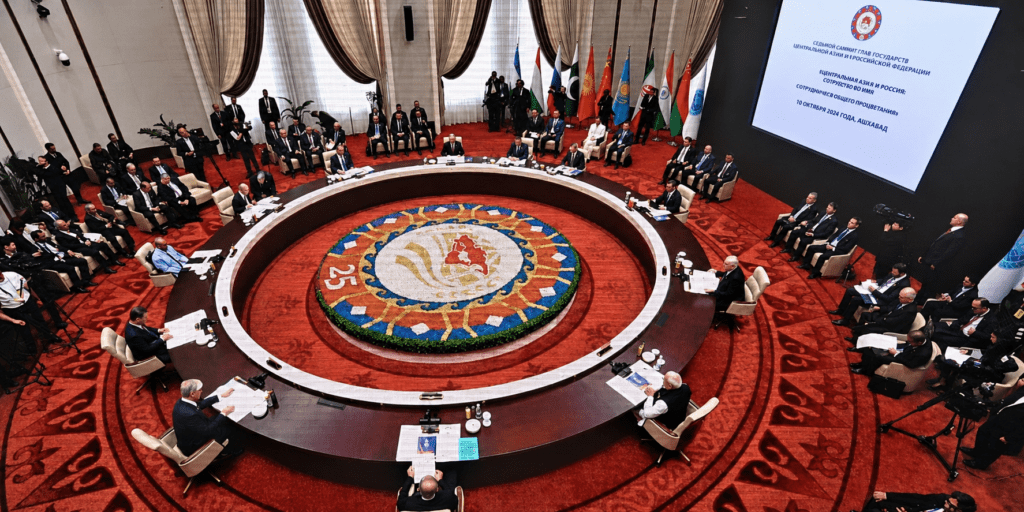
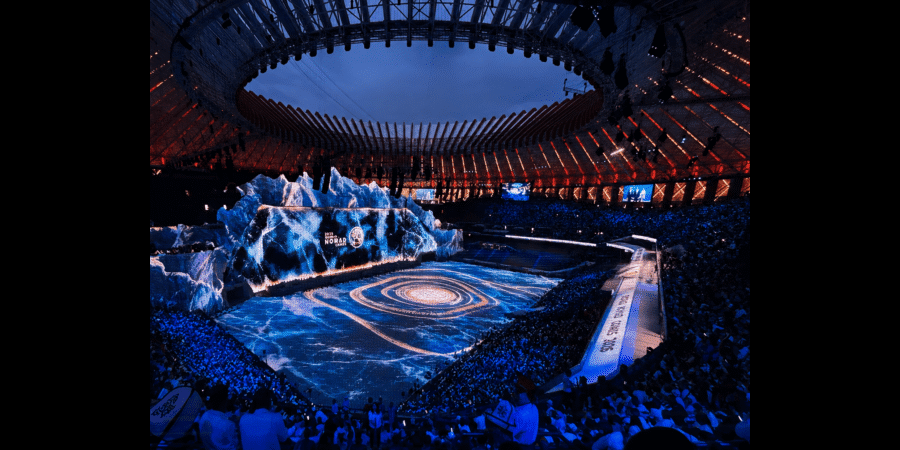
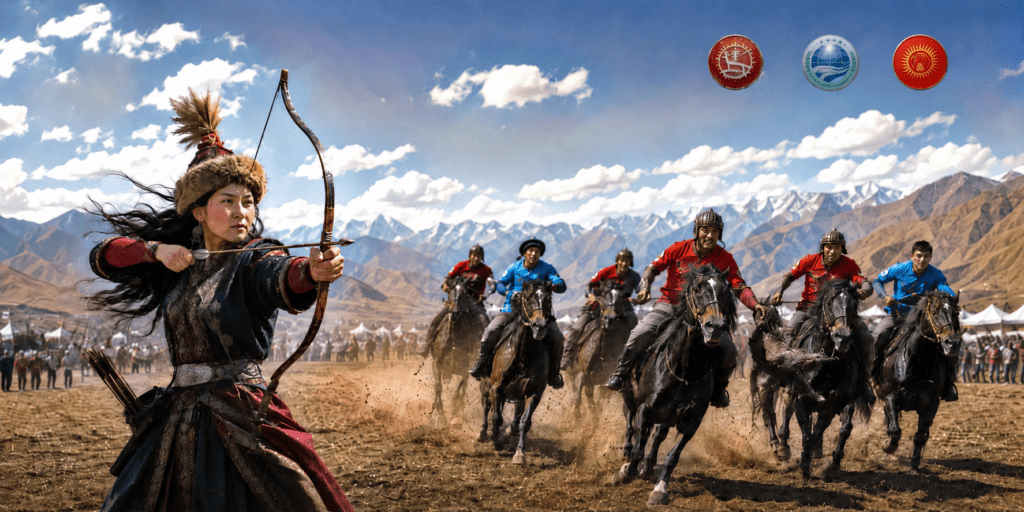
Kyrgyzstan is preparing for one of its busiest days in years. August 31 marks the 35th anniversary of the country’s independence, a day which will also see the opening ceremony of the sixth World Nomad Games. Meanwhile, leaders from the SCO’s ten member states, including Russia, China, India, Kazakhstan, and Uzbekistan, are also expected in Bishkek for a summit. The overlap is partly by design. Organizers say the World Nomad Games opening ceremony will be staged at Bishkek Arena on August 31, alongside the SCO summit program, ahead of the stadium’s formal opening later in September. The new stadium is designed for 51,000 spectators. The formal SCO Council of Heads of State meeting is scheduled for September 1. A detailed public timetable for the summit has not yet been issued. Presidential spokesman Askat Alagozov has said 21 heads of state are expected in Kyrgyzstan during this period, with several also making state visits. The World Nomad Games ceremony will include a parade of participating teams and a short concert program in front of the visiting leaders. Independence Day itself remains set for August 31. President Sadyr Japarov has instructed organizers to hold concerts and entertainment across the regions that day. The main state celebration of the 35th anniversary, however, will take place in Talas on September 11 and 12, which had already been selected to host the program before the August schedule took shape. [caption id="attachment_53765" align="aligncenter" width="1774"] Dancers perform during a previous Independence Day celebration in Bishkek. Photo: Stephen M. Bland/TCA.[/caption] Bishkek is preparing for the movement restrictions that come with diplomatic gatherings. Alagozov asked residents, where possible, to spend August 30, August 31, and September 1 at Issyk-Kul or elsewhere. “Otherwise, the inconvenience will affect you first of all, because roads in the city will be frequently closed for three days,” he said. September 1 will be a paid day off for employees of state and municipal institutions in the capital, with private employers advised to make similar arrangements. City Hall began planning well in advance. In October 2025, Mayor Aibek Dzhunushaliev called for a single operational protocol covering public transport, restrictions, fan zones, and other logistics. “Our main goal is to create comprehensive infrastructure and ensure a high international standard for these events,” he said. The city has since been preparing fan zones so residents and visitors can follow the main programs away from secured venues. Health and emergency planning has followed the same approach. Kyrgyzstan has already held public-health exercises ahead of the Games. The Ministry of Health said on August 10 that more than 600 medical workers are expected to support the SCO and World Nomad Games. Medical posts, strengthened ambulance teams, and a mobile hospital are planned at event sites. The World Nomad Games are familiar territory for Kyrgyzstan. The country staged the first three editions in 2014, 2016, and 2018, before the event moved to Turkey in 2022 and Kazakhstan in 2024. Its return to Kyrgyzstan has grown into a much larger operation....

Kyrgyzstan Expands Issyk-Kul Energy Infrastructure Ahead of SCO Summit

Kyrgyzstan has launched a large-scale modernization of energy infrastructure in the Issyk-Kul region as part of preparations for the upcoming Shanghai Cooperation Organization (SCO) summit, scheduled to take place this autumn in Cholpon-Ata. According to the Energy Ministry, authorities are upgrading power grids, expanding substation capacity, and installing new transformers across the region. In several villages in the Issyk-Kul region, self-supporting insulated wires are being installed to improve reliability and safety while reducing maintenance costs. Aging power networks are also being replaced. Particular attention is being given to the village of Baktuu Dolonotu near Cholpon-Ata, where some summit-related events are expected to take place. “Under the project, the existing 10 and 16 Megavolt-Ampere (MVA) transformers will be replaced with two new 40 MVA transformers, creating a modern high-capacity substation. The equipment has already been delivered, and preparations for installation are underway,” the ministry said. The modernization drive is also linked to the development of tourism infrastructure in the region. Several major projects are underway in Issyk-Kul, including the Ala-Too Resort ski complex and tourism facilities in the Jyrgalan Valley. To supply electricity to these new facilities, authorities are constructing a 110 kV transmission line from Karakol to Jyrgalan and replacing existing 35 kV overhead lines with underground cable systems. According to the Energy Ministry, trenches extending more than 100 kilometers have already been prepared for the new transmission line. Last year, a new substation was commissioned in the region, and 12.8 kilometers of cable lines were laid. “Work on the electricity supply for the cable car at the Ala-Too Resort ski base has been completed one hundred percent. The cable car could be launched right now,” Aslan Ibraev, deputy director of the Issyk-Kul Electric Grid Enterprise, told The Times of Central Asia. According to Ibraev, the first phase of infrastructure work for the ski resort has already been completed. “In total, we installed four transformer substations in Jyrgalan and laid 60 kilometers of underground electric cables,” he added. Kyrgyz authorities say the infrastructure upgrades are intended not only to ensure the successful hosting of international events, but also to support the long-term development of the region’s tourism sector. Construction of the ski resort is expected to be completed later this year. Authorities have also begun selling land plots for new tourism facilities near the resort area.

Trump Reengages Central Asia Amid Tariffs and Rising Competition

In a bid that signals renewed U.S. interest in Central Asia, U.S. President Donald Trump on September 7, 2025, held what he described as a “great conversation” with Kazakhstan’s President Kassym-Jomart Tokayev. Earlier in the week, Trump also spoke over the phone with Uzbek President Shavkat Mirziyoyev, with both sides highlighting plans to expand their strategic partnership. Commentators have noted that Trump’s rhetoric and transactional approach to foreign policy in his second term create both challenges and opportunities for sustained U.S. engagement in the region. “Great Conversation” With Tokayev As he departed the White House for the U.S. Open men’s final, President Trump told reporters, “We had a great conversation,” though he offered no further details on the substance of the discussion. On Kazakhstan’s side, President Tokayev had reached out in July, expressing his openness to constructive trade talks following Trump’s imposition of 25% U.S. tariffs on Kazakh goods. In that July letter, Tokayev committed to “developing fair, predictable, and mutually beneficial trade relations.” He also emphasized his readiness for “constructive dialogue aimed at finding a rational solution.” The exchange reflects the broader importance of the U.S.–Kazakhstan relationship, which extends far beyond tariffs. Since 2017, the two nations have maintained an “enhanced strategic partnership,” covering trade, security, and energy cooperation. Kazakhstan is the world’s largest uranium producer and a leading supplier to U.S. nuclear power plants, while American firms such as Chevron and ExxonMobil are deeply invested in the country’s vast oil fields. Strategically located between Russia, China, and Europe, Kazakhstan offers Washington a critical partner in promoting regional stability and developing alternative trade corridors traditionally reliant on Russian land. By engaging closely with Astana, the U.S. strengthens its foothold in Central Asia while securing vital resources and supporting Kazakhstan’s multi-vector diplomacy. Strategic Outreach to Uzbekistan Earlier the same week, Trump and Uzbekistan’s Mirziyoyev agreed to broaden their strategic partnership across economic, security, and cultural domains, the Uzbekistan press office reported. According to the office, Trump praised Uzbekistan’s “irreversible reforms” aimed at modernizing its economy and improving living standards, while Mirziyoyev lauded what he termed the “impressive results of the domestic and foreign policy” of the U.S. administration. This extension of engagement to Tashkent comes against a backdrop of longstanding U.S. involvement in Uzbekistan, including trade under bilateral agreements since the mid-1990s and cooperation on border control and counter-terrorism programs. In late 2024, shortly before Trump’s second term began, Washington reaffirmed its support for Uzbekistan’s bid to join the World Trade Organization, with U.S. Trade Representative Katherine Tai announcing the completion of bilateral market-access negotiations. That same year, U.S. officials also underscored opportunities in critical minerals cooperation with Tashkent through the C5+1 diplomatic framework. Beyond trade and security, Uzbekistan is strategically important as Central Asia’s most populous nation and a key transit hub between China, Russia, and South Asia. Closer U.S.–Uzbek ties complement Washington’s regional engagement with Kazakhstan, creating overlapping partnerships that strengthen American influence, promote economic diversification, and reinforce stability across Central Asia. Why Now? Geopolitics, Tariffs, and Regional...

Opinion: Victory Day Parade Puts China’s Military Might and Alliances on Full Display

The Shanghai Cooperation Organization summit coincided with China’s lavish commemorations of the "80th anniversary of victory in the War of Resistance Against Japanese Aggression and the broader World Anti-Fascist War." The culminating moment, a grand military parade, was followed by a formal reception hosted by President Xi Jinping for visiting foreign dignitaries. All five Central Asian heads of state attended the parade. As the summit concluded, Xi seized the opportunity to issue a pointed warning to the West, particularly the United States and President Donald Trump, who had made it clear that he was closely following events in Tianjin and Beijing. In a post on Truth Social, Trump wrote, "Please give my warmest regards to Vladimir Putin and Kim Jong Un as you conspire against the United States of America." Kim Jong Un’s high-profile visit to Beijing, including a prolonged meeting with Putin, signaled the emergence of a visible military alignment between North Korea and Russia. This visit served as a strategic complement to China's Victory Day display of military might. [caption id="attachment_35739" align="aligncenter" width="1280"] Image: president.uz[/caption] For the first time, China publicly exhibited components of its strategic nuclear triad: the air-launched Jinglei1 missile, submarine-launched Julang3, and land-based ICBMs such as the Dongfeng61 and Dongfeng31 (and reportedly the DF5C). Analysts saw this as a deliberate signal to the U.S., regional powers like India and Russia, and potential international arms buyers, positioning China as a formidable strategic actor. Also on display were China’s anti-drone “triad”, missile-gun systems, high-energy lasers, and high-power microwave weapons, highlighting advances in counter-drone technology. Additionally, the parade showcased hypersonic and cruise missiles, unmanned aerial and underwater systems, and even robotic dog units, demonstrating China’s futuristic military capabilities. While noting the parade's impressive visuals, analysts cautioned that the true readiness of many showcased systems, for example, torpedo drones or laser weapons, remains uncertain. [caption id="attachment_35741" align="aligncenter" width="1280"] Image: president.uz[/caption] Diplomatically, the summit also reinforced Sino-Russian ties. Putin, who described relations with China as “unprecedentedly” close, and Xi signed over 20 bilateral agreements, including a major energy deal, Power of Siberia 2, a gas pipeline delivering 50 billion cubic metres annually to China via Mongolia. Meanwhile, China announced a trial visa-free entry policy for ordinary Russian passport holders, effective from September 15, 2025, to September 14, 2026, allowing visits up to 30 days for tourism, business, or family purposes. Together, the military spectacle and deepening diplomatic and people-to-people ties affirm Xi’s confidence as he prepares for crucial negotiations with President Trump, an unmistakable projection of strength and strategic resolve.

Mirziyoyev Bets on the SCO to Boost Uzbekistan’s Security and Economy

Tianjin, China - The recent Shanghai Cooperation Organization (SCO) summit drew wide attention as leaders from across Eurasia convened to emphasize the Organization’s growing importance. For smaller members, the meeting was a chance to show commitment to regional cooperation and alignment with the bloc’s major powers. Uzbekistan, under President Shavkat Mirziyoyev, stood out by using the platform to outline his intention to strengthen engagement within the SCO to advance both economic development and security. Mirziyoyev’s speech stressed solidarity in the face of global uncertainty, institutional renewal to improve effectiveness, and deeper cooperation in areas such as security and nuclear policy. He also endorsed expanding membership, particularly from the Global South, while presenting proposals to boost trade, logistics, and investment. These priorities are consistent with Uzbekistan’s ongoing strategy of aligning its national agenda with the SCO’s broader evolution into a forum with Eurasian and global relevance. Reinforcing Multilateral Solidarity Uzbekistan’s solidarity with the SCO has been in the making for years, as Tashkent aligns parts of its security and economic strategy with the Organization’s framework. In his latest address, Mirziyoyev emphasized the role of solidarity amid rising instability: “A systemic crisis of trust, the escalation of conflicts, the weakening of multilateral institutions, and the fragmentation of the global trading system are undermining the foundations of the international architecture of security and stability. In these circumstances, mutual understanding and solidarity among the SCO member-states are not only a valuable asset, but also the key to preserving peace in our vast region.” While Russia emphasizes the SCO’s role in fostering multipolarity and China focuses on resilient supply chains, Uzbekistan is leveraging the principle of solidarity to safeguard its national interests - reducing dependence on any single power. Uzbekistan is positioning itself within the SCO to align its domestic priorities with broader SCO agendas shaped by Russia’s focus on security and China’s emphasis on economic initiatives. Expanding Membership and External Engagement Mirziyoyev underscored the SCO’s “openness,” identifying expansion as central to its continued development. He welcomed greater engagement with new members and partners, though he did not specify particular regions. Uzbekistan’s growing cooperation with countries such as Iran and Saudi Arabia demonstrates how this vision of openness is taking shape in practice. Tashkent has actively supported Iran’s accession to the SCO and recently signed agreements on transport corridors that connect Central Asia to Iranian ports on the Persian Gulf, facilitating greater trade with Iran. In parallel, deepening ties with Saudi Arabia - particularly through ACWA Power’s renewable energy projects, now among Uzbekistan’s largest foreign-funded ventures - illustrate Uzbekistan’s broader engagement with the Global South in the areas of connectivity and investment. These moves parallel Russia’s and China’s efforts to expand the SCO’s influence beyond its founding region. For Uzbekistan, expansion offers new avenues for trade, energy cooperation, and investment partnerships, while reinforcing its image as a bridge-builder. By publicly supporting this process, Mirziyoyev signaled that Uzbekistan expects wider membership to enhance both the Organization’s and its own standing. Institutional Alignment with the SCO A...

Uzbekistan President Urges SCO Reform and Regional Unity in Tianjin

On September 1, Uzbek President Shavkat Mirziyoyev participated in the regular meeting of the Council of Heads of State of the Shanghai Cooperation Organization (SCO), held in Tianjin, China, according to the presidential press service. The summit brought together leaders of member states to discuss the future of the organization, regional stability, and responses to global challenges. Opening the meeting, Chinese President Xi Jinping congratulated Uzbekistan on its Independence Day and commended the country’s progress under Mirziyoyev’s leadership. In his address, Mirziyoyev stressed the need for the SCO to adapt to a world marked by growing geopolitical tensions, a crisis of trust, and the weakening of multilateral institutions. He stressed that closer solidarity among SCO members is crucial for ensuring peace and stability in the region. Among his key proposals was the adoption of a declaration on multilateral partnership for nuclear security. The initiative is intended to enhance cooperation in the peaceful use of nuclear energy and support global non-proliferation efforts within the UN framework. Mirziyoyev also called for the resumption of interior minister-level meetings within the SCO, revisions to the existing agreement on combating organized crime, and the drafting of a new program to fight drug addiction, with targets extending to 2030. On Afghanistan, he proposed reviving the SCO-Afghanistan Contact Group to promote dialogue and launch socio-economic initiatives aimed at stabilizing the country. On economic cooperation, Mirziyoyev urged SCO member states to sign an agreement simplifying trade procedures and to develop new financial mechanisms to support industrial and infrastructure projects. He proposed the creation of a regional center for critical raw materials, a unified energy consortium, a network of venture capital funds for start-up development, and a digital portal to promote cross-border investment and connect businesses across the SCO space. Transport and connectivity featured prominently in his speech. Mirziyoyev advocated for the establishment of a “common transport space” and strengthening of the North-South and East-West corridors linking Central Asia with the Persian Gulf and Indian Ocean regions. He also called for the launch of regional platforms dedicated to climate adaptation and green technology development, alongside new initiatives in culture, education, and tourism to deepen people-to-people ties across the SCO.