
• KGS/USD = 0.01144 0%
  • KZT/USD = 0.00198 -0%
  • TJS/USD = 0.10901 0%
  • UZS/USD = 0.00008 0%
  • TMT/USD = 0.28490 0%
  • KGS/USD = 0.01144 0%
  • KZT/USD = 0.00198 -0%
  • TJS/USD = 0.10901 0%
  • UZS/USD = 0.00008 0%
  • TMT/USD = 0.28490 0%
  • KGS/USD = 0.01144 0%
  • KZT/USD = 0.00198 -0%
  • TJS/USD = 0.10901 0%
  • UZS/USD = 0.00008 0%
  • TMT/USD = 0.28490 0%
  • KGS/USD = 0.01144 0%
  • KZT/USD = 0.00198 -0%
  • TJS/USD = 0.10901 0%
  • UZS/USD = 0.00008 0%
  • TMT/USD = 0.28490 0%
  • KGS/USD = 0.01144 0%
  • KZT/USD = 0.00198 -0%
  • TJS/USD = 0.10901 0%
  • UZS/USD = 0.00008 0%
  • TMT/USD = 0.28490 0%
  • KGS/USD = 0.01144 0%
  • KZT/USD = 0.00198 -0%
  • TJS/USD = 0.10901 0%
  • UZS/USD = 0.00008 0%
  • TMT/USD = 0.28490 0%
  • KGS/USD = 0.01144 0%
  • KZT/USD = 0.00198 -0%
  • TJS/USD = 0.10901 0%
  • UZS/USD = 0.00008 0%
  • TMT/USD = 0.28490 0%
  • KGS/USD = 0.01144 0%
  • KZT/USD = 0.00198 -0%
  • TJS/USD = 0.10901 0%
  • UZS/USD = 0.00008 0%
  • TMT/USD = 0.28490 0%
08 December 2025

Viewing results 1 - 6 of 9

Kazakh Food Exports to China Grow After CIIE 2025 Deal

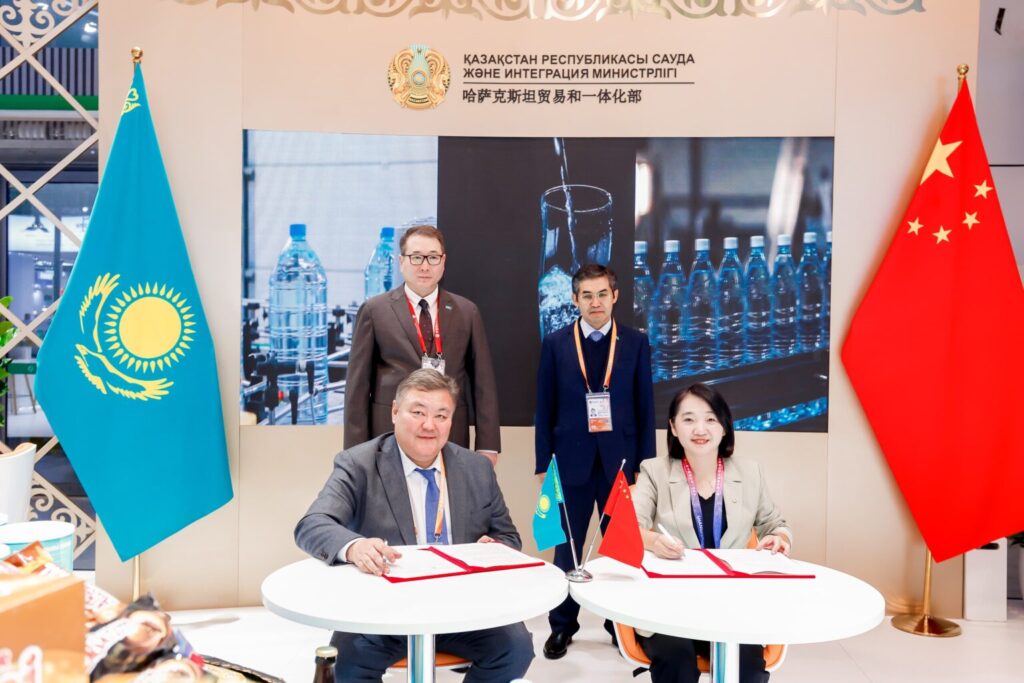
At the China International Import Expo (CIIE 2025) in Shanghai, Kazakhstan’s Trade Policy Development Center, QazTrade, signed a partnership agreement with Optimize Integration Group (OIG), one of China’s leading food importers responsible for 18% of all frozen meat imports into the country. The agreement aims to promote digital trade and create online platforms that will facilitate the entry of Kazakhstani food products into the Chinese market. Under the terms of the agreement, both sides will jointly promote Kazakh agricultural and food products, improve logistics infrastructure, and develop digital trade technologies and payment systems. “This partnership with OIG, one of the most technologically advanced and influential trading platforms in China, opens up significant opportunities,” said QazTrade CEO Aitmukhamed Aldazharov. “Kazakhstani producers will not only increase their exports to China but will also integrate into advanced digital supply chains. This is a major step forward for e-commerce and mutual trust between our countries.” At CIIE 2025, QazTrade also showcased the growing potential of Kazakhstan’s agricultural cooperatives. In collaboration with the National Association of Cooperatives of Kazakhstan and China Coop, China’s largest cooperative retail network, Kazakh products such as honey, kumis, and confectionery are set to enter the Chinese retail market. China Coop encompasses over 340,000 retail outlets with annual turnover exceeding 7 trillion yuan. Aldazharov expressed confidence in the cooperatives' prospects, noting that joint market research has been conducted, trial shipments arranged, and priority export categories identified. These include vegetable oil, meat, honey, dairy beverages, and confectionery. In parallel, QazTrade is launching an acceleration and training program aimed at Chinese companies seeking to expand their operations in Kazakhstan and across Central Asia.
Kazakhstan Expands Grain Exports to Europe and Beyond

Kazakhstan is entering new grain export markets, including the United Kingdom, Norway, and Portugal, as part of a broader push to diversify its agricultural trade, Agriculture Minister Aidarbek Saparov has announced. Saparov reported that the 2025 harvest has been one of the strongest in recent years, with 27.1 million tons of grain crops harvested from 16 million hectares. The average yield reached 17 centners per hectare, and wheat production totaled 20.3 million tons, an increase of 500,000 tons compared to last year. “We plan to maintain the level of wheat exports. This year, we have begun supplying markets that have not traditionally received Kazakh grain, Belgium, Portugal, Poland, Norway, the United Kingdom, Vietnam, the United Arab Emirates, as well as Morocco, Algeria, and Egypt in North Africa. Additionally, we have resumed shipments to Iran, Azerbaijan, Armenia, and Georgia,” Saparov said. Kazakhstan exported 13.4 million tons of grain during the last marketing year (September 1, 2024, August 31, 2025), a 47% increase compared to the 2023-2024 season. As of the latest data, 2.2 million tons of grain from the new harvest have already been exported, marking a 21% year-on-year increase. New Investments in Deep Grain Processing To support long-term export potential and value-added production, Kazakhstan is implementing five major investment projects aimed at deep grain processing. According to the Ministry of Agriculture, these initiatives will enable the additional processing of approximately 2.5 million tons of grain products annually. Among the most significant is a $1.5 billion investment by China’s Hopefull Grain & Oil Group to build a deep grain processing plant in the Akmola region. The project was discussed by Deputy Minister Yermek Kenzhehanuly and Hopefull’s local project manager, Yao Yao. The project will be rolled out in two phases. The first phase includes constructing a combined heat and power plant to generate renewable energy. The second phase will launch a high-tech facility to produce citric acid, glucose-fructose syrups, bioethanol, and protein concentrates. The company is also considering establishing an industrial park equipped with transport, energy, and engineering infrastructure. Focus on the Chinese Market As previously reported by The Times of Central Asia, Kazakhstan also aims to increase grain exports to China to two million tons per year. This expansion into Asia complements the country’s growing presence in European and Middle Eastern markets.

China Opens Market to Kazakhstan Pork Exports

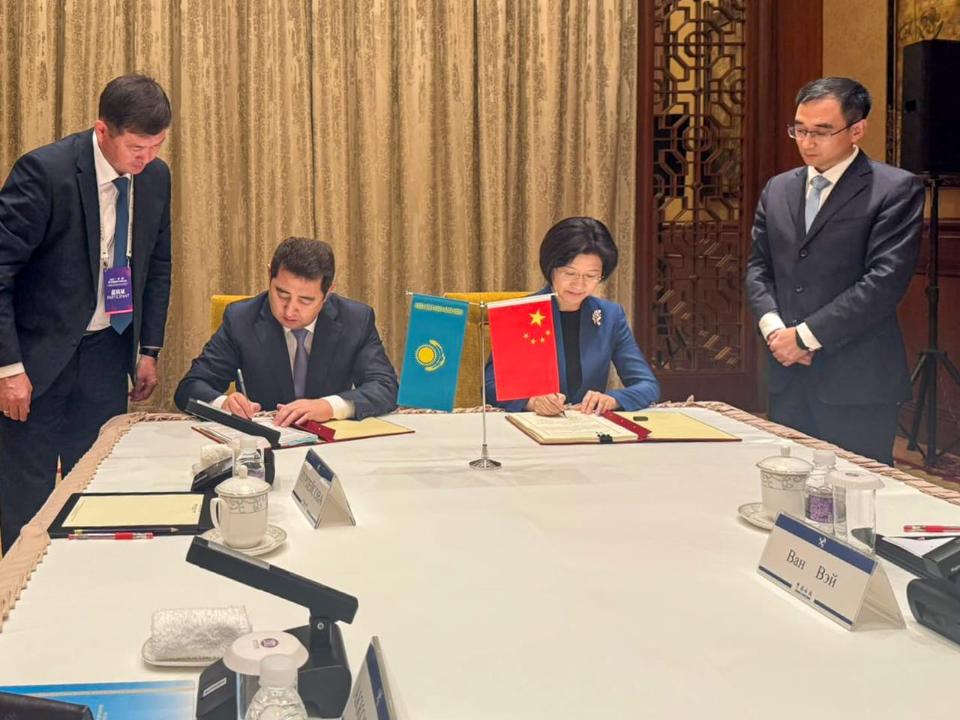
Kazakhstan has secured approval to begin exporting pork to China following the signing of a bilateral protocol on inspection, quarantine, and food safety standards. The agreement was formalized on October 15 in Shanghai by Kazakh Minister of Agriculture Aidarbek Saparov and Sun Meijun, Head of the General Administration of Customs of China. This marks the first time Kazakh pork producers have been granted access to the Chinese market. The agreement allows for the export of frozen, chilled, thermally processed pork products, and offal, signaling a major milestone for Kazakhstan’s agricultural sector. During the Shanghai meeting, the two officials also discussed expanding access for other Kazakh agricultural goods. Saparov highlighted Kazakhstan’s commitment to meeting China’s stringent food safety and quality standards. According to the Ministry of Agriculture, bilateral agricultural trade reached $992.3 million in the first seven months of 2025, a 28 percent increase on the same period in 2024. For comparison, total trade in 2024 amounted to $1.4 billion. This protocol follows a similar agreement signed in May 2025 that opened the Chinese market to Kazakh poultry exports. Currently, more than 2,800 Kazakh enterprises are registered with China’s General Administration of Customs and authorized to export goods to the country. On October 15, Kazakhstan’s Food Contract Corporation signed a memorandum of cooperation in Shanghai with China’s Shandong Hi-Speed Qilu Eurasia Railway Express Co. Ltd. The agreement aims to expand Kazakh exports of grain, animal feed, and oilseeds through a contract farming model, under which Chinese firms purchase future harvests from Kazakh producers at the sowing stage. Minister Saparov noted that Kazakhstan has the capacity to export 3-4 million tons of grain and feed flour to China annually. As previously reported by The Times of Central Asia, a new joint Kazakh-Chinese veterinary laboratory was recently launched in East Kazakhstan. The facility is intended to streamline agricultural export procedures and accelerate inspections for goods entering the Chinese market.
