Turkmenistan Has World’s Highest Freshwater Withdrawal Per Capita
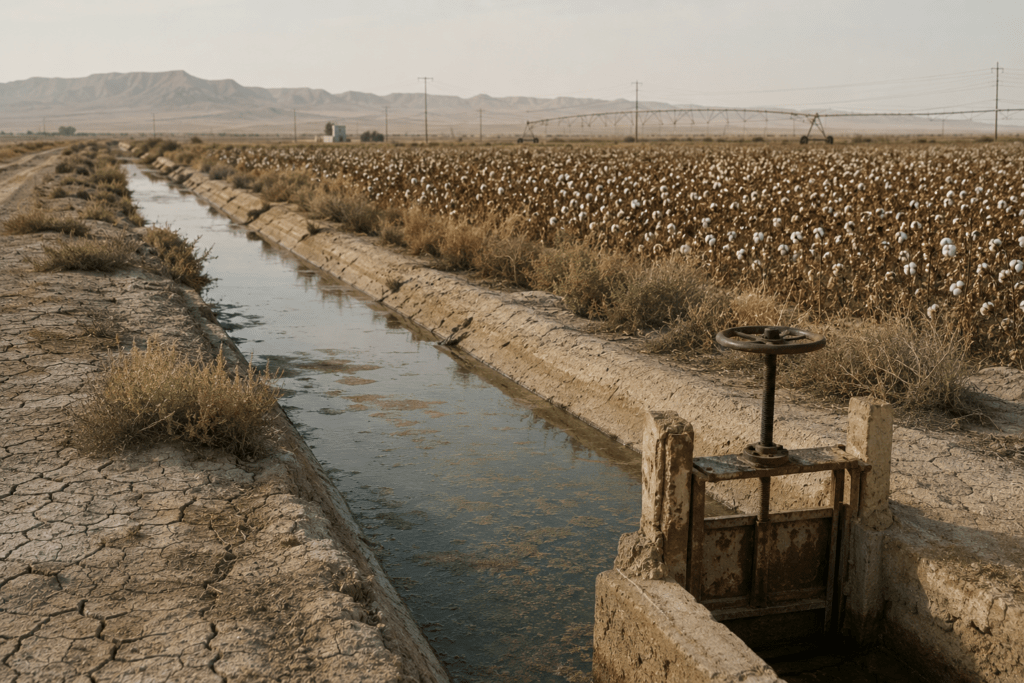
Turkmenistan has recorded the world’s highest annual freshwater withdrawal per capita, a ranking that points to the heavy strain placed on water resources by irrigated agriculture, particularly cotton production, according to international data based on statistics from the UN Food and Agriculture Organization (FAO) and the World Bank. The country’s position at the top of the ranking is driven not by household consumption, but by the massive use of water in agriculture, particularly in the cotton sector. The ranking is therefore less a measure of individual water use than an indicator of structural dependence on irrigation in an extremely arid country. According to the data, more than 3,631 cubic meters of freshwater are withdrawn annually for every resident of Turkmenistan. The calculations include not only domestic water usage, but also volumes consumed by agriculture, industry, and municipal infrastructure. The figure reflects Turkmenistan’s dependence on large-scale irrigation systems established during the Soviet period to support cotton production. Vast amounts of water are diverted from the Amu Darya River to agricultural land in one of the world’s driest climates. Researchers note that these irrigation projects were among the major causes of the environmental catastrophe that devastated the Aral Sea. Agriculture remains the world’s largest consumer of freshwater. According to international estimates, the agricultural sector accounts for roughly 70% of global freshwater use. As a result, the highest positions in the ranking are largely occupied by countries with arid climates and extensive irrigated farming systems. The top 15 countries also include Kazakhstan, Uzbekistan, Kyrgyzstan, Tajikistan, Azerbaijan, and Iran. At the opposite end of the ranking are countries with the world’s lowest levels of freshwater withdrawal per capita. These include the Democratic Republic of Congo, with just seven cubic meters per person annually, as well as Equatorial Guinea and the Maldives, with 11 cubic meters each. Climate change is already increasing pressure on water resources across many regions of the world. Droughts, rising temperatures, and growing agricultural demand are making efficient water management an increasingly urgent issue, including for the countries of Central Asia. For Central Asia, the figures underline a familiar problem: water use remains shaped by Soviet-era irrigation systems, while climate change is making the region’s rivers, reservoirs, and agricultural systems more vulnerable.