• KGS/USD = 0.01144 0%
  • KZT/USD = 0.00199 0%
  • TJS/USD = 0.10503 -0.19%
  • UZS/USD = 0.00008 0%
  • TMT/USD = 0.28571 0%
  • KGS/USD = 0.01144 0%
  • KZT/USD = 0.00199 0%
  • TJS/USD = 0.10503 -0.19%
  • UZS/USD = 0.00008 0%
  • TMT/USD = 0.28571 0%
  • KGS/USD = 0.01144 0%
  • KZT/USD = 0.00199 0%
  • TJS/USD = 0.10503 -0.19%
  • UZS/USD = 0.00008 0%
  • TMT/USD = 0.28571 0%
  • KGS/USD = 0.01144 0%
  • KZT/USD = 0.00199 0%
  • TJS/USD = 0.10503 -0.19%
  • UZS/USD = 0.00008 0%
  • TMT/USD = 0.28571 0%
  • KGS/USD = 0.01144 0%
  • KZT/USD = 0.00199 0%
  • TJS/USD = 0.10503 -0.19%
  • UZS/USD = 0.00008 0%
  • TMT/USD = 0.28571 0%
  • KGS/USD = 0.01144 0%
  • KZT/USD = 0.00199 0%
  • TJS/USD = 0.10503 -0.19%
  • UZS/USD = 0.00008 0%
  • TMT/USD = 0.28571 0%
  • KGS/USD = 0.01144 0%
  • KZT/USD = 0.00199 0%
  • TJS/USD = 0.10503 -0.19%
  • UZS/USD = 0.00008 0%
  • TMT/USD = 0.28571 0%
  • KGS/USD = 0.01144 0%
  • KZT/USD = 0.00199 0%
  • TJS/USD = 0.10503 -0.19%
  • UZS/USD = 0.00008 0%
  • TMT/USD = 0.28571 0%

Viewing results 1 - 6 of 7

Kazakhstan Gifts 1,500 Saiga Antelopes to China

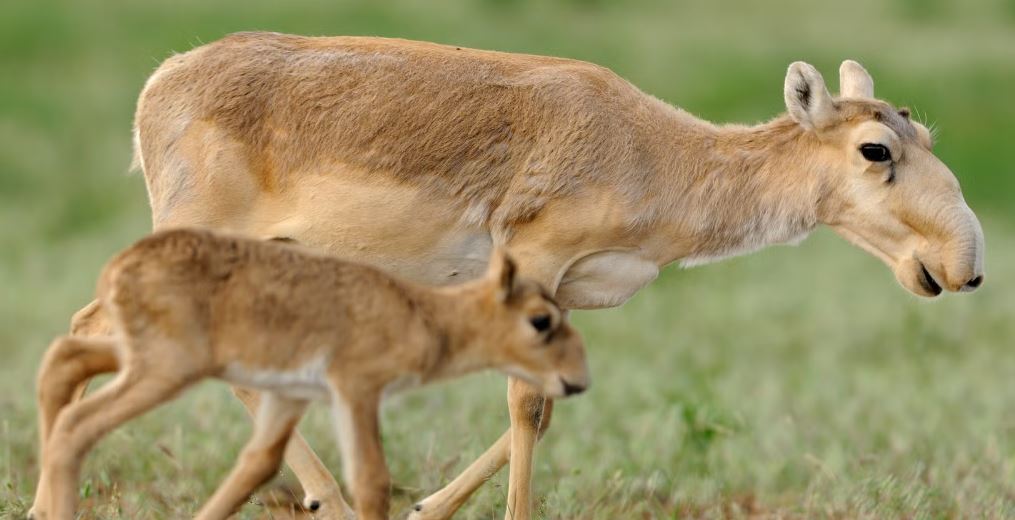
Kazakhstan has gifted 1,500 saiga antelopes to China, stepping in to support China’s own efforts to restore the species beyond Central Asia. Loved for its handsome, bulbous nose, the saiga is found in large numbers across the Kazakh steppe. Once endangered in Kazakhstan, numbering as few as 40,000 in 2005, the antelope is in fact now overpopulated, as numbers have reached a record 4.1 million in 2025. As such, Kazakhstan has been looking for ways to reduce its population while nurturing environmental and diplomatic ties with China. In turn, China has long been interested in reviving the saiga, but previous attempts have not been successful. Dastan Kusmanov, an ecologist and PhD candidate at the Nazarbayev University Graduate School of Public Policy, told The Times of Central Asia: “I believe that the saiga being gifted to China is an environmental measure. If a new saiga population is established in China, this is an overall benefit for the species’ survival, because if anything happens to the existing saiga population in Kazakhstan, the species still has a chance to survive elsewhere.” Kusmanov added, “It’s also beneficial for the environment in China. Saigas are an officially extinct species in China, but you need ungulate animals for the benefit of the environment. Ungulates are animals that eat grass and trample soil to make it softer. Through their diet, they then take seeds from one place to another through their excrement. Saigas also serve as a food source for wolves and eagles, so they are a vital part of the ecosystem and food chain.” The ecologist emphasized that losing 1500 animals from Kazakhstan’s steppe will not harm the species in the country: “As the gift of 1,500 saigas is less than 0.04% of over 4 million saigas in Kazakhstan, it will not have a negative impact on the existing Kazakhstan population.” Dr. Kanat Baigarin, Chief Officer for Sustainable Development at Nazarbayev University, agreed with Kusmatov that this new herd would help to protect the saiga species as a whole. “The more widely the saiga population is distributed,” Baigarin told The Times of Central Asia, “the more resilient it becomes to epidemics and other threats. This is a unique example of how countries can work together to restore endangered species.” “It's important to plan ahead for food resources, animal adaptation, and transboundary protection: this way, the project can serve as a foundation for broader environmental cooperation.” Meanwhile, neighboring Kyrgyzstan is focusing on species recovery. The Times of Central Asia previously reported that in May this year, Kyrgyzstan launched a conservation initiative to reintroduce another ungulate species, the jayran or goitered gazelle, along the southern shore of Lake Issyk-Kul.
Turkmenistan to Designate Bolshoy and Maly Balkhan Mountains as Protected Areas

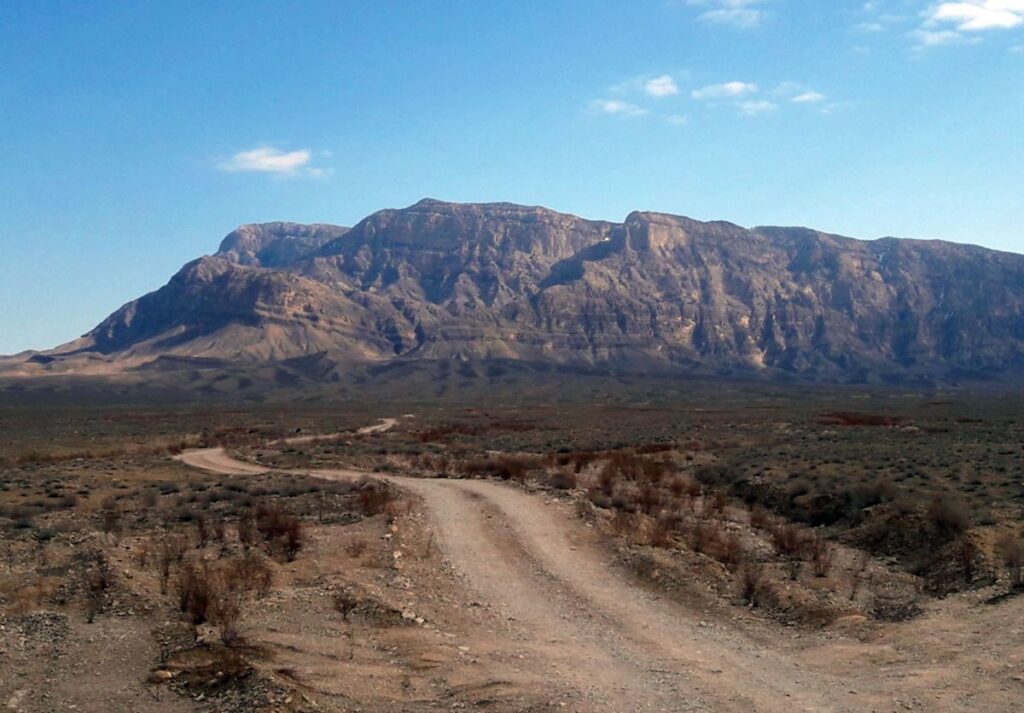
The government of Turkmenistan has announced plans to designate the Bolshoy and Maly Balkhan mountain ranges as protected areas. A new nature reserve is currently being established, with its core zone centered on Bolshoy Balkhan and additional wildlife sanctuaries to be located on Maly Balkhan and the Yuzhny Ustyurt plateau. Ecosystem Under Pressure Concerns about preserving the unique Balkhan ecosystem date back to the 19th century. The first official discussions arose in 1832 following Grigory Karelin’s expedition to the Caspian Sea. By 1836, cartographers had documented the eastern Caspian coastline, the ancient Amu Darya riverbed, and the Bolshoy Balkhan ridge. Zoologists such as Mikhail Laptev (1920s-1930s) and Gheldy Shukurov (1940s) later highlighted the ecological value of this “mountain island in the desert,” a view supported by contemporary scientists who continue to stress its conservation importance. For decades, the slopes of the Balkhans have served as seasonal pastures for small livestock from May to October. This overgrazing has degraded natural ecosystems and reduced biodiversity. The new reserve aims to reverse this trend by limiting cattle grazing to foothills and surrounding pastures. The Natural Wealth of the Balkhans The Balkhan region features a striking mix of desert plains and mountain-steppe terrain. Its highest peak is Mount Arlan, which rises to 1,880 meters. The area is home to two species of amphibians, 28 species of reptiles, 174 species of birds, and 45 species of mammals. Among the most distinctive species is the gray monitor lizard, the region’s largest lizard, growing up to 1.5 meters in length. The Central Asian leopard once roamed these mountains but has since migrated to the Ustyurt Plateau. In its absence, populations of wolves and jackals have increased. Other rare animals found in the area include the Turkmen corsac fox, manul (Pallas’s cat), banded gerbil, rock marten, and Severtsov's jerboa. Maly Balkhan, with its unique topography and the renowned Chalsuv spring, famous for its distinctive taste, reaches a height of 780 meters. In earlier decades, saigas would migrate here from Kazakhstan during winter, though such migrations have not occurred in recent years. Part of a Broader Conservation Push The creation of the Balkhan Reserve is part of Turkmenistan’s National Forest Program (2021-2025). The initiative also includes preparations for establishing the Zengibaba Reserve in Dashoguz velayat and expanding the Amudarya State Reserve. Additional protected areas are planned for Lebap velayat, particularly on the Tallymerdzhen Plain, which is home to the rare sandpiper.

Saiga Conservation Clash: Kazakhstan Aids China, Russia Struggles

Kazakhstan will transfer 1,500 saigas to China to help restore the species' population in the western regions of the People’s Republic of China. The announcement came during a bilateral meeting between President Kassym-Jomart Tokayev and Chinese President Xi Jinping. President Xi expressed gratitude for the initiative, reaffirming China’s commitment to restoring the population of this antelope species. Returning to Their Historical Habitat On June 18, Minister of Ecology Yerlan Nysanbayev elaborated on the decision, explaining that the move is part of an effort to support the long-term sustainability of the species by reintroducing it to its historical range. “Kazakhstan is currently home to 99% of the world's saiga population. Since 2003, when only 2,500 individuals remained, we have grown the population to more than five million,” Nysanbayev said. The minister emphasized that the transfer will proceed only after a joint scientific assessment by Kazakh and Chinese experts, who will evaluate potential resettlement zones, available food sources, and optimal transport methods. When asked whether the move aimed to reduce saiga numbers in response to farmers’ complaints, Nysanbayev dismissed the idea. "Can 1,500 animals really affect the overall population or solve issues like agricultural damage? This is absolutely irrelevant,” he stated. Nysanbayev also underscored the importance of international cooperation in biodiversity conservation. “The saiga population has historically extended beyond Kazakhstan, into Mongolia, China, Russia, and Turkmenistan,” he added. Ongoing Tensions Between Wildlife and Agriculture Despite conservation successes, conflicts between saigas and agricultural interests remain a serious concern. In 2022, farmers in the West Kazakhstan and Akmola regions reported significant crop losses and property damage caused by saigas, with some even calling for a state of emergency to be declared in the West Kazakhstan Region. In response to growing tensions, the government included saigas in the list of species subject to regulation in late 2023. Authorities initially planned to capture up to 200,000 animals, but logistical challenges led to the approval of a limited culling. This shift enabled meat-processing plants to begin producing canned saiga meat. However, in February 2024, the Ministry of Ecology suspended population control measures following President Tokayev’s public call to protect this iconic symbol of the Kazakh steppe. Nevertheless, in March 2025, during a meeting of the National Kurultai, President Tokayev acknowledged the strain on agriculture and raised concerns about potential epizootic risks and broader ecological pressures. “Agriculture is suffering. There are risks of a worsening epizootic situation. Overall, the burden on the ecosystem has increased,” Tokayev said. Minister Nysanbayev later confirmed that discussions about potential future regulation are ongoing. “It will take time for science to thoroughly study the situation again,” he said. Options under consideration include culling through corrals or selective shooting, with final decisions to be guided by scientific recommendations. Saiga Migration Threatens Saratov Farmers' Livelihoods In Russia, meanwhile, farmers and agricultural leaders in the Novouzensky district of the Saratov region have appealed to President Putin for help, citing a severe threat to their livelihoods from saigas migrating from the Kazakh steppes. They claim the influx of...

Kyrgyzstan Takes the Lead in Global Snow Leopard Conservation Efforts

On June 5-6, the Kyrgyz resort city of Cholpon-Ata is hosting the 9th Steering Committee Meeting of the Global Snow Leopard and Ecosystem Protection Program (GSLEP). The meeting brings together environment ministers from all 12 snow leopard range countries, Afghanistan, Bhutan, China, India, Nepal, Mongolia, Kazakhstan, Kyrgyzstan, Pakistan, Russia, Tajikistan, and Uzbekistan, along with representatives from conservation organizations and international financial institutions. Their goal is to advance conservation and climate action efforts in Asia’s high mountain regions through GSLEP, an intergovernmental alliance founded in Bishkek in 2013. The snow leopard, classified as endangered, serves as a potent symbol of the ecological and cultural importance of Asia’s mountainous landscapes. Kyrgyzstan has long been at the forefront of international conservation efforts. At the 79th session of the UN General Assembly, the country spearheaded a resolution, supported by other range nations, designating October 23 as International Snow Leopard Day. The GSLEP Steering Committee convened in Cholpon-Ata to assess ongoing conservation initiatives and define future priorities to protect snow leopards and mountain ecosystems. [caption id="attachment_32684" align="aligncenter" width="1280"] Image: mnr.gov.kg[/caption] In his opening remarks, Kyrgyzstan’s Minister of Natural Resources, Ecology, and Technical Supervision, Meder Mashiev, said: “For us, the snow leopard is not just a species, it is part of our culture and identity. Its preservation is our common responsibility.” Mashiev highlighted the country's recent achievements in conservation, including the initiation of a national snow leopard census, the adoption of SMART monitoring tools, the creation of new protected areas, and the establishment of the Ak Ilbirs (Snow Leopard) Ecological Corridor, an approximately one million-hectare expanse in the northeastern Issyk-Kul region. This corridor connects the Khan-Tengri State Nature Park, the Sarychat-Eertash Nature Reserve, and the Naryn Nature Reserve, providing secure habitats for snow leopards and other endangered species while promoting sustainable resource management. In December 2023, President Sadyr Japarov signed a decree formally recognizing the snow leopard as a national symbol of Kyrgyzstan. In a welcome address to participants, President Japarov highlighted Kyrgyzstan’s pivotal role as a mountainous nation (over 90% of its territory consists of highlands) in safeguarding high-altitude ecosystems. He stressed that mountains are not only repositories of natural wealth but also engines for economic growth through green investments. However, he cautioned that these regions face growing threats from overgrazing, forest degradation, and climate change, especially in snow leopard habitats. President Japarov also called for strengthening GSLEP’s institutional capacity and expanding cross-border conservation initiatives with the support of global environmental funds.

Kazakhstan and France Join Forces to Save Lake Balkhash

Work has begun in Almaty on the development of a master plan to preserve Lake Balkhash, one of Central Asia’s largest bodies of water. Experts from Kazakhstan and France will collaborate on the project, according to the Ministry of Water Resources and Irrigation of the Republic of Kazakhstan.  Master Plan for the Balkhash Ecosystem A two-day seminar has been launched in Almaty, during which a roadmap for the action plan was presented. The document includes an analysis of the water resources in the Ile-Balkhash basin, a study of groundwater reserves, the creation of a digital platform to monitor water levels, and the automation of hydraulic engineering facilities. Additional measures aim to ensure the more efficient use of the basin’s water resources and involve joint projects with China to protect the Ili River. The French Development Agency (AFD) and the French Geological and Mining Research Bureau (BRGM) are key partners in the project. French experts are currently collecting the necessary data and planning site visits to inspect wells, hydrological stations, and irrigated lands. The project is overseen by the Ministry of Water Resources and Irrigation of Kazakhstan, with support from Kazakhmys Corporation LLP. The seminar is attended by representatives from Kazakhstani ministries, international organizations, academia, and the Consulate General of France in Almaty. “For a long time, issues related to Lake Balkhash were addressed on a case-by-case basis, without a unified strategy. To move towards a systematic approach, we are starting to develop a master plan,” said Bolat Bekniyaz, First Deputy Minister of Water Resources and Irrigation. He emphasized that the plan would consider all aspects of the basin’s sustainability, from ecology and water management to energy, agriculture, and socio-economic development. Kazakhstan-France Cooperation The Balkhash preservation initiative builds on earlier agreements between Kazakhstan and France. Last October, it was announced that a memorandum of cooperation and a trilateral agreement, covering groundwater exploration in the Ili-Balkhash basin, were in preparation.  The French Development Agency (AFD), the French Geological and Mining Research Bureau (BRGM), and the International Water Agency (OiEau) are leading partners in this endeavor. During a meeting with Kazakhstan’s Minister of Water Resources, Nurzhan Nurzhigitov, French Ambassador Sylvain Guillemot highlighted the growing interest of French companies in constructing and modernizing water facilities, as well as in projects related to leak detection and resource management optimization. Water Resource Challenges in Balkhash Separately, on the shores of Lake Balkhash, in the village of Ulken, Kazakhstan plans to build its first nuclear power plant.  According to unofficial data, since early 2025, approximately 3.8 billion cubic meters of water have been diverted from the Kapshagay Reservoir to Lake Balkhash, a move that has positively impacted the region’s ecological conditions and the Ili River delta.  Experts have long warned that without a coordinated approach to water resource management, Lake Balkhash risks following the catastrophic path of the Aral Sea. Declining water levels are already impacting biodiversity, climate conditions, and the socio-economic well-being of local communities. The development of a master plan is viewed as a crucial...

Ecologists Warn Central Asian Dams May Threaten UNESCO Heritage Site

A coalition of international environmentalists is sounding the alarm over the impact of large-scale dam construction in Central Asia, warning that it could cause irreversible harm to the Western Tien Shan, a UNESCO World Heritage Site jointly shared by Kazakhstan, Kyrgyzstan, and Uzbekistan. Dam Projects Multiply Across Region According to a recent report by the coalition Rivers Without Boundaries, dozens of new hydropower projects are either in development or under construction across the region. The group says this wave of dam-building poses a significant threat to the unique ecosystems and biodiversity of the Western Tien Shan, which was inscribed on the UNESCO World Heritage List in 2016 due to its exceptional natural value. The report identifies more than five dams already constructed in recent years, with an additional 15 to 40 projects currently in the pipeline. These developments are affecting key river systems, including the Chatkal, Ugam, Pskem, and Aksu, which play a vital role in sustaining the region’s delicate ecological balance. Protected Areas Under Pressure Some of the most contentious projects are unfolding inside or near designated conservation zones. In Kyrgyzstan, a dam is planned within the Besh-Aral Nature Reserve, while gold mining activities have already degraded parts of the Chatkal River valley. In Kazakhstan, officials are considering a series of dams in Sayram-Ugam National Park. Uzbekistan is also pressing ahead with new hydropower schemes, including one on the Pskem River, drawing criticism from environmental advocates. “Short-term economic goals are being prioritized over the long-term need to protect this globally important natural area,” said Eugene Simonov, international coordinator of Rivers Without Boundaries. He urged UNESCO and the broader international community to intervene before further damage is done. Threats to Rare Species and Ecosystems Environmentalists argue that dam construction is fragmenting river systems and isolating animal habitats, particularly those of rare and endemic species. The snow leopard and several native fish species are among the wildlife at risk. Floodplain forests and wild fruit tree habitats, critical components of the area’s biodiversity, are also under threat. Alexander Kolotov, regional director of Rivers Without Boundaries, highlighted the dangers of building dams within protected national parks. “We are not properly measuring the impact on fish and river ecosystems,” he said. “If this continues, we could lose many species forever.” Legal and Diplomatic Concerns The group further contends that several dam projects may be violating international agreements, including the World Heritage Convention and the Espoo and Aarhus Conventions. These treaties require environmental impact assessments, public consultation, and cross-border cooperation, all of which may be lacking or inadequately implemented. Rivers Without Boundaries has formally petitioned UNESCO to add the Western Tien Shan to its List of World Heritage in Danger. The proposal is expected to be reviewed at the UNESCO World Heritage Committee session scheduled for July 2025. Previously, Evgeny Vinokurov, Vice-Chairman and Chief Economist of the Eurasian Development Bank, issued a stark warning about Central Asia’s looming water and energy crisis, noting that regional development must be carefully balanced with environmental protection.