

• KGS/USD = 0.01144 0%
  • KZT/USD = 0.00204 0%
  • TJS/USD = 0.10394 0%
  • UZS/USD = 0.00008 0%
  • TMT/USD = 0.28490 0%
  • KGS/USD = 0.01144 0%
  • KZT/USD = 0.00204 0%
  • TJS/USD = 0.10394 0%
  • UZS/USD = 0.00008 0%
  • TMT/USD = 0.28490 0%
  • KGS/USD = 0.01144 0%
  • KZT/USD = 0.00204 0%
  • TJS/USD = 0.10394 0%
  • UZS/USD = 0.00008 0%
  • TMT/USD = 0.28490 0%
  • KGS/USD = 0.01144 0%
  • KZT/USD = 0.00204 0%
  • TJS/USD = 0.10394 0%
  • UZS/USD = 0.00008 0%
  • TMT/USD = 0.28490 0%
  • KGS/USD = 0.01144 0%
  • KZT/USD = 0.00204 0%
  • TJS/USD = 0.10394 0%
  • UZS/USD = 0.00008 0%
  • TMT/USD = 0.28490 0%
  • KGS/USD = 0.01144 0%
  • KZT/USD = 0.00204 0%
  • TJS/USD = 0.10394 0%
  • UZS/USD = 0.00008 0%
  • TMT/USD = 0.28490 0%
  • KGS/USD = 0.01144 0%
  • KZT/USD = 0.00204 0%
  • TJS/USD = 0.10394 0%
  • UZS/USD = 0.00008 0%
  • TMT/USD = 0.28490 0%
  • KGS/USD = 0.01144 0%
  • KZT/USD = 0.00204 0%
  • TJS/USD = 0.10394 0%
  • UZS/USD = 0.00008 0%
  • TMT/USD = 0.28490 0%

Viewing results 1 - 6 of 7

Uzbekistan’s Supreme Court Updates List of Banned “Extremist” Online Content

Uzbekistan has released an updated list of sources and materials banned for promoting extremism and terrorism, according to the press service of the Supreme Court. The revised register, current as of 10 January 2026, includes online content deemed to pose a threat to public safety and the country’s constitutional order. The Supreme Court reported that the updated list contains 1,593 profiles, channels, and other materials, most of which are linked to content distributed via social networks and messaging platforms. The listed materials were found to promote extremist ideologies, justify violence, or encourage terrorist activity. Telegram was the most frequently cited platform, with 790 channels, groups, and materials included. Facebook followed with 249 entries, while 265 profiles were identified on Instagram. The list also includes 167 YouTube channels and videos, 53 TikTok profiles, and 36 entries from the Odnoklassniki network. Beyond social media, the register includes 13 websites and standalone digital materials classified as prohibited sources. Additionally, 20 books, lectures, and religious chants were assessed as promoting religious extremism or violent ideology. At the same time, some legal experts and human rights advocates caution that broadly defined extremism regulations carry risks of misuse. They argue that vague or expansive interpretations of what constitutes extremist or unconstitutional content could potentially be applied to suppress political dissent, independent journalism, or peaceful criticism of state policies, particularly in online spaces where contextual nuance is often limited. Concerns have also been raised about the potential impact on religious freedom. Critics note that religious materials or sermons not aligned with officially approved interpretations could be vulnerable to restriction, even when they do not explicitly call for violence. Without transparent judicial oversight and clear public access to decisions, observers warn that such measures may unintentionally marginalize lawful religious expression or discourage open theological discussion. The court stated that all materials were evaluated using clear criteria, such as promoting extremist ideas, justifying violence or terrorism, or seeking to undermine the constitutional system. Materials meeting these thresholds were formally recognized as prohibited. Legal grounds for these designations are provided under Uzbekistan’s Criminal Code. Article 244-1 covers extremist content promoting terrorism and allows for criminal prosecution, including prison terms of up to eight years for the preparation, storage, or dissemination of such materials. Article 244-3 addresses the unlawful distribution of religious content that breaches legal standards without directly inciting terrorism. Initial violations under this article result in administrative penalties such as fines and equipment confiscation but repeat offenses may escalate to criminal charges. These actions are part of Uzbekistan’s National Strategy to Counter Extremism and Terrorism for 2021–2026. Under this strategy, state agencies are tasked with identifying and curbing the spread of extremist and terrorist materials online, while enhancing legal, technical, and informational capabilities to counter growing digital recruitment activities.
Two Tajik Border Guards Killed in Attack Along Afghan Border

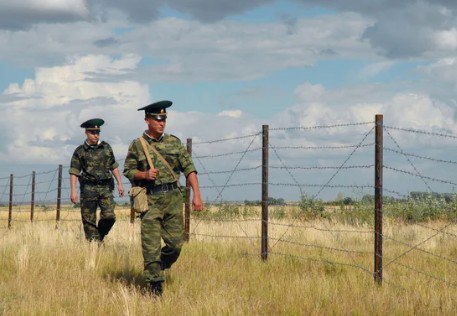
Tajikistan’s border troops have reported an armed incident along the country’s southern border with Afghanistan. While the attackers were neutralized during the confrontation, Tajikistan suffered casualties among its personnel. According to the State Committee for National Security (SCNS) of the Republic of Tajikistan, the incident occurred late on December 23, 2025. Three armed individuals described as “members of a terrorist organization” attempted to launch an attack on border post No. 5 “Bo” of the 0341 “Sarchashma” detachment in the Shamsiddin Shohin district. The intruders illegally crossed the state border at approximately 11:30 p.m. and entered Tajik territory. The following morning, at 11:15 a.m., Tajik border guards located the suspects. According to the official statement published by the Khovar news agency, the attackers refused to surrender and opened fire. All three assailants were killed in the ensuing operation. Tajik security forces seized a significant cache of weaponry at the scene, including three M-16 rifles, a Kalashnikov assault rifle, three foreign-made pistols equipped with silencers, ten hand grenades, one pair of night vision goggles, explosives, and other combat gear. Two members of the Border Troops of the SCNS, Zirekhbon Navruzbekov and Ismatullo Kurbonov, were killed in the clash. Authorities extended their condolences to the families of the fallen officers. The SCNS noted that this was the third such incident in the past month involving armed incursions from Afghan territory. In a strongly worded statement, the border service criticized the Taliban authorities for failing to uphold their international obligations and repeated commitments to secure the border and prevent terrorist activity. “These facts confirm that the Taliban government is demonstrating a serious and repeated inability and irresponsibility, in fulfilling its international obligations and consistent promises to ensure security and stability on the state border with the Republic of Tajikistan,” the statement read. Tajikistan called on Afghan authorities to issue a formal apology and implement additional effective measures to secure the shared border. According to Tajik officials, the border area is now stable, and an investigation into the latest incident is ongoing. Two earlier attacks were reported on November 26 and 30, 2025, also originating from Afghan territory. In those incidents, five Chinese citizens were killed and three injured. The attacks targeted a mining company in the Shohin district and a construction company in the Darvaz district. Tajikistan condemned the attacks and demanded that the Taliban arrest those responsible. The Afghan Foreign Ministry responded by stating that the attacks were intended to “create instability and mistrust between countries in the region.” President Emomali Rahmon publicly condemned the incidents and ordered Tajik security forces to take decisive measures to restore stability and prevent further cross-border attacks.

Tajikistan Launches Program to Reintegrate Convicted Extremists into Society

Tajik authorities have launched a state-backed program aimed at reintegrating citizens convicted of extremism and terrorism into peaceful civilian life. The initiative, which will run from 2025 to 2029, seeks to reduce the likelihood of re-engagement with radical movements and support the return of these individuals to society. New State Initiative: Goals and Budget According to official documents, the program is set to receive 38.5 million Tajikistani somoni (approximately $3.6 million) in funding. Nearly half of the funds will come from the state budget, with the remainder provided through international grants and extra-budgetary sources. The initiative includes a comprehensive set of measures: physical and psychological rehabilitation, vocational training, employment support, and involvement in patriotic and cultural activities. These components are designed to assist former prisoners in adjusting to life outside correctional facilities. Upon release, participants will be closely monitored to prevent any return to extremist ideologies. Implementation and oversight will be managed by local authorities and specialized agencies under the Ministry of Justice, which is tasked with submitting regular progress reports to the government. Understanding Pathways to Radicalization The drivers of radicalization in Central Asia are complex and multifaceted. Rustam Azizi, a specialist in countering violent extremism, told Asia-Plus that economic hardship alone does not account for why some individuals are drawn to extremist groups such as ISIS, Ansarullah, or the Taliban. “Economic difficulty doesn't automatically lead to radicalization, other negative outcomes like crime or social withdrawal are also possible,” Azizi explained. “Moreover, real-life cases show that not all recruits come from impoverished backgrounds.” Migration, while often discussed as a risk factor, does not directly cause radicalization, according to Azizi. Rather, it can create an environment where individuals are more exposed to recruitment efforts, particularly among youths aged 18 to 26. Azizi identifies three main categories of individuals most susceptible to radicalization: 1. Identity crisis: Often from secular, modernized, or mixed-background families, these individuals turn to religion as a way to find belonging, purpose, or self-worth. Frequently recent converts or newly observant Muslims, they may express a sentiment such as: “I may not be a good Tajik, but I am a very good Muslim.” 2. Individuals with criminal tendencies: For this group, terrorist organizations offer a platform to continue illicit activities under the cover of religious struggle. Notable examples include Abu Khalid Kulobi (Nusrat Nazarov) and Abu Usama Noraki (Tojiddin Nazarov), both of whom were involved in drug trafficking before joining ISIS. 3. Marginalized citizens: Representing the largest group, these individuals often come from remote areas and have limited access to education and economic opportunity. Lacking formal religious training, they are especially susceptible to simplistic, binary religious narratives—such as Muslims versus infidels, halal versus haram, jihad versus martyrdom—and are particularly vulnerable to recruitment. It is this demographic that the new government program primarily targets, with an emphasis on prevention, education, and structured support after incarceration. Authorities believe these efforts will promote national stability and help curb the threat posed by radical movements.
