• KGS/USD = 0.01143 0%
  • KZT/USD = 0.00202 0%
  • TJS/USD = 0.10661 -0.19%
  • UZS/USD = 0.00008 0%
  • TMT/USD = 0.28575 0%
  • KGS/USD = 0.01143 0%
  • KZT/USD = 0.00202 0%
  • TJS/USD = 0.10661 -0.19%
  • UZS/USD = 0.00008 0%
  • TMT/USD = 0.28575 0%
  • KGS/USD = 0.01143 0%
  • KZT/USD = 0.00202 0%
  • TJS/USD = 0.10661 -0.19%
  • UZS/USD = 0.00008 0%
  • TMT/USD = 0.28575 0%
  • KGS/USD = 0.01143 0%
  • KZT/USD = 0.00202 0%
  • TJS/USD = 0.10661 -0.19%
  • UZS/USD = 0.00008 0%
  • TMT/USD = 0.28575 0%
  • KGS/USD = 0.01143 0%
  • KZT/USD = 0.00202 0%
  • TJS/USD = 0.10661 -0.19%
  • UZS/USD = 0.00008 0%
  • TMT/USD = 0.28575 0%
  • KGS/USD = 0.01143 0%
  • KZT/USD = 0.00202 0%
  • TJS/USD = 0.10661 -0.19%
  • UZS/USD = 0.00008 0%
  • TMT/USD = 0.28575 0%
  • KGS/USD = 0.01143 0%
  • KZT/USD = 0.00202 0%
  • TJS/USD = 0.10661 -0.19%
  • UZS/USD = 0.00008 0%
  • TMT/USD = 0.28575 0%
  • KGS/USD = 0.01143 0%
  • KZT/USD = 0.00202 0%
  • TJS/USD = 0.10661 -0.19%
  • UZS/USD = 0.00008 0%
  • TMT/USD = 0.28575 0%
08 February 2026

Viewing results 1 - 6 of 9

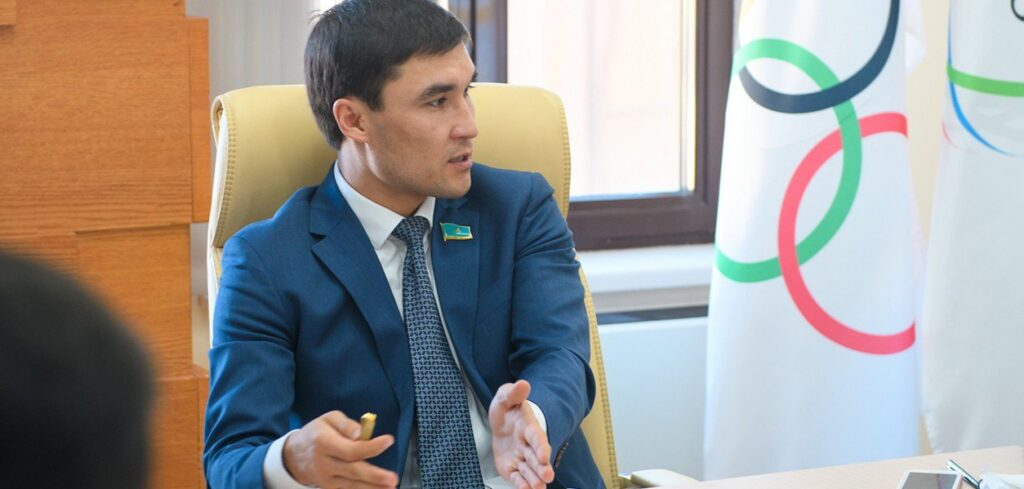
Olympic Boxing Champion Serik Sapiyev Assaulted by Deputy

A criminal case has been opened in Kazakhstan following the assault of Olympic boxing champion Serik Sapiyev by his deputy, Dauren Esimkhanov, in the Karaganda region’s Department of Physical Culture and Sports. The incident has triggered public outcry and intensified scrutiny of internal dynamics within the regional sports administration. Sapiyev, who currently heads the department, stated that the altercation was work-related. While the regional administration urged the public and media not to draw premature conclusions, it acknowledged that Esimkhanov had committed an offense and must be held accountable. A native of Karaganda, Sapiyev rose to prominence after winning gold in the 69 kg weight category at the 2012 London Olympics, where he was also awarded the Val Barker Trophy for most technical boxer. A two-time world amateur champion and two-time Asian champion, Sapiyev retired from professional boxing in 2012. He launched a political career the following year, becoming a UNESCO Goodwill Ambassador in 2013 and later serving as a deputy in the Mazhilis, Kazakhstan’s lower house of parliament, in 2017. In 2018, Sapiyev stepped down from parliament to lead the Committee on Sports and Physical Culture under the Ministry of Culture and Sports. He left the ministry in 2021 and, in late 2024, assumed his current position in Karaganda. The altercation reportedly took place on January 21 at a sports complex in Karaganda and was confirmed by local police. The Karaganda Region Police Department announced a criminal case based on a statement from the 42-year-old Sapiyev, citing grounds of assault. Esimkhanov, a sambo champion with accolades at both the Asian and world levels, has not denied involvement. Sapiyev addressed the incident on Instagram, asserting that the conflict stemmed from attempts to interfere with staffing decisions in the region's sports institutions without his knowledge. “I want to clarify: what happened was not a personal or domestic conflict, but rather resistance from certain individuals who have unofficial influence in the region,” Sapiyev wrote. “Without my knowledge, an attempt was made to illegally rotate the heads of sports organizations in the region. When I discovered this, I tried to stop it peacefully. I want to openly state that no provocations will shake my determination to implement systemic reforms in Kazakhstani sports, which the head of state has repeatedly spoken about.” In response, Esimkhanov claimed on social media that misinformation was being spread. “Currently, information that does not reflect the objective reality is being circulated. I ask you not to succumb to provocations and attempts to destabilize the situation by unscrupulous individuals,” he wrote. Ermaganbet Bulekpaev, the Akim of the Karaganda region, whose office oversees the department, called for caution and restraint while the investigation is underway. He confirmed that the Department for Civil Service Affairs will conduct a full inquiry, including a comprehensive audit of the department’s operations. “There has been a violation, and responsibility must be taken for it,” Bulekpaev stated during a staff meeting. “An investigation is underway, and each action will be given a legal assessment.” The scandal comes on...

Kazakhstan Opens Criminal Probe Over Calls to Attack CPC Oil Pipeline

Kazakhstan has opened a criminal investigation into public statements that authorities say encouraged attacks on the Caspian Pipeline Consortium (CPC), the main export route for the country’s crude oil, after months of disruption at the system’s Black Sea terminal turned a foreign security risk into a domestic legal and political issue. Prosecutor General Berik Asylov confirmed the case in a written reply to a parliamentary inquiry on January 6. "On December 17, 2025, the Astana City Police Department launched a pre-trial investigation under Part 1 of Article 174 of the Criminal Code of the Republic of Kazakhstan (incitement of social, national, tribal, racial, class, or religious discord) into negative public comments regarding damage to the Caspian Pipeline Consortium," the Prosecutor General stated. The authorities have yet to name suspects, publish the posts under review, or announce any arrests. The file remains at the evidence-gathering stage, and prosecutors have left open whether any charges will ultimately be filed under Article 174, or reclassified under other provisions once investigators assess the intent and impact. The probe follows a request by Mazhilis deputy, Aidos Sarym, who said that some social media commentary crossed from opinion into encouragement of harm to strategic infrastructure, endorsed attacks on the CPC, and urged further strikes on critical sites. The political sensitivity is rooted in the 1,500-kilometer pipeline’s central role in Kazakhstan’s economy. CPC carries crude from western Kazakhstan to a marine terminal near Russia’s Black Sea port of Novorossiysk, where the oil is loaded onto tankers for delivery to global markets. The pipeline is owned by a consortium that includes Kazakhstan, Russia, and several international energy companies. The system dominates Kazakhstan’s oil export economy. More than 80% of the country’s crude oil exports move through the CPC route, which also carries more than 1% of global oil supplies, making it a pressure point for both markets and state revenue when operations are disrupted. The investigation follows a period of repeated disruption at the Novorossiysk terminal in late 2025, after a naval drone strike damaged one of the offshore loading points used to transfer oil from the pipeline to tankers. The damage forced operators to suspend loadings and move vessels away while inspections and repairs were carried out, sharply reducing export capacity. The CPC relies on single-point moorings positioned at sea to load crude onto tankers, a critical constraint on the entire system; when one goes offline, capacity drops quickly. The pipeline cannot store large volumes, forcing upstream producers to cut or slow output. By late December, the impact was visible in Kazakhstan’s production figures. Oil output fell by about 6% during the month after the late November strike constrained exports. Production at the Tengiz oilfield, the country’s largest, dropped by roughly 10%. Exports of CPC Blend crude fell to about 1.08 million barrels per day in December, the lowest level in more than a year, as the terminal operated with only one functioning mooring while others remained offline due to damage and maintenance. Operational pressures continued as...

Russia Closes Criminal Case Into AZAL Plane Crash Near Aktau

Russia has closed its criminal investigation into the crash of an Azerbaijan Airlines (AZAL) aircraft near Aktau, a move that has drawn sharp criticism from Baku, according to Azerbaijani news outlet Minval Politika. Citing Foreign Minister Jeyhun Bayramov, the outlet reported that a letter from Alexander Bastrykin, the head of Russia’s Investigative Committee, notifying Baku of the case's closure caused “serious surprise” on the Azerbaijani side. Bayramov stated that Azerbaijan had issued a detailed and principled response to the letter and expects the process to proceed in accordance with public commitments made by Russian President Vladimir Putin in Dushanbe, as well as bilateral agreements between the two countries. The announcement came just days after Kazakhstan’s Ministry of Transport issued an interim update on its own investigation into the December 2024 crash of the Embraer E190 aircraft operated by AZAL. The update noted that accredited representatives from Azerbaijan, Russia, and Brazil are participating in the probe, alongside an observer from the International Civil Aviation Organization. The crash occurred on December 25, 2024, when the aircraft was operating a scheduled passenger flight from Baku to Grozny. After multiple failed landing attempts in Grozny, the crew diverted to Aktau, on Kazakhstan’s Caspian Sea coast. The plane reportedly circled the airfield twice before crashing near the runway and catching fire. Of the 67 people aboard, 62 passengers and five crew members, 38 were killed. The remaining 29 survived, including two members of the flight crew. Kazakhstan’s Ministry of Transport emphasized that the sole objective of its ongoing investigation is to determine the causes and contributing factors of the accident to prevent similar incidents in the future. The final report, including safety recommendations, will be released once all technical analyses are complete. In September, The Times of Central Asia reported that Russia had begun disbursing insurance payments related to the crash. The Russian Foreign Ministry stated that AlfaStrakhovanie JSC, one of Russia’s largest insurers and currently under Western sanctions over the war in Ukraine, began issuing compensation in February 2025. Azerbaijan Airlines reportedly received full compensation of 1.003 billion rubles (approximately $12.3 million) for the aircraft. Additionally, insurance claims related to injuries and fatalities among 46 of the 62 passengers had been settled. These included payments to seven of the 15 Russian citizens, 35 of the 38 Azerbaijani citizens, all three Kyrgyz citizens, and one of the six Kazakh citizens on board. As of that date, total insurance payouts to injured passengers and the families of those killed amounted to 358.4 million rubles. Russia’s decision does not affect the ongoing technical investigation being led by Kazakhstan.

U.S. Prosecutors Charge Two Tajik Nationals in Human Smuggling Operation

Two men from Tajikistan have been arrested and charged in Pennsylvania for allegedly smuggling people into the United States via the border with Mexico. Federal prosecutors said the defendants were charged with trying to bring a foreign citizen into the United States for financial gain and also conspiring to bring other foreigners into the U.S. as part of the smuggling operation. If convicted, they face a maximum of 10 years in prison for each count. “The indictment alleges that, as part of their conspiracy, the defendants assisted in smuggling Co-Conspirator #1 into the United States, and then received referrals through Co-Conspirator #1 to smuggle additional illegal aliens into the U.S.,” the U.S. Attorney’s Office for the Eastern District of Pennsylvania said in a statement on Tuesday. The statement identified the defendants as Bekhzod Rakhmatov, 30, of Maineville, Ohio, and Munis Khojiev, 31, of Philadelphia. It said they had also illegally entered the United States. Allegations against the suspects say that from about December 2022 to about May 2025, the two men worked to secure visas and passports for people who traveled through a number of countries with the aim of reaching the U.S.-Mexico border. “The defendants solicited and received funds from, and on behalf of, illegal aliens, as payment for smuggling the illegal aliens into the United States,” federal prosecutors said. The indictment comes as the U.S. cracks down on migration, including from some countries in Central Asia. Citizens from Turkmenistan face restrictions on travel to the United States under an order signed by President Donald Trump that bans or curbs the entry of nationals from 19 countries. The order took effect on June 9. Kyrgyzstan has expressed concern about reports that it might be included in another group of countries that will possibly be subject to similar U.S. bans and restrictions.

Artificial Intelligence to Assist Criminal Investigations in Kazakhstan

Kazakhstan has launched a pilot project to integrate artificial intelligence (AI) into law enforcement operations. The initiative, titled “Digital Assistant to the Investigator,” is being implemented by the General Prosecutor’s Office and the Ministry of Internal Affairs in a district police department in Astana. The system was officially introduced last week, with participation from Sabit Nurlybay, Chairman of the Committee on Legal Statistics and Special Records of the General Prosecutor’s Office, and Sanjar Adilov, Deputy Minister of Internal Affairs. Built on AI algorithms and large-scale data processing, the digital assistant is designed to support investigators by identifying connections between cases, generating predictions, and offering procedural recommendations both for conducting investigations and preventing crime. According to a statement from the Prosecutor General’s Office, the system is divided into three main modules: Investigation Planning - Upon registration of a criminal case, the system classifies the offense, outlines an investigative strategy based on existing circumstances, and suggests relevant witnesses to question and expert examinations to conduct Testimony Processing - AI transcribes spoken testimony into text during interviews, simultaneously analyzing speech patterns and behavior to detect contradictions and inconsistencies Document Generation - Based on interview data, the system drafts investigation documents that the investigator only needs to verify and sign The platform also generates final case documents, integrating information from the specific investigation along with relevant judicial precedents. Officials say the AI tool is expected to reduce investigation times and offload routine technical tasks from investigators. The initiative follows Kazakhstan’s unveiling of the most powerful supercomputer in Central Asia last month, a move aimed at bolstering national digital infrastructure and AI development. Kazakhstan’s push for AI integration aligns with findings from the International Monetary Fund, which last year ranked the country as the regional leader in AI readiness.