
• KGS/USD = 0.01143 -0%
  • KZT/USD = 0.00198 -0%
  • TJS/USD = 0.10899 0.93%
  • UZS/USD = 0.00008 0%
  • TMT/USD = 0.28490 -0.28%
  • KGS/USD = 0.01143 -0%
  • KZT/USD = 0.00198 -0%
  • TJS/USD = 0.10899 0.93%
  • UZS/USD = 0.00008 0%
  • TMT/USD = 0.28490 -0.28%
  • KGS/USD = 0.01143 -0%
  • KZT/USD = 0.00198 -0%
  • TJS/USD = 0.10899 0.93%
  • UZS/USD = 0.00008 0%
  • TMT/USD = 0.28490 -0.28%
  • KGS/USD = 0.01143 -0%
  • KZT/USD = 0.00198 -0%
  • TJS/USD = 0.10899 0.93%
  • UZS/USD = 0.00008 0%
  • TMT/USD = 0.28490 -0.28%
  • KGS/USD = 0.01143 -0%
  • KZT/USD = 0.00198 -0%
  • TJS/USD = 0.10899 0.93%
  • UZS/USD = 0.00008 0%
  • TMT/USD = 0.28490 -0.28%
  • KGS/USD = 0.01143 -0%
  • KZT/USD = 0.00198 -0%
  • TJS/USD = 0.10899 0.93%
  • UZS/USD = 0.00008 0%
  • TMT/USD = 0.28490 -0.28%
  • KGS/USD = 0.01143 -0%
  • KZT/USD = 0.00198 -0%
  • TJS/USD = 0.10899 0.93%
  • UZS/USD = 0.00008 0%
  • TMT/USD = 0.28490 -0.28%
  • KGS/USD = 0.01143 -0%
  • KZT/USD = 0.00198 -0%
  • TJS/USD = 0.10899 0.93%
  • UZS/USD = 0.00008 0%
  • TMT/USD = 0.28490 -0.28%
06 December 2025

Viewing results 1 - 6 of 7

Kazakhstan Launches Electronic Queue System at Border Crossing with Kyrgyzstan

Kazakhstan is expanding the use of its CarGoRuqsat electronic queue system at border crossings with neighboring countries, aiming to streamline freight transport. The system allows transport operators to pre-book border crossing times online or via a mobile app, making the process more efficient and predictable. Beginning October 20, CarGoRuqsat will be implemented at the Karasu checkpoint on the Kazakh-Kyrgyz border, according to the State Revenue Committee of Kazakhstan’s Ministry of Finance. The move has been welcomed by Kyrgyz freight operators, who in recent years have faced multi-day delays at the border, often while transporting perishable agricultural goods. The electronic system is expected to ease these bottlenecks and improve the overall efficiency of cross-border logistics. CarGoRuqsat is part of Kazakhstan’s broader digitalization initiative across its borders with member states of the Eurasian Economic Union (EAEU), which includes Armenia, Belarus, Kazakhstan, Kyrgyzstan, and Russia. The system is already operational at Kazakhstan’s borders with China, Uzbekistan, Turkmenistan, Russia, and Kyrgyzstan. Since its launch, more than 500,000 trucks have used the platform across 33 border crossings with EAEU countries. A similar initiative has also been introduced on the Kyrgyz-Uzbek border. As previously reported by The Times of Central Asia, an Electronic Queue Management System (e-QMS) was recently launched at the Dostuk checkpoint, the main crossing between Kyrgyzstan and Uzbekistan on the Osh-Andijan highway. That system, like CarGoRuqsat, enables drivers to reserve crossing slots digitally, reducing wait times, easing congestion, and improving the reliability of transit.
Electronic Queue System Launched at Key Kyrgyz-Uzbek Border Crossing

An Electronic Queue Management System (e-QMS) has been launched at the Dostuk border crossing, the primary checkpoint between Kyrgyzstan and Uzbekistan along the Osh-Andijon road. The initiative, developed through cooperation between the Kyrgyz government, the European Union, and the International Trade Centre (ITC), is part of the “Ready4Trade Central Asia” project (2024-2028), which aims to streamline trade procedures and boost economic competitiveness across the Trans-Caspian Transport Corridor. Funded by the European Union, the project is designed to simplify cross-border operations and improve conditions for small and medium-sized enterprises. The e-QMS platform, developed by the ITC in collaboration with Kyrgyzstan’s State Customs Service and Ministry of Economy and Commerce, allows transport operators to pre-book border crossing times online or via a mobile app. The system is expected to reduce waiting times, ease congestion, and improve the predictability of border transit, benefiting both carriers and customs authorities through greater transparency, efficiency, and safety. “For Kyrgyzstan, the implementation of e-QMS is a cornerstone in creating a business-friendly environment for exporters. The new system simplifies procedures, reduces costs for exporters and carriers, and makes trade more transparent and efficient,” said Iskender Asylkulov, Kyrgyzstan's Deputy Minister of Economy and Commerce. The system was initially piloted at the Kyzyl-Kiya border crossing in November 2024, where it processed more than 12,000 vehicles in its first six months. Following positive feedback from transport operators and significant reductions in wait times, the system has now been expanded to Dostuk, one of the region’s busiest crossings. In 2024 alone, over 87,000 vehicles passed through Dostuk, including more than 21,000 import consignments, nearly 8,000 export shipments, and over 58,000 transit movements. The deployment of the e-QMS is expected to further boost trade between Kyrgyzstan and Uzbekistan, which reached $846 million in 2024. From January to June 2025, bilateral trade turnover totaled $430.2 million, $50 million more than during the same period in 2024, according to data from Uzbekistan’s National Statistics Committee.

Kyrgyzstan Advances New Cross-Border Transport Corridor with China via Bedel Pass

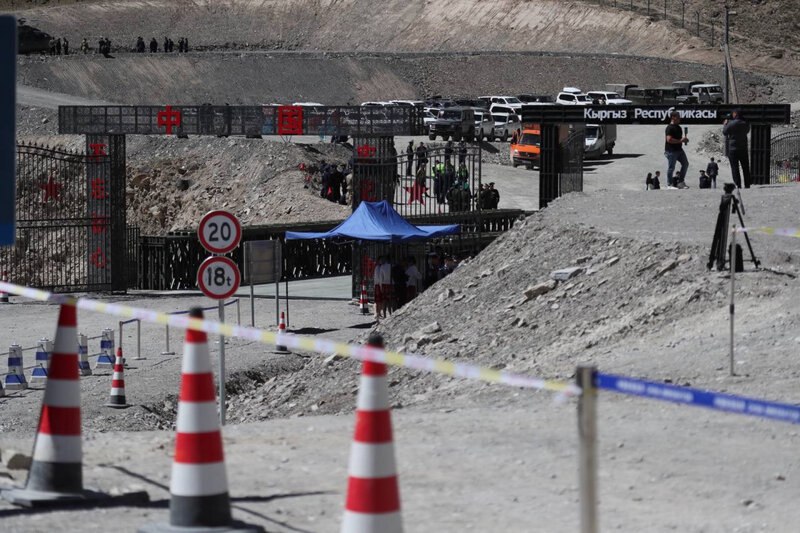
Kyrgyzstan is advancing plans to develop a new international transport corridor through the Bedel checkpoint on the Chinese border, aiming to boost cross-border trade and reduce reliance on high-altitude routes that are often impassable in winter. Bedel Corridor Gains Momentum The proposed corridor was a central focus during Deputy Chairman of the Cabinet of Ministers Bakyt Torobaev’s July 8 visit to Beijing. Torobaev met with Chinese corporate leaders to discuss the construction of the Barskoon-Uchturfan-Aksu highway, which would link Kyrgyzstan’s Issyk-Kul Region with China’s Aksu Prefecture in Xinjiang via the Bedel Pass. The Bedel checkpoint, located in a remote mountainous region of southeastern Kyrgyzstan, was first opened under a simplified regime in September 2024. It lies roughly equidistant from Karakol and Aksu and currently operates with temporary infrastructure. According to the Kyrgyz government, the route’s full-scale development, including a modern highway and internationally compliant border facilities, is scheduled for completion by 2027. Bedel will become Kyrgyzstan’s third automobile crossing point with China, alongside the Irkeshtam (Osh Region) and Torugart (Naryn Region) passes. These older routes are frequently disrupted by severe winter weather. The new corridor is expected to offer a more reliable and time-efficient alternative for cargo moving between Xinjiang and Kyrgyzstan, reducing dependence on the longer Kashgar-Torugart-Naryn-Bishkek route. In Beijing, Torobaev and Chinese officials agreed to organize reciprocal business visits and establish joint working groups with representatives from both governments to coordinate the project. The corridor is expected to strengthen Kyrgyzstan’s role as a regional transit hub, facilitating the re-export of Chinese goods to third countries. Bilateral trade between Kyrgyzstan and China reached $23 billion in 2024, an eightfold increase in recent years. Progress on China-Kyrgyzstan-Uzbekistan Railway During his Beijing visit, Torobaev also attended the 12th World Congress on High-Speed Rail, where he emphasized the strategic importance of the China-Kyrgyzstan-Uzbekistan (CKU) railway project. The 523-kilometer line includes 304 kilometers running through Kyrgyz territory. Construction officially began on December 27, 2024, in Jalal-Abad. Once complete, the railway will link China’s Kashgar with the Kyrgyz cities, Torugart, Makmal, and Jalal-Abad, before continuing to Andijan in Uzbekistan. The project is designed to handle up to 15 million tons of cargo annually and carries an estimated investment of $4.7 billion. Torobaev noted that the Makmal transshipment station will serve as the core logistics hub on the Kyrgyz side, featuring customs infrastructure, storage facilities, and multimodal services to ensure smooth cargo transit between China and Uzbekistan. “The CKU railway is the shortest route between East and West,” he said. “It will connect China to European and Middle Eastern markets, forming a vital transport artery.” Torobaev also announced a proposed rail extension between Aksu in China and Balykchy in Kyrgyzstan via the Bedel checkpoint, which would further enhance the regional transport network.
