


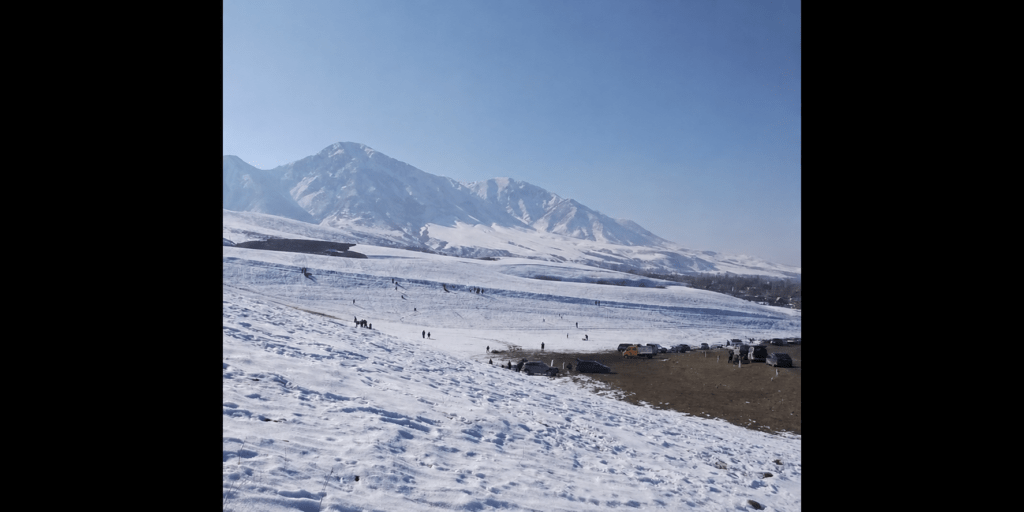
Kyrgyzstan’s Issyk-Kul Glaciers Have Lost One-Third of Their Area
Glacier coverage in the Issyk-Kul Basin has shrunk by 33.7% compared with records from 70–90 years ago, according to an updated inventory released by Kyrgyzhydromet, the Hydrometeorological Service under Kyrgyzstan’s Ministry of Emergency Situations. The service said coverage had declined by 23.1% over the past 7–10 years, indicating that the retreat has accelerated. The revised inventory was compiled using Copernicus Sentinel-2 satellite imagery, Google Earth, QGIS, and earlier glacier catalogs. Researchers refined glacier boundaries, documented fragmentation, and identified glaciers that had disappeared. Kyrgyzhydromet attributed the decline to climate change and said the new inventory would provide a baseline for assessing the country’s long-term water resources. The retreat has implications for Lake Issyk-Kul, which is fed by rivers originating in the surrounding mountains. The 2018 Catalogue of Glaciers of Kyrgyzstan, based on Landsat 8 imagery from 2013–2016, recorded 957 glaciers covering 560.8 square kilometers in the Issyk-Kul Basin. About 118 rivers and streams flow into the lake, many supplied by snow and glacial melt. Between 1927 and 2003, the lake’s water level fell by 2.75 meters. Continued glacier loss could reduce river inflows and increase pressure on agriculture and tourism, both of which depend heavily on the basin’s water resources. In December 2025, the Cabinet of Ministers approved the Concept for the Sustainable Development of the Ecological and Economic System of Lake Issyk-Kul through 2030, along with an action plan. The measures include modernizing irrigation infrastructure and expanding the use of water-saving technologies, supported by concessional financing for farmers. Kyrgyzstan is also preparing a feasibility study for an integrated national cryosphere monitoring system. The proposed system would combine monitoring of glaciers and snow cover with other parts of the cryosphere. The new inventory provides a more recent basis for that work and for future water management and climate risk assessments.
