• KZT/USD = 0.00219
  • TJS/USD = 0.10800
  • UZS/USD = 0.00008
  • TMT/USD = 0.29850
  • KZT/USD = 0.00219
  • TJS/USD = 0.10800
  • UZS/USD = 0.00008
  • TMT/USD = 0.29850
  • KZT/USD = 0.00219
  • TJS/USD = 0.10800
  • UZS/USD = 0.00008
  • TMT/USD = 0.29850
  • KZT/USD = 0.00219
  • TJS/USD = 0.10800
  • UZS/USD = 0.00008
  • TMT/USD = 0.29850
  • KZT/USD = 0.00219
  • TJS/USD = 0.10800
  • UZS/USD = 0.00008
  • TMT/USD = 0.29850
  • KZT/USD = 0.00219
  • TJS/USD = 0.10800
  • UZS/USD = 0.00008
  • TMT/USD = 0.29850
  • KZT/USD = 0.00219
  • TJS/USD = 0.10800
  • UZS/USD = 0.00008
  • TMT/USD = 0.29850
  • KZT/USD = 0.00219
  • TJS/USD = 0.10800
  • UZS/USD = 0.00008
  • TMT/USD = 0.29850
26 November 2026

Viewing results 1 - 6 of 3

COP31 Climate Pact Collapses, Leaving Central Asia’s Adaptation Finance Unresolved

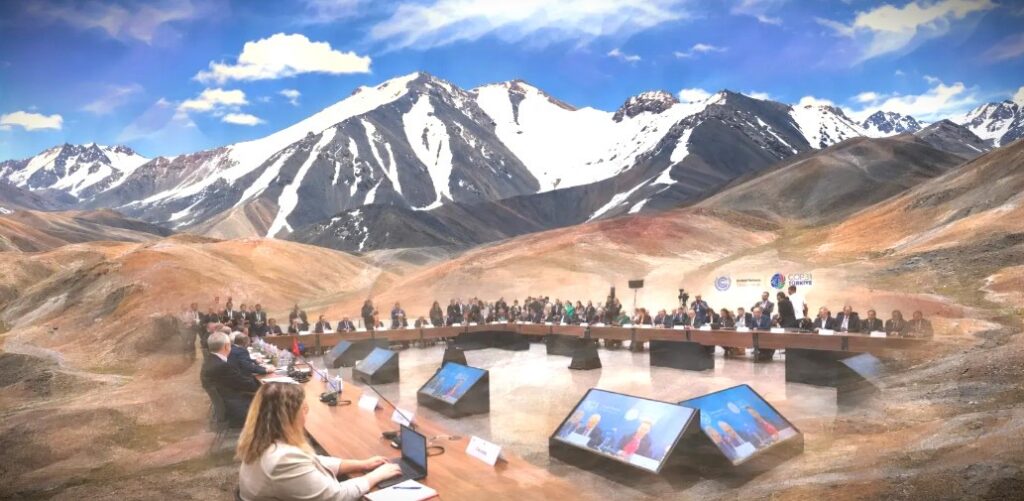
The proposed global climate pact at COP31 collapsed in Antalya on November 22 after the European Union and other delegations rejected the compromise. The breakdown also left a proposed program for mountain regions and glacier-dependent communities unadopted in a significant setback for Kyrgyzstan and Tajikistan. COP31 President Murat Kurum acknowledged that the text lacked consensus and said no replacement would be issued. The failure leaves existing climate agreements in force, but the summit produced no new overarching political deal on fossil fuels or adaptation finance. The rejected Antalya Pact referred to the 2023 Dubai climate agreement without explicitly mentioning coal, oil or gas. European and vulnerable island delegations opposed that omission, while Russia defended continued fossil-fuel supplies, and Saudi Arabia argued that all climate technologies should remain available. The compromise promoted electrification alongside carbon-capture technology, prompting warnings that the latter could prolong dependence on fossil fuels. Climate scientist Ricky Rood used an analogy shared by fellow scientist Jeff Masters: “Imagine your bathtub is overflowing. Water is pouring across the floor. You know exactly what the problem is. But instead of turning off the tap, you announce an ambitious investment in towels. And then decide to install an even bigger tap.” Climate Finance Stalls The finance negotiations ended without a new quantified commitment to help developing countries adapt to worsening climate impacts. The final proposal abandoned an earlier $120 billion annual target, instead calling for further talks in 2027 on how to triple adaptation finance by 2035, without establishing a baseline for that increase. Harjeet Singh, global convener of the Fill the Fund campaign and founding director of the Satat Sampada Climate Foundation, criticized the failed proposal: “Rich countries refused to put money on the table to help communities prepare for and recover from climate disasters, and handed polluters a free pass instead. No deal is better than a deal that locks in failure.” Uzbekistan estimates that meeting its climate commitments by 2030 will require $33.7 billion for emissions reduction and $15.7 billion for adaptation. Prior to the summit, Presidential environmental adviser Aziz Abdukhakimov told The Times of Central Asia: “Access to adequate, predictable and affordable climate finance remains essential for developing countries to achieve their climate goals.” Before the breakdown, Nargis Kosimova of Uzbekistan’s Ekolog association told CAN EECCA that climate commitments should be judged by “real results: improved air and water quality, preserved biodiversity and greater environmental safety for the population.” Some regional financing was secured independently of the failed political deal. On October 28, the Green Climate Fund approved a $133.9 million grant for Climate-Resilient Landscapes in Central Asia. The program covers Uzbekistan, Kyrgyzstan and Tajikistan and has an overall planned value of $296 million, including expected co-financing. It will support restoration and climate-resilient farming in 180 municipalities. Some Agreements Survive the Breakdown The Development Bank of Kazakhstan signed three agreements at COP31 for energy projects with a combined estimated value of about $1.3 billion. They cover a 150-megawatt wind farm in the Turkistan region costing $161.4 million,...
Opinion: What is on the agenda for Central Asia at COP31?

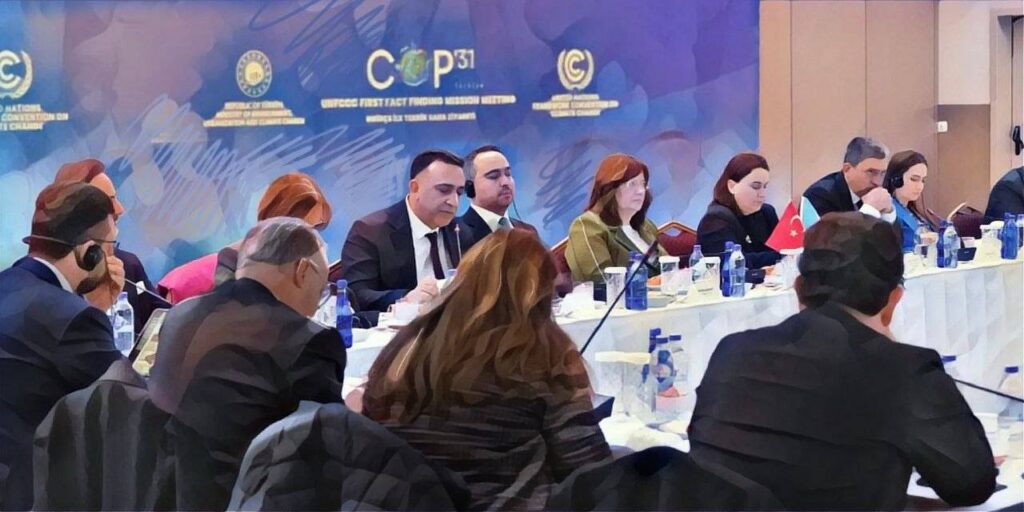
The 2026 United Nations Climate Change Conference, better known as COP31, is taking place in Antalya, Türkiye, from November 9 to 20. Delegations from almost 200 countries will participate in the event, including all the Central Asian republics, but Uzbekistan and Kazakhstan will play an outsize role in coordinating their messaging and ensuring the regional environmental agenda gets the time it needs in the spotlight. The buzzword for the C5 in Türkiye is “cooperation.” Kazakhstan’s Ministry of Ecology and Natural Resources will host a meeting for Central Asia’s five environmental ministers at its national pavilion to discuss regional cooperation and joint climate initiatives. Uzbekistan is committed to contributing to common positions on glacier retreat, water security, adaptation needs, and equitable access to climate finance through the multilateral Mountain Group and the Group of Landlocked Developing Countries (LLDCs). Turkmenistan will continue pushing for the formation of the Ashgabat Climate Dialogue as a new multilateral platform for promoting climate change initiatives. In line with its Mountain Agenda, the Kyrgyz Republic will be lobbying for support to establish the Global Mountain Resilience Center in Bishkek. Mobilizing affordable climate finance is critical for all the republics. According to the Climate Policy Initiative, global climate finance reached $2 trillion in 2024, against estimated annual mitigation finance needs of $7.8 trillion through 2030. In an interview with The Times of Central Asia, Aziz Abdukhakimov, Presidential Adviser on Environmental Issues and Chair of the National Committee on Ecology and Climate Change of the Republic of Uzbekistan, stated: “Access to adequate, predictable and affordable climate finance remains essential for developing countries to achieve their climate goals. For Uzbekistan, the implementation of our national climate commitments is estimated to require approximately $33.7 billion for mitigation and $15.7 billion for adaptation by 2030.” Closing, or at least narrowing, that gap requires building support among international financial institutions, multilateral development banks, development partners, and private investors. The GEF Council, meeting in Samarkand ahead of the Eighth GEF Assembly, endorsed a $3.9 billion replenishment package (GEF-9), demonstrating donor interest and tangible commitment to climate projects, including for a restoration project in the Chu and Talas river basins shared by Kazakhstan and Kyrgyzstan, and for a risk mitigation facility to attract private investment into Uzbekistan’s renewable energy sector. But there is hope that commitments at COP31 will go further. In September 2026, during Climate Week NYC, President-Designate Murat Kurum announced that Uzbekistan would be one of the first five pilot countries to receive support under the Climate Implementation Bridge (BRIDGE), the flagship initiative of COP31. This represents an important opportunity to translate national climate priorities into investment-ready projects and facilitate access to international financing. In his interview, Abdukhakimov stated that Uzbekistan’s focus will be “mobilizing investment in renewable energy, energy efficiency, climate-resilient infrastructure, sustainable water management, agriculture and ecosystem restoration.” At the same time, Kazakhstan will be presenting its plans to establish a national climate investment platform, plus a framework partnership program for developing the circular economy across Central Asia. Tajikistan will be...

Kyrgyzstan’s Issyk-Kul Glaciers Have Lost One-Third of Their Area

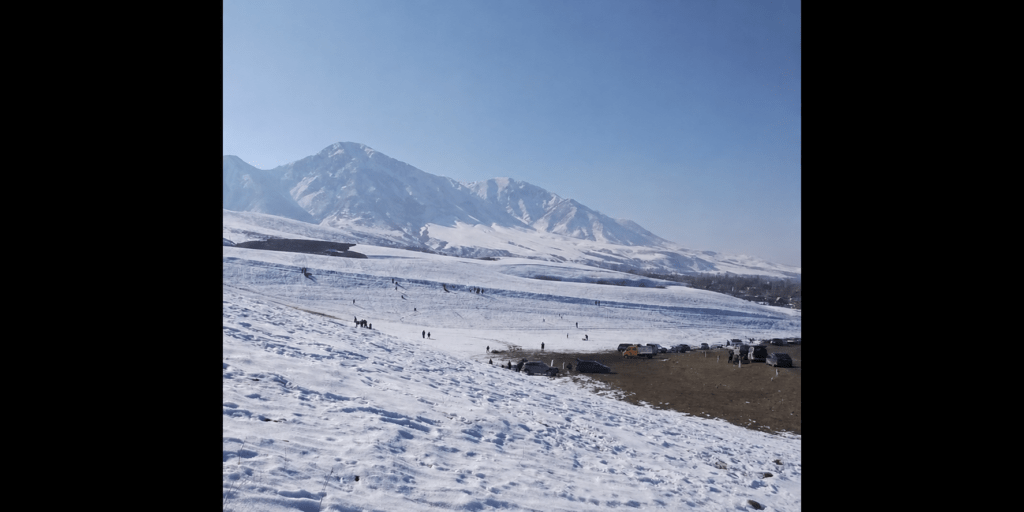
Glacier coverage in the Issyk-Kul Basin has shrunk by 33.7% compared with records from 70–90 years ago, according to an updated inventory released by Kyrgyzhydromet, the Hydrometeorological Service under Kyrgyzstan’s Ministry of Emergency Situations. The service said coverage had declined by 23.1% over the past 7–10 years, indicating that the retreat has accelerated. The revised inventory was compiled using Copernicus Sentinel-2 satellite imagery, Google Earth, QGIS, and earlier glacier catalogs. Researchers refined glacier boundaries, documented fragmentation, and identified glaciers that had disappeared. Kyrgyzhydromet attributed the decline to climate change and said the new inventory would provide a baseline for assessing the country’s long-term water resources. The retreat has implications for Lake Issyk-Kul, which is fed by rivers originating in the surrounding mountains. The 2018 Catalogue of Glaciers of Kyrgyzstan, based on Landsat 8 imagery from 2013–2016, recorded 957 glaciers covering 560.8 square kilometers in the Issyk-Kul Basin. About 118 rivers and streams flow into the lake, many supplied by snow and glacial melt. Between 1927 and 2003, the lake’s water level fell by 2.75 meters. Continued glacier loss could reduce river inflows and increase pressure on agriculture and tourism, both of which depend heavily on the basin’s water resources. In December 2025, the Cabinet of Ministers approved the Concept for the Sustainable Development of the Ecological and Economic System of Lake Issyk-Kul through 2030, along with an action plan. The measures include modernizing irrigation infrastructure and expanding the use of water-saving technologies, supported by concessional financing for farmers. Kyrgyzstan is also preparing a feasibility study for an integrated national cryosphere monitoring system. The proposed system would combine monitoring of glaciers and snow cover with other parts of the cryosphere. The new inventory provides a more recent basis for that work and for future water management and climate risk assessments.
