• KGS/USD = 0.01144 0%
  • KZT/USD = 0.00211 0%
  • TJS/USD = 0.10803 0%
  • UZS/USD = 0.00008 0%
  • TMT/USD = 0.28490 -0.28%
  • KGS/USD = 0.01144 0%
  • KZT/USD = 0.00211 0%
  • TJS/USD = 0.10803 0%
  • UZS/USD = 0.00008 0%
  • TMT/USD = 0.28490 -0.28%
  • KGS/USD = 0.01144 0%
  • KZT/USD = 0.00211 0%
  • TJS/USD = 0.10803 0%
  • UZS/USD = 0.00008 0%
  • TMT/USD = 0.28490 -0.28%
  • KGS/USD = 0.01144 0%
  • KZT/USD = 0.00211 0%
  • TJS/USD = 0.10803 0%
  • UZS/USD = 0.00008 0%
  • TMT/USD = 0.28490 -0.28%
  • KGS/USD = 0.01144 0%
  • KZT/USD = 0.00211 0%
  • TJS/USD = 0.10803 0%
  • UZS/USD = 0.00008 0%
  • TMT/USD = 0.28490 -0.28%
  • KGS/USD = 0.01144 0%
  • KZT/USD = 0.00211 0%
  • TJS/USD = 0.10803 0%
  • UZS/USD = 0.00008 0%
  • TMT/USD = 0.28490 -0.28%
  • KGS/USD = 0.01144 0%
  • KZT/USD = 0.00211 0%
  • TJS/USD = 0.10803 0%
  • UZS/USD = 0.00008 0%
  • TMT/USD = 0.28490 -0.28%
  • KGS/USD = 0.01144 0%
  • KZT/USD = 0.00211 0%
  • TJS/USD = 0.10803 0%
  • UZS/USD = 0.00008 0%
  • TMT/USD = 0.28490 -0.28%

Viewing results 1 - 6 of 21

Kazakhstan’s Crypto Aspirations Face a Power Problem

Kazakhstan’s First Deputy Minister of Digital Development, Innovation, and Aerospace Industry, Kanysh Tuleushin, believes that state-regulated cryptocurrency mining could generate substantial revenue and help modernize the country's energy infrastructure. Tuleushin argues that Kazakhstan has the potential to become Central Asia’s leading blockchain hub. However, this vision clashes with the country’s ongoing energy crisis, which continues to impact households and businesses. Optimistic Vision In an article published in the state newspaper Kazakhstanskaya Pravda, Tuleushin outlined how mining operations could contribute to the development of Kazakhstan’s power generation capabilities. He emphasized the use of associated petroleum gas (APG) to produce electricity for mining, which he claims would reduce carbon emissions and boost oil sector profits. “Miners can help modernize the power grid. In the U.S., they participate in grid balancing by consuming excess energy during low-demand periods. Kazakhstan already has a ‘70⁄30’ initiative, where foreign investors upgrade thermal power plants, allocating 70% of new capacity to the general grid and 30% to miners,” Tuleushin wrote. Tuleushin reported that cryptocurrency mining has brought 17.7 billion tenge to the national budget over the past three years. Meanwhile, trading volume on the Astana International Financial Center (AIFC) exchanges increased from $324.2 million in 2023 to $1.4 billion in 2024. From January 1, 2025, miners will be required to sell 75% of their assets through the AIFC. Despite a generally cautious regulatory stance, Kazakhstan permits digital asset trading within the AIFC. Digital assets are categorized as secured (linked to physical assets) or unsecured (such as Bitcoin and Ethereum). In 2023, digital asset transactions in Kazakhstan reached $4.1 billion, but 91.5% occurred in the “gray zone,” beyond state oversight. In 2024 alone, the Financial Monitoring Agency shut down 36 illegal crypto exchanges, froze $4.8 million in assets, and blocked over 3,500 illicit platforms. Tuleushin argues that fully legalizing and regulating these operations could add more than 190 billion tenge annually to the budget, enough to fund major public infrastructure such as schools and hospitals. He proposes extending crypto trading beyond the AIFC, authorizing crypto ATMs, and opening the market to major players, an approach akin to that of the UAE. Tuleushin also claimed that regions like Pavlodar and Karaganda have electricity surpluses and that Kazakhstan's cold climate further lowers operational costs for miners. Unchecked Consumption and Mounting Strain Despite the deputy minister's optimism, Kazakhstan’s Supreme Audit Chamber (SAC) has raised alarms over uncontrolled energy consumption by miners. According to a 2024 audit, miners consumed 901 million kWh worth 13 billion tenge, despite a national energy shortage, by bypassing RFZ LLP, the country’s sole energy purchaser. Former Prime Minister and current head of the Supreme Audit Chamber, Alikhan Smailov, warned, “Miners are consuming up to a billion kilowatt-hours. This is damaging our economy. How can we allow unchecked consumption amid such a crisis?” The audit revealed systemic issues, including deteriorating Soviet-era power plants (55% average wear), a 4,500-worker shortfall in the energy sector, and a lack of financial oversight by the Ministry of Energy. Looming Crisis In January...

Kazakhstan’s Central Bank Governor: Navigating the “New Global Map”

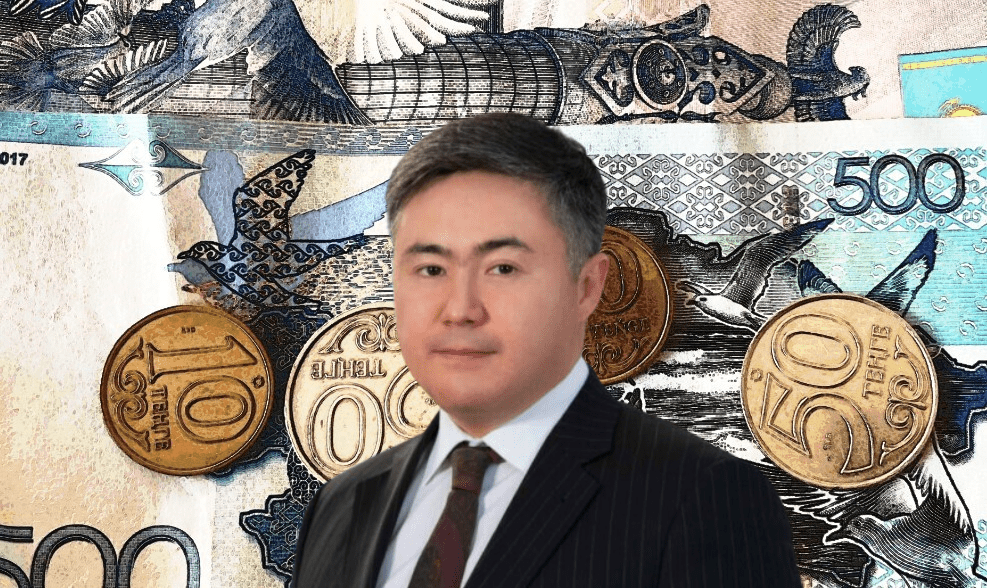
Gov. Timur Suleimenov of the National Bank of Kazakhstan spoke about U.S. tariffs, financial uncertainty, reforms and declining oil prices on Wednesday at the spring meetings in Washington of the World Bank Group and the International Monetary Fund. Here are some of Suleimenov’s key comments in a conversation with Jihad Azour, director of the IMF’s Middle East and Central Asia department: Consumer lending and regulation in Kazakhstan: Due to advances in digitizing financial services, Suleimenov said, “consumer lending became easy for the banks because they're all interlinked to the government databases, they have developed their own databases. So checking a consumer, a potential consumer, and deciding whether or not to go ahead with the loan takes minutes. And therefore everyone can go online and in a couple of weeks get, I don't know, $1,000 microcredit or something like that. That led to proliferation of consumer lending. It grew in last five years, it grew at about 30%. Well, nominal wages grew at about 10-12%. So it's not sustainable and that's why we decided that we're doing something. Our part as macroprudential regulator and our colleagues at the Agency for Oversight, they're doing their part in terms of prudential regulation as well.” U.S. Tariffs: “Now, of course, we're in a completely different setup with tariffs, reshaping global economy, supply chains, investment flows. And I think everyone is yet to find their place on this new global map. In terms of trade with the United States, we have $4.2 billion in trade and most of it is in strategic goods when it comes to U.S. imports from Kazakhstan, therefore it is exempted. But the key element is of course oil prices, global economic turmoil, of course the decrease in oil prices for oil-producing countries. Very important, 50% of our exports is oil, 35-33% of our fiscal revenues is oil. So anything that relates to oil production or oil price affects public finances and overall economic performance of the country. But we are ready, we of course as the situation was unfolding, we have our plan B and plan C. I believe many countries do have the same plan and I think we all should. It's very difficult to predict how this thing plays out.” Navigating Uncertainty “Sometimes times of crisis call for very difficult reforms. But all the stakeholders should be on the same page. Sometimes, you know, things like stability are better than development. They prevail. And therefore, it is for the governments and central banks to sit down together and see what the priorities are, the common national interests, national economic interests, whether it's difficult reforms, whether it's just maintaining stability. Well, in Kazakhstan, I think we're ready for more radical reforms that we're currently implementing. But again, let's be honest, being a petroleum state, oil producing state, makes it much, much more difficult. Because when you have 30% of your GDP in coffers in the national fund… it is very difficult to sell the reforms to the public, to the parliaments, because they're saying, guys, you're sitting on cash. The cash is invested normally, elsewhere, not into the local economy, which is the right way,...

Kazakh Lawmakers Propose Creation of National Cryptobank

Azat Peruashev, leader of the Ak Zhol political party's faction in the Mazhilis, the lower house of Kazakhstan’s parliament, has proposed the establishment of a national cryptobank. The initiative would involve the National Bank of Kazakhstan and second-tier commercial banks. In a formal inquiry addressed to Prime Minister Olzhas Bektenov, Peruashev highlighted the growing interest among Kazakhstanis in digital currencies, which are increasingly viewed as tools for investment, capital preservation, and peer-to-peer transactions. However, Kazakhstan currently lacks a legal framework for the use of digital assets, and the circulation of cryptocurrencies remains officially prohibited. Peruashev warned that this prohibition has driven the crypto market underground, with up to 90 percent of cryptocurrency transactions taking place outside the legal economy. "The ban has only fostered a shadow market, illegal exchanges, grey schemes, tax evasion, and the financing of illicit activities," he said. "Citizens are losing vast sums to scammers, pyramid schemes, and unregulated platforms. Billions in crypto assets are being transferred abroad without oversight, and the state is losing out on substantial tax revenues." Peruashev believes that establishing a cryptobank, a state-recognized institution for the regulation, exchange, and storage of digital assets, could serve as a vital tool for bringing the crypto sector into the legal domain. He proposed involving the National Bank and select commercial banks that already employ digital financial instruments. Such a system, he argued, would allow the state to reclaim control over the majority of crypto-assets circulating within the country and better protect users from fraud. The MP pointed to international precedents. In the United States, Anchorage Digital Bank, Kraken Bank, and Custodia Bank operate with federal oversight. Switzerland is home to SEBA Bank and Sygnum Bank both pioneers in integrating traditional finance with digital assets. “If something can’t be resisted, there’s only one solution, engage and lead. In this case, that means legalize and regulate,” Peruashev stated. As previously reported by The Times of Central Asia, Binance has officially launched operations in Uzbekistan, while Kyrgyzstan is considering legislation to establish licensed cryptobanks to manage digital assets within a regulated framework.

Central Asia’s Crypto Gamble: Growth Amid Uncertainty

Central Asian countries are approaching the cryptocurrency and crypto-mining industry at varying speeds. While some are just beginning to explore the sector, others have already taken significant, albeit sometimes contradictory, steps. Kazakhstan: From Mining Powerhouse to Regulatory Caution Kazakhstan once emerged as a global leader in bitcoin mining. Between mid-2021 and early 2022, the country ranked third in the world in terms of bitcoin mining capacity, accounting for 13.22% of global computing power, trailing only the United States and China. This boom was fueled by low electricity costs, favorable tax conditions, and an influx of miners fleeing stricter regulations in China. However, the rapid growth strained Kazakhstan’s energy infrastructure. The Ministry of Energy reported that while annual electricity consumption had previously grown by an average of 2%, in 2021 it surged by 6.1% and up to 12% in the densely populated southern energy zone. Digital mining was cited as the primary cause. By early 2025, Kazakhstan’s share of global mining capacity had dropped to just 1.4%, placing it outside the top five globally. Although around 60 companies are currently active in the sector, some operations have stalled. Tax legislation has tightened since 2022, with miners required to pay 1-2 tenge per kilowatt-hour depending on the energy source. Illegal mining and unlicensed exchanges remain a challenge; in 2024 alone, 12 criminal cases were launched against underground platforms. Despite these setbacks, experts see potential for a more sustainable and regulated industry. The Astana International Financial Center (AIFC) has become the hub for cryptocurrency operations. A 2023 law on digital assets and updated rules from the Astana Financial Services Authority (AFSA) in 2024 have laid a more comprehensive legal foundation, including provisions on cybersecurity and anti-money laundering. Over 10 licensed cryptocurrency exchanges now operate in Kazakhstan, including global names like Binance, Bybit, and Bitfinex Securities. New initiatives such as the digital tenge and the Cryptocard aim to further integrate blockchain into daily financial transactions. President Kassym-Jomart Tokayev reaffirmed the government's commitment to digital transformation in March 2025: “The development of the digital asset industry and blockchain technology plays a major role. Urgent measures must be taken to liberalize regulation, ensure the legal circulation of digital assets and crypto exchanges, and attract investment in digital mining,” he said. Uzbekistan: State-Supported Growth Uzbekistan has made blockchain and digital assets a policy priority. The National Agency for Perspective Projects (NAPP) is the main regulatory body. Between 2022 and 2024, the agency issued 14 licenses to cryptocurrency companies. The UzNEX exchange, an internationally licensed platform, has played a key role in developing the crypto market in both Uzbekistan and the wider region. Its services include crypto asset trading, staking, and NFT transactions. In 2024, it expanded its list of supported cryptocurrencies (including Toncoin) and plans to launch a digital art platform. Total trading volume exceeded $1 billion in 2024. Kyrgyzstan: Building a Legal Framework Since 2022, Kyrgyzstan has actively developed its regulatory environment for digital assets. The key legislation is the Law on Virtual Assets, which outlines...

Binance Officially Launches Operations in Uzbekistan

The National Agency for Prospective Projects has announced that Binance, one of the world’s largest cryptocurrency exchanges, will officially provide services to users in Uzbekistan. According to the agency’s press service, Binance will operate in the country through the local company CoinPay LLC, ensuring compliance with Uzbekistan’s laws. Residents of Uzbekistan will be able to access the platform via coinpay.uz, which will allow users to deposit and withdraw funds in the national currency using bank cards and local payment systems. “The system will launch after integrating all partner platforms, including national payment systems,” the agency stated. Legal Challenges Resolved This development comes after Binance faced regulatory challenges in Uzbekistan. In January 2024, the National Agency for Prospective Projects fined Binance for non-compliance with the country’s laws on cryptocurrency asset turnover. The agency subsequently filed a lawsuit in the Tashkent City Economic Court to enforce the fine. The court trial, which ran from March 26 to June 7, 2024, ruled in favor of the agency. Binance was fined 300 base calculation amounts, which the company paid in full to the state budget. Binance’s Expansion in Central Asia Uzbekistan is the latest addition to Binance’s growing presence in Central Asia. The exchange launched its first local digital asset platform in the region in Kazakhstan in June 2023. This platform is based at the Astana International Financial Center. Later that year, Binance Kazakhstan partnered with the National Bank of Kazakhstan and the National Payment Corporation to implement a groundbreaking project: the issuance of the world’s first stablecoin backed by a national digital currency. This innovation was tested on the BNB Smart Chain (BSC) network. Binance has also made efforts to engage with the cryptocurrency community in Kyrgyzstan. In January 2023, the company held its first community meet-up in the country. In May of that year, Binance’s regional head for Central Asia, Kirill Khomyakov, described Kyrgyzstan as a promising market for cryptocurrency development. However, despite these initiatives, Binance has not yet officially launched operations in the Republic. Binance’s official entry into Uzbekistan marks another step in its strategic expansion across Central Asia. By complying with local regulations and collaborating with a licensed partner, Binance has reinforced its commitment to integrating its platform into Uzbekistan’s growing cryptocurrency landscape.

Kyrgyzstan Aims to Integrate Cryptocurrencies with Licensed Crypto Banks

Kyrgyzstan’s Ministry of Economy and Commerce has submitted a draft law titled "On Amendments to Certain Legislative Acts of the Kyrgyz Republic in the Sphere of Virtual Assets" to the country’s parliament. The proposed legislation aims to establish licensed crypto banks to provide regulated banking services related to digital assets and cryptocurrencies. The Ministry emphasized the urgency of integrating crypto assets into Kyrgyzstan's financial system, citing the rapid growth of digital technologies and cryptocurrencies. In its commentary on the bill, the Ministry stated: “Given the rapid development of digital technologies and cryptocurrencies, the creation of a crypto bank is an urgent necessity for the integration of crypto assets into the traditional financial system of the country. A crypto bank will ensure safe, regulated, and convenient interaction of citizens and businesses with cryptocurrencies.” The Ministry identified several key goals for the proposed crypto bank: To legalize and regulate the cryptocurrency market by establishing clear rules and standards. To increase trust in crypto assets while ensuring the protection of users’ rights. To mitigate risks of fraud and unauthorized access to funds. The Ministry also highlighted the potential economic benefits of introducing a crypto bank. Legalizing cryptocurrency transactions would increase transaction volumes and boost tax revenues. Additionally, the initiative is expected to create new jobs in the fintech sector, positioning Kyrgyzstan as a regional hub for financial innovation. Kyrgyzstan already taxes cryptocurrency mining, with a rate of 10% applied to electricity costs for mining activities. This rate includes VAT and sales tax. From January to November 2024, Kyrgyzstan collected 46.6 million KGS (approximately $537,000) in cryptocurrency mining taxes, nearly half the total collected in 2023, according to the Ministry of Finance. While public interest in cryptocurrencies is growing among individuals and businesses in Kyrgyzstan, the market remains poorly regulated. The Ministry believes that a licensed crypto bank will address these challenges, increasing transparency, trust, and financial security. By adopting this legislation, Kyrgyzstan seeks to modernize its financial system and embrace emerging opportunities in the digital economy.