
• KGS/USD = 0.01144 0%
  • KZT/USD = 0.00212 0%
  • TJS/USD = 0.10761 -0.09%
  • UZS/USD = 0.00008 0%
  • TMT/USD = 0.28571 0%
  • KGS/USD = 0.01144 0%
  • KZT/USD = 0.00212 0%
  • TJS/USD = 0.10761 -0.09%
  • UZS/USD = 0.00008 0%
  • TMT/USD = 0.28571 0%
  • KGS/USD = 0.01144 0%
  • KZT/USD = 0.00212 0%
  • TJS/USD = 0.10761 -0.09%
  • UZS/USD = 0.00008 0%
  • TMT/USD = 0.28571 0%
  • KGS/USD = 0.01144 0%
  • KZT/USD = 0.00212 0%
  • TJS/USD = 0.10761 -0.09%
  • UZS/USD = 0.00008 0%
  • TMT/USD = 0.28571 0%
  • KGS/USD = 0.01144 0%
  • KZT/USD = 0.00212 0%
  • TJS/USD = 0.10761 -0.09%
  • UZS/USD = 0.00008 0%
  • TMT/USD = 0.28571 0%
  • KGS/USD = 0.01144 0%
  • KZT/USD = 0.00212 0%
  • TJS/USD = 0.10761 -0.09%
  • UZS/USD = 0.00008 0%
  • TMT/USD = 0.28571 0%
  • KGS/USD = 0.01144 0%
  • KZT/USD = 0.00212 0%
  • TJS/USD = 0.10761 -0.09%
  • UZS/USD = 0.00008 0%
  • TMT/USD = 0.28571 0%
  • KGS/USD = 0.01144 0%
  • KZT/USD = 0.00212 0%
  • TJS/USD = 0.10761 -0.09%
  • UZS/USD = 0.00008 0%
  • TMT/USD = 0.28571 0%

Viewing results 1 - 6 of 5

UNFPA to Open Regional Demographic Resilience Hub in Almaty

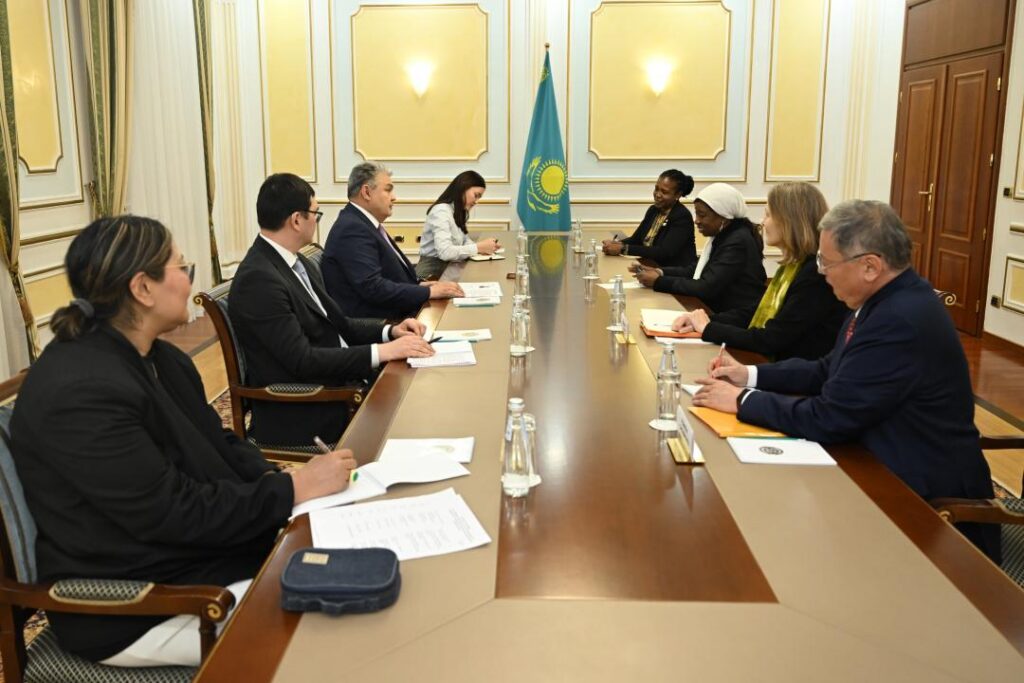
The United Nations Population Fund (UNFPA) will open a Central Asian hub on demographic resilience in Almaty, Kazakhstan’s Foreign Ministry said. The decision was confirmed during a meeting between Kazakhstan's Foreign Minister Yerzhan Kosherbayev and UN Under-Secretary-General and UNFPA Executive Director Diene Keita. The new hub will function as a regional center for collecting, analyzing, and studying demographic trends across Central Asia. UNFPA representatives said the decision to locate the hub in Almaty reflects the organization’s positive assessment of Kazakhstan’s reforms in gender equality, women’s rights protection, and social policy development. Keita said Kazakhstan has made significant progress in healthcare, youth and family policy, and reducing maternal and infant mortality rates. UNFPA is the UN agency specializing in reproductive health and demographic development. The organization supports countries in implementing programs related to healthcare, gender equality, and social resilience. Kosherbayev said President Kassym-Jomart Tokayev places particular importance on cooperation with the UN and supports initiatives aimed at reforming international institutions. “The minister positively assessed cooperation between the Kazakh government and UNFPA in improving maternal and infant mortality indicators, developing youth health centers, and conducting demographic research,” the Foreign Ministry said. According to Kosherbayev, healthcare, youth policy, and gender equality should become key areas of regional cooperation with UNFPA. He also proposed making greater use of the UN Regional Center for Sustainable Development Goals for Central Asia and Afghanistan in Almaty to expand the agency’s presence in the region. Following the talks, the two sides agreed to continue cooperation on regional and global agenda issues. During her visit, Keita also met with Prime Minister Olzhas Bektenov and reaffirmed UNFPA’s readiness to continue supporting Kazakhstan’s strategic initiatives. As previously reported by The Times of Central Asia, Kazakhstan has made significant progress in reducing maternal and infant mortality, while Astana has also been actively sharing its experience in maternal and child healthcare with other countries in the region.

Kazakhstan’s Birth Rate Continues to Fall Amid Demographic Concerns

Kazakhstan is witnessing a sustained decline in its birth rate despite government efforts to stimulate demographic growth. In their latest report, analysts at Ranking.kz have explored why more Kazakhstanis are choosing to have fewer or no children, and what factors are driving this downward trend. Sharp Decline in Newborn Numbers According to official data, 77,300 children were born in the first quarter of 2025, a 15.8% decrease compared to the same period in 2024. This continues a multi-year decline: annual births dropped from 446,500 in 2021 to 365,900 in 2024. Kazakhstan’s total fertility rate also reflects this trend. After peaking at 23.5 births per 1,000 people in 2021, the rate has steadily fallen to 18.2 in 2024 and further to 15.4 in early 2025. Regionally, Mangistau and Turkestan remain the most fertile areas, with 21.3 births per 1,000 people, followed by Shymkent (19.7). The lowest rates are in North Kazakhstan (8.5), Kostanay (9.5), and East Kazakhstan (9.6). Changing Attitudes Toward Parenthood A 2024 national survey shows a growing reluctance among citizens to expand their families. Over half (51.3%) of respondents said they already have children and do not plan to have more. Only 13% hoped to have two children, 9.1% three, and 10.5% four or more. Meanwhile, 3.9% said they do not intend to have children at all, a sentiment more common in urban areas (4.5%) than in rural regions (3%). Among urban parents, 52.4% said they would not have more children, compared to 49.5% in rural communities. UN projections suggest Kazakhstan's demographic decline will persist. The fertility rate is expected to dip to 19 in 2025, 17.6 in 2034, and continue falling to 11.4 by 2100, raising concerns about aging and the growing demographic burden. Economic and Medical Challenges According to the platform "Children of Kazakhstan", economic hardship remains a central factor. Rising costs for housing, healthcare, and education have made child-rearing increasingly unaffordable, prompting many to delay or reconsider parenthood altogether. Societal values are also shifting. More young Kazakhs are prioritizing education, careers, and personal development. Women, in particular, are pursuing higher education and professional goals before starting families. Healthcare issues have further exacerbated the trend. The number of women diagnosed with infertility rose to 29,100 in the first half of 2024, surpassing the total for all of 2023 (28,500). This figure has climbed steadily from just 10,000 in 2019. Male infertility is also rising, though the numbers are significantly lower. Reported cases increased from 36 in 2019 to 119 in 2021, before fluctuating slightly to 108 in 2023.

Kyrgyzstan on the Threshold of an Aging Population: Government Develops Active Longevity Program

Kyrgyzstan is approaching a demographic milestone as the proportion of elderly citizens grows. In response to this shift, the Ministry of Labor, Social Security, and Migration has developed the State Program of Active Longevity for 2025-2030, which has been submitted for public discussion. Demographic Trends and Projections According to the National Statistical Committee, Kyrgyzstan’s population at the beginning of 2024 stood at 7.162 million. Of this, 407,800 citizens (5.7%) were aged 65 and older. The United Nations (UN) classification considers a country to be “on the threshold of old age” when this age group comprises between 4% and 7% of the population. Once it exceeds 7%, the country is categorized as having an aging population. Forecasts suggest that by 2030, Kyrgyzstan’s 65+ population will be close to this threshold, and by 2050, it may reach 19%, while the proportion of children is expected to decline from 33% to 22%. Challenges of an Aging Society As the population ages, Kyrgyzstan faces several challenges, including: Declining workforce: A shrinking number of working-age citizens may place economic strain on the labor market. Increased demographic burden: Fewer workers supporting a growing elderly population could impact productivity and economic growth. Rising social security and healthcare costs: Increased demand for pensions, medical services, and elderly care will require policy adjustments. Labor market adaptation: Strategies will be needed to integrate older workers and extend their economic participation. Strengthening intergenerational ties: Social policies may need to promote solidarity between younger and older generations. The State Program of Active Longevity The State Program of Active Longevity (2025-2030) aims to establish strategic policies to enhance the quality of life for older citizens. The document outlines three key focus areas: Encouraging Active Aging: Initiatives to promote employment, volunteering, and social engagement among older adults. Ensuring Health and Social Well-being: Expanding access to healthcare, preventive medicine, and social support services. Creating Conditions for a Dignified Life in Old Age: Enhancing pension security, housing, and accessibility infrastructure for elderly citizens. With Kyrgyzstan on the cusp of demographic aging, long-term planning and policy reforms will be essential to ensure social and economic stability in the years ahead.
