


Pentagon UFO Files Add CIA Report on Kazakhstan’s Sary Shagan Range
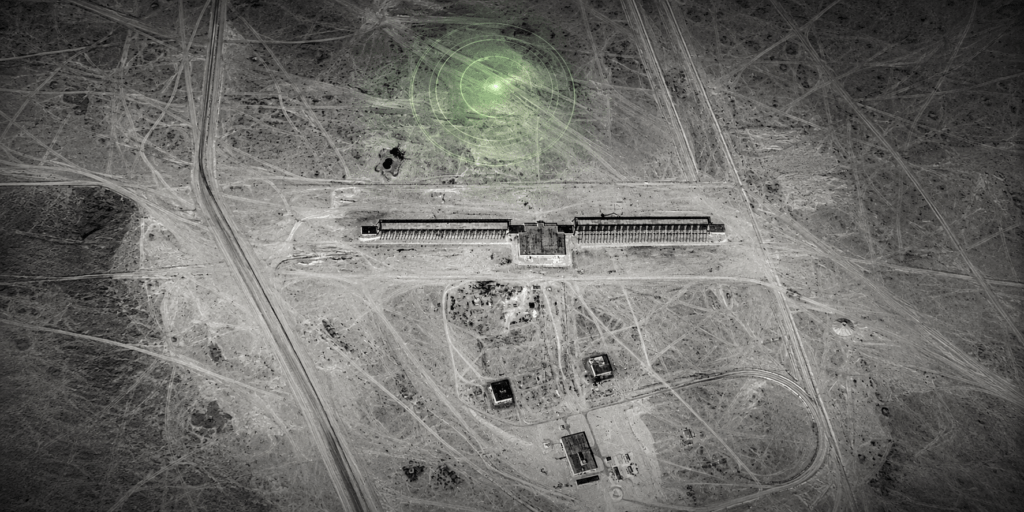
On May 22, the Pentagon released the second tranche of U.S. Department of War records on unidentified anomalous phenomena (UAP), the official term now often used for what are commonly called UFOs, through the Presidential Unsealing and Reporting System for UAP Encounters, known as PURSUE. The first batch, published on May 8, included a 1994 State Department cable about a Tajik Air crew’s report of an unidentified object over Kazakhstan. The new PURSUE release includes a CIA intelligence report describing a 1973 sighting at the Soviet Union’s Sary Shagan weapons testing range in Kazakhstan. The report itself is not new to the public record. The CIA first released it in 1978 in a heavily redacted version, leaving the brief UAP account as the only section that remained substantially readable. A fuller copy was cleared for release in the agency’s December 19, 2019 response to a Mandatory Declassification Review request filed by John Greenewald, founder of The Black Vault, a website that publishes declassified U.S. government records obtained through public-records requests. Much of the document deals with missile systems and warhead handling. It also refers to “rumored laser research” and includes a brief account of what the report calls an “unidentified phenomenon.” The CIA describes the source as a “former Soviet citizen who served…,” with the rest of the line obscured. Given the report’s detailed references to Sary Shagan sites and facility layouts, the file appears to rely on someone with firsthand knowledge of the range, though the released copy does not clarify the nature of the source’s connection to it. According to the report, on “one evening in late summer 1973,” the source stepped outside at Site 7 during a Canada-USSR sports broadcast and saw “an unidentified sharp (bright) green circular object or mass in the sky.” The object was west of the site at an estimated 70-degree angle, though its altitude was “undeterminable.” After 10 to 15 seconds, the “green circle widened” and “several green concentric circles formed around the mass.” There was no sound, and the object disappeared within minutes. Sary Shagan, near Lake Balkhash in central Kazakhstan, was established by the Soviet Union in 1956 for anti-ballistic missile testing and was the site of what is widely described as the world’s first successful interception of a ballistic missile warhead on March 4, 1961. Russia still leases parts of the range, while Kazakhstan controls other areas. The file also refers to the System-75, or SA-2, a Soviet surface-to-air missile system, and to the System-300/Aldan, which a CIA field comment identifies as the ABM-1 Galosh anti-ballistic missile. “According to hearsay,” the report says, experiments involving laser weapons were being conducted somewhere at the range and “supposedly” involved “powerful antennas,” though the file gives “no further details.” A better-known Soviet-era UAP case is the Petrozavodsk phenomenon of September 20, 1977, named for the city in Karelia in northwestern Russia, where the most widely publicized sighting was reported. Accounts of unusual lights also came from locations in northern Europe and further...
