
• KGS/USD = 0.01143 0%
  • KZT/USD = 0.00205 0%
  • TJS/USD = 0.10724 0.09%
  • UZS/USD = 0.00008 0%
  • TMT/USD = 0.28571 0%
  • KGS/USD = 0.01143 0%
  • KZT/USD = 0.00205 0%
  • TJS/USD = 0.10724 0.09%
  • UZS/USD = 0.00008 0%
  • TMT/USD = 0.28571 0%
  • KGS/USD = 0.01143 0%
  • KZT/USD = 0.00205 0%
  • TJS/USD = 0.10724 0.09%
  • UZS/USD = 0.00008 0%
  • TMT/USD = 0.28571 0%
  • KGS/USD = 0.01143 0%
  • KZT/USD = 0.00205 0%
  • TJS/USD = 0.10724 0.09%
  • UZS/USD = 0.00008 0%
  • TMT/USD = 0.28571 0%
  • KGS/USD = 0.01143 0%
  • KZT/USD = 0.00205 0%
  • TJS/USD = 0.10724 0.09%
  • UZS/USD = 0.00008 0%
  • TMT/USD = 0.28571 0%
  • KGS/USD = 0.01143 0%
  • KZT/USD = 0.00205 0%
  • TJS/USD = 0.10724 0.09%
  • UZS/USD = 0.00008 0%
  • TMT/USD = 0.28571 0%
  • KGS/USD = 0.01143 0%
  • KZT/USD = 0.00205 0%
  • TJS/USD = 0.10724 0.09%
  • UZS/USD = 0.00008 0%
  • TMT/USD = 0.28571 0%
  • KGS/USD = 0.01143 0%
  • KZT/USD = 0.00205 0%
  • TJS/USD = 0.10724 0.09%
  • UZS/USD = 0.00008 0%
  • TMT/USD = 0.28571 0%

Viewing results 1 - 6 of 9

Pentagon UFO Files Add CIA Report on Kazakhstan’s Sary Shagan Range

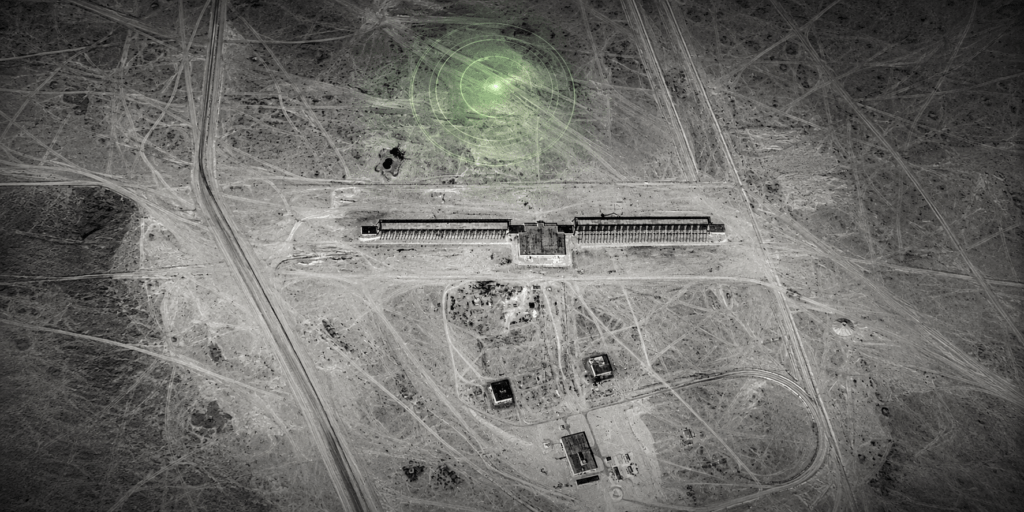
On May 22, the Pentagon released the second tranche of U.S. Department of War records on unidentified anomalous phenomena (UAP), the official term now often used for what are commonly called UFOs, through the Presidential Unsealing and Reporting System for UAP Encounters, known as PURSUE. The first batch, published on May 8, included a 1994 State Department cable about a Tajik Air crew’s report of an unidentified object over Kazakhstan. The new PURSUE release includes a CIA intelligence report describing a 1973 sighting at the Soviet Union’s Sary Shagan weapons testing range in Kazakhstan. The report itself is not new to the public record. The CIA first released it in 1978 in a heavily redacted version, leaving the brief UAP account as the only section that remained substantially readable. A fuller copy was cleared for release in the agency’s December 19, 2019 response to a Mandatory Declassification Review request filed by John Greenewald, founder of The Black Vault, a website that publishes declassified U.S. government records obtained through public-records requests. Much of the document deals with missile systems and warhead handling. It also refers to “rumored laser research” and includes a brief account of what the report calls an “unidentified phenomenon.” The CIA describes the source as a “former Soviet citizen who served…,” with the rest of the line obscured. Given the report’s detailed references to Sary Shagan sites and facility layouts, the file appears to rely on someone with firsthand knowledge of the range, though the released copy does not clarify the nature of the source’s connection to it. According to the report, on “one evening in late summer 1973,” the source stepped outside at Site 7 during a Canada-USSR sports broadcast and saw “an unidentified sharp (bright) green circular object or mass in the sky.” The object was west of the site at an estimated 70-degree angle, though its altitude was “undeterminable.” After 10 to 15 seconds, the “green circle widened” and “several green concentric circles formed around the mass.” There was no sound, and the object disappeared within minutes. Sary Shagan, near Lake Balkhash in central Kazakhstan, was established by the Soviet Union in 1956 for anti-ballistic missile testing and was the site of what is widely described as the world’s first successful interception of a ballistic missile warhead on March 4, 1961. Russia still leases parts of the range, while Kazakhstan controls other areas. The file also refers to the System-75, or SA-2, a Soviet surface-to-air missile system, and to the System-300/Aldan, which a CIA field comment identifies as the ABM-1 Galosh anti-ballistic missile. “According to hearsay,” the report says, experiments involving laser weapons were being conducted somewhere at the range and “supposedly” involved “powerful antennas,” though the file gives “no further details.” A better-known Soviet-era UAP case is the Petrozavodsk phenomenon of September 20, 1977, named for the city in Karelia in northwestern Russia, where the most widely publicized sighting was reported. Accounts of unusual lights also came from locations in northern Europe and further...
Kazakhstan’s Haunted Steppe: Myths, Cold War Ruins, and Unexplained Phenomena

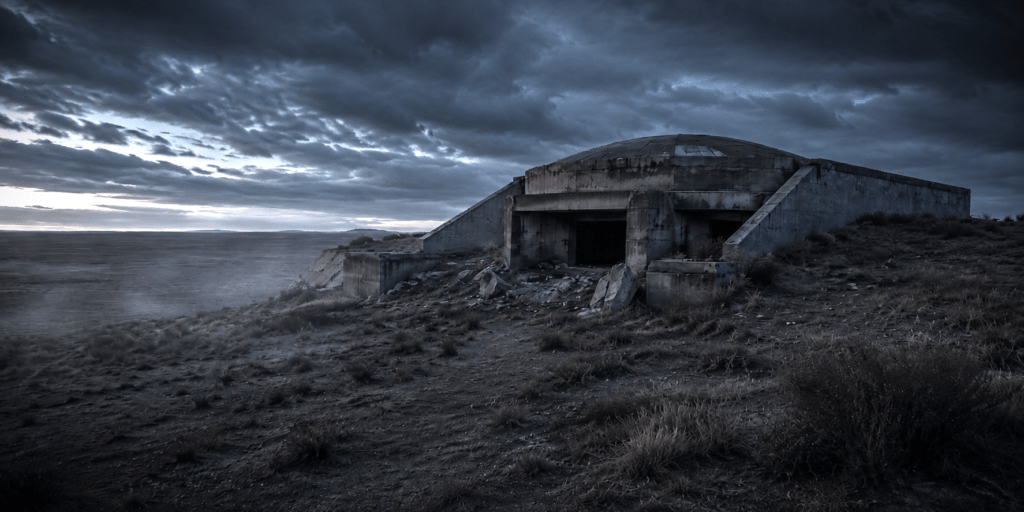
Kazakhstan’s vast steppes, deserts, mountains, and abandoned Soviet sites have produced a mythology of their own. Some stories are folklore. Others grew from real geography, ecological disaster, nuclear testing, secretive institutions, and the long shadow of the Cold War. That mix helps explain why tales of lost islands, strange stones, atomic ghosts, and unidentified flying objects still circulate across the country. The most interesting stories are not necessarily the ones that prove anything paranormal. They are the ones that show how history and landscape can turn into legend. You Will Go But Never Return One of Kazakhstan’s best-known mysterious places is Barsakelmes, whose name is usually translated from Kazakh as “You Will Go But Never Return.” The former island, once located in the Aral Sea, was less than 20 kilometers long, but it acquired an outsized reputation during the Soviet period. [caption id="attachment_49303" align="aligncenter" width="2560"] Barsakelmes[/caption] Today, Barsakelmes is no longer technically an island. The Aral Sea has largely dried up after one of the world’s major ecological disasters, and the surrounding landscape has changed almost beyond recognition. The island’s name did much of the work. So did Soviet-era popular culture. Russian science-fiction writer Sergei Lukyanenko, who was born in Kazakhstan, helped deepen its mystique through a story published in the Soviet magazine Tekhnika Molodezhi. In that fictional version, Barsakelmes became a deadly place linked to secret laboratories, biological experiments, and mutant soldiers. The confirmed history is less lurid, but still striking. Local accounts and researchers have linked the name to earlier tragedies, including stories of herders who died while trying to cross the frozen Aral Sea. Over time, those disappearances became part of the island’s reputation as a place from which people did not return. The mystery deepened in the 2000s, when archaeologists found burial grounds and remains of ancient settlements on the dried seabed near Barsakelmes. The finds, dated to the 11th-14th centuries, included religious structures and evidence of trade links that may have extended toward China. Some homes reportedly contained jars still filled with grain, suggesting that residents left suddenly. Whether they fled a flood, conflict, or another disaster is less certain. But it is easy to see how the physical evidence of abrupt abandonment fed older stories about a cursed landscape. Even the island’s natural features became part of the legend. Fishermen once avoided the area after seeing what they thought were huge bones along the shore. They were, in fact, large gypsum formations glinting in the sun. Today, Barsakelmes is also a protected area and a refuge for rare wildlife, showing how a place associated with loss can also become a site of recovery. The Stone Spheres of Mangystau Another of Kazakhstan’s strange landscapes lies on the Mangystau Peninsula in the west of the country, about 150 kilometers from Aktau. There, in a valley that resembles a Martian plain, hundreds of large stone spheres are scattered across the ground. Some are several meters in diameter. Visitors have compared them to giant balls, prehistoric eggs, or...

Pentagon UFO Files Include 1994 Tajik Air Report Over Kazakhstan

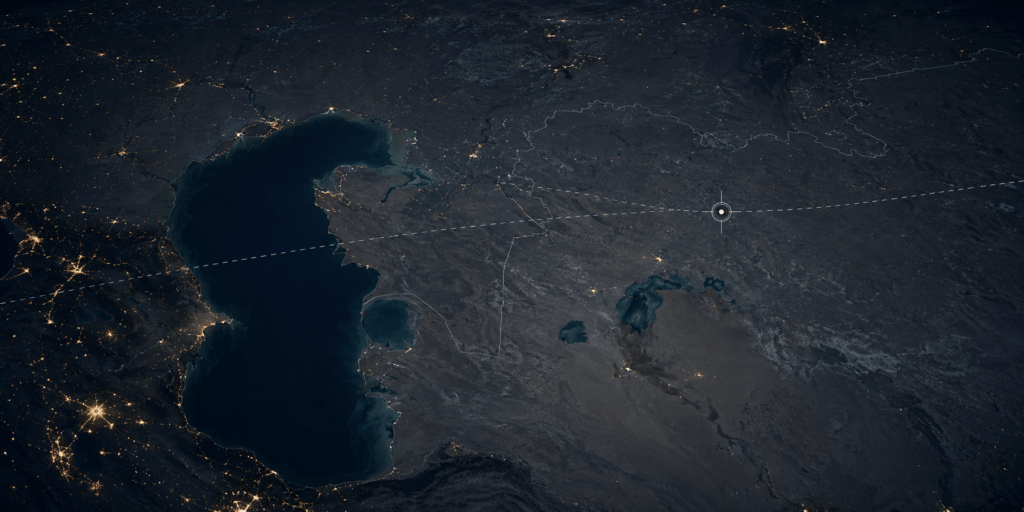
On May 8, the Pentagon released the first batch of U.S. Department of War files on unidentified anomalous phenomena (UAP), including a State Department cable describing a 1994 sighting by Tajik Air pilots over Kazakhstan. The new archive, called the Presidential Unsealing and Reporting System for UAP Encounters, was created in response to a directive from U.S. president Donald Trump. It covers unresolved cases where the government cannot make a definitive determination from available data, with further releases expected “every few weeks.” The department uses the current term UAP as well as the older term unidentified flying object (UFO). The release includes a three-page unclassified State Department cable from the U.S. embassy in Dushanbe. Dated January 31, 1994, it is titled “Tajik Air Pilots Report Unidentified Flying Object” and carries a State Department “Released in Full” stamp dated February 25, 2026. The same cable had previously appeared in CUFON’s archive of State Department UFO records, released in 2000 in response to a Freedom of Information Act (FOIA) request. According to the cable, Tajik Air chief pilot Ed Rhodes, identified as a United States citizen, and two American pilot colleagues reported that they had encountered a UFO on January 27, 1994, while flying at 41,000 feet in a Boeing 747SP. The location was given as latitude 45 north and longitude 55 east, over Kazakhstan. The pilots described the object as an intensely bright light approaching from the east at high speed and at an altitude far above their aircraft. They said they watched it for about 40 minutes as it moved in circles, corkscrews, and 90-degree turns. Rhodes reportedly took several photographs with a pocket Olympus camera and said copies would be sent to the embassy and to the Tajikistan desk at the State Department if they came out. No such photographs appear in the released cable. The crew could not identify the object’s shape because it was dark. They described its light as resembling a “bow wave,” and later said the aircraft flew beneath contrails left by the object after sunrise. Rhodes estimated those contrails to be at about 100,000 feet. The embassy suggested that the object might have been a meteor entering and skipping off the Earth’s atmosphere. Rhodes and the other pilots rejected that explanation, saying their years flying passenger aircraft for Pan Am had given them extensive experience with meteors and space junk. Based on the object’s reported speed and maneuverability, Rhodes expressed the view, which the cable says his crew seemed to support, that it was “extraterrestrial and under intelligent control.” The U.S. government recorded what the pilots said, but the cable does not confirm what they saw, as demonstrated in the file’s cautionary note: “We have no opinion and report the above for what it may be worth.” The release adds an official U.S. record to a regional history in which unexplained aerial reports have surfaced in Soviet research programs and, more recently, in media and online claims. During the Soviet period, reports of anomalous...
