


From AI Pilots to Islamic Finance: Banking’s Digital Shift in Uzbekistan
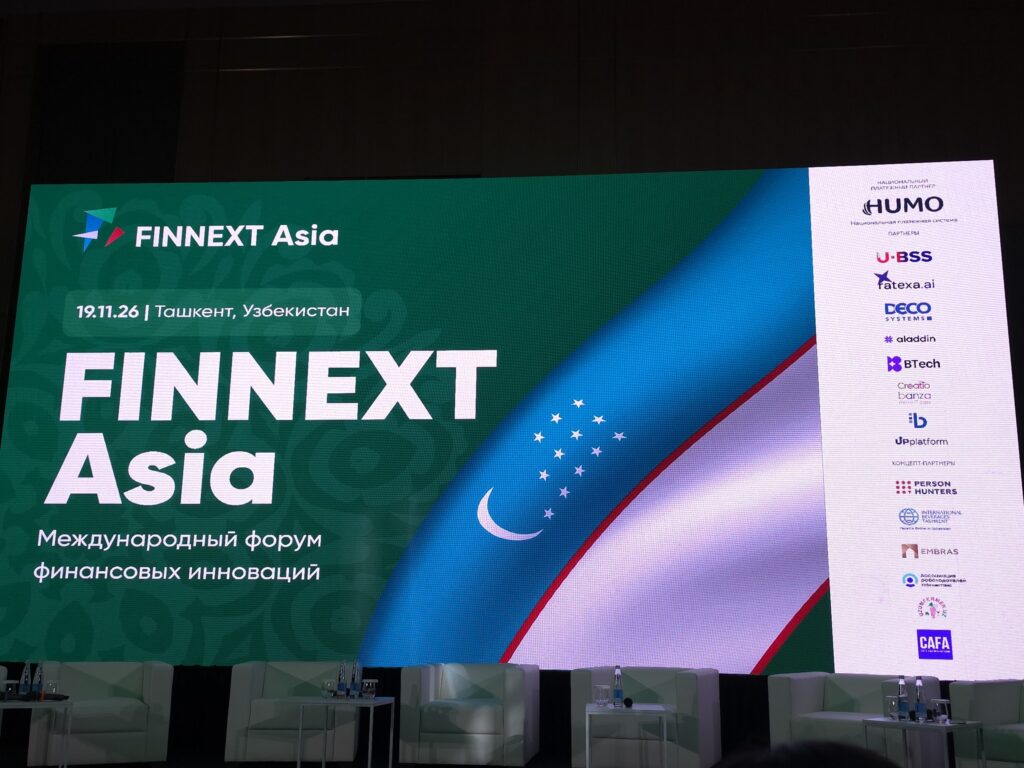
Central Asian banks are looking beyond experimental artificial intelligence (AI) projects, seeking to turn them into measurable business results. How to achieve this without compromising data security or accountability was a central topic at the third international FINNEXT Asia forum, held in Tashkent on November 19. The forum brought together around 700 participants from the financial industry. Among them was Sergey Kozlov of Uzbekistan’s Uzbek Industrial and Construction Bank (SQB), who discussed the bank’s new AI platform, while Askhat Giniyatov of Russia’s T-Bank outlined how digital technology could make Islamic finance more competitive. [caption id="attachment_61152" align="aligncenter" width="1024"] Participants of the FINNEXT Asia forum/ТСА[/caption] Moving Beyond AI Experiments For Kozlov, successful technology experiments do not necessarily translate into better business performance. “I've come to a fairly simple conclusion: individual AI projects, even successful ones, don't really change much at the scale of an entire bank. You can launch dozens of pilots, chatbots, and standalone products of different sizes, involve dozens of people, create momentum, achieve impressive results in demos, and still fail to make a real impact on the business as a whole – everything remains an experiment riding the wave of hype,” he told The Times of Central Asia. SQB has developed an internal platform that allows departments to share AI infrastructure instead of building separate systems for each task. “In just six months we went from starting development to putting a multimodal AI platform into production. Our employees chose the name SQB.NOVA,” Kozlov said. The platform also incorporates Uzbek speech recognition, an important feature in a multilingual banking market where international AI products do not always meet local language requirements. Keeping the platform in-house also reduces reliance on costly external AI services. “We’re moving away from developing individual products towards reusing existing technology components. If one team has learned how to process documents effectively or work with corporate knowledge, the next team doesn’t need to start from scratch – they can simply take an already deployed solution from the repository,” Kozlov said. “This fundamentally changes the economics of AI implementation. Each new product should be developed faster and cost less than the previous one.” For now, however, SQB is still assessing the financial impact of the platform. Kozlov said he prefers to discuss verified results rather than aggregate projected savings from individual projects. Lending, Fraud, and Data Security Kozlov sees credit risk management as one of the most promising applications of AI in Uzbekistan’s banking sector, particularly for small businesses with limited credit histories or incomplete financial statements. Such companies may nevertheless have years of transaction records, including customer payments and transfers to suppliers. Machine learning models can analyze these records to identify patterns overlooked by conventional credit scoring systems, potentially expanding access to financing. AI can also help banks detect fraud by identifying unusual transaction patterns. Automated lending decisions also raise questions about discrimination and accountability. “It is very important to consider the principles of fairness and explainability in decision-making. A model may be statistically accurate but still...
