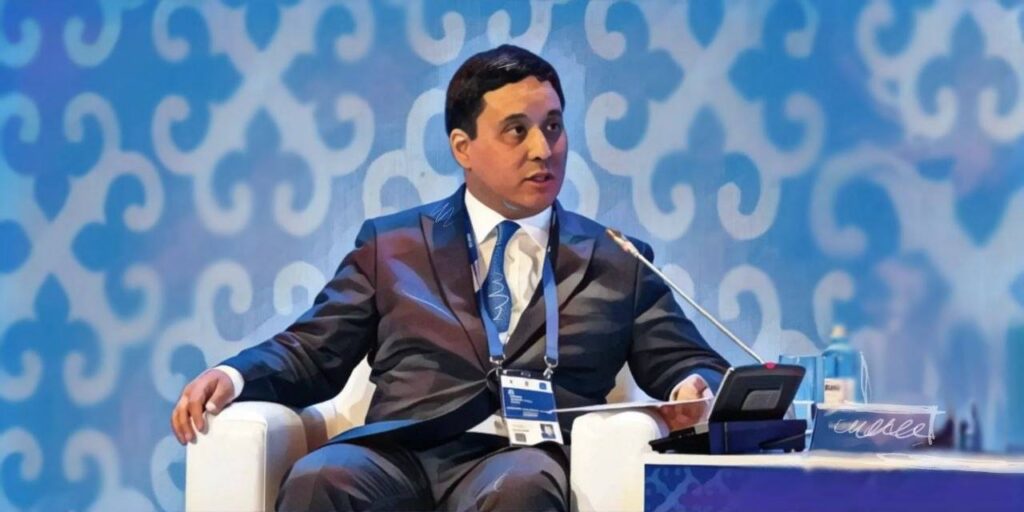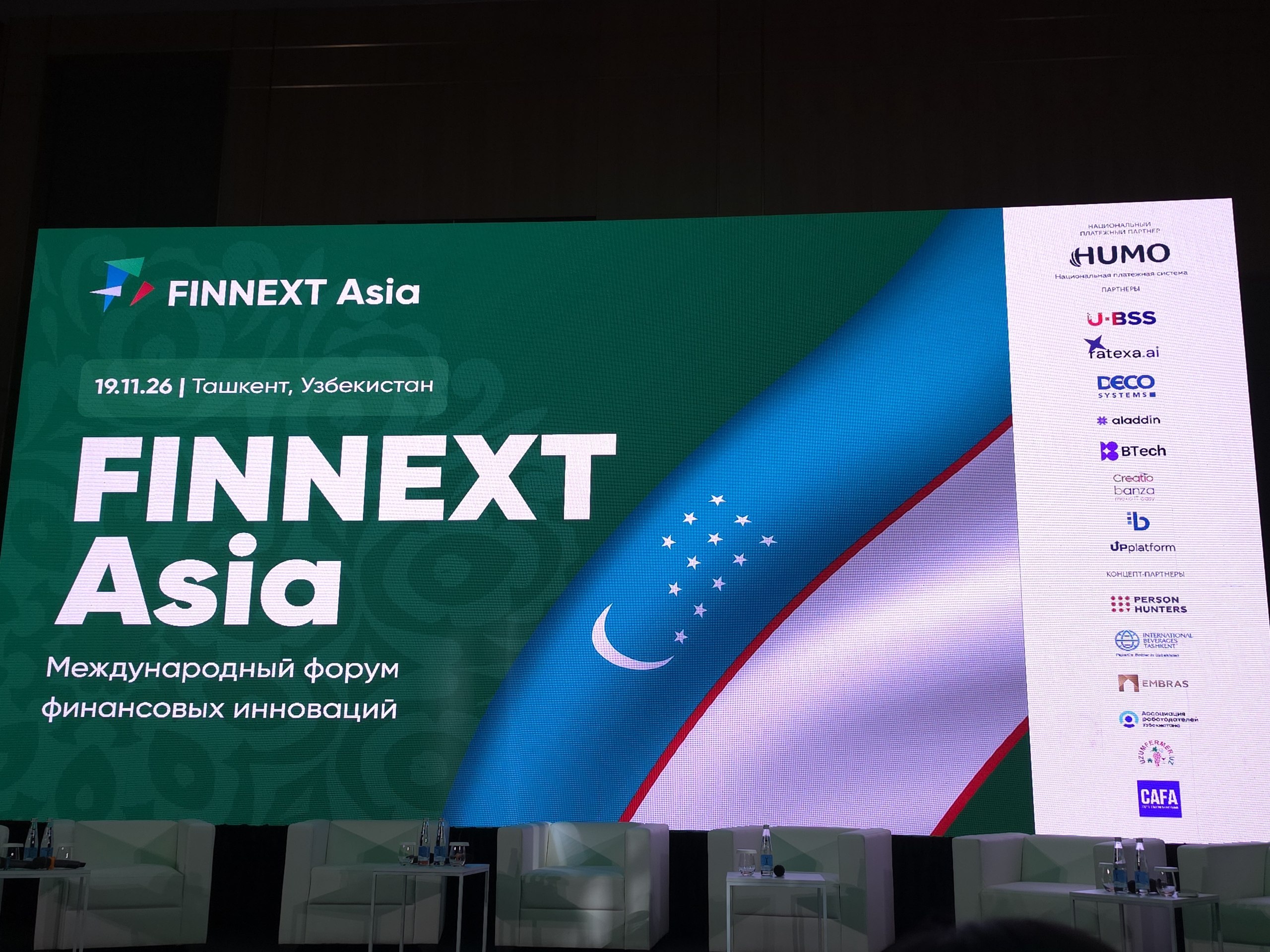
Central Asian banks are looking beyond experimental artificial intelligence (AI) projects, seeking to turn them into measurable business results. How to achieve this without compromising data security or accountability was a central topic at the third international FINNEXT Asia forum, held in Tashkent on November 19.
The forum brought together around 700 participants from the financial industry. Among them was Sergey Kozlov of Uzbekistan’s Uzbek Industrial and Construction Bank (SQB), who discussed the bank’s new AI platform, while Askhat Giniyatov of Russia’s T-Bank outlined how digital technology could make Islamic finance more competitive.
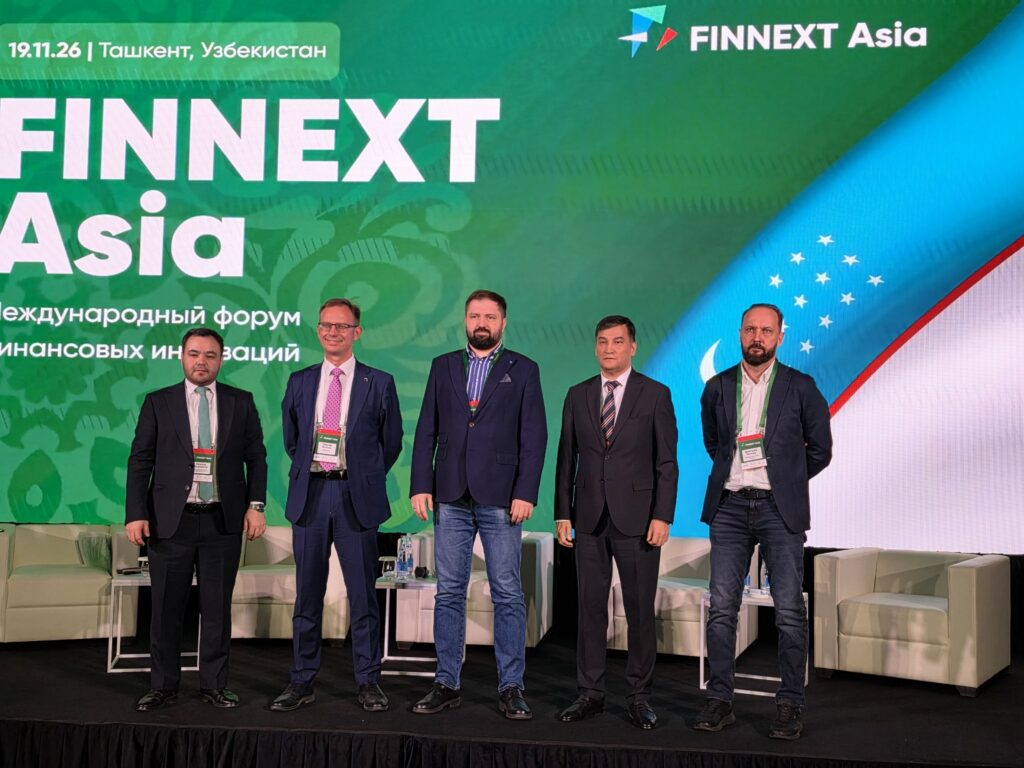
Participants of the FINNEXT Asia forum/ТСА
Moving Beyond AI Experiments
For Kozlov, successful technology experiments do not necessarily translate into better business performance.
“I’ve come to a fairly simple conclusion: individual AI projects, even successful ones, don’t really change much at the scale of an entire bank. You can launch dozens of pilots, chatbots, and standalone products of different sizes, involve dozens of people, create momentum, achieve impressive results in demos, and still fail to make a real impact on the business as a whole – everything remains an experiment riding the wave of hype,” he told The Times of Central Asia.
SQB has developed an internal platform that allows departments to share AI infrastructure instead of building separate systems for each task.
“In just six months we went from starting development to putting a multimodal AI platform into production. Our employees chose the name SQB.NOVA,” Kozlov said.
The platform also incorporates Uzbek speech recognition, an important feature in a multilingual banking market where international AI products do not always meet local language requirements.
Keeping the platform in-house also reduces reliance on costly external AI services.
“We’re moving away from developing individual products towards reusing existing technology components. If one team has learned how to process documents effectively or work with corporate knowledge, the next team doesn’t need to start from scratch – they can simply take an already deployed solution from the repository,” Kozlov said.
“This fundamentally changes the economics of AI implementation. Each new product should be developed faster and cost less than the previous one.”
For now, however, SQB is still assessing the financial impact of the platform. Kozlov said he prefers to discuss verified results rather than aggregate projected savings from individual projects.
Lending, Fraud, and Data Security
Kozlov sees credit risk management as one of the most promising applications of AI in Uzbekistan’s banking sector, particularly for small businesses with limited credit histories or incomplete financial statements.
Such companies may nevertheless have years of transaction records, including customer payments and transfers to suppliers. Machine learning models can analyze these records to identify patterns overlooked by conventional credit scoring systems, potentially expanding access to financing.
AI can also help banks detect fraud by identifying unusual transaction patterns.
Automated lending decisions also raise questions about discrimination and accountability.
“It is very important to consider the principles of fairness and explainability in decision-making. A model may be statistically accurate but still systematically disadvantage certain groups of customers,” Kozlov said.
“I firmly believe that automation does not remove responsibility from the bank. We can delegate work, but not responsibility. We must understand the logic behind our decisions and be accountable for their consequences – and that’s why expertise and knowledge are so critically important,” he added.
The use of external AI services can expose banks to additional risks, including data leaks.
“When employees start using publicly available AI services to work with banking documents, the question arises: where does this data go, who has access to it, and what might happen to it afterwards?” Kozlov said.
Another issue is that models may generate convincing but inaccurate information. The consequences of such errors become more serious when AI agents are authorized to alter banking records or execute transactions rather than simply assist employees.
“I would be quite cautious about the idea of full AI autonomy in critical banking processes. In my view, the level of autonomy should be determined not by the system’s technological capabilities, but by the consequences of a potential error and the ability of humans to maintain governance and control at any moment,” Kozlov said.
As AI models become more widely accessible, he argues, banks will increasingly compete on their ability to use them reliably and demonstrate measurable financial results.
Bringing Islamic Finance Into Digital Banking
Askhat Giniyatov, director of Islamic banking development at Russia’s T-Bank, believes digital banking could make Islamic financial products more accessible and competitive with conventional loans.
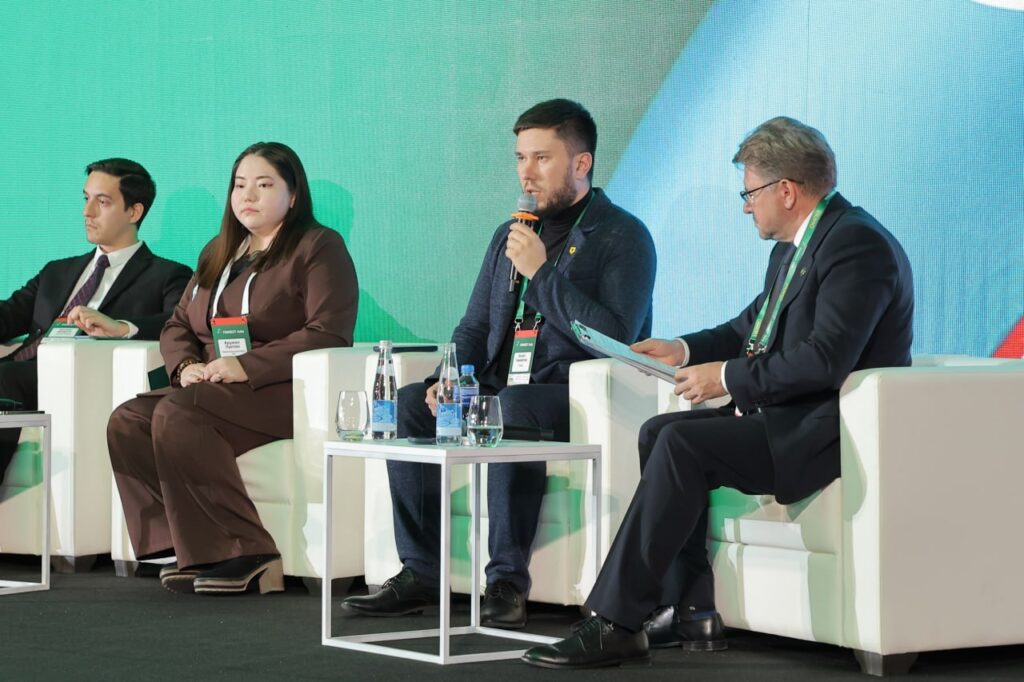
Askhat Giniyatov (third from left), Head of Islamic Finance at Russia’s T-Bank/ТСА
Islamic finance prohibits interest-based lending and provides alternative financing arrangements involving assets and risk sharing. One widely used instrument is murabaha, in which a financial institution purchases an asset and resells it to the customer at an agreed markup.
“Islamic neobanking contributes to the introduction of Islamic banking instruments into modern society. The digitalization of murabaha and other products makes it possible to reduce internal operating costs, while the absence of expenses associated with maintaining physical offices allows these products to become competitive with conventional lending,” Giniyatov said.
Lower operating costs do not necessarily translate into cheaper financing. Giniyatov argues that pricing also depends on the size of the customer base, as financial institutions can distribute operating costs across more users.
“Demand determines a fair price. The more people use Islamic finance products, the fairer their cost becomes when compared with conventional lending,” he explained.
Participants at FINNEXT Asia discussed integrating Islamic financial instruments into mainstream mobile banking applications, alongside the prospects for introducing a digital soum in Uzbekistan, where the central bank is studying a digital currency for transactions between financial institutions.
Giniyatov believes Russia’s Islamic finance experiment, launched in September 2023, could offer practical lessons for Central Asian banks. While closer institutional cooperation faces difficulties, he sees opportunities for exchanges between financial specialists.
Uzbekistan has also been developing a regulatory framework for Islamic banking. As The Times of Central Asia previously reported, a new Islamic banking law took effect in June, and the central bank established an Islamic Finance Council to develop national standards and advise regulators.