
• KZT/USD = 0.00216
  • TJS/USD = 0.10800
  • UZS/USD = 0.00009
  • TMT/USD = 0.29850
  • KZT/USD = 0.00216
  • TJS/USD = 0.10800
  • UZS/USD = 0.00009
  • TMT/USD = 0.29850
  • KZT/USD = 0.00216
  • TJS/USD = 0.10800
  • UZS/USD = 0.00009
  • TMT/USD = 0.29850
  • KZT/USD = 0.00216
  • TJS/USD = 0.10800
  • UZS/USD = 0.00009
  • TMT/USD = 0.29850
  • KZT/USD = 0.00216
  • TJS/USD = 0.10800
  • UZS/USD = 0.00009
  • TMT/USD = 0.29850
  • KZT/USD = 0.00216
  • TJS/USD = 0.10800
  • UZS/USD = 0.00009
  • TMT/USD = 0.29850
  • KZT/USD = 0.00216
  • TJS/USD = 0.10800
  • UZS/USD = 0.00009
  • TMT/USD = 0.29850
  • KZT/USD = 0.00216
  • TJS/USD = 0.10800
  • UZS/USD = 0.00009
  • TMT/USD = 0.29850
19 August 2026

Viewing results 1 - 6 of 2

Kazakhstan Proposes Rules for Paid Electronic Entry Permits

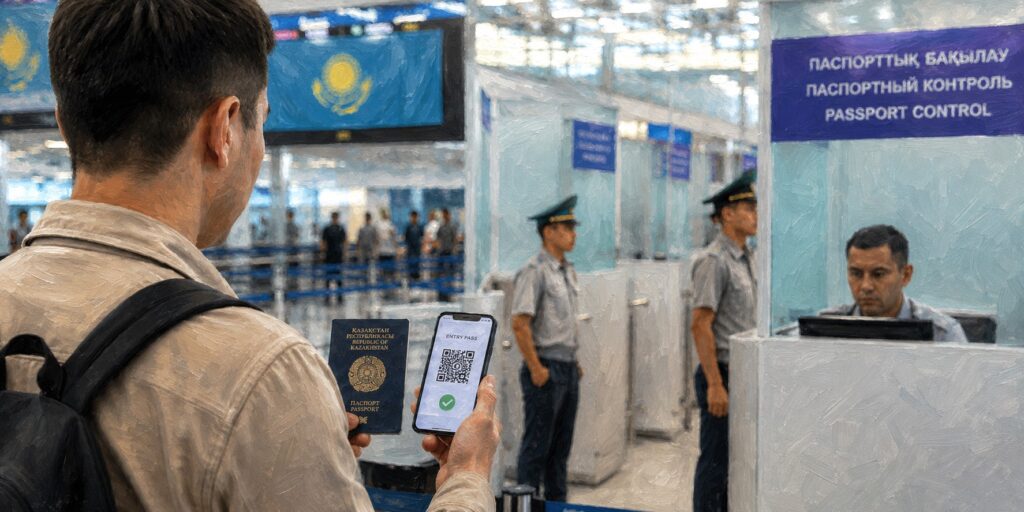
Kazakhstan's Interior Ministry has opened public consultation on rules for a paid electronic entry permit for foreign visitors. The ministry has proposed a phased rollout between August and December 2026, but the published summary leaves several basic questions unanswered. The proposal was posted on July 31, and remains open for comments until August 17. It would amend Kazakhstan's 2012 rules governing the entry, stay, and departure of foreign nationals. The ministry says the system will provide "transparency, speed, and completeness [in] recording the cross-border movements of foreign nationals.” However, the consultation page does not display the proposed amendments, an explanatory note, or a comparative table. Rather, it shows an information summary and one attachment labeled as a Russian-language table, leading one public commenter, Andrei Sukhanov, to ask: "Where is the draft itself? Or is only its title being discussed?" That omission makes it impossible to establish several important terms from the consultation. The page does not state the fee, the nationalities covered, the grounds for refusal, the appeal process, or the date when permits would become mandatory. It also fails to explain whether visa holders would need a further separate authorization. The legal basis for introducing paid electronic entry permits already exists: President Kassym-Jomart Tokayev signed Law No. 326-VIII on June 24. The law was first published on June 25, and most of its provisions take effect on August 25. The law defines an electronic entry permit as a digital document granting a foreign citizen or stateless person the right to enter Kazakhstan or transit its territory. The Interior Ministry will issue, refuse, or cancel permits in coordination with the National Security Committee. Foreign citizens and stateless persons entering Kazakhstan will undergo identification and authentication, including the processing of personal and biometric data for a digital immigration profile. The government will set the fee and payment procedure. The law directs half of the revenue toward migration and border-control technology, while the other half will support domestic and inbound tourism. The Interior Ministry's summary says differentiated charges would fund technical maintenance, digital infrastructure upgrades, and personal-data protection. It gives no amounts or categories, meaning travelers cannot assess the cost. Kazakhstan is already testing the permit through the QazETA platform. During the pilot, the Electronic Travel Authorization is recommended rather than compulsory for citizens of visa-exempt countries. Applicants are asked to submit requests through the mobile app at least 72 hours before travel, and an authorization remains valid for 180 days. An ETA does not extend the permitted length of stay or guarantee admission, with border officials retaining the final decision. The current pilot exempts holders of diplomatic and service passports, members of official delegations, and accredited diplomats. The government has not announced when the pilot will end or published the list of countries that will face a mandatory requirement. A local report in July said Kyrgyzstan had sought clarification on whether the system would cover citizens of Eurasian Economic Union states. Kazakhstan has not published a decision on that point. The...


How Digital Public Services Are Changing Daily Life in Central Asia

Kazakhstan, Uzbekistan, and Kyrgyzstan have moved from queues at public service centers to passports in mobile apps in just a few years, compressing a transition that took many countries decades. Behind the impressive figures, however, are questions the region is still trying to answer. Not so long ago, obtaining a certificate in Central Asia meant a trip to a government office, a queue, and a stack of papers. Today, a resident of Almaty can renew a driver’s license by phone, an entrepreneur in Tashkent can register a company without leaving the office, and a doctor in Bishkek can issue an electronic sick leave certificate. The digitalization of public services has moved beyond strategic documents and become part of everyday life for tens of millions of people. The scale of change is reflected in international assessments. In the United Nations E-Government Development Index (EGDI) for 2024, Asia showed the fastest growth of any region. Kazakhstan, Uzbekistan, and Kyrgyzstan all improved their positions, each at its own pace, and each with its own model. Kazakhstan: From eGov to a Platform State Kazakhstan remains one of the region’s leaders in digital governance. In the 2024 EGDI ranking, the country rose to 24th place globally, ahead of a number of developed economies. Today, around 90% of more than 1,300 public services are available online, while the eGov.kz portal and eGov Mobile app offer access to a growing range of services. The figures speak for themselves. According to Kazakhstan’s e-government portal, citizens received more than 25.7 million services through eGov.kz in 2025, while the eGov Mobile audience exceeded 11.7 million users. The “Digital Documents” section is especially popular: the app provides access to 39 types of documents, from identity cards to driver’s licenses and student IDs. The expansion has continued. In 2025, Kazakhstan launched eGovBusiness, a single-window service for entrepreneurs that allows them to register companies, apply for subsidies, and check risks. The authorities have also moved to consolidate fragmented government apps into the unified eGov and Aitu platforms. The next frontier is artificial intelligence. In 2025, Kazakhstan established the Ministry of Artificial Intelligence and Digital Development. Through the National AI Platform, the country is developing sovereign infrastructure intended to support the use of generative AI in government and keep citizens’ data within national systems. Uzbekistan: The Fastest Leap Forward If Kazakhstan sets the regional benchmark, Uzbekistan has shown some of the fastest momentum. Over six years, the country climbed 24 positions in the EGDI ranking, from 87th place in 2018 to 63rd in 2024, and entered the category of countries with a “very high” level of e-government development for the first time. At the center of this transformation is the unified portal my.gov.uz, through which citizens and businesses access public services. More than 760 services are available on the platform, while the mobile app offers more than 540. In the first half of 2025 alone, more than 16 million services were provided through the system. The direction is set by the Digital Uzbekistan 2030...