• KZT/USD = 0.00213
  • TJS/USD = 0.10800
  • UZS/USD = 0.00008
  • TMT/USD = 0.29850
  • KZT/USD = 0.00213
  • TJS/USD = 0.10800
  • UZS/USD = 0.00008
  • TMT/USD = 0.29850
  • KZT/USD = 0.00213
  • TJS/USD = 0.10800
  • UZS/USD = 0.00008
  • TMT/USD = 0.29850
  • KZT/USD = 0.00213
  • TJS/USD = 0.10800
  • UZS/USD = 0.00008
  • TMT/USD = 0.29850
  • KZT/USD = 0.00213
  • TJS/USD = 0.10800
  • UZS/USD = 0.00008
  • TMT/USD = 0.29850
  • KZT/USD = 0.00213
  • TJS/USD = 0.10800
  • UZS/USD = 0.00008
  • TMT/USD = 0.29850
  • KZT/USD = 0.00213
  • TJS/USD = 0.10800
  • UZS/USD = 0.00008
  • TMT/USD = 0.29850
  • KZT/USD = 0.00213
  • TJS/USD = 0.10800
  • UZS/USD = 0.00008
  • TMT/USD = 0.29850

Viewing results 1 - 6 of 2

Kazakhstan Expands Technology Agenda, Inviting Investors into Space and Artificial Intelligence

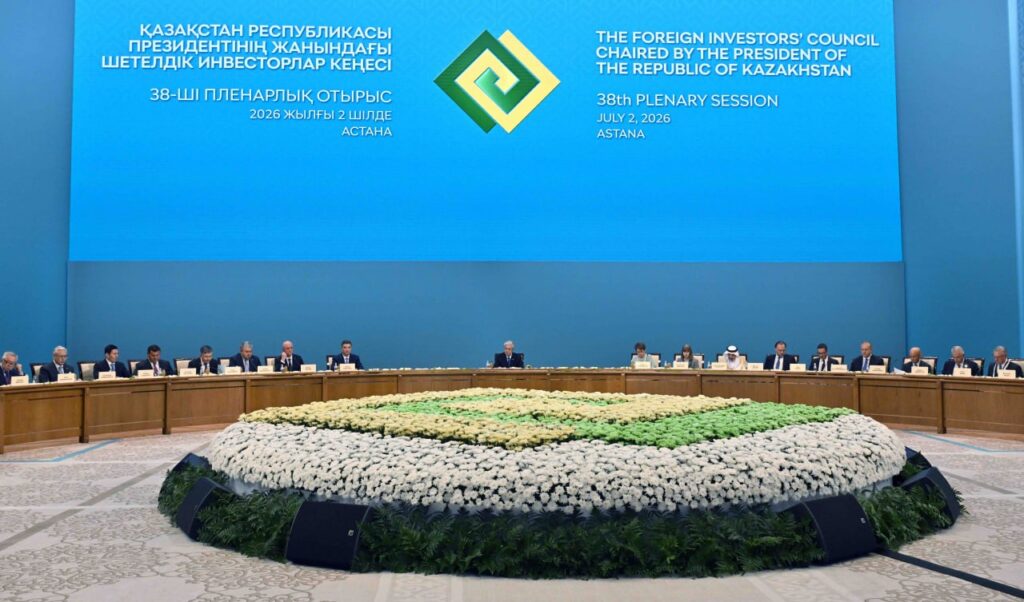
Kazakhstan is stepping up its focus on the digital economy and high technology, expanding its investment agenda beyond the resource sector. At a meeting of the Foreign Investors’ Council on July 2, officials presented several areas they see as potential new growth drivers: artificial intelligence, digital infrastructure, space technology, and the innovation hub of Alatau City. For Astana, the push is part of a broader economic development strategy. President Kassym-Jomart Tokayev said Kazakhstan’s economy grew by 6.5% in 2025, while GDP has exceeded $300 billion. According to Tokayev, accumulated net foreign direct investment has surpassed $150 billion, making Kazakhstan Central Asia’s largest recipient of foreign investment. Against this backdrop, the government is increasingly focused on the next stage of development: building digital industries that could help shape the region’s economic architecture in the coming years. Artificial intelligence is central to this strategy. Tokayev described AI as one of the key drivers of the global economy and confirmed that 2026 has been declared the Year of Artificial Intelligence and Digital Development in Kazakhstan. The country has adopted a new package of sector-specific legislation, including the Digital Code and the Law on Artificial Intelligence, and has created the Ministry of Artificial Intelligence and Digital Development. One of the most prominent projects in this sector is Data Center Valley, an infrastructure cluster intended to host large-scale computing and data-processing facilities. According to the president, the project has already attracted interest from Amazon, G42, and other international technology companies. For Kazakhstan, the development of data centers has strategic importance. As global demand for computing power and AI infrastructure grows, countries with access to energy, favorable logistics, and clear regulation are becoming increasingly attractive destinations for international capital. A separate part of the strategy focuses on the space sector. Deputy Prime Minister and Minister of Artificial Intelligence and Digital Development Zhaslan Madiyev invited foreign investors to participate in building a joint space ecosystem. According to Madiyev, Kazakhstan sees the sector as broader than traditional satellite infrastructure, viewing it as a technological platform that can combine spacecraft manufacturing, launches, maintenance, Earth observation, and AI-driven analytics. This approach reflects a wider global trend. The space technology market is entering a new phase of growth, driven by private investment, satellite communications, geo-analytics, and big data services. For Kazakhstan, this creates an opportunity to use its accumulated expertise and infrastructure, including its space-sector legacy at Baikonur, which remains leased to Russia until 2050. Another pillar of the digital strategy is Alatau City, an innovation hub being built near Almaty. The authorities view it as an experimental platform for digital assets, fintech, autonomous transport, and artificial intelligence technologies. According to Madiyev, Alatau City is expected to become one of the first sites in the region for testing autonomous vehicles, drones, and tokenized solutions. Tokayev said the city will be built on a “digital by default” principle, meaning that administrative and public services will be designed in digital form from the outset. The Times of Central Asia previously reported that Astana...

How Digital Public Services Are Changing Daily Life in Central Asia

Kazakhstan, Uzbekistan, and Kyrgyzstan have moved from queues at public service centers to passports in mobile apps in just a few years, compressing a transition that took many countries decades. Behind the impressive figures, however, are questions the region is still trying to answer. Not so long ago, obtaining a certificate in Central Asia meant a trip to a government office, a queue, and a stack of papers. Today, a resident of Almaty can renew a driver’s license by phone, an entrepreneur in Tashkent can register a company without leaving the office, and a doctor in Bishkek can issue an electronic sick leave certificate. The digitalization of public services has moved beyond strategic documents and become part of everyday life for tens of millions of people. The scale of change is reflected in international assessments. In the United Nations E-Government Development Index (EGDI) for 2024, Asia showed the fastest growth of any region. Kazakhstan, Uzbekistan, and Kyrgyzstan all improved their positions, each at its own pace, and each with its own model. Kazakhstan: From eGov to a Platform State Kazakhstan remains one of the region’s leaders in digital governance. In the 2024 EGDI ranking, the country rose to 24th place globally, ahead of a number of developed economies. Today, around 90% of more than 1,300 public services are available online, while the eGov.kz portal and eGov Mobile app offer access to a growing range of services. The figures speak for themselves. According to Kazakhstan’s e-government portal, citizens received more than 25.7 million services through eGov.kz in 2025, while the eGov Mobile audience exceeded 11.7 million users. The “Digital Documents” section is especially popular: the app provides access to 39 types of documents, from identity cards to driver’s licenses and student IDs. The expansion has continued. In 2025, Kazakhstan launched eGovBusiness, a single-window service for entrepreneurs that allows them to register companies, apply for subsidies, and check risks. The authorities have also moved to consolidate fragmented government apps into the unified eGov and Aitu platforms. The next frontier is artificial intelligence. In 2025, Kazakhstan established the Ministry of Artificial Intelligence and Digital Development. Through the National AI Platform, the country is developing sovereign infrastructure intended to support the use of generative AI in government and keep citizens’ data within national systems. Uzbekistan: The Fastest Leap Forward If Kazakhstan sets the regional benchmark, Uzbekistan has shown some of the fastest momentum. Over six years, the country climbed 24 positions in the EGDI ranking, from 87th place in 2018 to 63rd in 2024, and entered the category of countries with a “very high” level of e-government development for the first time. At the center of this transformation is the unified portal my.gov.uz, through which citizens and businesses access public services. More than 760 services are available on the platform, while the mobile app offers more than 540. In the first half of 2025 alone, more than 16 million services were provided through the system. The direction is set by the Digital Uzbekistan 2030...