
• KZT/USD = 0.00220
  • TJS/USD = 0.10860
  • UZS/USD = 0.00008
  • TMT/USD = 0.29850
  • KZT/USD = 0.00220
  • TJS/USD = 0.10860
  • UZS/USD = 0.00008
  • TMT/USD = 0.29850
  • KZT/USD = 0.00220
  • TJS/USD = 0.10860
  • UZS/USD = 0.00008
  • TMT/USD = 0.29850
  • KZT/USD = 0.00220
  • TJS/USD = 0.10860
  • UZS/USD = 0.00008
  • TMT/USD = 0.29850
  • KZT/USD = 0.00220
  • TJS/USD = 0.10860
  • UZS/USD = 0.00008
  • TMT/USD = 0.29850
  • KZT/USD = 0.00220
  • TJS/USD = 0.10860
  • UZS/USD = 0.00008
  • TMT/USD = 0.29850
  • KZT/USD = 0.00220
  • TJS/USD = 0.10860
  • UZS/USD = 0.00008
  • TMT/USD = 0.29850
  • KZT/USD = 0.00220
  • TJS/USD = 0.10860
  • UZS/USD = 0.00008
  • TMT/USD = 0.29850
03 November 2026

Viewing results 1 - 6 of 2

IT Park Uzbekistan Named Asia-Pacific’s Best Knowledge Zone

IT Park Uzbekistan won the Knowledge Zone of the Year – Asia-Pacific category at the Global Free Zones of the Year Awards 2026, organized by fDi Intelligence, a publication of the Financial Times Group. The awards assess economic zones on their ability to attract businesses and investment. The publication considered 16 knowledge zones worldwide, with Dubai Silicon Oasis in the United Arab Emirates winning the global title. According to Uzbekistan's Ministry of Digital Technologies, IT Park has more than 4,100 resident companies, including over 1,200 with foreign participation. Together, they employ more than 56,000 people. More than 1,100 companies export services to 102 countries, while IT Park companies exported $392.5 million in services in the first half of 2026, an increase of $90.3 million compared with the same period last year. IT Park statistics for the first half of 2026 show that North America was the largest export market for its resident companies, accounting for 54% of exports. Commonwealth of Independent States countries and other markets accounted for 22%, the European Union and the United Kingdom for 16%, and the Middle East and North Africa for 8%. In 2017, the export network covered just eight countries. The government has also invested in technology training. According to official figures, 1.7 million young people have participated in the One Million Uzbek Coders program, while 1.3 million have taken part in Five Million AI Leaders, an initiative focused on artificial intelligence (AI). More than 18 billion Uzbek soums (approximately $1.5 million) have been allocated to reimburse expenses for international information technology certification and training, benefiting 4,926 young professionals. Another 3.17 billion soums (approximately $263,000) was provided to educational institutions through the IT Talents program for training graduates who secured jobs with companies exporting digital services. In late 2025, the government launched the AI initiative, which provides free online courses. Universities are also establishing AI laboratories, with 20 currently operating. Other initiatives support young people and women in technology, including the ICT4Girls programming competition and startup incubators. Based on its Global Startup Ecosystem Index 2026, StartupBlink named Uzbekistan Country of the Year and identified it as the world's fastest-growing startup ecosystem. Its score in the ranking increased by 227.3% over the previous year, reflecting improvements in measures such as startup activity and the business environment rather than growth in employment or revenue. The country climbed 31 places over two years to rank 79th globally, while Tashkent placed 229th among cities. Analytics platform Dealroom estimated the combined value of the country's venture-backed startups at $4.3 billion. What remains unclear is how many participants in the government's training programs go on to find work in the technology sector. The 56,000 people employed by IT Park companies represent only part of the industry, while the training initiatives cover different levels of education and skills. The ministry's announcement offers no overall figures on participants' subsequent employment or earnings, making it difficult to assess the impact of these large-scale programs.

Women in Tech Uzbekistan Forum Highlights Growing Demand for AI Skills

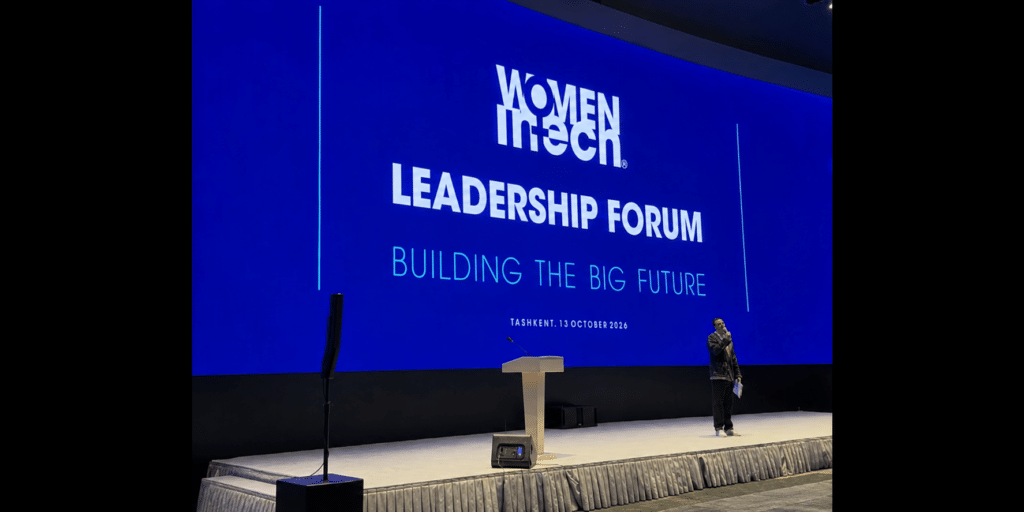
Uzbekistan is attracting foreign technology companies, expanding IT education, and training young people to work with artificial intelligence. But employers’ needs are changing faster than educational programs can adapt. Just a few years ago, companies were looking for programmers, then cloud technology specialists. Now they need developers capable of building AI systems and autonomous digital agents. Against this backdrop, discussions in Tashkent are focusing on how to increase women’s participation in the technology industry and enable them not only to learn new tools but also to develop their own products. These issues took center stage at the Women in Tech Leadership Forum, held on October 13 at Uzbekistan’s Ministry of Digital Technologies. The event brought together approximately 300 representatives of government agencies, international organizations, technology companies, and the business community. It was organized by the ministry and Women in Tech Uzbekistan, the national chapter of an international organization working to expand women’s participation in technology. [caption id="attachment_58421" align="aligncenter" width="1774"] Kamola Sobirova, an adviser to Uzbekistan’s Minister of Digital Technologies[/caption] Employers Need More Than Programmers Kamola Sobirova, an adviser to Uzbekistan’s Minister of Digital Technologies, explained in an exclusive interview with The Times of Central Asia how international companies’ requirements for local specialists have changed. “A few years ago, there was high demand for programmers. A year or two later, companies started asking us for cloud technology specialists. Then artificial intelligence emerged, and companies needed AI architects and prompt engineers,” Sobirova said. According to Sobirova, employers are now looking for specialists who can develop AI agents – software systems capable of independently carrying out sequences of tasks using artificial intelligence. “We cannot afford to stand still because technology continues to evolve. We must train specialists with up-to-date skills and create the right conditions for them,” she said. Uzbekistan previously ran the One Million Uzbek Coders program and has since launched the Five Million AI Leaders initiative. These programs are designed to provide large-scale training in digital skills, including programming and working with artificial intelligence. AI and the future of women’s work The question of whether AI will eliminate jobs was also raised during the interview. Sobirova rejected the idea that the main effect of AI would simply be widespread job losses. “There is a trend that everyone thinks AI will take over many professions and replace them, or that artificial intelligence has arrived and we will lose our jobs, but it is not like that,” she said. “Artificial intelligence will take the jobs of people who do not have artificial intelligence skills.” She argued that AI should increasingly be viewed as a tool that allows people to work more efficiently rather than simply as a replacement for workers. “Life has become much faster, and in this process artificial intelligence can help us become full users of AI and optimize our work,” Sobirova said. She also said the same principle applies to journalism and other media-related work, where AI can be used to support different parts of the workflow. “Coursera [an online...