
• KZT/USD = 0.00214
  • TJS/USD = 0.10810
  • UZS/USD = 0.00008
  • TMT/USD = 0.29850
  • KZT/USD = 0.00214
  • TJS/USD = 0.10810
  • UZS/USD = 0.00008
  • TMT/USD = 0.29850
  • KZT/USD = 0.00214
  • TJS/USD = 0.10810
  • UZS/USD = 0.00008
  • TMT/USD = 0.29850
  • KZT/USD = 0.00214
  • TJS/USD = 0.10810
  • UZS/USD = 0.00008
  • TMT/USD = 0.29850
  • KZT/USD = 0.00214
  • TJS/USD = 0.10810
  • UZS/USD = 0.00008
  • TMT/USD = 0.29850
  • KZT/USD = 0.00214
  • TJS/USD = 0.10810
  • UZS/USD = 0.00008
  • TMT/USD = 0.29850
  • KZT/USD = 0.00214
  • TJS/USD = 0.10810
  • UZS/USD = 0.00008
  • TMT/USD = 0.29850
  • KZT/USD = 0.00214
  • TJS/USD = 0.10810
  • UZS/USD = 0.00008
  • TMT/USD = 0.29850
13 August 2026

Viewing results 1 - 6 of 2

Dombra Dispute and Niqab Bans Fuel Religious Debate in Central Asia

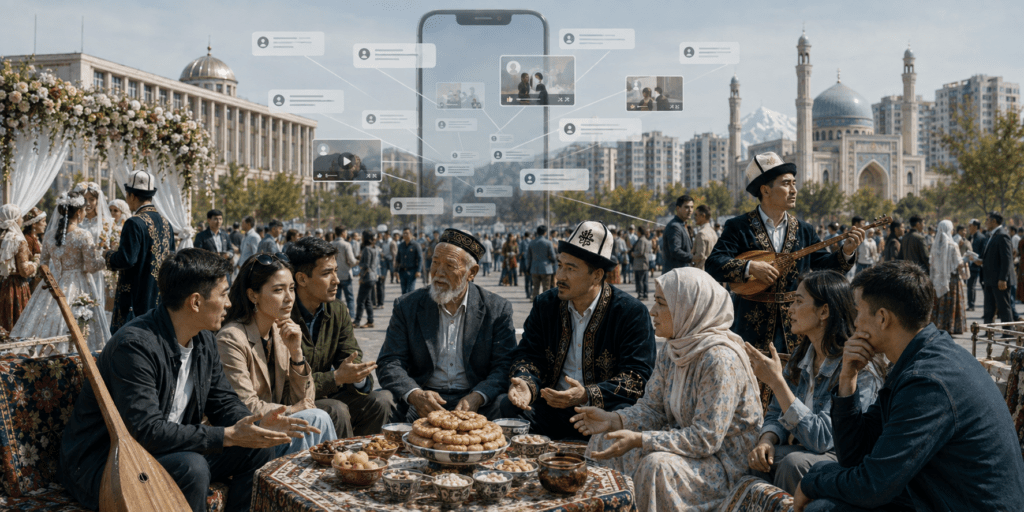
Standing before a court in Aktobe in June, 35-year-old Azat Konys apologized to “the entire Kazakh people” for insulting one of the country’s most cherished cultural symbols. Two months earlier, during a TikTok livestream, he had declared the dombra forbidden under Islam, compared the two-stringed instrument to part of the devil’s anatomy and called clerics from Kazakhstan’s official Islamic authority “dogs of hell.” Konys asked the court not to imprison him. The judge instead sentenced him to three years and six months for inciting religious and national hatred. The controversy began when Konys cited the Hanafi school of Sunni Islamic jurisprudence, the dominant legal tradition among Muslims in Kazakhstan, to argue that the dombra and other stringed instruments, including the guitar and balalaika, were haram, meaning forbidden under Islamic law. The remarks caused particular anger because the dombra is more than a musical instrument in Kazakhstan: it has accompanied oral poetry and storytelling for generations and is officially celebrated as a symbol of cultural heritage and national  identity. Police identified Konys after clips from the livestream circulated on social media and detained him in April. The case is an unusually stark example of how online religious disputes are spilling into legal and political life across Central Asia. Arguments that might once have remained within mosques or religious communities are now spreading through social media, forcing governments and official Islamic authorities alike to decide where religious expression ends and attacks on national culture begin. A more recent controversy arose in Kazakhstan’s Turkestan Region, where a 66-year-old guest at a toi, a traditional wedding feast, called for stricter adherence to Islamic law. He urged the organizers to separate men and women and remove music and alcohol from the celebration, while describing musicians as “heralds of Satan.” The video spread rapidly on social media, prompting nationwide debate. The man was detained and placed in a temporary detention facility for incitement of religious and social hatred. In a statement, the Ministry of Internal Affairs said that freedom of expression does not extend to statements that degrade the dignity of others or could provoke religious or social hostility. The Spiritual Administration of Muslims of Kazakhstan (SAMK), the country’s main official Muslim body, later issued its own response. It stated that Islam does not prohibit music in itself and stressed that publicly insulting artists or women is inconsistent with Islamic ethics. Another controversy centered on Nauryz, the spring equinox holiday celebrated throughout Central Asia and across much of the Turkic and Iranian cultural world. In March, a blogger in the Almaty Region described the holiday as “non-Muslim” and argued that it should not be celebrated. Police opened a criminal case against him on suspicion of inciting religious hatred. Kazakhstan’s Prosecutor General’s Office subsequently warned of legal liability for statements attacking Nauryz and other national traditions. The SAMK, meanwhile, publicly celebrated Nauryz as a national holiday promoting social harmony and charitable acts. The debate soon spread beyond social media into politics and the entertainment industry. Producer and television presenter Bayan Alaguzova said...


Singer MEREY on Kazakh-Language Music, Tradition, and a New Sound

Singer, poet, and lyricist MEREY is among a younger group of artists bringing a different sensibility to music in Kazakhstan. Her work is rooted in Kazakh-language expression, but it also pushes beyond familiar expectations of how a female singer should sound and present herself. In an interview with The Times of Central Asia, MEREY discusses the influence of poetry on her lyrics, the reaction to experimentation, and what she believes is missing from Kazakhstan’s contemporary music scene. TCA: Tell us a little about yourself. How did you get into music? MEREY: I came to music at 17, that’s when I wrote my first song in English. Before that, for as long as I can remember, I had been writing poetry; it was my first form of self-expression. During my school years, I also studied music more formally. I played in a national orchestra, where I both sang and performed dombra parts. That experience strongly shaped my sense of stage presence and musical language. Today, I position myself as a poet, singer, and lyricist. For me, text and music are inseparable. TCA: Who or what influenced your artistic development the most? MEREY: Since school, I have read the works of Mukaghali Makatayev, a classic of Kazakh poetry known for lyrical verses about love, homeland, and the human experience, and Fariza Ongarsynova, a prominent poet who wrote about emotions, time, and women’s lives. They left a deep mark on me as a poet, and echoes of their style can be found in my lyrics. As a teenager, I listened to Billie Eilish, Lana Del Rey, and The Neighbourhood. Later, Mitski, Zemfira, Valentin Strykalo, and Børns. Now I feel close to what Chappell Roan and Meg Myers are doing. My taste leans toward alternative music with an emphasis on vocals, lyrics, and guitar riffs, with a slightly detached aesthetic. This directly informs my own music. TCA: Your music is often described as a blend of traditional elements and modern electronics. How did this sound take shape? MEREY: I wouldn’t fully agree with the phrasing about electronics, but my sound is in many ways inspired by Darkhan Juzz. He was the first artist from Kazakhstan who truly impressed me with his sound. I come from a Kazakh-speaking background, so my lyrics tend to be more literary rather than conversational, unlike many artists of the new school. That’s thanks to my parents and my education in a Kazakh-language school. The modern side comes from my musical tastes, especially the Western scene. My sound combines a Western sensibility with precise, expressive Kazakh language. It’s a mix of Western thinking and Kazakh tradition and that is exactly what resonates with listeners. TCA: How important is it for you to preserve cultural roots in contemporary music? MEREY: It is fundamentally important. As I grow older, I become more conscious, and even stricter, about the Kazakh language and tradition. I’m glad that today national elements, ornaments, traditional clothing, interest in Tengriism, and the language itself, are once again becoming part of the cultural...