• KGS/USD = 0.01144 0%
  • KZT/USD = 0.00205 0%
  • TJS/USD = 0.10429 0.29%
  • UZS/USD = 0.00008 0%
  • TMT/USD = 0.28571 0.28%
  • KGS/USD = 0.01144 0%
  • KZT/USD = 0.00205 0%
  • TJS/USD = 0.10429 0.29%
  • UZS/USD = 0.00008 0%
  • TMT/USD = 0.28571 0.28%
  • KGS/USD = 0.01144 0%
  • KZT/USD = 0.00205 0%
  • TJS/USD = 0.10429 0.29%
  • UZS/USD = 0.00008 0%
  • TMT/USD = 0.28571 0.28%
  • KGS/USD = 0.01144 0%
  • KZT/USD = 0.00205 0%
  • TJS/USD = 0.10429 0.29%
  • UZS/USD = 0.00008 0%
  • TMT/USD = 0.28571 0.28%
  • KGS/USD = 0.01144 0%
  • KZT/USD = 0.00205 0%
  • TJS/USD = 0.10429 0.29%
  • UZS/USD = 0.00008 0%
  • TMT/USD = 0.28571 0.28%
  • KGS/USD = 0.01144 0%
  • KZT/USD = 0.00205 0%
  • TJS/USD = 0.10429 0.29%
  • UZS/USD = 0.00008 0%
  • TMT/USD = 0.28571 0.28%
  • KGS/USD = 0.01144 0%
  • KZT/USD = 0.00205 0%
  • TJS/USD = 0.10429 0.29%
  • UZS/USD = 0.00008 0%
  • TMT/USD = 0.28571 0.28%
  • KGS/USD = 0.01144 0%
  • KZT/USD = 0.00205 0%
  • TJS/USD = 0.10429 0.29%
  • UZS/USD = 0.00008 0%
  • TMT/USD = 0.28571 0.28%

Viewing results 1 - 6 of 22

Kyrgyzstan Tests Technologies for Tracking Civilian Drones

Kyrgyz authorities are evaluating new technological solutions to monitor and control civilian drone flights. A Romanian company recently presented its Argonian UTM and Drone Detection service to the State Agency for Civil Aviation of Kyrgyzstan. The system is designed to determine the location of unmanned aerial vehicles (UAVs) and track their flight parameters. According to the agency, company representatives delivered a detailed presentation outlining the system’s operating principles and technical capabilities. Officials expressed particular interest in functions related to UAV detection and real-time monitoring of key flight parameters. Following the presentation, a practical demonstration was conducted in an urban area of Bishkek. Four drones were launched simultaneously from different locations in the capital. The system reportedly recorded take-off points, altitude, and flight speed in real time, and mapped the flight paths of each device. In addition, the Argonian UTM system identified the location of one drone operator, indicating that the device was being controlled from a moving vehicle. The data was shown to participants at the meeting and said to correspond with the drones’ actual flight parameters. The State Agency for Civil Aviation stated that the solution “ensures effective detection of unmanned aerial vehicles, enables real-time monitoring of key flight parameters, and is of practical interest for improving UAV operational safety.” Agency representatives described the presentation as positively received, adding that the potential acquisition of the system will be considered as part of broader efforts to enhance drone flight safety and introduce new technical solutions in the country. Interest in such technologies is increasing amid tighter regulation of UAV operations. Since the beginning of 2026, a new law has required drone owners in Kyrgyzstan to register with the State Agency for Civil Aviation and undergo a medical examination by a psychiatrist. UAV operations are now permitted only with a one-time authorization or an annual permit issued by state authorities.

Kazakh Military Advances Domestic Drone Production

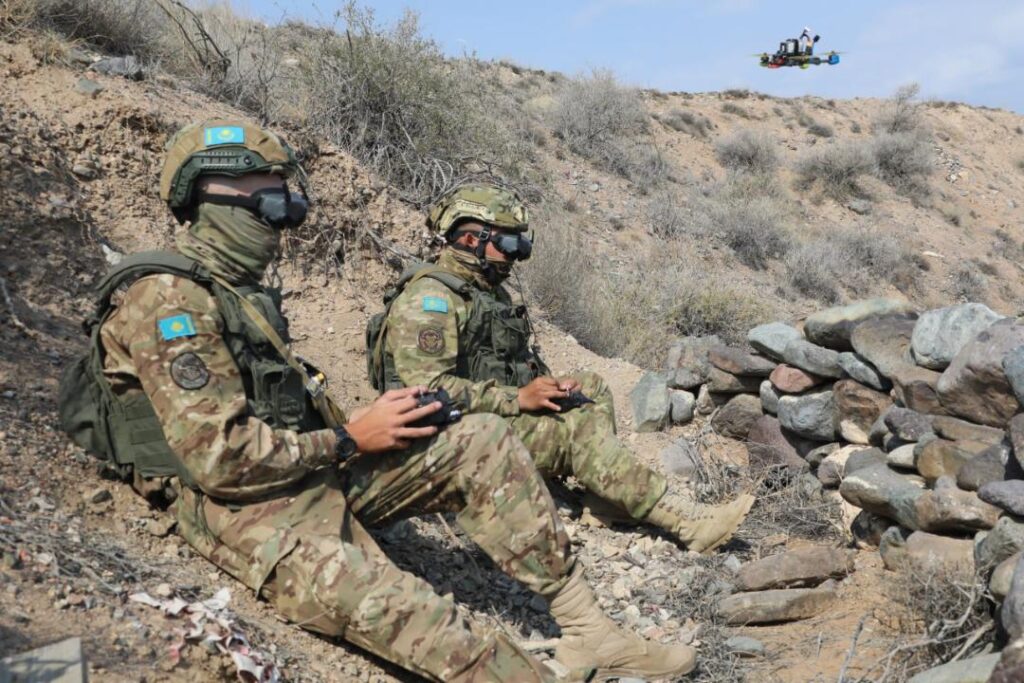
Kazakhstan’s Airborne Assault Forces (AAF) are establishing an independent production base for unmanned aerial systems (UAS), signaling a strategic shift toward greater self-reliance in military technology. According to the Ministry of Defense, approximately 100 drones have already been assembled and deployed across various branches of the armed forces. Unmanned units were formally established within the AAF two years ago. Since then, military personnel have gained hands-on experience in drone operations and developed in-house capabilities for maintenance, repair, and assembly. This has significantly reduced dependence on foreign supplies and accelerated the integration of unmanned systems into the military structure. A dedicated workshop for the production and servicing of drones began operations in December 2025. Within two months, the facility had launched a full production cycle from hardware assembly and software configuration to testing and delivery. “The 100th drone was recently assembled here,” the Ministry of Defense reported in a statement. The facility is staffed by contract personnel who have completed specialized technical training. All drones undergo mandatory testing before being dispatched to military units. Military experts note that the development of domestic UAV production is driven by the evolving nature of warfare. Recent armed conflicts have underscored the growing role of drones in reconnaissance, fire correction, target designation, and unit coordination. In 2026, systematic training of UAV operators will begin at the AAF’s training center. Instruction will be led by specialists with operational experience across various UAV platforms. Kazakhstan’s UAV units have already seen active deployment during the Desant-2025 military exercises, held from September 2-12, 2025, at the Koktal training ground in the Zhetysu region. More than 3,000 AAF personnel participated in the drills. The military's drone development effort mirrors a broader trend in Kazakhstan, where drones are increasingly used in civilian sectors. As previously reported by The Times of Central Asia, a pilot project for drone-based delivery services is set to launch in Almaty in 2026. Elsewhere, researchers in East Kazakhstan are employing drones and artificial intelligence to monitor soil and crop conditions, while engineers in Karaganda have unveiled prototypes of safety-enhancing UAVs for public use.

Kazakhstan to Use Innovative Drone Technology for Aral Seabed Reforestation

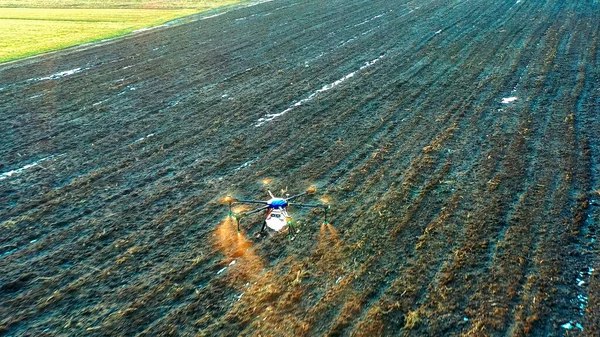
On October 29, a new initiative titled “Improving the Ecosystem of the Aral Seabed” was launched by Korkyt Ata Kyzylorda University, the University of California, Berkeley, the Kazakh Directorate of the International Fund for Saving the Aral Sea (IFAS), and the Bulat Utemuratov Foundation.  The project seeks to rehabilitate the dried Aral Sea bed using innovative E-seed technology developed by scientists at UC Berkeley. The method involves aerial seeding with drones that distribute self-burying seeds encased in biodegradable material, an approach designed to accelerate greening, increase plant survival rates, and reduce labor costs. Once the world’s fourth-largest inland sea, the Aral Sea covered 68,000 square kilometers across Kazakhstan and Uzbekistan. Beginning in the 1960s, large-scale irrigation projects diverted water from the Amu Darya and Syr Darya rivers to support cotton farming. By 2007, the sea had shrunk to just 10% of its original size. Today, the Aral Sea is a symbol of one of the world's most severe environmental disasters. Salt-laden dust from the exposed seabed, estimated in the tens of billions of tons, is carried by wind as far as the Arctic and the Himalayas. This toxic dust, infused with pesticides and heavy metals, contaminates soil, water, and air, threatening regional public health and food security. “The Aral Sea is a wound on the planet that cannot be ignored. We are launching a project that will create a barrier against salt and toxic dust, improve human health, and contribute to the future of the entire Earth,” said Ainur Karbozova, Director of the Bulat Utemuratov Foundation. “The uniqueness of this technology is that it can be applied worldwide from restoring burned-out forests to transforming deserts into green oases.” A test planting on a one-hectare site is planned for March-April 2026. In 2027, the second phase will expand the pilot to 50 hectares. “The use of the innovative E-seed technology will strengthen the soil structure, reduce dust and salt emissions, and ultimately increase the region's biodiversity,” said Rakhat Kurmanbayev, Associate Professor at Korkyt Ata Kyzylorda University. “By 2040, we plan to stabilize the ecosystem over at least 50 square kilometers. The project will reduce air temperatures by 1-2°C and improve the microclimate.” The initiative aligns with broader environmental goals outlined under Kazakhstan’s 2024-2026 chairmanship of IFAS, during which large-scale afforestation efforts aim to green more than 1 million hectares of the Aral seabed. The Times of Central Asia previously reported the construction of a saxaul nursery in the Kyzylorda region. Located directly on the former seabed, the facility is expected to produce 1.5 million drought-resistant saxaul saplings per year. According to the Ministry of Ecology and Natural Resources, Kazakhstan plans to afforest 1.1 million hectares of the dried seabed with saxaul. Between 2021 and 2024, 475,000 hectares were afforested, including 127,000 in 2024 alone. An additional 428,000 hectares are scheduled for planting in 2025. By the end of 2025, Kazakhstan expects saxaul to cover approximately 40% of its portion of the dried Aral seabed. 

Explosion of Unknown Drone Reported in Western Kazakhstan

Debris believed to be from an unmanned aerial vehicle (UAV) has been discovered in the Burlin district of West Kazakhstan region. Preliminary information indicates that the explosion occurred early in the morning near the village of Kyzyltal. According to Uralskaya Nedelya, representatives from the district akimat (local government), emergency services, and local police are currently investigating the scene. The military prosecutor’s office has also been dispatched and has opened a criminal case. “This morning, a drone of unknown origin exploded near Kyzyltal village in the Burlin district. The roofs of houses in the village were nearly blown off,” eyewitnesses told local media. The incident coincides with an air threat alert declared in Russia’s neighboring Orenburg region, where authorities reported a potential UAV incursion. The “Kover” plan, a protocol enacted during airspace threats, was implemented at the airports in Orenburg and Orsk. Police in West Kazakhstan confirmed the incident and stated that a full investigation is underway. “The police department, in cooperation with authorized agencies, is conducting an investigation into the discovery of what appears to be UAV debris in the Burlin district. All circumstances are being reviewed,” the department’s press service said. Kazakhstan’s Ministry of Defense also responded, noting that no casualties or material damage had been reported. “In cooperation with relevant state bodies, verification efforts are underway to determine the circumstances and origin of the object. The Ministry of Defense of the Republic of Kazakhstan has implemented additional measures to enhance airspace control and prevent unauthorized aerial border crossings. Consultations are ongoing with foreign partners who may potentially be linked to the UAV,” the ministry said in a statement. This incident follows a similar discovery on June 19, when suspected UAV fragments were found in the Karakiyan district of the Mangistau region, near the Bolashak border station. As The Times of Central Asia previously reported, in March 2025 there were three drone-related events in West Kazakhstan in one month, raising concerns about airspace security near the country's border with Russia.

East Kazakhstan Researchers Use AI and Drones to Boost Soil and Crop Management

Researchers at Sarsen Amanzholov University in Ust-Kamenogorsk, East Kazakhstan, have developed a digital system that integrates drone imagery with artificial intelligence (AI) to assess soil quality and crop health with high precision. The system enables farmers to monitor soil and plant conditions in ways previously inaccessible. Drones equipped with multispectral cameras capture images across five spectral bands: red, blue, green, near-infrared, and mid-infrared. “This approach makes it possible to ‘see’ what is invisible to the human eye, soil moisture levels, chlorophyll content, early signs of plant disease, or land degradation,” said Almasbek Maulit, a researcher at Sarsen Amanzholov University. “AI algorithms analyze the images, differentiate between crops and weeds, identify patterns of spread, and even generate automatic maps of infected areas. This enables farmers to take targeted action from local treatment of problem zones to adjusting crop rotation or cultivation methods.” The system offers several key benefits: Optimized use of fertilizers and plant protection products, reducing costs Early detection of problems, minimizing crop losses Improved profitability through better sowing and crop management strategies Reliable land quality assessments for investors and state authorities The project is part of Kazakhstan’s broader strategy to integrate high-tech solutions into agriculture, a sector that remains a cornerstone of the national economy. Earlier this year, The Times of Central Asia reported that engineers in Karaganda unveiled prototypes of drones designed for public safety applications. By merging AI with drone-based imaging, scientists in East Kazakhstan are helping to position the country’s agribusiness sector for smarter, more sustainable practices and long-term growth.

Karaganda Engineers Unveil Safety-Enhancing Drone Prototypes

The Karaganda-based research and production association Perspektiva has unveiled three prototypes of unmanned aerial vehicles (UAVs) designed to enhance public safety across Kazakhstan. The drones are intended for a range of uses, including recording traffic violations, locating missing persons, and detecting fires. The company is currently assessing the feasibility of launching mass production. The initiative is part of Kazakhstan’s broader effort to develop high-tech industries with a high degree of domestic localization. Among the newly developed UAVs are the Vista-7, a long-range drone; the compact Chimera-5, which is suitable for indoor use and operation in hard-to-reach areas; and the versatile Apex-7, designed for street patrols, mass event monitoring, and fire safety surveillance. According to Maxim Kim, project manager at NPO Perspektiva, the drones integrate foreign electronic components with locally manufactured frames, which are low-cost and easily replaceable. “Even if the body is damaged, it can be printed in 20 minutes and the existing electronics can continue to be used,” he explained. Imported drones currently cost upwards of 12 million KZT (approximately $22,000), and their frames are often irreparable. By contrast, local production is expected to significantly reduce costs, making drones more accessible to both government agencies and private enterprises. Kim added that UAVs could serve as a cost-effective alternative to fixed surveillance cameras on highways and could also be deployed to monitor infrastructure such as oil pipelines. Perspektiva previously developed the Argus-Pedestrian automated system, which captures violations at pedestrian crossings in Karaganda. According to developers, no pedestrian accidents have occurred in areas where the system has been installed. There are plans to expand the program to other cities across the country. As The Times of Central Asia previously reported, members of Kazakhstan’s parliament have proposed introducing a mandatory remote identification system for drones weighing 250 grams or more, a regulatory step aimed at ensuring greater transparency and accountability in UAV operations.