• KZT/USD = 0.00212
  • TJS/USD = 0.10810
  • UZS/USD = 0.00008
  • TMT/USD = 0.29850
  • KZT/USD = 0.00212
  • TJS/USD = 0.10810
  • UZS/USD = 0.00008
  • TMT/USD = 0.29850
  • KZT/USD = 0.00212
  • TJS/USD = 0.10810
  • UZS/USD = 0.00008
  • TMT/USD = 0.29850
  • KZT/USD = 0.00212
  • TJS/USD = 0.10810
  • UZS/USD = 0.00008
  • TMT/USD = 0.29850
  • KZT/USD = 0.00212
  • TJS/USD = 0.10810
  • UZS/USD = 0.00008
  • TMT/USD = 0.29850
  • KZT/USD = 0.00212
  • TJS/USD = 0.10810
  • UZS/USD = 0.00008
  • TMT/USD = 0.29850
  • KZT/USD = 0.00212
  • TJS/USD = 0.10810
  • UZS/USD = 0.00008
  • TMT/USD = 0.29850
  • KZT/USD = 0.00212
  • TJS/USD = 0.10810
  • UZS/USD = 0.00008
  • TMT/USD = 0.29850
04 August 2026

Viewing results 1 - 6 of 50

Work in the EAEU App Expands to Uzbekistan to Support Migrant Workers

The “Work in the EAEU” mobile app, developed by the Eurasian Development Bank’s (EDB) Fund for Digital Initiatives, has officially launched services for migrant workers in Uzbekistan, the EDB has announced. With this launch, the app now operates in Uzbekistan, a country that is neither a member of the Eurasian Economic Union (EAEU) - which includes Armenia, Belarus, Kazakhstan, Kyrgyzstan, and Russia - nor an EDB member state. The expansion highlights the app’s broader regional ambitions. Initially launched in June 2022, the “Work in the EAEU” app was designed to support the free movement of labor within EAEU member states. The service has since expanded to include Tajikistan in September 2024, and now Uzbekistan. Services for Migrant Workers The app provides a wide range of services tailored for individuals seeking employment in Uzbekistan. Key features include: Job search tools and the ability to apply for vacancies. Assistance in applying to government authorities for personal identification numbers or registration cards. Access to tax services, information on work permits, and visa requirements, including types of visas and IT visas. Support in finding accommodation and purchasing air or railway tickets. Comprehensive legal and regulatory information on employment in Uzbekistan. The app is intended to simplify employment processes for migrant workers and enhance their access to essential services through a single platform. Migration Trends in the Region For decades, hundreds of thousands of citizens from former Soviet republics have migrated within the region in search of better job opportunities. Central Asian countries, including Uzbekistan, have historically supplied significant numbers of labor migrants to Russia. However, recent geopolitical shifts have altered migration patterns. Following Russia’s invasion of Ukraine and the partial mobilization in September 2022, thousands of Russian citizens fled their country, with many relocating to Central Asia. This reverse migration underscores the increasing importance of tools like the “Work in the EAEU” app, which facilitates mobility and employment across borders. The launch of the “Work in the EAEU” app in Uzbekistan represents a step forward in easing cross-border employment processes in the region. As migration patterns continue to evolve, such digital initiatives will play a crucial role in supporting both labor migrants and host countries.
Kazakhstan Limits Re-Export of Russian Grain to Uzbekistan and China

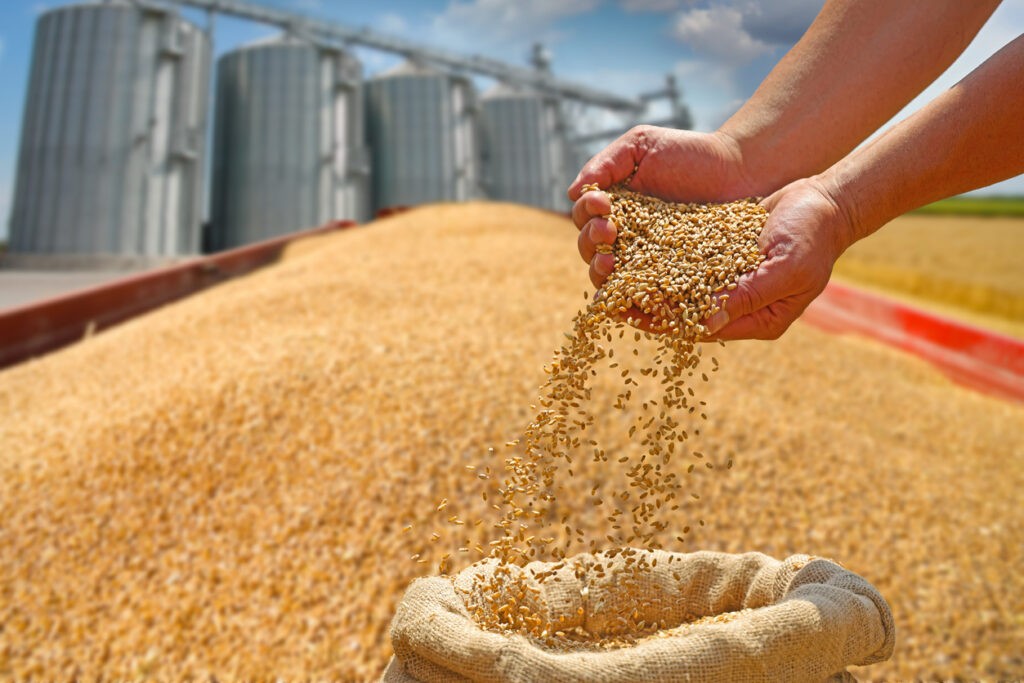
Kazakhstan has imposed restrictions on the re-export of Russian grain to Uzbekistan and China, Prime Minister Olzhas Bektenov announced. The move aligns with Kazakhstan’s ban on wheat imports from Eurasian Economic Union (EAEU) countries, which will remain in effect until the end of 2024. The restriction was outlined in Bektenov's response to a parliamentary inquiry. He explained that the decision aims to protect Kazakhstan’s domestic agricultural market, citing concerns about maintaining local production. During a meeting of the Kazakhstan-Russia intergovernmental commission, Rosselkhoznadzor, Russia’s federal agricultural oversight agency, raised issues related to the restrictions. The commission recommended that authorities expedite the removal of these measures, highlighting their impact on bilateral agricultural trade. Bektenov noted that these restrictions were critical to safeguarding Kazakhstan’s domestic market. “To protect the domestic market, Kazakhstan banned wheat imports from EAEU countries until the end of 2024. This ban limits the re-export of Russian grain to Uzbekistan and China,” he stated. In addition to the re-export ban, Kazakhstan has raised unified tariffs for the transit of goods across its territory for EAEU countries. Notably, the tariff for transporting Russian grain to Kyrgyzstan through Kazakhstan has doubled this year, further impacting regional trade dynamics.

Kazakhstan Sports Anticipates Influx of Russian and Belarusian Athletes

Kazakhstan's lower house of parliament, the Mazhilis, has approved in its first reading a bill on physical culture and sports that would ban the funding of foreign athletes (legionnaires) from the state budget and national companies with government stakes. However, even if this bill is enacted, Kazakh sports teams will retain a legal avenue to invite athletes from Eurasian Economic Union (EAEU) countries using public funds. For the first time, Kazakhstan’s national legislature is proposing a provision prohibiting the use of state funds to finance athletes who are not citizens of Kazakhstan, with the goal of prioritizing Kazakh athletes in terms of both sports representation and financial support. Minister of Tourism and Sports Yerbol Myrzabasynov has also suggested setting a cap on state funding for professional sports clubs, which would vary by sport according to national priorities. “The freed funds will be redirected towards children’s and youth sports, including boarding schools, youth sports schools, sports reserves, and facility upgrades,” Myrzabasynov explained. The bill was approved in the first reading. Currently, government funding for sports clubs in Kazakhstan comes from two main sources. Teams competing internationally, such as the Barys hockey team in the Continental Hockey League, the Astana basketball team in the VTB United League, and the Astana cycling team in the World Tour, receive support from the Samruk-Kazyna fund. Other teams in soccer, hockey, basketball, and volleyball competing in Kazakhstan’s national championships are funded by local budgets, with Astana’s soccer team - which also receives sponsorship from the Samruk-Kazyna fund - being the sole exception. Should the bill pass, these teams will need to rely on Kazakh athletes — or athletes from EAEU countries such as Russia, Belarus, Armenia, and Kyrgyzstan. The Treaty on the Eurasian Economic Union, enacted in January 2015, promotes the free movement of services, goods, capital, and labor across member states, ensuring equal labor rights and remuneration for citizens of EAEU countries. This treaty means that Kazakh clubs cannot restrict funding for athletes from EAEU nations without breaching international commitments. In Kazakh soccer, for instance, EAEU athletes are not counted as foreign players in the Premier League, a policy instituted after the Kazakhstan Football Federation set a limit on foreign players several years ago, capping each team’s roster at eight foreign players per season. Athletes from Russia, Belarus, Armenia, and Kyrgyzstan, however, are treated as domestic players due to Kazakhstan’s international obligations. This arrangement stems from Kazakhstan’s Law on Legal Acts, which stipulates that ratified international treaties take precedence over national laws. Therefore, if the bill banning foreign athletes' funding from the state budget is fully enacted, EAEU athletes will remain exempt from this ban. The bill must still pass through a second reading in the Mazhilis, two readings in the Senate, and obtain presidential approval before it becomes law. Questions remains as to whether Kazakh sports clubs will use this provision to hire athletes from EAEU countries, given potential legal challenges. Local administrations (akimats) who would be affected by any restrictions on funding for...

Uzbekistan Rejects Military Alliances and Maintains Observer Role in EAEU

At the opening of the Week of International Partnership Initiatives in Tashkent, the first deputy speaker of the Legislative Chamber of the Oliy Majlis, Akmal Saidov, stated that Uzbekistan will not join any military formations and will remain an observer state in the Eurasian Economic Union (EAEU). Responding to a question on whether Uzbekistan would compromise its sovereignty to cooperate more closely with other countries, Saidov announced: “The first article of our constitution states that Uzbekistan is a sovereign state. If we are talking about joining any paramilitary defense structures and organizations, then no, we will not allow it. We will never send our men [overseas] on military missions, including peacekeeping missions. There will be no foreign military bases in our territory." Saidov also emphasized that Uzbekistan’s current status as an observer in the EAEU is the most appropriate for the country. As head of the parliamentary commission tasked with studying Uzbekistan’s potential accession to the EAEU, Saidov asserted that, after reviewing over a thousand documents, observer status better aligns with Uzbekistan’s interests. He further explained that Kazakhstan had gained minimal benefit from joining the EAEU and that the new Constitution strengthens and strictly follows the main principles of Uzbekistan’s foreign policy. Uzbekistan received observer status in the EAEU on December 11, 2020, during an online summit of the High Eurasian Economic Council, attended by President Shavkat Mirziyoyev.

Kyrgyz Prime Minister: Labor Migrants From EAEU Should Not Be Discriminated Against on Territory of the Union

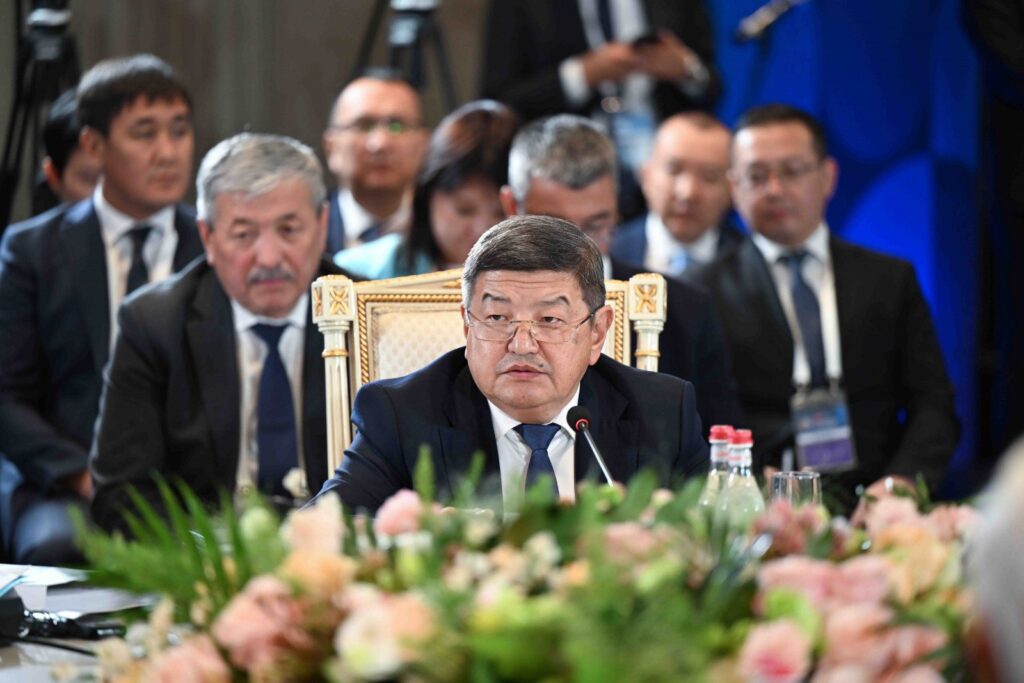
Speaking at a meeting of the Eurasian Intergovernmental Council in Yerevan, Kyrgyz Prime Minister Akylbek Japarov said that tightening migration laws should not apply to citizens from EAEU countries. According to Akylbek Japarov, increasing trade between EAEU countries and developing cooperative ties is the basis for sustainable economic growth. However, the main participants in any integration are people, so the attitude toward the citizens of the EAEU countries in any state of the Union should be the same. “Such a level of integration has been reached, when business and citizens of member states understand and deeply believe in the unity of the economic union (EAEU), and respectively require the same attitude to themselves being on the territory of any of the EAEU countries,” said the head of the Cabinet. Therefore, according to Japarov, the leadership of the EAEU countries should pay special attention when tightening migration legislation and adjust their attitudes toward migrants from union countries. Following the terrorist attack on the Crocus City Hall near Moscow, the Russian authorities significantly tightened migration legislation. Thousands of citizens, mainly from Tajikistan and Uzbekistan, were subjected to forced deportation. The restrictions also affected Kyrgyz citizens, although the country is a member of the EAEU. “We proceed from the fact that legislative initiatives should not contradict the norms of the EAEU treaty; that is, they should not apply to our working citizens and members of their families. Both in the documents initiated by state structures and in the public space, it is necessary to separate the rights of citizens of the EAEU countries from those of countries that are not part of it,” Japarov emphasized. According to official data, about half a million Kyrgyz citizens work in Russia. The unofficial figure may be two or three times higher.

Kyrgyzstan’s Wages Lowest Among EAEU Countries

Kyrgyzstan has the lowest average monthly wage among its fellow Eurasian Economic Union (EAEU) members, an economic integration bloc that includes Armenia, Belarus, Kazakhstan, and Russia. According to the Eurasian Economic Commission, the EAEU’s governing body, in January–June 2024, the average monthly nominal wage in Kyrgyzstan was $398, in Belarus $666, in Armenia $704, in Kazakhstan $875, and in Russia $922. Compared to the same period in 2023, wages increased in all EAEU member states with the highest growth recorded in Belarus (113%) and Russia (109.4%). Lower wages in Kyrgyzstan are however, somewhat compensated by the cost of food. In a survey conducted by Kyrgyzstan’s Ministry of Water Resources, Agriculture and Processing Industry, it was found that the price of comparable food products in the country are 13.59% lower than in Kazakhstan and 16.17% lower than in Russia.