
• KGS/USD = 0.01144 0%
  • KZT/USD = 0.00190 -0%
  • TJS/USD = 0.10837 0.37%
  • UZS/USD = 0.00008 0%
  • TMT/USD = 0.28571 0%
  • KGS/USD = 0.01144 0%
  • KZT/USD = 0.00190 -0%
  • TJS/USD = 0.10837 0.37%
  • UZS/USD = 0.00008 0%
  • TMT/USD = 0.28571 0%
  • KGS/USD = 0.01144 0%
  • KZT/USD = 0.00190 -0%
  • TJS/USD = 0.10837 0.37%
  • UZS/USD = 0.00008 0%
  • TMT/USD = 0.28571 0%
  • KGS/USD = 0.01144 0%
  • KZT/USD = 0.00190 -0%
  • TJS/USD = 0.10837 0.37%
  • UZS/USD = 0.00008 0%
  • TMT/USD = 0.28571 0%
  • KGS/USD = 0.01144 0%
  • KZT/USD = 0.00190 -0%
  • TJS/USD = 0.10837 0.37%
  • UZS/USD = 0.00008 0%
  • TMT/USD = 0.28571 0%
  • KGS/USD = 0.01144 0%
  • KZT/USD = 0.00190 -0%
  • TJS/USD = 0.10837 0.37%
  • UZS/USD = 0.00008 0%
  • TMT/USD = 0.28571 0%
  • KGS/USD = 0.01144 0%
  • KZT/USD = 0.00190 -0%
  • TJS/USD = 0.10837 0.37%
  • UZS/USD = 0.00008 0%
  • TMT/USD = 0.28571 0%
  • KGS/USD = 0.01144 0%
  • KZT/USD = 0.00190 -0%
  • TJS/USD = 0.10837 0.37%
  • UZS/USD = 0.00008 0%
  • TMT/USD = 0.28571 0%
06 November 2025

Viewing results 1 - 6 of 3

Tajikistan’s Rogun Dam Delayed as World Bank Freezes Funding

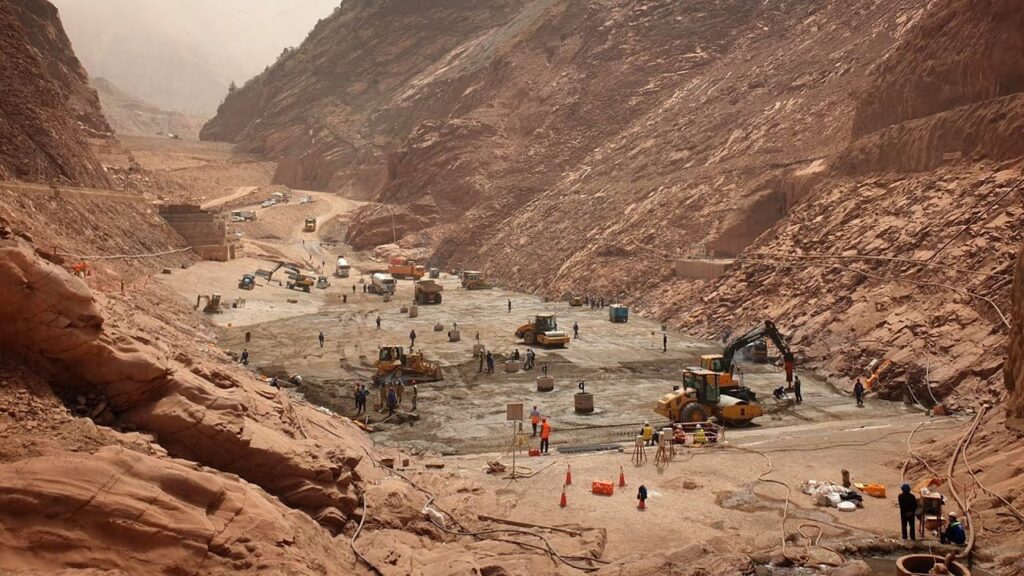
The future of Tajikistan’s flagship infrastructure project, the Rogun Hydropower Plant, has been thrown into doubt as the World Bank and other development partners delay financing until the government fulfils key conditions, Nezavisimaya Gazeta reported. The move reflects growing concerns among environmental groups and downstream communities in Uzbekistan and Turkmenistan over the dam’s ecological risks to the Amu Darya River. A Strategic Asset With Mounting Costs The Rogun project, often hailed as Tajikistan’s greatest national undertaking, is central to the government’s ambitions for energy independence and regional electricity exports. But it also represents one of the country's most significant financial liabilities. Standard & Poor’s Global Ratings recently affirmed Tajikistan’s sovereign credit rating at “B/B” with a stable outlook, but cautioned that Rogun is so costly it may never generate sufficient returns. The agency warned that the project could push the national budget into deficit by the end of 2025. Construction of the dam began in 1976 under the Soviet Union but was suspended during Tajikistan’s civil war. Attempts to restart the project in the early 2000s stalled over disagreements with Russian partners. In 2016, the government relaunched the project with support from the World Bank, awarding the main construction contract to Italy’s Salini Impregilo (now Webuild). That same year, the Vakhsh River was diverted and dam construction resumed. Two turbines were commissioned in 2018 and 2019, but significant progress has since slowed. To complete the plant, Tajikistan must install six additional turbines, raise the dam from its current 135 meters to the planned 335 meters, and secure an estimated $6.4 billion in new funding, roughly 40% of the country’s projected GDP for 2025. Conditions for Continued Support The World Bank has suspended further financing until Tajikistan presents a credible financing strategy that avoids unsustainable public debt, finalizes long-term electricity export agreements, and implements robust dam safety protocols. Without these conditions in place, the Bank has stated it cannot continue its support. Environmental opposition to the project has also intensified. The international coalition Rivers without Boundaries has warned that filling the Rogun reservoir could reduce Amu Darya river flows by more than 25%, accelerating desertification and endangering the livelihoods of up to 10 million people in Uzbekistan and Turkmenistan. Alexander Kolotov, a representative of the coalition, told Nezavisimaya Gazeta that the World Bank’s board is expected to review a report based on complaints filed by downstream communities, though no specific date has been set. Kolotov emphasized that Rogun poses one of the largest economic risks to Tajikistan and questioned whether international lenders should deepen their involvement. Broader Economic Fragility Tajikistan faces additional vulnerabilities. The country remains heavily reliant on remittances from labor migrants in Russia, lacks economic diversification, and is projected to lose its “least developed country” status in 2026, potentially curtailing its access to concessional aid and financing. For now, the Rogun Hydropower Plant stands as both a symbol of national aspiration and a looming financial gamble. Whether it becomes a cornerstone of regional energy security or a cautionary tale...

Flash Floods Severely Damage Irrigation Infrastructure and Crops in Tajikistan

Heavy rains and ensuing flash floods have inflicted significant damage on agriculture and infrastructure near the city of Penjikent in northwestern Tajikistan. The rural community of Kosatarosh was particularly hard-hit, with key irrigation canals damaged and dozens of hectares of farmland inundated. Key Canals and Farmland Affected According to the emergency response headquarters under the Penjikent city administration, flooding and mudslides disrupted the flow of two major irrigation canals, Khalifa Hassan and Farmetan. Around 20 meters of the bank of the Khalifa Hassan Canal was washed away, with sediment and debris accumulating in the channel. The Farmetan Canal was partially blocked, endangering the water supply for local farms. The disruption poses a serious threat to agricultural output, as the Khalifa Hassan Canal supplies water to over 3,500 hectares of cropland and orchards. Local authorities estimate that at least 80 hectares of rice, potatoes, corn, and other crops, cultivated by both collective farms and private households, were affected. On the morning of June 16, Penjikent Mayor Abduholik Kholikzoda visited the affected area and held an emergency meeting with representatives of the Committee for Emergency Situations and other relevant agencies. Authorities agreed to initiate a rapid damage assessment and commence restoration work. The State Administration for Land Reclamation and Irrigation of the Zarafshon River Basin has been tasked with clearing debris from the canals and repairing damaged sections. Specialists from the Zarafshon joint venture have already deployed equipment and begun initial repair operations. Authorities Had Issued Warnings The Tajikistan Hydrometeorological Agency had issued a warning on June 12-13 about the heightened risk of mudslides in mountainous and foothill regions, including areas in Sughd region, such as Ayni, Penjikent, and Iskanderkul, as well as regions under direct republican jurisdiction and parts of the Gorno-Badakhshan Autonomous Region. “Precipitation expected in mountainous and foothill areas could lead to mudslides,” the agency warned. The Emergency Committee advised residents to avoid rivers and reservoirs, suspend fishing and hunting, and temporarily cease grazing livestock in vulnerable mountainous areas. Volatile Summer Weather Increases Risk Forecasters predict that June 2025 will be unusually hot across Tajikistan, with temperatures expected to exceed seasonal averages by more than two degrees. The southern and lowland regions are expected to experience particularly high temperatures. Despite the heat, meteorologists warn of possible short-term rainfall, thunderstorms, dust storms, and squalls. Authorities have urged citizens to remain vigilant, particularly in flood-prone mountainous areas, where weather volatility continues to pose a risk. The situation in Penjikent underscores the increasing vulnerability of such regions to climate-induced disasters.

Kazakhstan Seeks to Mitigate Impact of U.S. Tariffs

Kazakhstan is working to minimize the economic damage from newly imposed U.S. tariffs, the highest levied on any Central Asian country. The government is assessing the scope of potential losses and pursuing diplomatic efforts to reverse or reduce the trade measures. A New Front in the Trade War On April 2, U.S. President Donald Trump announced sweeping new tariffs on imports from over 180 countries. Kazakhstan was subjected to a 27% tariff rate. In contrast, most other post-Soviet countries, including Uzbekistan, Kyrgyzstan, Armenia, and Tajikistan, were assigned a 10% tariff, described by the U.S. administration as the “base rate” for countries that “trade fairly” with the United States. Russia and Belarus, whose trade with the U.S. is effectively suspended due to sanctions, were exempt from the increase. Only Moldova, which reportedly imposes a 61% duty on U.S. goods, received a higher rate than Kazakhstan. According to Washington, Kazakhstan applies a 54% tariff on U.S. imports, prompting a reciprocal response, though the methodology behind the administration’s calculations has been questioned by many analysts. Moldova’s higher rate of 61% led to a 31% U.S. tariff. Limited Exposure for Key Exports U.S. President Trump announced a 90-day reprieve for affected countries on April 9, allowing time for negotiations to take place. While the move signals potential flexibility, the economic impact remains uncertain. Kazakh Trade Ministry representative Serik Ashitov stated on April 29 that only 4.8% of Kazakhstan’s exports to the U.S. would be affected by the tariffs. Crucially, major exports, such as oil, uranium, silver, and ferroalloys stand to remain untouched. These commodities account for approximately 90% of Kazakh shipments to the U.S. Despite fears of a broader economic fallout, Kazakhstan's stock market showed resilience in the first quarter of 2025, according to financial news channels. However, the trade conflict has had a deflationary effect on key exports. Oil prices have dropped below projected baselines amid concerns about declining global demand driven by slowing industrial activity, especially in Asia. “We’re observing falling oil prices and reduced global trade. The tariffs are cutting into industrial output in China and other key consumers of raw materials, which affects oil demand directly,” noted a representative of the Kazakhstan Stock Exchange. As of late April, Brent crude was trading at approximately $64 per barrel. Negotiations and Constraints In response, Kazakhstan has initiated diplomatic talks with the United States and plans to raise the issue at the World Trade Organization (WTO). “At present, there is no reason to believe these measures will significantly affect our exports. Nonetheless, we will continue working with American counterparts to mitigate the consequences of these unilateral measures,” Ashitov said during a press briefing. However, analysts caution that Kazakhstan may face structural limits in attempting to resolve this dispute. As a member of the Eurasian Economic Union (EAEU), Kazakhstan does not set its tariff policy independently. “Our customs duties are EAEU duties,” economist Almas Chukin explained. “If we wanted to unilaterally lower tariffs for the U.S., as Israel did, it would require the approval...
