• KZT/USD = 0.00213
  • TJS/USD = 0.10820
  • UZS/USD = 0.00008
  • TMT/USD = 0.29850
  • KZT/USD = 0.00213
  • TJS/USD = 0.10820
  • UZS/USD = 0.00008
  • TMT/USD = 0.29850
  • KZT/USD = 0.00213
  • TJS/USD = 0.10820
  • UZS/USD = 0.00008
  • TMT/USD = 0.29850
  • KZT/USD = 0.00213
  • TJS/USD = 0.10820
  • UZS/USD = 0.00008
  • TMT/USD = 0.29850
  • KZT/USD = 0.00213
  • TJS/USD = 0.10820
  • UZS/USD = 0.00008
  • TMT/USD = 0.29850
  • KZT/USD = 0.00213
  • TJS/USD = 0.10820
  • UZS/USD = 0.00008
  • TMT/USD = 0.29850
  • KZT/USD = 0.00213
  • TJS/USD = 0.10820
  • UZS/USD = 0.00008
  • TMT/USD = 0.29850
  • KZT/USD = 0.00213
  • TJS/USD = 0.10820
  • UZS/USD = 0.00008
  • TMT/USD = 0.29850
05 August 2026

Viewing results 1 - 6 of 8

Italy Commits $150 Million to Tajikistans Rogun Hydropower Plant

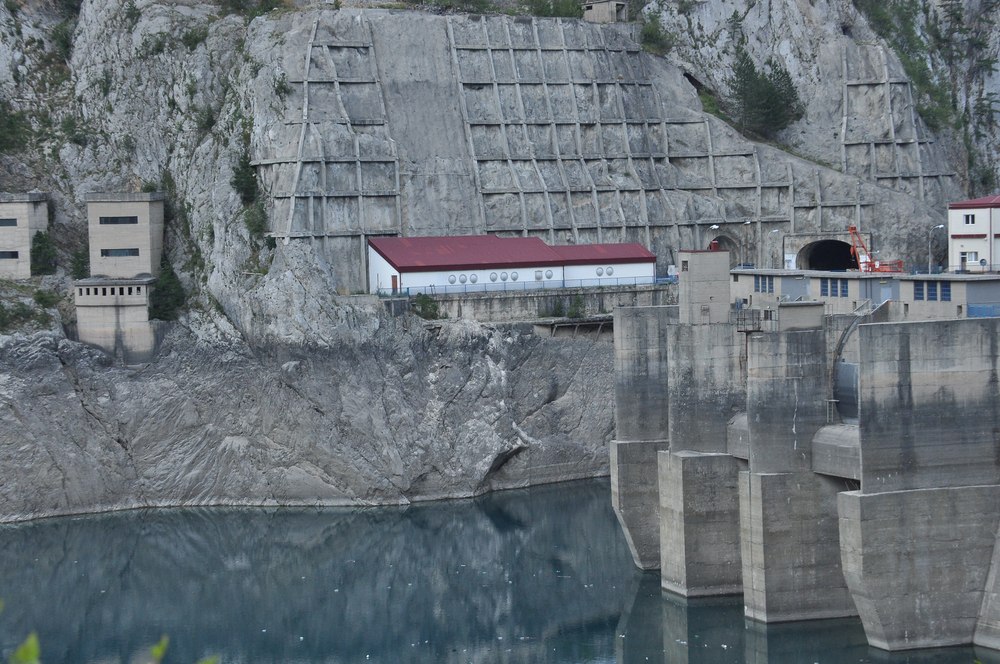
The World Bank Group and Italy’s state-controlled development bank, Cassa Depositi e Prestiti (CDP), have signed a co-financing agreement to support construction of Tajikistan’s Rogun Hydropower Plant, CDP and the World Bank’s office in Tajikistan said. The signing ceremony took place at Tajikistan’s Ministry of Finance in Dushanbe. Under the agreement, the Italian Climate Fund will provide $150 million for the project. The funds will be managed by CDP on behalf of Italy’s Ministry of Environment and Energy Security. CDP said the financing would support construction work on the right bank of the Rogun Dam. The Rogun Hydropower Plant is being financed by a consortium of 12 international development partners led by the World Bank Group, with CDP among its members. According to the World Bank, the project is expected to strengthen Tajikistan’s energy security while supporting the development of a cleaner energy market across Central Asia. The World Bank has already approved $650 million in grant financing for the project through the International Development Association (IDA). Located on the Vakhsh River, the Rogun Hydropower Plant is the centerpiece of the Vakhsh hydropower cascade. The project originated during the Soviet period, although construction of the current scheme was formally launched in 2017. Once completed, currently scheduled for 2033, the facility is projected to have an installed capacity of 3,780 MW. The World Bank estimates the plant will generate 14,400 gigawatt-hours of renewable electricity each year, equivalent to about 60% of Tajikistan’s current electricity production. The bank says the project will help reduce the country’s chronic winter electricity shortages, provide more reliable electricity for around 10 million people, create over 30,000 direct and indirect jobs, and enable electricity exports to neighboring Kazakhstan and Uzbekistan. Despite the new financing, the project continues to face criticism from environmental groups. The Times of Central Asia previously reported that the World Bank’s Inspection Panel registered a complaint filed by the environmental coalition Rivers Without Boundaries on behalf of downstream communities in Uzbekistan and Turkmenistan. The coalition argued that the project’s environmental and social assessments were outdated and warned that filling the Rogun reservoir could reduce water flows to the Amu Darya delta, accelerate desertification, increase soil salinity, and affect livelihoods downstream. In June 2025, the World Bank’s Inspection Panel recommended a full investigation. However, in November 2025, the Board of Executive Directors declined to authorize one, saying the complaint did not meet the mechanism’s technical eligibility criteria. Environmental groups criticized the decision. The World Bank has maintained that the project complies with its environmental and social safeguard framework, citing updated assessments, public consultations, and ongoing monitoring.

Inside Tajikistan’s Rogun Dam, the Mega-Project Built to Power a Nation

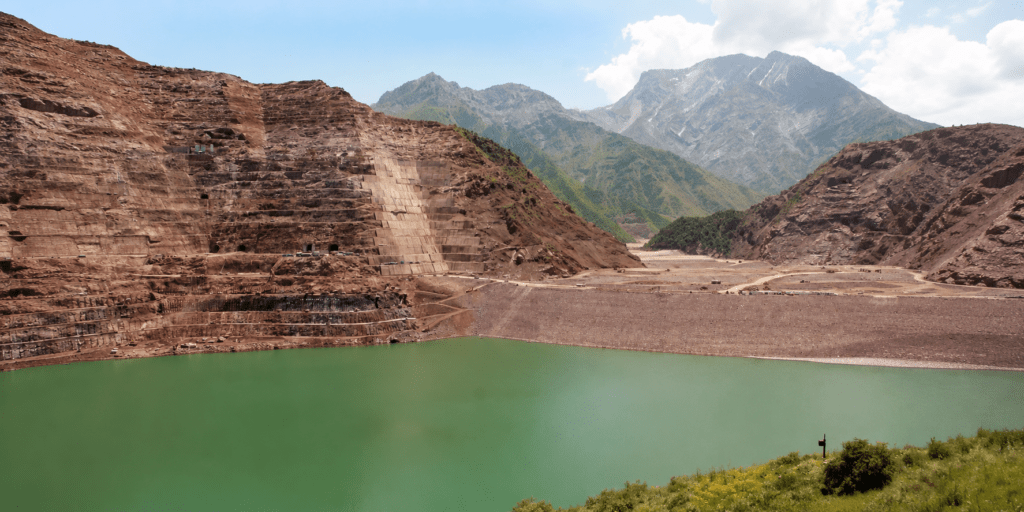
“Building a hydroelectric power plant is a responsibility for our country!” Displayed in Tajik at the entrance to the Rogun construction site, deep in the mountains of Tajikistan, the slogan captures the significance of what has become the most ambitious infrastructure project in the country’s history - and one of the largest hydropower developments in the world. Nearly fifty years after the Soviet authorities launched construction in 1976, the mega-project is finally entering a decisive phase. Long delayed by the collapse of the Soviet Union, the civil war of the 1990s, and the economic struggles of Central Asia’s poorest country, the project has gained renewed momentum over the past decade. After a two-hour drive through the mountains east of Dushanbe, the scale of the site gradually comes into view. Located more than 1,300 meters above sea level, Rogun is far more than a dam. The complex includes dozens of kilometers of tunnels, diversion canals, underground power stations, and an extensive network of technical infrastructure carved into the rock. [caption id="attachment_49947" align="aligncenter" width="1365"] Turbines in the process of being built[/caption] Once completed, according to current project plans, the structure will rise to 335 meters, making it the tallest dam in the world, Tajik officials proudly note. For now, it stands at approximately 140 meters. “This is where the Vakhsh River flows,” says Anvar Rahmonov, Production Director at Rogun HPP, standing on a ridge overlooking the future reservoir. [caption id="attachment_49948" align="aligncenter" width="2048"] Anvar Rahmonov, Production Director at Rogun HPP[/caption] Fed by glaciers in the Pamir Mountains, the river is diverted through underground galleries that currently power two 600-megawatt turbines. Below, dozens of trucks move continuously across the site while workers labor across different sections of the project. The deep blue waters of the future reservoir - designed to hold more than 13 billion cubic meters of water - contrast sharply with the surrounding red-earth mountains and the constant movement of heavy machinery. The project remains far from complete. Four additional turbines are still under construction. Once fully operational, the plant will have a total installed capacity of 3,600 megawatts, according to Tajik project officials, comparable to that of a nuclear power station. Ending Chronic Energy Shortages For a country of just over ten million people that continues to face electricity shortages every winter, the stakes are enormous. Despite possessing one of Central Asia’s largest hydropower potentials, Tajikistan still suffers from a chronic energy deficit. During the winter months, the country lacks roughly a quarter of the electricity needed to meet domestic demand, resulting in rationing and power restrictions across much of rural Tajikistan. “Thanks to this project, Tajikistan will be able to achieve energy independence,” says Andres Ricaldi, an engineer with the Franco-Belgian consultancy Tractebel, which is involved in the project. In the substation, a diagram of the power lines supplying the different regions is shown. [caption id="attachment_49946" align="aligncenter" width="2048"] Substation zone[/caption] Yet Rogun’s ambitions extend well beyond the domestic market. “The meaning of the Rogun Dam has changed,” explains Artemy Kalinovsky,...

Rahmon Outlines Measures to Address Tajikistan’s Winter Power Shortages

President Emomali Rahmon has acknowledged that Tajikistan’s population continues to endure severe electricity rationing during the winter months, and has outlined steps the government is taking to alleviate the crisis. “We are fully aware of the challenges faced by the people of Tajikistan during the period of temporary restrictions on electricity supply,” Rahmon said in his annual address to parliament on December 16, adding that authorities are implementing all necessary measures to address the issue. Rahmon attributed the shortages primarily to rapid population growth and the expansion of industrial production, both of which have significantly increased domestic electricity consumption. He also cited unfavorable weather conditions, including below-average rainfall last autumn, which reduced water inflows into reservoirs that supply the country’s hydropower plants. He noted that since independence, 1.3 million new homes have been built to accommodate over 8.4 million people. In the past seven years alone, 2,600 new industrial enterprises have begun operations, further raising electricity demand. Despite these pressures, Tajikistan has steadily increased electricity production. Over the past decade, annual generation has risen by 7 billion kilowatt-hours, from 17.2 billion in 2015 to 24.2 billion in 2025, an increase of approximately 40%. However, domestic demand is projected to grow by an additional 31% by 2030 compared to 2025 levels. Over the past ten years, investments in the energy sector have added 1,017 megawatts to the country’s installed capacity. A further 200 megawatts were gained through the rehabilitation and modernization of existing plants. One of the most recent projects was the modernization of the Kairakkum Hydroelectric Power Plant, completed in November 2025, which increased its capacity from 114 megawatts to 174 megawatts. While Tajikistan possesses vast hydropower potential, it has long struggled with chronic energy shortages. In response, the government has prioritized large-scale hydropower projects, particularly the Rogun Dam and Hydropower Plant, which is expected to be central to achieving domestic energy security and establishing Tajikistan as a regional electricity exporter. Rahmon announced that the third generating unit of the Rogun plant is scheduled for commissioning in September 2027, marking a key milestone on the path to full energy independence. In parallel, construction has begun on two large solar power plants, each with a capacity of 250 megawatts, in the Sughd and Khatlon regions. Both facilities are expected to be operational by August 2026. He also emphasized the importance of improving energy efficiency alongside expanding generation capacity. Electricity losses remain high, exceeding 3 billion kilowatt-hours annually. Rahmon called for accelerating the rollout of a nationwide digital billing system, which he said has already reduced losses. The introduction of modern digital billing and payment technologies revealed that 30% to 40% of households were previously not paying for electricity. Since the system’s implementation, losses have declined. In the first 11 months of 2025, total electricity losses stood at approximately 3 billion kilowatt-hours, 500 million kilowatt-hours less than during the same period the previous year.

Environmental Groups Criticize World Bank’s Decision on Rogun Dam Complaint

Environmental advocates have sharply criticized the World Bank’s decision to reject a request for a full investigation into Tajikistan’s Rogun Hydropower Plant, citing concerns over potentially severe environmental and social consequences for communities downstream along the Amu Darya river in Uzbekistan and Turkmenistan. According to the international coalition Rivers without Boundaries, the World Bank’s Board of Executive Directors dismissed the complaint despite mounting evidence that the project could exacerbate water scarcity, degrade water quality, damage vulnerable ecosystems, and displace rural populations dependent on agriculture and access to clean water. The complaint, filed earlier this year on behalf of affected communities, argued that the project’s environmental impact assessments were based on outdated data and non-binding verbal assurances from Tajikistan that the reservoir would not be operated at full capacity. The World Bank’s Inspection Panel registered the complaint in April 2025 and, after conducting an initial review, including a fact-finding visit to Tajikistan in June, recommended a comprehensive investigation, citing a strong likelihood of harm. However, the Bank’s Board rejected that recommendation, asserting that only citizens of the country receiving Bank financing are eligible to request an investigation. This decision surprised observers, particularly given that the Bank had previously accepted similar complaints from Uzbekistan over the same project in 2010. Environmental groups argue that the Board’s procedural reasoning allows it to ignore the project's far-reaching transboundary impacts. Evgeny Simonov, a lead expert at Rivers without Boundaries, stated that the Inspection Panel’s own findings validated the downstream communities’ concerns. He accused the Bank of avoiding accountability by hiding behind technicalities. Alexander Kolotov, director of the same coalition, said the ruling reveals a contradiction between the Bank’s public commitments to inclusive development and its actual response to cross-border grievances. He warned that dismissing downstream voices undermines the principles of equitable and participatory water governance. Environmental experts also caution that the refusal to launch an investigation leaves no recourse for affected communities should their fears materialize. Potential long-term impacts include increased soil salinity, reduced agricultural productivity, and the erosion of traditional rural livelihoods. The Rogun Alert coalition, an alliance of international environmental organizations, announced plans to continue monitoring the situation and to explore alternative mechanisms to protect the environmental rights of the region’s residents. Previous assessments had warned that filling the Rogun reservoir could reduce water flows to the Amu Darya delta by 25% or more, with potentially devastating effects on ecosystems and the wellbeing of up to 10 million people in Uzbekistan and Turkmenistan.

Tajikistan Upgrades Nurek Dam to Boost Power Supply Ahead of Winter Crunch

Tajikistan’s massive Nurek hydroelectric dam – the world’s second-tallest – is undergoing a sweeping modernization to shore up the nation’s electricity supply ahead of the demanding winter season. The 300-meter-high dam, completed in 1980 on the Vakhsh River near the Afghan border, has long been a strategic asset, supplying approximately 70% of Tajikistan’s power. As winter approaches and energy demand peaks, crews at the 3,015 MW hydropower plant are racing to upgrade aging turbines and infrastructure to ensure reliable electricity across the country. The overhaul, which began several years ago, promises not only to keep the lights on through harsh weather but also to boost Nurek’s capacity and extend the life of a facility that has defined Tajikistan’s energy landscape for five decades. A Soviet-Era Marvel at the Heart of Tajikistan’s Power Grid When it was completed in 1980, Nurek was the tallest dam in the world, a record it held for years as a feat of Soviet engineering, with the earth-fill embankment forming a vast reservoir of 98 km² that stores some 10.5 billion cubic meters of water. Between 1972 and 1979, nine giant hydro turbines were installed, giving Nurek an original design capacity of approximately 2,700 MW. Over time, improvements brought its output to just over 3,000 MW. In addition to producing power, the reservoir also supports major irrigation across the Amu Darya basin with one scheme alone - via the Dangara tunnel - irrigating roughly 70,000 hectares, underscoring its dual importance for energy and agriculture. For Tajikistan, a mountainous country of roughly 10.8 million people, Nurek has been nothing short of an economic lifeline. Hydropower accounts for roughly 98% of Tajikistan’s electricity generation, one of the highest shares of renewable energy in the world. This green energy dominance is largely thanks to Nurek and a network of smaller dams. However, the infrastructure is aging, and after 50 years of service, Nurek’s machinery had begun to falter. By the mid-2010s, winter electricity shortages had become common. During the cold months from late September to April, the hydrological cycle leaves Tajikistan with reduced river flow, just as heating needs spike. In those winters, rural areas often faced power rationing and outages, while the capital Dushanbe and other major cities narrowly avoided blackouts. Modernizing Nurek became essential to prevent a return to the severe energy crises of the past and to meet the country’s development goals. Upgrading and Expanding a Giant A comprehensive rehabilitation of Nurek began in earnest in recent years, backed by international financing, including the World Bank. The overhaul is split into phases: Phase I of the modernization — covering four of Nurek’s nine generating units along with major dam-safety works — is scheduled for completion by the end of 2026. Phase II will then refurbish the remaining six units. The upgrades are substantial - new high-efficiency Francis turbines will raise each unit’s capacity from 335 MW to 375 MW. In October 2022, the first upgraded unit came online, producing about 10% more power than before. By August...

Tajikistan’s Rogun Dam to Triple Forests Under No Net Loss Plan

The construction of Tajikistan’s massive Rogun Hydropower Plant (HPP) will proceed under strict environmental conditions, guided by what experts describe as a "No Net Loss" (NNL) approach to nature. According to Asia-Plus, the updated Environmental and Social Impact Assessment (ESIA) for the project outlines a series of measures to offset ecological damage, including large-scale forest restoration. The report states that 262 hectares of land, including 185 hectares of juniper forest and 77 hectares of floodplain, will be lost due to construction. To compensate, authorities plan to restore 786 hectares of new forest, tripling the area impacted. The reforestation effort will prioritize juniper, riverside, and fruit and nut forests, while also establishing new protected areas to reinforce local ecosystems. Tajikistan’s Forestry Agency has already allocated nearly 7,600 hectares of land for these efforts. Reforestation is expected to cost over $7.5 million, with annual maintenance costs projected at approximately $10,500. The ESIA outlines a phased strategy. From 2025 to 2030, specific restoration sites will be identified. Practical implementation, including planting and ecosystem protection, is scheduled to begin in 2031. The NNL principle aims to ensure that long-term ecological gains outweigh short-term environmental disruptions. Once completed, the Rogun HPP will have an installed capacity of 3,780 megawatts, making it the largest hydropower facility in Central Asia. Its six turbines, each with a capacity of 630 MW, are expected to generate over 14.5 billion kilowatt-hours of electricity annually once the plant becomes fully operational in 2029. Two units, launched in 2018 and 2019, are already producing power at reduced capacity. In 2024, the plant generated 1.22 billion kWh, accounting for 5.5 percent of Tajikistan’s total electricity output. However, the project has not escaped controversy. The World Bank’s Inspection Panel recently agreed to review a formal complaint filed by residents of Uzbekistan and Turkmenistan, supported by the regional coalition Rivers Without Boundaries. The complaint questions the adequacy of the project's environmental assessments, which critics argue fail to fully account for downstream impacts on communities and ecosystems along the Amu Darya basin. Despite these concerns, Tajik officials maintain that Rogun will enhance national energy independence while also helping position Central Asia as a hub for renewable energy.