• KGS/USD = 0.01144 0%
  • KZT/USD = 0.00216 0%
  • TJS/USD = 0.10663 0%
  • UZS/USD = 0.00008 0%
  • TMT/USD = 0.28530 0%
  • KGS/USD = 0.01144 0%
  • KZT/USD = 0.00216 0%
  • TJS/USD = 0.10663 0%
  • UZS/USD = 0.00008 0%
  • TMT/USD = 0.28530 0%
  • KGS/USD = 0.01144 0%
  • KZT/USD = 0.00216 0%
  • TJS/USD = 0.10663 0%
  • UZS/USD = 0.00008 0%
  • TMT/USD = 0.28530 0%
  • KGS/USD = 0.01144 0%
  • KZT/USD = 0.00216 0%
  • TJS/USD = 0.10663 0%
  • UZS/USD = 0.00008 0%
  • TMT/USD = 0.28530 0%
  • KGS/USD = 0.01144 0%
  • KZT/USD = 0.00216 0%
  • TJS/USD = 0.10663 0%
  • UZS/USD = 0.00008 0%
  • TMT/USD = 0.28530 0%
  • KGS/USD = 0.01144 0%
  • KZT/USD = 0.00216 0%
  • TJS/USD = 0.10663 0%
  • UZS/USD = 0.00008 0%
  • TMT/USD = 0.28530 0%
  • KGS/USD = 0.01144 0%
  • KZT/USD = 0.00216 0%
  • TJS/USD = 0.10663 0%
  • UZS/USD = 0.00008 0%
  • TMT/USD = 0.28530 0%
  • KGS/USD = 0.01144 0%
  • KZT/USD = 0.00216 0%
  • TJS/USD = 0.10663 0%
  • UZS/USD = 0.00008 0%
  • TMT/USD = 0.28530 0%

Viewing results 1 - 6 of 145

Central Asia Poised to Outpace Global Growth in 2025, IMF Projects (With One Exception)

The year 2025 is anticipated to bring moderate growth for the global economy, according to forecasts by the International Monetary Fund (IMF). Global GDP is projected to grow by 3.2%, reaching $115.3 trillion at current prices. While global growth is expected to remain stable, it is weaker than initially forecast. The IMF notes that the economic outlook for the United States has improved, but growth expectations for other advanced economies, particularly in Europe, have been downgraded. Emerging markets and developing economies continue to grapple with a range of challenges, including production disruptions, shipping delays, geopolitical conflicts, civil unrest, and extreme weather events. These factors have tempered growth prospects in regions such as the Middle East, Central Asia, and sub-Saharan Africa. In contrast, emerging Asia is experiencing robust growth, fueled by strong demand for semiconductors and electronics, underpinned by substantial investments in artificial intelligence. Additionally, public investment in China and India is driving regional economic expansion. However, the IMF forecasts that global growth will average 3.1% annually over the next five years, a pace slower than pre-pandemic levels. Global Economic Highlights In 2025, the United States is expected to retain its position as the world’s largest economy, with a GDP of $30.3 trillion at current prices. China will follow with $19.5 trillion, while Germany is projected to rank third at $4.9 trillion. Japan and India will occupy fourth and fifth places, with GDPs of $4.4 trillion and $4.3 trillion, respectively. Central Asia Outlook In Central Asia, Uzbekistan’s economy is forecast to expand by 5.7%, reaching $127.4 billion at current prices, according to the IMF. This growth rate positions Uzbekistan as one of the region’s fastest-growing economies. Kazakhstan, the largest economy in Central Asia, is expected to achieve 4.6% growth, with GDP reaching $306.6 billion. Kyrgyzstan’s GDP is forecast to grow by 5%, reaching $17.3 billion at current prices. Tajikistan’s economy is expected to grow by 4.5%, with GDP projected at $14.1 billion. Turkmenistan is forecast to experience slower growth, with its GDP increasing by 2.3% to reach $91.1 billion.

Rahmon Unveils Tajikistan’s Roadmap for Economic Growth and Diplomacy

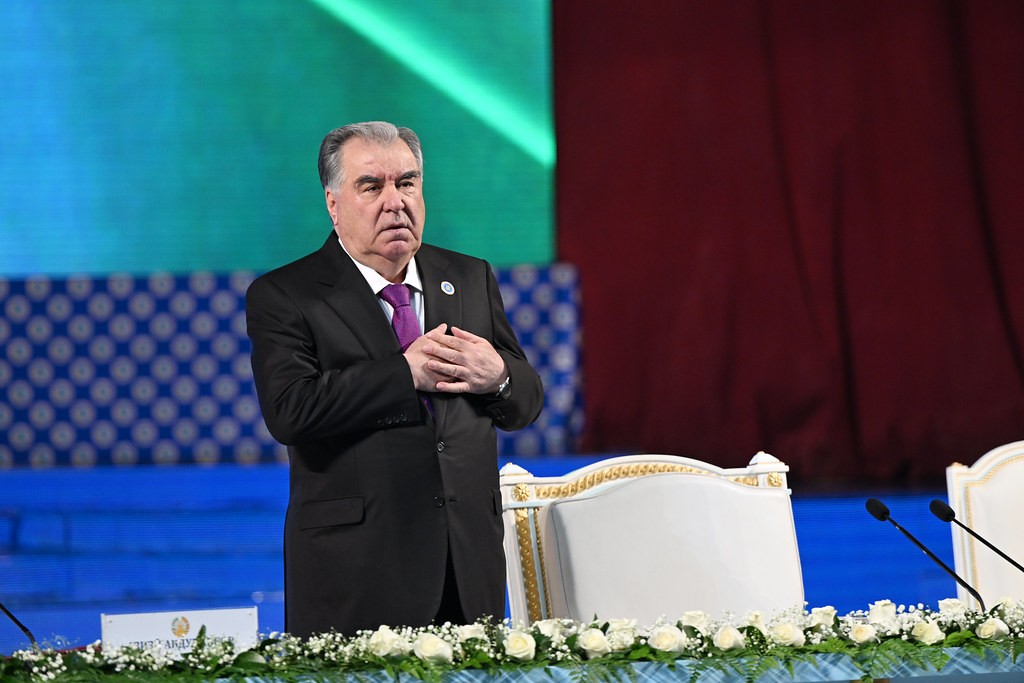
On December 28, Tajikistan’s President Emomali Rahmon delivered his annual address, titled “On Major Dimensions of Tajikistan’s Domestic and Foreign Policy,” during a joint session of both chambers of the Tajik Parliament​. The president outlined key priorities for implementing domestic and foreign policy and advancing various sectors of Tajikistan's economy, including industry, energy, agriculture, transport, investment, entrepreneurship, education, science, healthcare, and social protection. Rahmon directed the government to draft a "Medium-Term Development Program for 2026-2030" by the end of 2025. Highlighting the need for innovation, he proposed declaring 2025-2030 the “Years of Development of the Digital Economy and Innovation.” Additionally, he announced plans to establish a University of Innovation and Digital Technologies in Kulob, building upon the existing Institute of Technology and Innovation Management. Rahmon noted significant progress in industrialization, with Tajikistan’s industrial production nearly doubling in the past five years. This growth included the creation of more than 2,040 industrial enterprises and 74,000 jobs. In the road and transport sector, Rahmon underscored the importance of transforming Tajikistan into a transit hub. Ongoing modernization and reconstruction efforts have already improved the country’s ranking in the World Economic Forum’s road quality index, rising from 50th to 44th among 165 countries. Rahmon highlighted that 43% of Tajikistan's 2024 state budget is allocated to the social sector. Over the past five years, public-sector wages have increased four times, doubling overall during this period. He instructed the government to further raise salaries for employees in education, healthcare, social protection, culture, sports, government agencies, law enforcement, and the military. Employment remains a strategic priority. Rahmon noted that 4.1 million jobs have been created since independence, and he directed regional and local authorities to generate an additional 1.4 million jobs across all sectors of the economy in the next five years. On foreign policy, Rahmon reiterated Tajikistan’s commitment to its “open doors” approach, expressing readiness to strengthen bilateral and multilateral relations. He emphasized the importance of constructive engagement with international and regional organizations, including the United Nations, international financial institutions, and development partners. Rahmon’s address outlined a comprehensive roadmap for Tajikistan’s development, combining innovation, infrastructure, and social investment with an open and cooperative foreign policy. His directives reflect a vision aimed at fostering economic growth, improving living standards, and enhancing the country's position on the global stage.

Uzbekistan’s Foreign Trade Turnover Reaches $59.4 Billion in 2024

From January to November 2024, Uzbekistan’s foreign trade turnover (FTT) reached $59.4 billion, marking an increase of $2.1 billion or 3.6% compared to the same period in 2023, according to the Uzbek Statistical Agency. The volume of exports rose to $24.2 billion, a 4.4% increase compared to January-November 2023. Imports totaled $35.1 billion, growing by 3.0% over the same period. Kazakhstan emerged as one of Uzbekistan’s largest economic partners, following China and Russia. Factors contributing to this include a shared border, trade liberalization, and economic collaboration within the CIS free trade zone. Uzbekistan currently conducts trade with 195 countries, with significant FTT shares attributed to: China: 19.0% Russia: 18.0% Kazakhstan: 6.5% Turkey: 4.4% South Korea: 3.0% The Commonwealth of Independent States (CIS) countries accounted for 35.4% of Uzbekistan’s FTT during this period, reflecting a 3.0% increase from 2023. The growing economies of Uzbekistan’s trading partners in the CIS suggest a potential for increased demand for Uzbek exports. However, trade with non-CIS countries saw a decline. Uzbekistan’s trade share with other foreign nations dropped by 3.0% compared to the same period in 2023, comprising 64.6% of the total FTT.

Uzbekistan Targets $43 Billion in Investments to Accelerate Growth

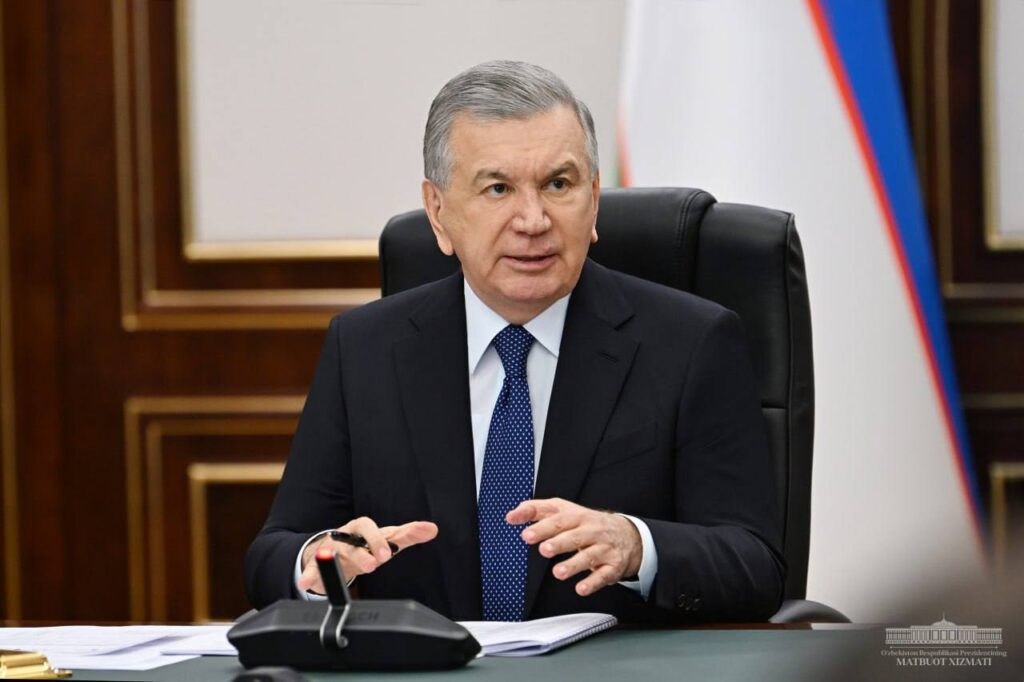
On December 19, Uzbek President Shavkat Mirziyoyev chaired a government meeting to review foreign investment progress in 2024 and outline goals for 2025​. Since 2017, Uzbekistan has attracted a total of $188 billion in investments, including $87 billion in foreign investments. This has increased the share of investments in the country’s GDP to over 30%, providing a solid foundation for sustainable economic growth. In 2024, the volume of investments grew by 1.3 times, surpassing $36 billion. These funds financed 560 large and medium-sized projects, many of which have already been put into operation this year. These projects are expected to boost Uzbekistan’s exports by $1 billion in 2025. For 2025, Uzbekistan aims to utilize $43 billion in investments, funding over 300 large projects. These initiatives will support the production of 662 types of import-substituting goods, further strengthening the country’s industrial base. Mirziyoyev underscored the importance of targeted engagement with foreign investors and improving conditions to attract more investment. The meeting also set an ambitious goal to double Uzbekistan’s annual export volume by 2030, reaching $45 billion. Achieving this target will require launching new investment projects, increasing the production of high-added-value goods, and expanding access to international markets.

Kyrgyzstan Unveils Ambitious Growth Plans at People’s Kurultai

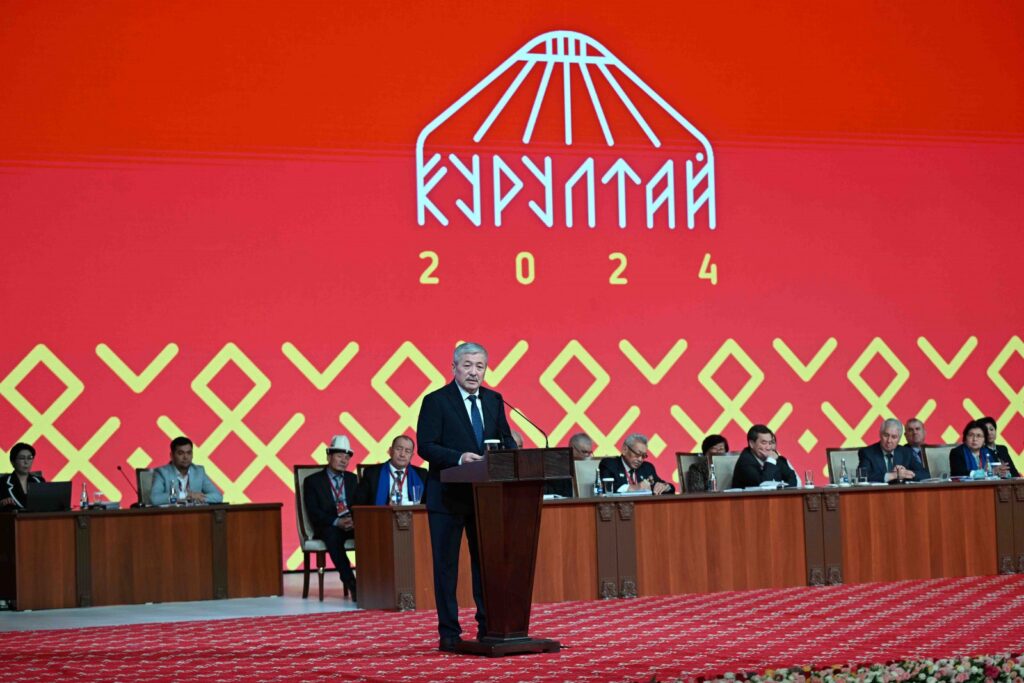
On December 20, Bishkek hosted the third People’s Kurultai (Congress), a platform for direct dialogue between representatives of local communities from across Kyrgyzstan and the country’s top leadership. The event featured opening remarks by President Sadyr Japarov and a detailed address by newly appointed Chairman of the Cabinet of Ministers, Adylbek Kasymaliyev, who outlined the government’s economic priorities and strategic plans for the future. Japarov set the tone for the event by sharing his vision for Kyrgyzstan’s development priorities. He announced that construction of the long-anticipated China-Kyrgyzstan-Uzbekistan railway will commence on December 27. Kasymaliev, in his address, emphasized Kyrgyzstan’s ability to sustain economic momentum, citing the country’s 9% annual GDP growth rate over the past three years. He highlighted key initiatives aimed at transforming Kyrgyzstan’s economic landscape, including: Strategic Infrastructure Projects: Kasymaliyev underscored the significance of the China-Kyrgyzstan-Uzbekistan railway, which is expected to create new economic centers and logistics hubs, effectively positioning Kyrgyzstan as a "land port" in the region. Hydropower and Renewable Energy: As a reliable partner in Central Asia’s hydropower sector, Kyrgyzstan will continue collaborating with Kazakhstan and Uzbekistan on the flagship Kambarata-1 hydroelectric power plant. Kasymaliyev also announced plans to expand solar and wind energy, eliminate state monopolies in the energy sector, and create conditions to attract private investment. Agriculture and Food Security: The government will prioritize agricultural processing to add value to raw products, ensuring food security and bolstering rural economic development. Construction as an Economic Driver: With construction contributing 7.4% of Kyrgyzstan’s GDP - a tenfold increase since 2013 - Kasymaliyev called the industry a vital indicator of economic growth. He noted that construction has significantly improved citizens' well-being over the past three years. Government’s Strategic Goals Kasymaliyev laid out an ambitious roadmap for the Cabinet of Ministers, aiming for the following by 2030: Economic Growth: Maintaining a GDP growth rate of 9% and achieving a GDP of $30 billion. Income Growth: Raising GDP per capita from $2,500 to $4,000. Economic Transition: Shifting from a services-oriented economy to an industrial-agrarian model. Support for Small and Medium Businesses: Increasing their share in GDP from the current 40.5% to 50%. Poverty Reduction: Lowering the poverty rate to 17%. Education Expansion: Ensuring 80% of preschool-age children have access to kindergarten. Kasymaliyev’s address underscored the government’s commitment to comprehensive economic reforms and regional cooperation. His plans reflected an optimistic vision for Kyrgyzstan’s development while addressing key challenges in energy, infrastructure, and social services.

Uzbekistan’s Economic Transformation and Future Goals Take Center Stage

Uzbekistan’s economic progress and future ambitions are in focus as the Indian magazine Business Central Asia dedicates its latest issue to the country’s development. Highlighting key points from President Shavkat Mirziyoyev’s address to the Legislative Chamber of the Oliy Majlis, the feature showcases Uzbekistan’s achievements and ambitious goals for the years ahead. The article highlights Uzbekistan’s remarkable economic transformation. Since the early 2000s, the country’s economy has doubled, surpassing the $100 billion mark. By 2024, per capita income is expected to reach $3,000, while exports have grown to exceed $25 billion for the first time. Gold and foreign exchange reserves have also seen substantial growth, surpassing $40 billion. Looking to the future, the Uzbekistan-2030 strategy outlines ambitious targets to further accelerate economic growth. The plan envisions increasing GDP to $160 billion, with a projected $110 billion milestone this year. If current growth rates are sustained, Uzbekistan’s economy could reach $200 billion by 2030, significantly improving living standards and the overall quality of life for its citizens. Ensuring macroeconomic stability is a key priority in the government’s roadmap. Over the next five years, Uzbekistan aims to sustain annual growth of 6-7%, expand the private sector’s share of the economy to 85%, and launch large-scale public-private partnership projects. The feature also emphasizes Uzbekistan’s long-term economic resilience. According to the World Bank, the country is poised to rank among the top three fastest-growing economies in Europe and Central Asia in 2024, further validating its development strategy. Uzbekistan’s leadership remains committed to maintaining growth momentum while addressing structural reforms. With a strong focus on sustainable development, the government’s policies aim to enhance economic opportunities and ensure inclusive growth for all segments of the population.