
• KGS/USD = 0.01144 0%
  • KZT/USD = 0.00200 0%
  • TJS/USD = 0.10494 0%
  • UZS/USD = 0.00008 0%
  • TMT/USD = 0.28490 0%
  • KGS/USD = 0.01144 0%
  • KZT/USD = 0.00200 0%
  • TJS/USD = 0.10494 0%
  • UZS/USD = 0.00008 0%
  • TMT/USD = 0.28490 0%
  • KGS/USD = 0.01144 0%
  • KZT/USD = 0.00200 0%
  • TJS/USD = 0.10494 0%
  • UZS/USD = 0.00008 0%
  • TMT/USD = 0.28490 0%
  • KGS/USD = 0.01144 0%
  • KZT/USD = 0.00200 0%
  • TJS/USD = 0.10494 0%
  • UZS/USD = 0.00008 0%
  • TMT/USD = 0.28490 0%
  • KGS/USD = 0.01144 0%
  • KZT/USD = 0.00200 0%
  • TJS/USD = 0.10494 0%
  • UZS/USD = 0.00008 0%
  • TMT/USD = 0.28490 0%
  • KGS/USD = 0.01144 0%
  • KZT/USD = 0.00200 0%
  • TJS/USD = 0.10494 0%
  • UZS/USD = 0.00008 0%
  • TMT/USD = 0.28490 0%
  • KGS/USD = 0.01144 0%
  • KZT/USD = 0.00200 0%
  • TJS/USD = 0.10494 0%
  • UZS/USD = 0.00008 0%
  • TMT/USD = 0.28490 0%
  • KGS/USD = 0.01144 0%
  • KZT/USD = 0.00200 0%
  • TJS/USD = 0.10494 0%
  • UZS/USD = 0.00008 0%
  • TMT/USD = 0.28490 0%

Viewing results 1 - 6 of 9

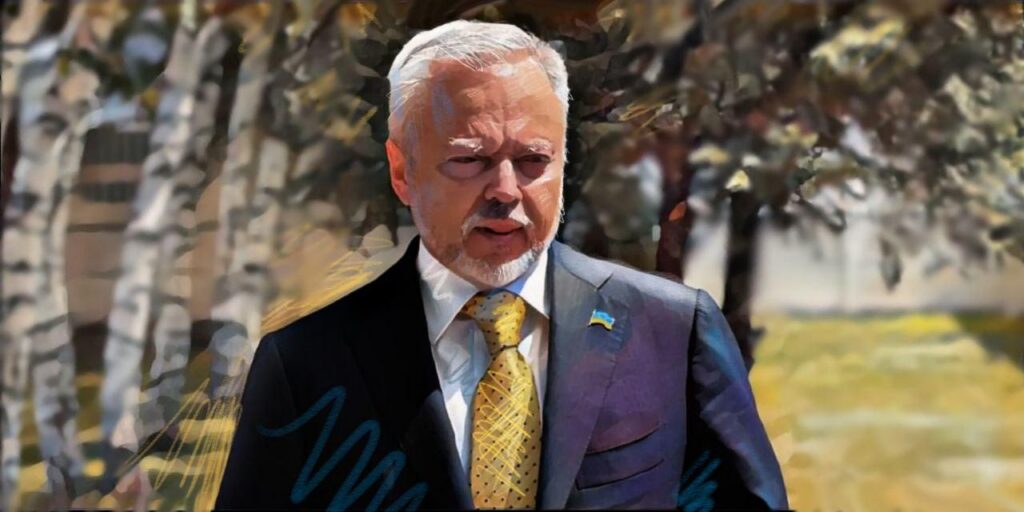
Ukrainian Ambassador to Kazakhstan: “The War Will End This Year. I Truly Believe In That.”

As the war between Russia and Ukraine approaches its fifth year, diplomatic efforts to reshape trade routes, energy flows, and regional partnerships are intensifying far beyond the battlefield. For Ukraine, Central Asia has emerged as an increasingly important economic and logistical partner, particularly as Kyiv seeks alternatives to disrupted transport corridors and supply chains. The Times of Central Asia spoke with Viсtor Mayko, Ukraine’s Ambassador to Kazakhstan, about the prospects for deeper economic cooperation with Central Asia, the role of the Middle Corridor, energy transit challenges in the Caspian region, Kyiv’s expectations for international support, and a possible path toward ending the war. Trade and Economic Prospects in Central Asia TCA: Mr. Ambassador, what are the prospects for deepening trade and economic partnerships between Ukraine, Kazakhstan, and wider Central Asia? Which sectors offer the greatest potential for cooperation? Ambassador Mayko: Deepening trade and economic ties between Ukraine, Kazakhstan, and other Central Asian countries is not merely a prospect; it is a necessity dictated by global economic trends. Kazakhstan leads the region economically, with a GDP exceeding $300 billion. It is on a trajectory to join the G20 within 5 to 10 years. The United States, recognizing this potential, has invited Kazakhstan to the upcoming G20 meeting in the U.S., demonstrating Kazakhstan’s rising global significance. Ukraine and Kazakhstan’s economies are complementary. Ukraine brings experience in agricultural technology, mechanical engineering, IT, and processing, while Kazakhstan contributes resource strength, industrial capacity, and logistics. Promising areas for cooperation include agro-industrial development, from crop production to digitalized processing; industrial cooperation through equipment supply and joint production; logistics and infrastructure aimed at strengthening transport corridors; and energy and IT projects focused on efficiency and network modernization. We are already transitioning from theory to action. A major business delegation from Ukraine will visit Kazakhstan this year. We also anticipate another meeting of the Joint Ukrainian-Kazakh Intergovernmental Commission on Economic Cooperation, which is crucial for removing barriers and initiating new projects. Ukraine’s presence in Kazakhstan’s economy has historically been significant. If not for the war and resulting transport disruptions, I believe our mutual trade could have reached $10 billion. Ukrainian machinery still accounts for a substantial portion of Kazakhstan’s industrial base, especially in regions such as Karaganda, Aktau, and Pavlodar, though much of this equipment now requires modernization. Another promising area is mineral resource development. Ukraine has the scientific and practical base to contribute meaningfully to this sector. Turkmenistan’s earlier collaboration with Ukrainian firms in revitalizing depleted wells illustrates our potential. Wells deemed exhausted by older technologies yielded hundreds of thousands of tons of oil under Ukrainian management. This successful model can be applied in Kazakhstan, one of the EU’s top three oil suppliers. Transport Infrastructure and the Middle Corridor TCA: How is cooperation in the transport sector developing, especially regarding the Middle Corridor? Are there any potential plans for joint infrastructure projects? Ambassador Mayko: Russia’s full-scale aggression disrupted Ukraine’s previous logistics routes. Today, we prioritize alternatives like the Trans-Caspian International Transport Route, the “Middle Corridor”, as a...
Trade in Central Asia: China Deepens Influence, Europe Expands Presence, Region Seeks New Markets

Central Asia remains a theater of active economic competition, with countries in the region striving to diversify external partnerships and reduce dependence on traditional power centers, Russia and China. While both continue to dominate foreign trade, Kazakhstan, Uzbekistan, Kyrgyzstan, and Tajikistan are increasingly exploring new directions. The region’s evolving trade dynamics reflect each country's economic characteristics. Kazakhstan is driven by energy and metals exports, Uzbekistan by manufacturing and resource processing, while Kyrgyzstan and Tajikistan rely heavily on remittances and raw material exports. Amid global shifts and intensified competition for markets, Central Asian states are gradually shaping more multipolar trade strategies, opening up new routes and partnerships. Turkmenistan is excluded from this analysis due to the opacity of its national statistics. Kazakhstan As Central Asia’s largest economy, Kazakhstan relies heavily on natural resource extraction. Its main exports include oil, gas, metals, coal, grain, and agricultural products. Imports consist primarily of machinery, chemicals, vehicles, and consumer goods. Key export partners include Italy (21.6%), China (18.6%), Russia (10.2%), the Netherlands (7.4%), Turkey (4.7%), and Uzbekistan (4.3%). On the import side, China (29%) and Russia (28.8%) dominate, followed by Germany (4.8%), South Korea (3.7%), the United States (3.6%), and Turkey (2.5%). Kazakhstan has maintained a positive trade balance, buoyed by consistent demand for raw materials. In January-July 2025, the country’s foreign trade turnover totaled $78.18 billion, down 2.6% from the same period in 2024. Exports declined by 6.4% to $43.58 billion, while imports rose by 2.6% to $34.6 billion. Uzbekistan Uzbekistan's economy is focused on agriculture, textiles, natural resources, and manufacturing. Major exports include textiles, gold, gas, automobiles, cotton, and fruit. Imports are led by machinery, equipment, chemicals, and petroleum products. In the first half of 2025, foreign trade turnover reached $44.4 billion, up 19.9% year-on-year. Exports rose 34.9% to $20.1 billion, while imports increased 9.9% to $24.29 billion, leaving a trade deficit of $4.18 billion. Uzbekistan trades with 197 countries. Its largest trade partners are China (18.2%), Russia (16.1%), Kazakhstan (5.9%), Turkey (3.6%), and South Korea (2.2%). Export destinations include Russia (12.3%), China (5.5%), Kazakhstan (4.0%), Afghanistan (3.7%), Turkey (3.0%), France (2.6%), the UAE (1.8%), Kyrgyzstan (1.6%), Tajikistan (1.4%), and Pakistan (1.2%). Imports mainly come from China (28.7%), Russia (19.3%), Kazakhstan (7.6%), Turkey (4.1%), South Korea (3.9%), Germany (2.8%), and India (2.6%). Kyrgyzstan Kyrgyzstan, with limited natural resources, is heavily dependent on foreign trade. Its economy is rooted in agriculture, mining, and textiles. Key exports include gold and agricultural products, while imports are dominated by machinery, vehicles, petroleum products, and chemicals. From January to June 2025, foreign trade turnover fell 12.4% year-on-year to $6.99 billion. Exports made up only 15% of total trade, underscoring a continued trade deficit. Main partners remain Kazakhstan, Russia, and China. Tajikistan Tajikistan’s economy is centered on agriculture, hydropower, textiles, and mining. In January-August 2025, foreign trade turnover rose 16.8% year-on-year to $6.73 billion. Exports totaled $1.63 billion, while imports reached $5.1 billion, more than triple the export volume. Main exports are aluminum, textiles, agricultural goods, and minerals; imports...

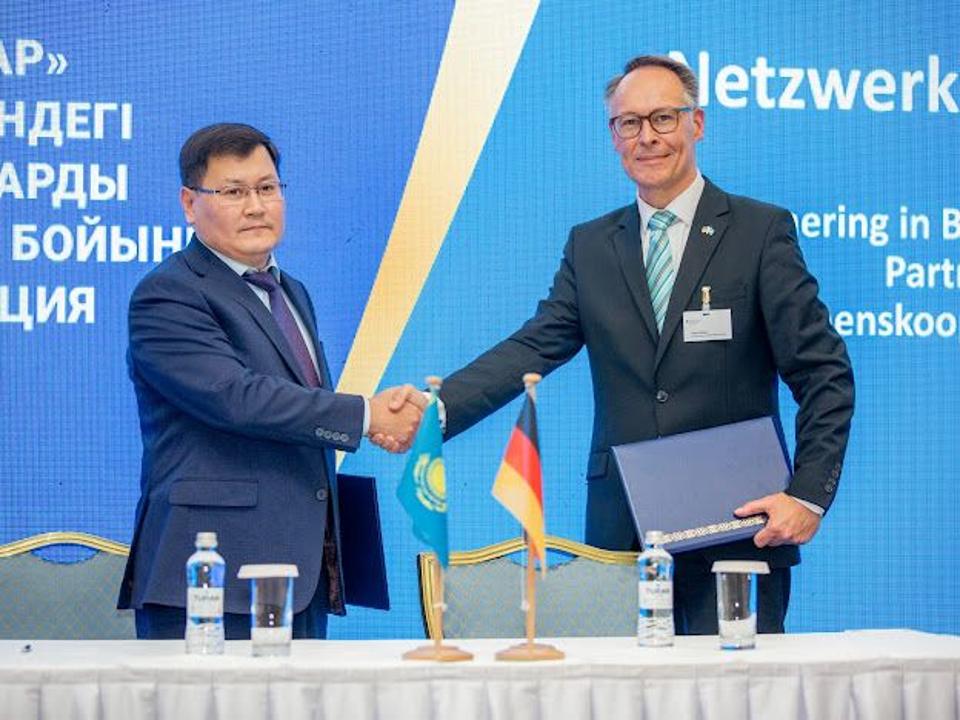
Kazakhstan and Germany Extend Business Partnership Program Through 2028

Kazakhstan and Germany have signed an agreement to extend their long-running “Partnering in Business with Germany” program until 2028, reinforcing bilateral economic cooperation with a particular focus on small and medium-sized enterprises (SMEs). Jointly implemented by Kazakhstan’s Ministry of National Economy and Germany’s Federal Ministry for Economic Affairs and Energy, the program has been in operation for 15 years. More than 800 Kazakhstani entrepreneurs have participated, gaining hands-on training in Germany, learning best business practices, modernizing their operations, and securing contracts, licenses, and franchise agreements. In 2025, the German side will continue to fully cover costs for participants, including training, insurance, and accommodation. Deputy Minister of National Economy Yerlan Sagnayev emphasized that the program not only fosters professional development among Kazakhstani entrepreneurs but also contributes to deepening long-term economic ties between the two nations. Germany is Kazakhstan’s largest trading partner within the European Union. At the 16th Kazakhstan-German Business Council meeting held in Astana in May, it was revealed that Kazakhstan ranked 43rd among Germany’s global trade partners in 2024 and accounted for 83% of Germany’s trade volume with Central Asia. Energy remains a central pillar of bilateral cooperation. Kazakhstan began exporting crude oil to Germany via the Druzhba pipeline in 2023, with volumes expected to rise to 1.5 million tons in 2025, up from 993,000 tons in 2023.

Kyrgyzstan and Afghanistan Aim to Boost Trade and Economic Ties

Kyrgyzstan and Afghanistan have agreed to open trading houses in each other’s countries as part of a broader effort to deepen bilateral trade and economic cooperation. The agreement was reached on August 13 during the visit of an Afghan delegation to Bishkek, led by Nooruddin Azizi, Acting Minister of Industry and Commerce of the Islamic Emirate of Afghanistan. Azizi met with the Kyrgyz Minister of Economy and Commerce, Bakyt Sydykov. The two ministers signed a roadmap for future cooperation, along with a memorandum of understanding focused on enhancing trade and economic ties. Sydykov described the visit as a significant step toward strengthening bilateral relations and highlighted Kyrgyzstan’s interest in exploring new, mutually beneficial areas of cooperation. He noted that the two countries hold considerable potential for expanding trade. Discussions also touched on digitalization, with the Kyrgyz side offering to share its experience in the sector with Afghan partners. According to Afghanistan’s Ministry of Industry and Commerce, the two countries recorded $66 million in bilateral trade during the last solar year (March 2024-March 2025), with Afghan exports accounting for $7 million of that figure. Key Afghan exports to Kyrgyzstan include aluminum and copper utensils, pressure cookers, carpets, fruits, and vegetables. In January-February 2025 alone, Kyrgyzstan exported $11.5 million worth of petroleum products to Afghanistan, according to Kyrgyz media. Trade between the two countries has seen an uptick following Kyrgyzstan’s September 2024 decision to remove the Taliban from its list of prohibited organizations. The Kyrgyz Ministry of Foreign Affairs said the move was aimed at promoting regional stability and fostering constructive dialogue. On September 6, 2024, then-Chairman of the Cabinet of Ministers Akylbek Japarov met with Afghanistan’s Chargé d’Affaires in Kyrgyzstan, Nurullah Amin, to discuss ways to advance bilateral relations. The Kyrgyz side expressed interest in enhancing trade and transport links, jointly developing Afghan mineral resources, and cooperating in energy, industry, and agriculture.

China-Kazakhstan Economic Ties: Strong Trade, Weakening Investment

For the second consecutive year, China remains Kazakhstan's largest foreign economic partner. In 2023, China's share of Kazakhstan's total trade turnover surpassed 20%, up from 15.1% in 2019, according to analysts at Ranking.kz. Trade Dynamics: What Kazakhstan Sells and Buys Data from the National Statistics Bureau of the ASPiR RK show that bilateral trade between Kazakhstan and China reached $30.1 billion in 2023. Kazakhstan exported goods worth $14.9 billion to China, while imports from China totaled $15.2 billion. In the first quarter of 2025, trade turnover stood at $5.9 billion, a 5.1% decrease compared to the same period in 2024. Analysts attribute this dip primarily to reduced exports from Kazakhstan. Kazakhstan’s exports to China consist predominantly of raw materials: oil and gas, ores, metal concentrates, uranium, and agricultural products. China, in return, exports transport equipment, electronics, construction materials, clothing, and footwear to Kazakhstan. Notably, Kazakhstan spent over $100 million on Chinese sock imports last year. Digital technology also represents a significant share of imports, with Kazakh companies spending approximately $683.6 million on computers and laptops. Chinese Investment: From Energy to Industrial Zones China ranks among the top five foreign investors in Kazakhstan. In 2024, direct investment from China amounted to $1.2 billion, almost 50% less than the previous year. This decline mirrors broader trends affecting other major investor countries. Overall, 2024 marked a record low for gross foreign direct investment (FDI) inflows into Kazakhstan. Between 2015 and 2022, 25 joint projects valued at $7.4 billion were implemented. According to KAZAKH INVEST and Halyk Research, an additional 30 major initiatives worth $5.2 billion are in the pipeline. One flagship project is the $1.5 billion copper smelter in the Abai region, a joint venture between KAZ Minerals and Chinese investors, expected to be completed by the end of 2028. Another major initiative is an industrial town in the Zhetysu region’s special economic zone (SEZ), with investments totaling $638 million. The site will host enterprises in non-ferrous metallurgy, electronics, and food production, spanning over 1,000 hectares. China is also a key player in Kazakhstan’s renewable energy sector, financing wind farms in the Abai, Aktobe, Mangistau, and Ulytau regions at an estimated cost of $1.2 billion. As of May 1, 2025, more than 4,100 legal entities with Chinese participation were registered in Kazakhstan, which is 3.5 times the number recorded in 2019, according to the Bureau of National Statistics. Of these, approximately 40.7 percent (about 1,700 companies) are involved in trade, while others operate in industry (354 enterprises), construction (352), and mining (209).
