• KGS/USD = 0.01143 0%
  • KZT/USD = 0.00201 0%
  • TJS/USD = 0.10510 -0.28%
  • UZS/USD = 0.00008 0%
  • TMT/USD = 0.28575 0%
  • KGS/USD = 0.01143 0%
  • KZT/USD = 0.00201 0%
  • TJS/USD = 0.10510 -0.28%
  • UZS/USD = 0.00008 0%
  • TMT/USD = 0.28575 0%
  • KGS/USD = 0.01143 0%
  • KZT/USD = 0.00201 0%
  • TJS/USD = 0.10510 -0.28%
  • UZS/USD = 0.00008 0%
  • TMT/USD = 0.28575 0%
  • KGS/USD = 0.01143 0%
  • KZT/USD = 0.00201 0%
  • TJS/USD = 0.10510 -0.28%
  • UZS/USD = 0.00008 0%
  • TMT/USD = 0.28575 0%
  • KGS/USD = 0.01143 0%
  • KZT/USD = 0.00201 0%
  • TJS/USD = 0.10510 -0.28%
  • UZS/USD = 0.00008 0%
  • TMT/USD = 0.28575 0%
  • KGS/USD = 0.01143 0%
  • KZT/USD = 0.00201 0%
  • TJS/USD = 0.10510 -0.28%
  • UZS/USD = 0.00008 0%
  • TMT/USD = 0.28575 0%
  • KGS/USD = 0.01143 0%
  • KZT/USD = 0.00201 0%
  • TJS/USD = 0.10510 -0.28%
  • UZS/USD = 0.00008 0%
  • TMT/USD = 0.28575 0%
  • KGS/USD = 0.01143 0%
  • KZT/USD = 0.00201 0%
  • TJS/USD = 0.10510 -0.28%
  • UZS/USD = 0.00008 0%
  • TMT/USD = 0.28575 0%
28 February 2026

Viewing results 1 - 6 of 9

Ziroat Mirziyoyeva Named Among World’s Top 100 Women in Oncology

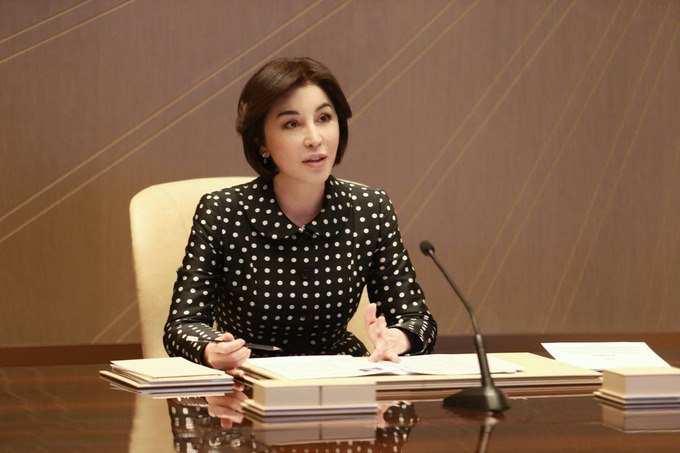
Ziroat Mirziyoyeva, the wife of Uzbekistan's President Shavkat Mirziyoyev, has been named one of the 100 most influential women in oncology by the international platform OncoDaily. Mirziyoyeva was recognized for her work as Chair of the Board of Trustees of the Zamin International Public Foundation, where she has supported initiatives focused on early detection and treatment of childhood cancers. Experts cited by OncoDaily highlighted her role in promoting international collaboration in pediatric oncology and advancing global efforts to improve survival rates for children with life-threatening illnesses. According to OncoDaily, Mirziyoyeva has emerged as a leading advocate for expanding access to cancer care for children in low and middle-income countries, where survival rates remain disproportionately low. The platform noted her leadership at a high-level forum at the United Nations General Assembly in September 2025, titled “Global Movement to Improve Survival and Reduce Suffering of Children with Cancer and Other Life-Threatening Diseases.” The event, co-hosted with the World Health Organization and St. Jude Children’s Research Hospital, called for urgent global action to increase survival rates for pediatric cancers. OncoDaily stated that her efforts have helped place Uzbekistan on the global health policy agenda, aligning the country with international goals to raise childhood cancer survival rates to 60 percent by 2030.

Tajik Ophthalmologist Parvina Mirakhmedova Wins Innovation Award in London

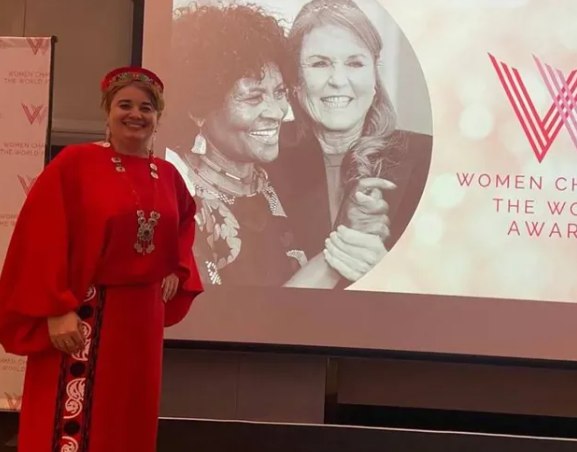
Parvina Mirakhmedova, a Tajik ophthalmologist and researcher, has won international acclaim at the prestigious Women Changing the World Awards, held in London. She was the only representative from Central Asia among participants from 55 countries. Mirakhmedova was nominated in three Industry Award categories: Women in Health, Tech Innovation, and Innovation. She won the Tech Innovation Award and took second place in the Women in Health category. Sarah Ferguson, the Duchess of York, personally presented Mirakhmedova with the Golden Heart Award, honoring both her professional accomplishments and the broader social impact of her work. In her acceptance speech, Mirakhmedova expressed gratitude to those who supported her journey to London, emphasizing the importance of showcasing Tajikistan's scientific talent on the global stage. Transforming Ophthalmology with Innovation Over recent years, Mirakhmedova has significantly advanced the field of ophthalmology. She developed a new diagnostic algorithm for early-stage glaucoma detection, dramatically lowering the risk of vision loss. Additionally, she created cell-counting software that has standardized the diagnosis of ocular inflammation, notably improving treatment accuracy for uveitis. Her work has been published in peer-reviewed journals indexed in Scopus. Among her most accessible innovations is a Telegram bot (@ophthalmo_test_bot) that helps doctors monitor inflammation in uveitis, enabling timely treatment adjustments. Personal Struggles Behind the Science Mirakhmedova’s professional journey is rooted in personal adversity. “I lost my father to cancer, and later, my mother became seriously ill. I experienced first hand what patients and their families endure,” she said. These experiences inspired her to drive change in Tajikistan’s medical system. She advocates for the integration of global medical innovations, asserting, “The world is moving forward, innovations are transforming medicine, and Tajikistan must not fall behind.” A Decade of Determination Mirakhmedova began her career at the international Solim Med and private Nurafzo clinics and underwent further training in Germany. Initially, her ideas were met with skepticism. “Innovations are always resisted at first. But eventually, they become indispensable,” she noted. Despite early challenges, she remained committed to her vision, bolstered by support from her mentors at the Abuali Ibni Sino Department of Ophthalmology at the Tajik State Medical University, her family, and her own perseverance. Reaching the award finals marked a turning point. “I felt a deep sense of satisfaction. To those who once said my ideas were useless, this is the answer,” she said. Her recognition in London is not just a personal triumph, it affirms her contributions to medicine on an international scale and signals the potential for transformative change in ophthalmology across the region.

An Uzbek Woman Suffers Terribly, Then Starts Over

The lakes, mountains and brisk air of Uzbekistan’s Bustanlik district lie just a few dozen kilometers from the urban sprawl of Tashkent, and tourists as well as conference delegates retreat there for a break or to learn and exchange ideas. Sometimes, people attending a hotel conference barely get outside to absorb the beauty of the surrounding national parks. That’s what happened to me, a reporter for The Times of Central Asia. But then, I found some inspiration within the hotel’s bland walls. I was attending a training course on data journalism for a few days in Bustanlik. During dinner, hotel employees mentioned that Dilorom Yuldasheva, an Uzbek woman internationally acclaimed for her resolve and accomplishment after a catastrophic injury, was also staying there after appearing at an event in Tashkent. Soon after, around 50-60 people in the hotel restaurant applauded as a bouquet was handed to Yuldasheva. It seemed that the hotel administration had arranged the small celebration because most guests weren’t aware that she was there. I approached her table, introducing myself and asking if she’d be willing to talk. She smiled and agreed. Yuldasheva wore light makeup and spoke softly. At the start of our conversation, I mentioned that I already knew her from media coverage. Then I asked if she could share something she had never told anyone before. “There’s nothing left untold,” she said. “But if you’d like, I can tell you the same stories again, just for you.” ----- The BBC released a list of 100 influential and inspiring women for 2024, highlighting women who “have had to dig deep and find new levels of resilience” while facing violence and humanitarian crises in Gaza, Lebanon, Ukraine and Sudan, as well as polarization surrounding a record number of international elections, and the growing challenges of climate change. On the list are stranded astronaut Sunita Williams, rape survivor Gisèle Pelicot, actress Sharon Stone, Olympic athletes Rebeca Andrade and Allyson Felix, singer Raye, Nobel Peace Prize laureate Nadia Murad, visual artist Tracey Emin, climate campaigner Adenike Oladosu and writer Cristina Rivera Garza. Also on that list is Yuldasheva, a 41-year-old seamstress and entrepreneur from Denov, in Uzbekistan’s Surkhandarya region. The village where she lives is mainly engaged in livestock raising, crop farming, and gardening. In 2021, while helping with the grain harvest, she lost both her legs in an accident. That day, she had been wearing a long robe to protect herself from the sun, a common style of dress among rural women, many of whom consider it shameful for them to wear trousers. As she worked near a combine harvester, the fabric got caught in the machine’s moving parts, pulling her in. She struggled frantically, and in vain, to escape. “I didn’t even have time to scream, and when I opened my eyes, I was sitting on the combine harvester, but this didn’t last long. The combine harvester blade spun and threw me several meters away,” she said. In August 2022, Yuldasheva was fitted with prosthetic legs...

Kyrgyzstan Invests Over $356 Million in Women’s Entrepreneurship

The development of women’s entrepreneurship in Kyrgyzstan has received significant financial backing, with more than $356 million directed to supporting women-led businesses since the establishment of the OJSC (Guarantee Fund). According to the OJSC, in the first ten months of 2024 alone, 1,088 guarantees were issued to women, accounting for 40% of the total guarantees provided by the Fund during this period. To date, the Fund has issued 4,071 guarantees totaling 3.166 billion soms ($356 million), empowering women across all regions of Kyrgyzstan to launch and expand businesses in various sectors. Women’s entrepreneurship is becoming an increasingly vital component of Kyrgyzstan’s economy. According to the United Nations Development Programme (UNDP), women currently lead 29% of the country’s small and medium-sized enterprises. Bishkek recently hosted Expo 2024 “Women’s Entrepreneurship,” which showcased the accomplishments of women entrepreneurs while highlighting their growing role in driving innovation and economic growth. Furthermore, the Women’s Entrepreneurship 2024 program reported that 48% of all loans issued this year were granted to women, reflecting the expanding support for women-led businesses across the country. This upward trend highlights the growing recognition of women entrepreneurs as key players in Kyrgyzstan’s innovation ecosystem and economic development.

Kyrgyzstan to Enshrine Concept of “Women’s Entrepreneurship” in Law

Kyrgyzstan's Jogorku Kenesh (parliament) has approved, in its third reading, a bill to introduce the term “women’s entrepreneurship” into the country’s Law on the Protection of Entrepreneurs’ Rights. The amendments, proposed by deputies Kamila Talieva, Eldar Abakirov, Daniyar Tolonov, Taalaibek Masabirov, Elvira Surabaldieva, and Nilufar Alimzhanova, aim to recognize women entrepreneurs as a distinct category within small and medium-sized businesses (SMEs). The initiative is expected to drive the growth of small and microbusinesses in Kyrgyzstan, following the example of international practices. Employment Disparities According to the explanatory note accompanying the bill, the employment rate for working-aged women in 2020 was 43%, compared to 70.9% for men. In urban areas, women’s employment stood at 46.8%, while in rural areas, it dropped to 40.6%. Additionally, women comprise 69% of the economically inactive population, with 97% of them engaged in household work. A Path to Economic Empowerment The bill’s authors emphasize that legislative recognition of women’s entrepreneurship will expand access to state support for women-led businesses. This could enhance women’s participation in the business sector, improve their economic standing, and contribute to the overall wellbeing of families and society. The proposed measures aim to address gender barriers, encourage women’s economic activity, and create favorable conditions for their full participation in the development of SMEs. Lawmakers believe such changes will not only bolster economic stability but also strengthen social cohesion. A Rare Legislative Step Kyrgyzstan’s effort to enshrine women’s entrepreneurship in law is rather rare in the global context. While other countries have some framework to support  entrepreneurship among women, provisions are often more vague. For example: – In Uzbekistan, the Law On Guarantees of Freedom of Entrepreneurial Activity provides broad protections but does not specifically address women’s entrepreneurship. – In Russia there is no legal definition of women’s entrepreneurship, though various programs support women in business. – In the United States the Women’s Business Ownership Act of 1988 offers significant support to women entrepreneurs but does not explicitly define the term. By taking this legislative step, Kyrgyzstan positions itself as a leader in fostering gender-inclusive economic policies, potentially serving as a model for other nations.

BBC Women of the Year List Includes Two Nominees From Central Asia

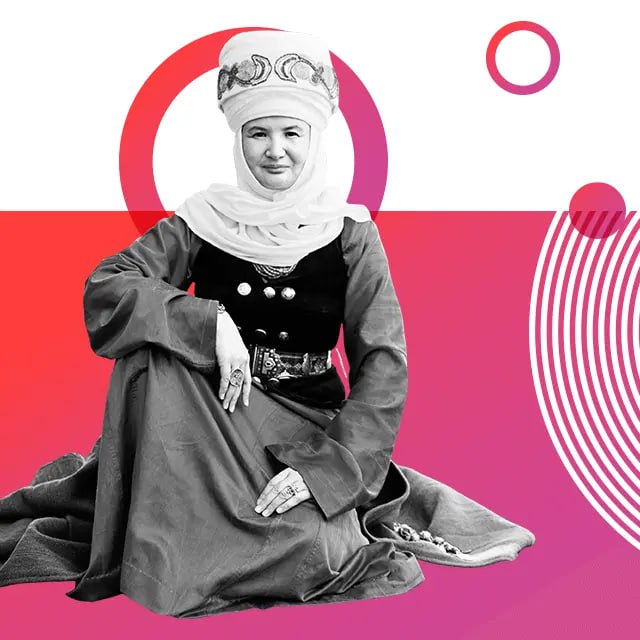
The BBC has unveiled its annual list of the world’s most inspiring women. The introduction to the list says that the “BBC 100 Women Project highlights women who have shown remarkable determination to drive change in a year marked by global upheaval.” Alongside figures such as Nobel laureate Nadia Murad, actress Sharon Stone, Olympians Rebeca Andrade and Allyson Felix, singer Ray, artist Tracey Emin, climate activist Adenike Oladosu, and writer Cristina Rivera Garza, the list of nominees includes two women from Central Asia. They are: Dilorom Yuldasheva (Uzbekistan) [caption id="attachment_26251" align="aligncenter" width="300"] @BBC| Dilorom Yuldosheva, Uzbekistan[/caption] A seamstress and entrepreneur, two years ago Dilorom Yuldasheva lost both legs in an accident. Undeterred, she pursued her dream of empowering young women in Uzbekistan to earn livelihoods and develop new skills. Yuldasheva established a tailoring business after studying entrepreneurship and resource management. In a short time, she trained over 40 students, offering free classes as her business grew. She secured contracts to produce clothing for workers and schoolchildren, creating income opportunities for herself and dozens of other women. Zhanylsynzat Turganbayeva (Kyrgyzstan) [caption id="attachment_26252" align="aligncenter" width="300"] @BBC| Zhanylsynzat Turganbaeva, Kyrgyzstan[/caption] Zhanylsynzat Turganbayeva is devoted to preserving and restoring Kyrgyz cultural heritage. She runs an ethnology museum in Bishkek, showcasing unique national artifacts. Her charitable efforts focus on safeguarding Kyrgyz literature, including the epic Manas. This UNESCO-recognized work spans approximately 500,000 lines—20 times the length of Homer’s Odyssey—and recounts the story of a hero who unites 40 Kyrgyz tribes. Turganbayeva creates resources and opportunities for “manaschi,” the traditional performers of the epic. These women exemplify courage and perseverance, inspiring others to bring positive change to their communities.