• KGS/USD = 0.01143 0%
  • KZT/USD = 0.00202 0%
  • TJS/USD = 0.10599 -0.19%
  • UZS/USD = 0.00008 0%
  • TMT/USD = 0.28575 0%
  • KGS/USD = 0.01143 0%
  • KZT/USD = 0.00202 0%
  • TJS/USD = 0.10599 -0.19%
  • UZS/USD = 0.00008 0%
  • TMT/USD = 0.28575 0%
  • KGS/USD = 0.01143 0%
  • KZT/USD = 0.00202 0%
  • TJS/USD = 0.10599 -0.19%
  • UZS/USD = 0.00008 0%
  • TMT/USD = 0.28575 0%
  • KGS/USD = 0.01143 0%
  • KZT/USD = 0.00202 0%
  • TJS/USD = 0.10599 -0.19%
  • UZS/USD = 0.00008 0%
  • TMT/USD = 0.28575 0%
  • KGS/USD = 0.01143 0%
  • KZT/USD = 0.00202 0%
  • TJS/USD = 0.10599 -0.19%
  • UZS/USD = 0.00008 0%
  • TMT/USD = 0.28575 0%
  • KGS/USD = 0.01143 0%
  • KZT/USD = 0.00202 0%
  • TJS/USD = 0.10599 -0.19%
  • UZS/USD = 0.00008 0%
  • TMT/USD = 0.28575 0%
  • KGS/USD = 0.01143 0%
  • KZT/USD = 0.00202 0%
  • TJS/USD = 0.10599 -0.19%
  • UZS/USD = 0.00008 0%
  • TMT/USD = 0.28575 0%
  • KGS/USD = 0.01143 0%
  • KZT/USD = 0.00202 0%
  • TJS/USD = 0.10599 -0.19%
  • UZS/USD = 0.00008 0%
  • TMT/USD = 0.28575 0%
15 February 2026

Viewing results 1 - 6 of 12

Kazakhstan Aims to Eliminate Energy Deficit and Begin Electricity Exports by 2027

Kazakhstan is on track to eliminate its domestic electricity deficit within the next year and transition from import reliance to surplus. According to projections by the Ministry of Energy, the country will fully meet internal demand by the end of the first quarter of 2027, and by 2029, it expects to maintain a stable surplus in both electricity and regulating capacity, laying the groundwork for future exports. Energy Minister Yerlan Akkenzhenov announced the plan during a meeting on the development of the electric power industry. At the close of 2025, Kazakhstan’s electricity generation totaled 123.1 billion kWh, while consumption reached 124.6 billion kWh, resulting in a deficit of over 1 billion kWh. However, this shortfall was less than half the 2 billion kWh gap recorded at the end of 2024, which was offset by imports from Russia, Uzbekistan, and Kyrgyzstan. Installed generation capacity increased over the year from 25.3 to 26.7 GW. While coal-fired power plants continue to dominate, accounting for 51.4% of output, the shares of gas (25.6%) and renewable energy (13.5%) are steadily growing. The Energy Ministry credits market liberalization for helping stabilize the power system. Over the past two years, nearly $1.8 billion in investment, mainly for capital repairs and modernization, has flowed into the sector. As a result, the number of technological violations has dropped by 27%, and nine combined heat and power (CHP) plants have exited the so-called “red zone.” Akkenzhenov noted that generating companies’ owners did not receive dividends, with all profits reinvested into asset renewal. This marks a strategic pivot from short-term profitability to long-term system reliability. Looking ahead to 2035, Kazakhstan plans to add over 26 GW in new generating capacity, including nuclear power. Simultaneously, the government is prioritizing upgrades to existing coal-fired plants using clean coal technologies. Key infrastructure projects include the 2,640 MW Ekibastuz GRES-3 station, a new 700 MW facility in Kurchatov, and CHP plants in Kokshetau, Semey, and Ust-Kamenogorsk. Contractors have been selected, and implementation is already underway. Despite this progress, systemic risks remain. Prime Minister Olzhas Bektenov has strongly criticized delays in the execution of energy projects. Nuclear power development has emerged as a distinct strategic priority. Kazakhstan plans to construct at least three nuclear power plants. Work on the first began last summer in partnership with Russia’s Rosatom, while two more are expected to be built with the involvement of the China National Nuclear Corporation (CNNC). President Kassym-Jomart Tokayev has described the development of nuclear energy as correcting a “historical absurdity.” Kazakhstan, one of the world’s leading uranium producers and exporters, has yet to use this resource to support its own energy needs.

Alisher Sultanov Leaves Office After a Decade of Declining Gas Production in Uzbekistan

Alisher Sultanov was relieved of his post as presidential representative on energy security on December 16, ending some ten years of dubious performance as one of Uzbekistan’s top energy officials. Under Sultanov’s watch as head of the state oil and gas company and then as a top official in Uzbekistan’s Energy Ministry, the country’s oil and gas production decreased, and Uzbekistan went from being a gas exporter to an importer. A Career in the Gas and Oil Sector Sultanov started working in Uzbekistan’s energy sector in the mid-1990s and gradually made his way through the ranks at the state oil and gas company Uzbekneftegaz. In 2015, Sultanov became Uzbekneftegaz’s chairman, serving in that position until 2018. In 2017, Sultanov was appointed Deputy Prime Minister in charge of the fuel, energy, and industrial sector, and in February 2019, he was named Energy Minister. He stepped down as Energy Minister in April 2022, officially for health reasons, but by 2023 was back as presidential advisor on oil and gas, chemical, and energy matters, though that title was changed in July 2025 to the president’s representative on energy security. Stagnation and Decline Uzbekistan does not have large oil reserves. BP’s Statistical Review of World Energy has continually put Uzbekistan’s oil reserves at somewhere around 600-620 million barrels. Uzbekistan does have significant natural gas reserves of at least some 1.1 trillion cubic meters, however, according to the BP Statistical Review of World Energy. The country has been working with international partners to explore for new deposits, particularly in areas of the recently dried out Aral Sea. In 2011, Uzbekistan’s average oil production was some 80,000 barrels per day (bpd), and gas production for that year was some 56.6 billion cubic meters (bcm). Uzbekistan was still sourcing from many fields that had been producing since Uzbekistan was a Soviet republic, and it was not surprising that yields from these depleted fields started decreasing after 2011. Sultanov became head of Uzbekneftegaz in August 2015, and that year, oil production had already dropped to some 60,000 bpd and gas to some 53.6 bcm. Both fluctuated only a little over the next three years, ending 2018 at an average of 64,000 bpd and 58.3 bcm. The 2018 figure for gas was the peak production year of the 2011-2020 period, though it fell well short of the 66 bcm Uzbekneftegaz was predicting for 2018. After Sultanov was named Energy Minister in 2019, the figure for gas production fell significantly. In 2019, gas production was 57.5 bcm, but in 2020, only 47.1 bcm, though oil output held steady at 67,000 bpd and 61,000 bpd, respectively. Gas production increased slightly in 2021 to 50.9 bcm, but then dropped to 48.9 bcm in 2022. The decrease continued after Sultanov stepped down as Energy Minister in April 2022, plummeting to 44.2 bcm in 2023 and 42.2 bcm in 2024. With a rapidly growing population and expanding industrial sector, Uzbekistan’s domestic gas consumption was sharply increasing, rising from 43.6 bcm in 2020 to 54.6...

Tokayev in Bishkek: Deals, Diplomacy, and a Golden Bridge

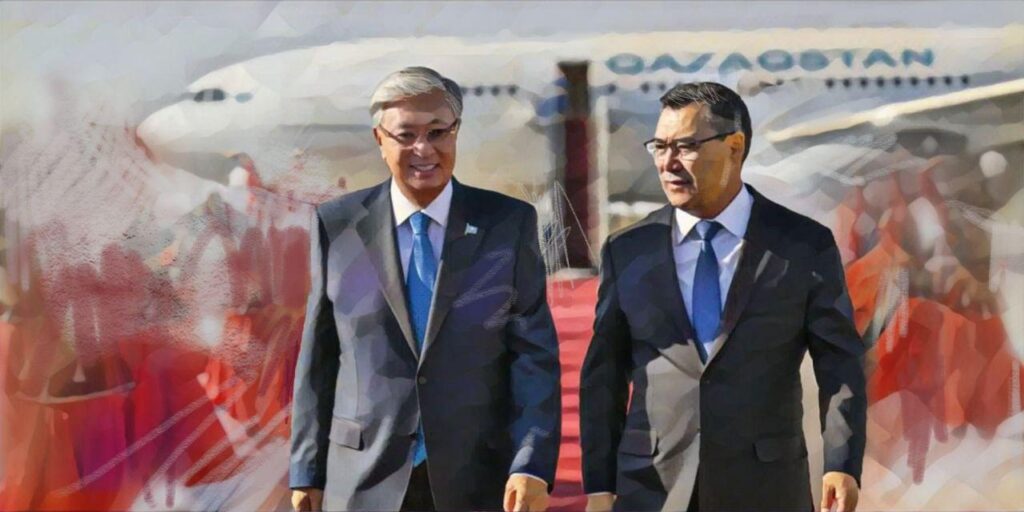
Kazakh President Kassym-Jomart Tokayev arrived in Kyrgyzstan on 21 August for an official visit that rolls into a full day of talks in Bishkek on 22 August, including a session of the Supreme Interstate Council. The Kyrgyz capital implemented rolling traffic restrictions around motorcade routes, a sign of how tightly choreographed the program is. The visit’s centerpiece is a Tokayev–Japarov meeting in both narrow and expanded formats, alongside a packed slate of bilateral events that underscore deepening political, economic, and cultural ties between the neighbors. Tokayev’s schedule blends state protocol with public-facing diplomacy. Alongside presiding over the seventh meeting of the Supreme Interstate Council, the two leaders are set to unveil the “Golden Bridge of Friendship” monument in Bishkek’s Yntymak Park - an attempt to give symbolic form to a relationship both sides have labored to institutionalize over the past two years. The program is also set to include the inauguration of the Consulate General of Kazakhstan in Osh, the launch of a branch of L.N. Gumilyov Eurasian National University in Kyrgyzstan’s south, the third Kyrgyz-Kazakh Youth Forum, and Days of Kazakhstan Cinema - events designed to anchor cooperation beyond chancelleries and boardrooms. This public show of diplomacy is being matched by concrete steps. The new Consulate General in Osh is intended to smooth consular services, support cross-border business, and expand cultural ties in a region where Kazakh–Kyrgyz trade and travel flows are accelerating. Central government, city, and regional officials joined Kazakh diplomats at the ribbon-cutting, underscoring the practical, day-to-day value for citizens who live and work across the southern corridor. Optics aside, the substance is in the talks. Astana and Bishkek have spent the last 18 months upgrading their legal architecture. In April 2024, the presidents signed a Treaty on Deepening and Expanding Allied Relations, moving the relationship beyond the basic language of partnership and into a framework that touches upon security, transport, energy, agriculture, and cultural cooperation. Kazakhstan’s Parliament later approved, and the president signed implementing legislation, putting the allied-relations commitments on a firmer legal footing domestically. This trip is widely viewed in both capitals as a chance to translate that framework into specific projects - some of which are already in motion. Trade and connectivity top the economic agenda. Bilateral trade hit roughly $1.7 billion in 2024, and both governments have repeatedly floated a target of $3 billion within the decade. The composition of flows is familiar: Kazakhstan ships metals, grain, fuels, and construction materials, while Kyrgyzstan supplies gold, coal, light-industry goods, and services. Reaching the next rung, however, will require more predictable border procedures, harmonized standards, and dedicated logistics capacity - areas where ministerial roadmaps are already in circulation. Energy and water cooperation is the other pillar. Kyrgyzstan’s Kambarata-1 hydropower project - envisioned as a 1,860 MW plant on the Naryn River - has become a regional test case for practical integration. Since mid-2024, Kyrgyzstan, Kazakhstan, and Uzbekistan have built a joint track with the World Bank and other partners to complete feasibility work, structure financing,...

Central Asia Faces Growing Energy Deficit

Central Asia is heading toward a serious energy crunch. According to the Logistan.info portal, regional demand for imported natural gas is expected to reach 25 billion cubic meters annually by 2030. This looming shortfall is driven by rapid population growth, around one million people per year, industrial expansion, declining domestic production, and the deteriorating state of aging infrastructure. Recent accidents in Bishkek, Tashkent, Dushanbe, and Ekibastuz illustrate the scale and urgency of the problem. Kazakhstan: Rising Output, Falling Exports Kazakhstan produced 59.2 billion cubic meters of gas in 2024, representing a 6.4% increase from the previous year. However, nearly half of this was reinjected into oil reservoirs to sustain production. Only 29 billion cubic meters were available for domestic consumption. Soaring internal demand has already led to a sharp decline in exports to China, which fell 40% to 8.7 billion cubic meters. Uzbekistan: From Exporter to Importer Uzbekistan's situation is even more precarious. In 2024, the country produced 44.6 billion cubic meters of gas and 713,400 tons of oil, figures that are in decline, dropping 4.5% and 8.5% respectively. To cover the shortfall, Tashkent has turned to Russia and Turkmenistan, purchasing $1.7 billion worth of gas. Uzbekneftegaz expects to produce just 26.5 billion cubic meters of commercial gas in 2025, far short of projected domestic needs. Kyrgyzstan, Tajikistan, and Turkmenistan Kyrgyzstan and Tajikistan produce virtually no hydrocarbons and rely entirely on imports of these resources. Meanwhile, demand continues to grow in tandem with their populations, and domestic energy generation falls short of even basic consumption needs. Turkmenistan remains the region’s top gas exporter, sending 41.3 billion cubic meters abroad in 2024. However, Ashgabat’s ability to increase exports is limited by its own growing domestic consumption, binding long-term contracts with China, and a lack of large-scale infrastructure development. Investment, Delays, and Structural Challenges While Central Asian governments have announced plans for new hydroelectric plants, combined heat and power stations, and nuclear power facilities, tangible progress remains slow. Kazakhstan, Kyrgyzstan, and Uzbekistan have yet to break ground on any of their proposed nuclear power projects. Key obstacles include a shortage of qualified personnel, water scarcity, environmental concerns, and, above all, insufficient funding. Without substantial foreign investment, modernization efforts are likely to stall. To ease financial pressures, countries in the region have begun raising gas and electricity tariffs. These price hikes aim to offset upgrade costs but have provoked public backlash and fueled inflation. In Uzbekistan, for instance, inflation accelerated to 15% in May 2025, with energy prices cited as the primary driver. The Russian Option Forecasts for regional gas imports remain imprecise, but analysts estimate the need could rise to 20-25 billion cubic meters annually by 2030. Russia appears poised to become the main supplier, though details of supply agreements, including pricing, volumes, and terms, have not been disclosed. Central Asian governments are attempting to keep cooperation with Moscow strictly within the economic sphere, wary of entangling political dependencies. As a result, the region faces a dual challenge: securing energy stability through...

Kazakhstan’s Crypto Aspirations Face a Power Problem

Kazakhstan’s First Deputy Minister of Digital Development, Innovation, and Aerospace Industry, Kanysh Tuleushin, believes that state-regulated cryptocurrency mining could generate substantial revenue and help modernize the country's energy infrastructure. Tuleushin argues that Kazakhstan has the potential to become Central Asia’s leading blockchain hub. However, this vision clashes with the country’s ongoing energy crisis, which continues to impact households and businesses. Optimistic Vision In an article published in the state newspaper Kazakhstanskaya Pravda, Tuleushin outlined how mining operations could contribute to the development of Kazakhstan’s power generation capabilities. He emphasized the use of associated petroleum gas (APG) to produce electricity for mining, which he claims would reduce carbon emissions and boost oil sector profits. “Miners can help modernize the power grid. In the U.S., they participate in grid balancing by consuming excess energy during low-demand periods. Kazakhstan already has a ‘70⁄30’ initiative, where foreign investors upgrade thermal power plants, allocating 70% of new capacity to the general grid and 30% to miners,” Tuleushin wrote. Tuleushin reported that cryptocurrency mining has brought 17.7 billion tenge to the national budget over the past three years. Meanwhile, trading volume on the Astana International Financial Center (AIFC) exchanges increased from $324.2 million in 2023 to $1.4 billion in 2024. From January 1, 2025, miners will be required to sell 75% of their assets through the AIFC. Despite a generally cautious regulatory stance, Kazakhstan permits digital asset trading within the AIFC. Digital assets are categorized as secured (linked to physical assets) or unsecured (such as Bitcoin and Ethereum). In 2023, digital asset transactions in Kazakhstan reached $4.1 billion, but 91.5% occurred in the “gray zone,” beyond state oversight. In 2024 alone, the Financial Monitoring Agency shut down 36 illegal crypto exchanges, froze $4.8 million in assets, and blocked over 3,500 illicit platforms. Tuleushin argues that fully legalizing and regulating these operations could add more than 190 billion tenge annually to the budget, enough to fund major public infrastructure such as schools and hospitals. He proposes extending crypto trading beyond the AIFC, authorizing crypto ATMs, and opening the market to major players, an approach akin to that of the UAE. Tuleushin also claimed that regions like Pavlodar and Karaganda have electricity surpluses and that Kazakhstan's cold climate further lowers operational costs for miners. Unchecked Consumption and Mounting Strain Despite the deputy minister's optimism, Kazakhstan’s Supreme Audit Chamber (SAC) has raised alarms over uncontrolled energy consumption by miners. According to a 2024 audit, miners consumed 901 million kWh worth 13 billion tenge, despite a national energy shortage, by bypassing RFZ LLP, the country’s sole energy purchaser. Former Prime Minister and current head of the Supreme Audit Chamber, Alikhan Smailov, warned, “Miners are consuming up to a billion kilowatt-hours. This is damaging our economy. How can we allow unchecked consumption amid such a crisis?” The audit revealed systemic issues, including deteriorating Soviet-era power plants (55% average wear), a 4,500-worker shortfall in the energy sector, and a lack of financial oversight by the Ministry of Energy. Looming Crisis In January...

Kazakhstan Faces Record Power Deficit as Electricity Shortfall Hits 2.4 Billion kWh

Kazakhstan has experienced its most significant electricity imbalance in recent years. According to data from Energyprom.kz, the gap between electricity production and consumption reached 2.4 billion kilowatt-hours (kWh) in 2024, an increase of 200 million kWh from 2023, when the shortfall stood at 2.2 billion kWh. While the country’s total generation amounted to 117.9 billion kWh, domestic consumption exceeded 120.4 billion kWh. Imports Offset Domestic Shortfalls To address this growing energy deficit, Kazakhstan primarily imports electricity from Russia. Smaller volumes are supplied by Kyrgyzstan, although these are typically part of Russian transit deliveries to Kyrgyz consumers. Despite these imports, domestic electricity generation continues to grow at a modest pace. In 2024, total generation rose by 4.2%, with a 3% year-on-year increase recorded in the first two months of 2025. Nevertheless, the production boost has not been sufficient to meet demand, necessitating continued reliance on external suppliers. Decline in Coal Dependence One notable trend is the gradual reduction in Kazakhstan’s dependence on coal-fired thermal power plants (TPPs), traditionally among the most polluting energy sources. In 2024, the share of coal-fired generation declined from 77.4% to 74.9%, equivalent to approximately 88.4 billion kWh of total output. In contrast, the share of alternative power sources increased. Hydroelectric power plants (HPPs) contributed 9.5% of total generation, up 1.8 percentage points year-on-year, while gas turbine power plants (GTPPs) accounted for 10.1%, a 0.3-point increase. Renewable energy sources, including wind, solar, and biogas, produced 6.4 billion kWh, representing 5.4% of total electricity output. Revised Forecasts and Growing Challenges The Ministry of Energy of the Republic of Kazakhstan has updated its projections to reflect the sector’s challenges. As of early 2025, officials estimate the country’s electricity deficit could grow to 5.7 billion kWh by year-end. This revision stems from downgraded forecasts for generation volumes, which are now projected at 117.1 billion kWh, down from an earlier estimate of 121.8 billion kWh. Expectations for the commissioning of new generation capacity have also been lowered, further exacerbating the shortfall. Nonetheless, government planners remain cautiously optimistic. If several large-scale energy projects move forward on schedule, the deficit could shrink to 2.6 billion kWh by the end of 2026. A full build-out of planned capacity could even lead to a surplus. New Capacity and Long-Term Plans The government has outlined plans to construct 59 new energy facilities with a combined capacity of 26.4 gigawatts (GW). These include both new builds and upgrades to existing plants. Major initiatives involve constructing a nuclear power plant (2.4 GW) and a third state district power station (GRES-3) with 2.6 GW of capacity. Additionally, 11 regional centers are set to receive combined-cycle gas turbines with a total capacity of 4.5 GW. Renewable energy is also a key focus. By 2029, Kazakhstan aims to commission four large wind power plants equipped with energy storage systems, totaling 3.8 GW in capacity. These projects are being developed through intergovernmental agreements with investors from the United Arab Emirates, France, and China.