• KGS/USD = 0.01144 0%
  • KZT/USD = 0.00205 0%
  • TJS/USD = 0.10429 0.29%
  • UZS/USD = 0.00008 0%
  • TMT/USD = 0.28571 0.28%
  • KGS/USD = 0.01144 0%
  • KZT/USD = 0.00205 0%
  • TJS/USD = 0.10429 0.29%
  • UZS/USD = 0.00008 0%
  • TMT/USD = 0.28571 0.28%
  • KGS/USD = 0.01144 0%
  • KZT/USD = 0.00205 0%
  • TJS/USD = 0.10429 0.29%
  • UZS/USD = 0.00008 0%
  • TMT/USD = 0.28571 0.28%
  • KGS/USD = 0.01144 0%
  • KZT/USD = 0.00205 0%
  • TJS/USD = 0.10429 0.29%
  • UZS/USD = 0.00008 0%
  • TMT/USD = 0.28571 0.28%
  • KGS/USD = 0.01144 0%
  • KZT/USD = 0.00205 0%
  • TJS/USD = 0.10429 0.29%
  • UZS/USD = 0.00008 0%
  • TMT/USD = 0.28571 0.28%
  • KGS/USD = 0.01144 0%
  • KZT/USD = 0.00205 0%
  • TJS/USD = 0.10429 0.29%
  • UZS/USD = 0.00008 0%
  • TMT/USD = 0.28571 0.28%
  • KGS/USD = 0.01144 0%
  • KZT/USD = 0.00205 0%
  • TJS/USD = 0.10429 0.29%
  • UZS/USD = 0.00008 0%
  • TMT/USD = 0.28571 0.28%
  • KGS/USD = 0.01144 0%
  • KZT/USD = 0.00205 0%
  • TJS/USD = 0.10429 0.29%
  • UZS/USD = 0.00008 0%
  • TMT/USD = 0.28571 0.28%

Viewing results 1 - 6 of 243

Tajikistan Struggles to Fund Cleanup of Soviet-Era Uranium Waste

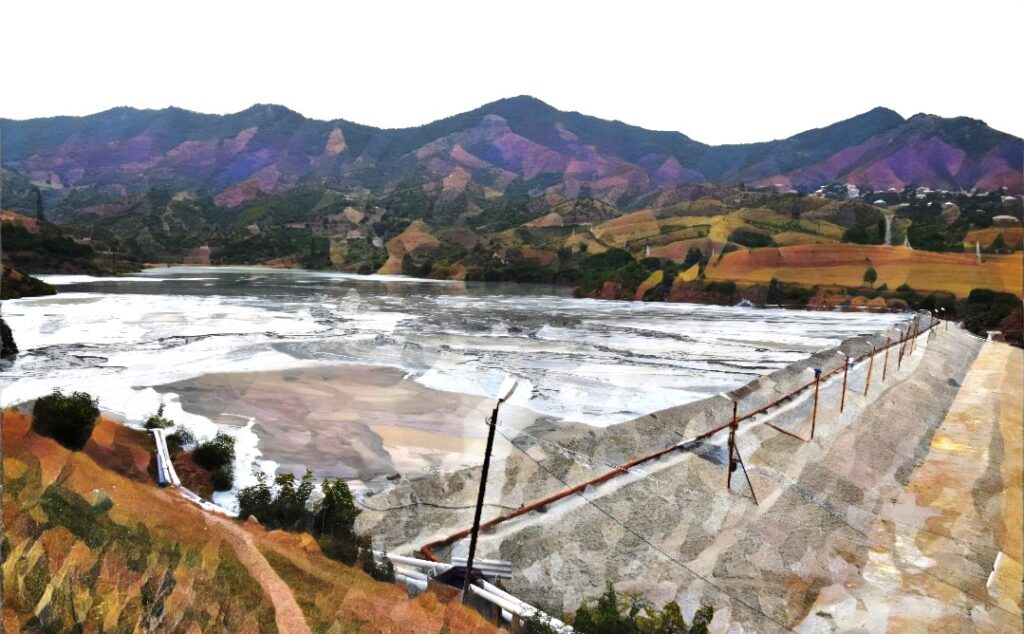
Tajikistan continues to grapple with the extensive environmental legacy of the Soviet-era uranium industry. Tens of millions of tons of radioactive waste still pose serious risks to human health and the environment. Addressing this legacy will require hundreds of millions of dollars and sustained international support. Uranium mining in Tajikistan began in the 1940s in areas including Taboshar, Adrasman, and nearby settlements. After mining operations were shut down, the country was left with abandoned mines, underground tunnels, and extensive tailings ponds containing more than 55 million tons of radioactive waste across an area exceeding 170 hectares. In 2023, partial rehabilitation work was completed in Taboshar, where 7.6 million tons of waste, representing 17.5 percent of the total, were remediated. The Tajik government has agreed to continue cooperation with Russia, which is expected to allocate approximately $17 million for the reclamation of selected facilities. However, the most hazardous areas remain unaddressed. These include early-stage Taboshar tailings ponds, underground workings, and the Degmai complex. International consultants Wismut GmbH, WISUTEC GmbH, and GEOS estimate that restoring the Taboshar facilities will require approximately $9.5 million, while reclamation of the Degmai tailings pond is expected to cost about $27 million. All of these sites are included in the International Atomic Energy Agency master plan and have been designated as funding priorities. Progress remains slow, largely due to limited financial resources. Despite some external support, current funding levels fall far short of what is required. To date, only 17 percent of contaminated sites have been decontaminated. The European Bank for Reconstruction and Development special environmental rehabilitation account for Central Asia has yet to become fully operational. In 2025, the government approved a national rehabilitation program covering the 2025 to 2030 period. The plan includes legislative updates, project design, implementation, and ongoing monitoring. Preliminary estimates suggest Tajikistan will need more than $110 million by 2030 to complete its remediation objectives. Given the scale of the required investment, international financing remains essential. Tajikistan is working to transform its uranium legacy into a manageable and transparent project, but without sustained international partnership, the challenge is unlikely to be resolved.
Kyrgyzstan Launches Environmental Strategy for Lake Issyk-Kul

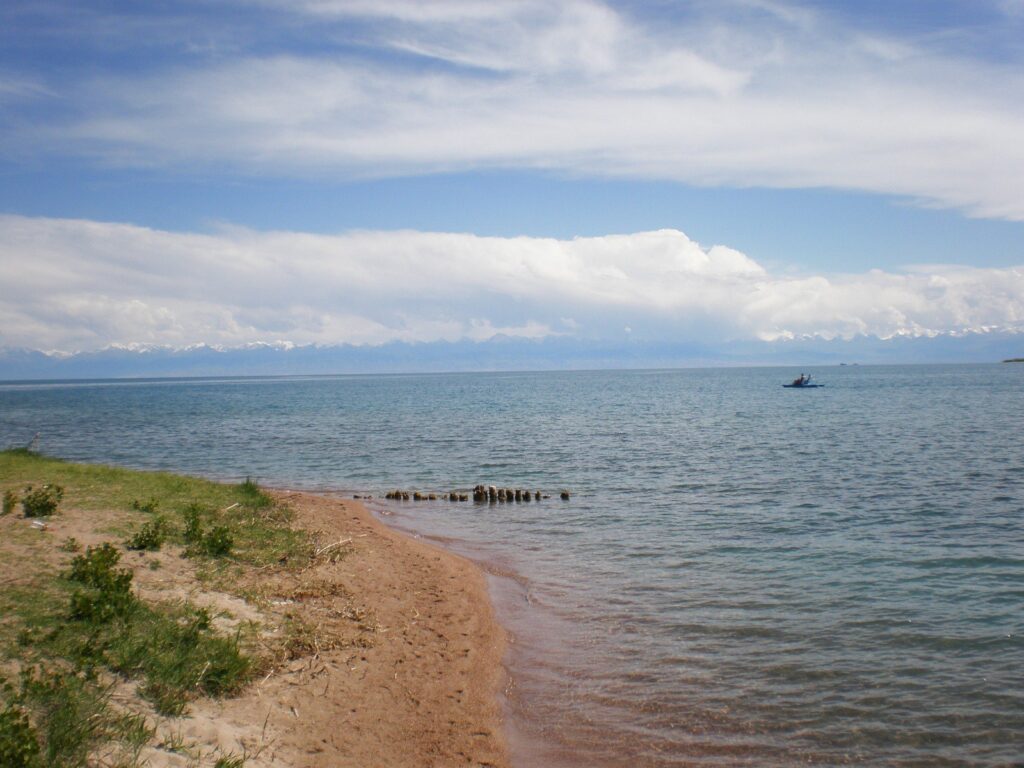
On December 2, Kyrgyzstan’s Cabinet of Ministers approved the Concept for the Sustainable Development of the Ecological and Economic System of Lake Issyk-Kul until 2030, along with a corresponding Action Plan. The initiative aims to protect the lake and its surrounding biosphere from intensifying environmental and human pressures, while ensuring long-term economic resilience in the region. Located in northeastern Kyrgyzstan, Issyk-Kul is the country’s largest lake, a unique ecological reserve, and one of Central Asia’s main tourist destinations. However, the newly adopted Concept reflects growing concerns over environmental degradation and the urgent need for coordinated management. Based in part on a government technical assessment, the strategy outlines a comprehensive roadmap to stabilize the lake’s ecosystem, modernize critical infrastructure, and mitigate climate risks. Climate Threats and Water Imbalance A key priority of the Concept is enhanced monitoring of Lake Issyk-Kul and its surrounding basin, particularly its water and energy resources. Climate change, including glacial retreat and reduced river inflow, has placed the basin under mounting stress. Of the 957 glaciers in the Issyk-Kul basin, covering 560.8 square kilometers, many are melting at an accelerated rate. Although roughly 120 rivers flow into the lake, only 80 reach it during summer due to irrigation withdrawals. To restore hydrological balance, the government plans to introduce modern irrigation technologies across 100,000 hectares of farmland. Officials estimate this could redirect up to 200 million cubic meters of water back into the lake each year. Between 1927 and 2003, Issyk-Kul’s water level fell by 2.75 meters, driven by declining inflow, outdated monitoring systems, and inefficient water use. The new Concept calls for restoring hydrological infrastructure, including groundwater observation stations and river hydro-posts. It also proposes strict accounting of irrigation water and a shift toward water-saving technologies in agriculture. Combatting Wastewater and Pollution Untreated wastewater remains one of the most severe threats to the lake’s ecosystem. Discharges from settlements, hotels, and tourism facilities have polluted the lake for years. The Concept aims to modernize wastewater treatment plants, expand sewage networks, and promote the reuse of treated water for irrigation purposes. Over the past five years, 47 new treatment facilities have been constructed in the Issyk-Kul region. The government now plans to reduce untreated wastewater discharge by 40%. Industrial Risks and Waste Management Environmental oversight of industrial activity, particularly at the Kumtor gold mine, the country’s largest, is another priority. The Concept calls for stricter regulation of hazardous waste and the rehabilitation of mining tailings to protect soil, groundwater, and the lake itself. Solid waste management is also being addressed. In October 2025, China’s Hunan Junxin Environmental Protection Co. Ltd. began building a waste-to-energy incineration plant in Karakol, the region’s administrative center. This will be the company’s third facility in Kyrgyzstan, following earlier projects in Bishkek and Osh. The introduction of separate waste collection systems is seen as key to reducing landfill pressure and minimizing environmental damage. To address air quality, the Concept promotes modernization of outdated heating systems, emission controls on industry and transport, and the adoption of...

Mirziyoyev Orders Crackdown on Pollution and Waste

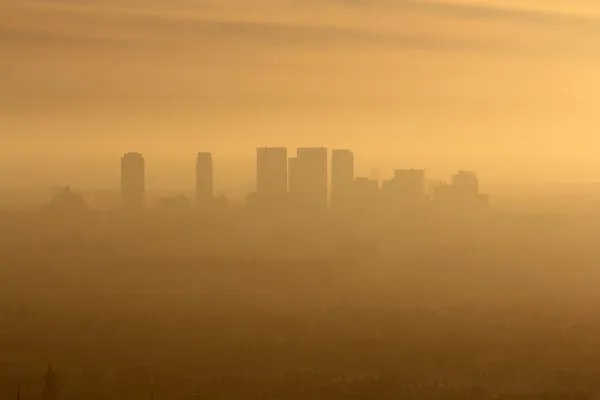
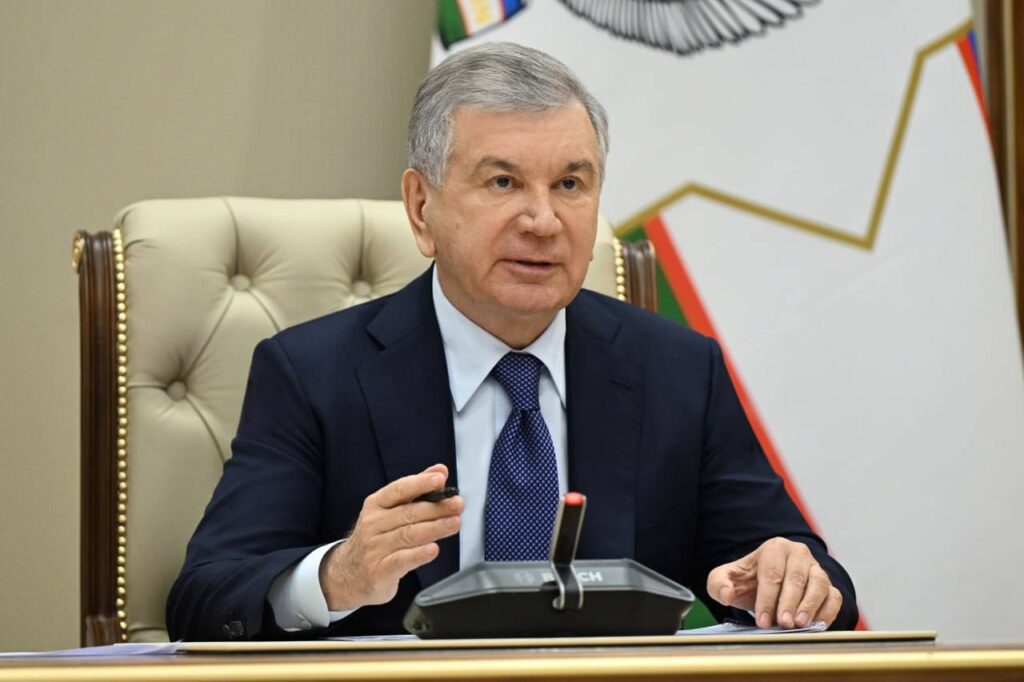
Uzbekistan is intensifying its environmental oversight as President Shavkat Mirziyoyev convened a high-level government meeting on December 1 to address mounting pollution, delays in waste-to-energy infrastructure, and preparedness for the winter season. The session highlighted the rising social and economic risks of air-quality deterioration in Tashkent, and chronic failures in waste management nationwide. Officials attributed recent spikes in air pollution in the capital not only to industrial emissions and construction activity but also to a severe cold anticyclone blanketing much of the country. This weather system caused high atmospheric pressure and temperature inversions, trapping fine particulate matter and inhibiting air circulation. In response, authorities launched inspections of construction sites, greenhouses, and vehicle emissions, while emergency measures, such as watering streets, cleaning canals, and activating fountains, were deployed to stabilize air quality. Mirziyoyev ordered regional officials to enforce stricter environmental compliance, eliminate violations promptly, and take proactive steps to prevent further degradation. He emphasized that growing public frustration demands “decisive and coordinated action” from all levels of government. Stalled Waste-to-Energy Projects Under Scrutiny Waste-to-energy development, a cornerstone of Uzbekistan’s sustainability agenda, also came under fire. Although $933 million in investment has been pledged, several regions have yet to launch projects. Existing facilities in Andijan, Namangan, Ferghana, Samarkand, Kashkadarya, and Tashkent continue to face critical infrastructure deficiencies, including inadequate roads, electricity, and water supply. Mirziyoyev instructed officials to remove these bottlenecks and ensure the nationwide rollout of waste-to-energy projects in 2026. The government has set a target of reducing household waste disposal areas by 50% by 2030. To date, 47 landfill sites have been closed and rehabilitated, restoring over 240 hectares of land for environmental use. Yet the majority of Uzbekistan’s 132 active landfills still lack protective barriers, green belts, and basic safety systems. The president ordered the transformation of these sites into “environmentally safe zones” and called for greater public engagement through environmental education. Starting in 2026, the government will allocate at least 150 billion soums annually from the state budget for this initiative. Hazardous Waste and Digital Tracking Industrial and hazardous waste management also remains underdeveloped. Processing rates have improved but still fall short of international norms. Mirziyoyev demanded a full inventory of hazardous waste generation and storage sites and directed each region to launch its own recycling or disposal initiatives. A unified digital platform will be introduced to monitor hazardous waste nationwide. Winter Readiness and Public Safety Winter preparedness was another major focus. Persistent issues with liquefied gas distribution prompted the president to order operational reforms and faster responses to citizen complaints. Authorities reported substandard repairs along 1,800 kilometers of power lines; the Prosecutor General’s Office will investigate, and the Energy Inspectorate has been tasked with strengthening oversight to ensure stable electricity supply during the winter. Mirziyoyev also called for updated fire-safety standards in residential buildings, including a ban on highly flammable façade materials. Presidential Decree and Long-Term Strategy The December 1 meeting followed a presidential decree issued on November 25 introducing emergency environmental measures and creating a special...

Tashkent’s Air Pollution Crisis Sparks Public Concern and Expert Warnings

On November 20, local media reported that Tashkent briefly topped the global air pollution rankings compiled by IQAir, drawing urgent public attention to the capital’s worsening environmental conditions. According to IQAir, the city’s PM2.5 concentration reached 229 at 10:51 a.m. on November 21, placing Tashkent behind only Delhi and Lahore for hazardous air quality. Experts Warn of Long-Term Mismanagement Behind Toxic Air Environmental specialists attribute the crisis to deep-rooted structural mismanagement. Environmental advocate Mutabar Khushvaktova cited IQAir’s breakdown of primary pollution sources: summer dust storms (36%), heating systems running on coal and fuel oil in autumn and winter (28%), vehicle emissions (16%), and industrial activity (13%). Khushvaktova argued that ineffective oversight across construction, industry, transportation, and urban development has contributed to the current crisis. “Even after the Ministry of Ecology was established, conditions did not improve. Initially, the ministry reacted defensively to criticism but then stopped responding altogether. If this continues, public frustration will intensify and the economy will suffer. Illness will increase, productivity will fall, hospitals will be overwhelmed, and skilled professionals may leave the country,” she warned. She outlined several urgent steps: increased government transparency, expert-led planning, strict protection of green zones, enhanced oversight of construction sites, mandatory filtration at industrial plants, and boosted funding for water and glacier research. She also emphasized safeguarding forests, reservoirs, and nature reserves from tourism-related development and called for full reform of Tashkent’s landscaping department. “We need stable urban ecosystems, modern irrigation systems, restored canals, and composting initiatives. This work must be done in close cooperation with the Ecology Committee,” she said. Families in Tashkent Voice Growing Health Concerns Madina Mo‘minova, a writer and filmmaker known for her work on environmental themes in children’s literature, expressed grave concern for families in the capital. “Air quality in Uzbekistan, especially in Tashkent, has reached an unbearable level,” she said. “I fear for my children and grandchildren. People are afraid to open their windows or even go outside. Many are already thinking about leaving.” Mo‘minova noted that while the government has taken preliminary steps, the response needs to be more comprehensive and sustainable. “Greenhouses shouldn’t just be shut down, they need access to clean energy sources like natural gas to prevent recurring pollution after every inspection. We want to live in a safe, healthy country, not one teetering on ecological collapse,” she said. Urban Planners Call for Infrastructure Restoration and Stricter Oversight Temur Akhmedov, an expert on green urban development, stressed the importance of rehabilitating traditional infrastructure. “Restoring canals should be the top priority in Tashkent and other cities,” he said. “In many areas, the damage is extensive, but we must recover what we can.” He also advocated for halting new construction until a comprehensive environmental strategy is in place, along with enforcing dust-control measures at existing sites. These environmental concerns coincide with accelerated urban development plans. On November 20, President Shavkat Mirziyoyev signed a decree aimed at stabilizing the housing and mortgage markets. The initiative includes plans to double annual housing construction by 2040, reaching 421,000...

Uzbekistan’s Green Energy Output Hits 9 Billion kWh in 2025

Uzbekistan’s solar and wind power plants generated a record 9 billion kilowatt-hours (kWh) of electricity in 2025, according to data released by the Ministry of Energy on October 22. The milestone reflects the country’s growing commitment to renewable energy and aligns with the strategic goals outlined by President Shavkat Mirziyoyev in his addresses to the 78th and 80th sessions of the United Nations General Assembly. Uzbekistan aims to adapt its economy to climate change, achieve carbon neutrality, and expand the share of renewables in its energy mix. The country currently operates 12 solar photovoltaic plants and five wind farms with a combined capacity of 4,682 megawatts. These facilities have saved approximately 2.73 billion cubic meters of natural gas and prevented the emission of nearly 4 million tons of pollutants. As of October 22, total electricity generation from hydro, solar, and wind sources reached 14.52 billion kWh for the year. Renewable energy now accounts for about 23% of Uzbekistan’s total electricity output. Officials estimate that the 9 billion kWh produced by solar and wind facilities alone could meet ten months of electricity demand for 7.5 million households or provide a full year’s supply for 6 million homes. The figure highlights the country’s accelerating transition toward a more sustainable energy future.

Kazakhstan Urges Regional Cooperation to Save the Aral Sea

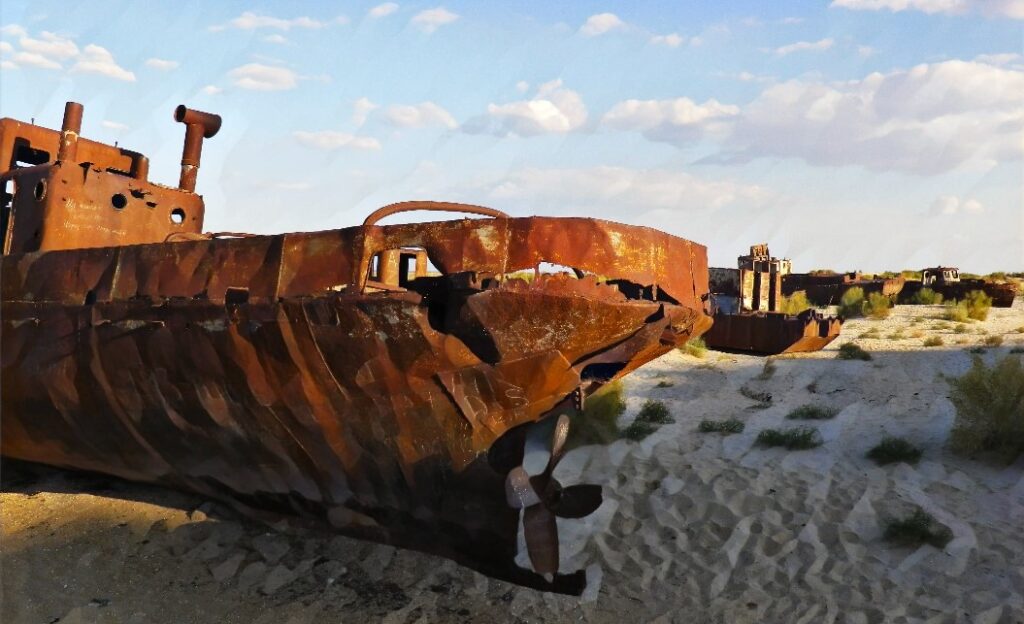
Kazakhstan has intensified its efforts to restore its portion of the former Aral Sea, calling on neighboring Central Asian states to increase their participation in regional environmental cooperation. Once the world’s fourth-largest lake, the Aral Sea has become a symbol of ecological catastrophe. Experts warn that international efforts remain inadequate. How the Sea Died Straddling the border between Kazakhstan and Uzbekistan, the Aral Sea began to shrink in the 1960s when large-scale irrigation projects diverted water from its two main tributaries, the Amu Darya and Syr Darya rivers, to support cotton production and agriculture. A growing regional population added further strain. By 1989, the sea had split into the Northern (Small) and Southern (Large) Aral Seas. In 2014, the eastern basin of the Southern Aral Sea dried up completely. Today, the Aralkum Desert occupies much of what was once open water. Kazakhstan has since focused on restoring the Northern Aral Sea. [caption id="attachment_37684" align="aligncenter" width="2560"] A ship stranded in the desert, Moynaq, Uzbekistan; image: TCA, Stephen M. Bland[/caption] The restoration of the Northern Aral Sea has already yielded visible environmental and social benefits. Rising water levels have lowered salinity, allowing several native fish species to return. Local fisheries, once thought lost, are now active again in communities such as Aralsk. According to the Ministry of Ecology, the annual fish catch in the North Aral has risen more than tenfold since the early 2000s, reviving local employment and boosting food security. Experts note that even small ecological gains have had a profound psychological impact on residents who once witnessed the sea’s disappearance. Call for Renewed Efforts On October 15, Kazakhstan called for expanded international cooperation to protect both the Aral and Caspian Seas. First Deputy Minister of Foreign Affairs, Yerzhan Ashikbayev, speaking at the International Astana Think Tank Forum-2025, emphasized Kazakhstan’s contribution to the global climate agenda. He noted that a regional climate summit, set to be held in Astana in 2026, would provide a platform for coordinated strategies and joint decision-making among Central Asian nations. “Astana also calls for increased international participation in solving environmental problems and preserving the water resources of the Aral and Caspian Seas,” Ashikbayev said. Earlier, on October 10, Prime Minister Olzhas Bektenov met with senior officials from Tajikistan, Uzbekistan, and Turkmenistan during the second meeting of the Board of the International Fund for Saving the Aral Sea (IFAS), chaired by Kazakhstan. The event highlighted the need for a united regional approach, noting that restoration of the Aral Sea can be achieved through collective action. Bektenov acknowledged the challenges of the recent growing season, but said regional cooperation had helped maintain a stable water regime in the basin. “Each country has its own national interests, and we are obliged to defend them and will always do so. But I am convinced that our common strategic, long-term priority is good neighborly relations. In solving everyday short-term tasks, we must not undermine long-term priorities. I think that we will take joint measures to ensure that issues are always...