
• KZT/USD = 0.00225
  • TJS/USD = 0.10850
  • UZS/USD = 0.00008
  • TMT/USD = 0.29850
  • KZT/USD = 0.00225
  • TJS/USD = 0.10850
  • UZS/USD = 0.00008
  • TMT/USD = 0.29850
  • KZT/USD = 0.00225
  • TJS/USD = 0.10850
  • UZS/USD = 0.00008
  • TMT/USD = 0.29850
  • KZT/USD = 0.00225
  • TJS/USD = 0.10850
  • UZS/USD = 0.00008
  • TMT/USD = 0.29850
  • KZT/USD = 0.00225
  • TJS/USD = 0.10850
  • UZS/USD = 0.00008
  • TMT/USD = 0.29850
  • KZT/USD = 0.00225
  • TJS/USD = 0.10850
  • UZS/USD = 0.00008
  • TMT/USD = 0.29850
  • KZT/USD = 0.00225
  • TJS/USD = 0.10850
  • UZS/USD = 0.00008
  • TMT/USD = 0.29850
  • KZT/USD = 0.00225
  • TJS/USD = 0.10850
  • UZS/USD = 0.00008
  • TMT/USD = 0.29850
18 November 2026

Viewing results 1 - 6 of 2

Shrinking Caspian Sea Challenges Kazakhstan’s Transport Ambitions, Environmentalist Warns

Kazakhstan’s plans to develop the Trans-Caspian transport route face a growing environmental challenge as the Caspian Sea shrinks. Environmentalist Vadim Ni questioned the coordination behind those plans in an interview with The Times of Central Asia. "Negotiations on the Trans-Caspian Corridor are taking place at the presidential level and among the economic ministries, while the Ministry of Ecology still does not know what its role is within this route. It only recently became involved in negotiations on the issue. But how can you develop the Trans-Caspian Corridor if the sea continues to shrink?" he emphasized. Ni, an environmental law specialist and founder of the Save the Caspian Sea movement, also called for greater domestic environmental spending. Kazakhstan and Uzbekistan should increase their own funding rather than relying primarily on international climate funds, he argued. His comments come as the 31st Conference of the Parties to the United Nations Framework Convention on Climate Change (COP31) opens on November 9 in Antalya, Turkey. The conference runs through November 20. The Caspian Sea Is Shrinking as Transport Ambitions Grow The falling water level of the Caspian Sea is already affecting coastal ecosystems, fisheries, and transport infrastructure. For Kazakhstan, the problem has taken on additional economic significance because of the development of the Trans-Caspian International Transport Route, which connects China and Central Asia with Europe via the Caspian Sea and the South Caucasus. According to the Kazakh Research Institute of the Caspian Sea, water levels in Kazakhstan's sector fell by 2.45 meters between 1996 and 2025. In July 2026, the monitoring station on Kulaly Island recorded a level of 29.42 meters below the reference elevation datum, the lowest reading in the observation record. Between 2016 and 2025, the sea's surface area shrank by approximately 11,200 square kilometers. Along some sections of the northeastern coast, the shoreline retreated by more than 20 kilometers. [caption id="attachment_60278" align="aligncenter" width="1440"] Satellite images show the northern Caspian Sea on September 20, 2006, and September 19, 2022, revealing exposed land as waters receded. Credit: NASA Earth Observatory/Lauren Dauphin, using MODIS data from NASA EOSDIS LANCE and GIBS/Worldview.[/caption] In October, Kazakhstan began large-scale dredging operations at the Port of Aktau. The project involves removing about 1.3 million cubic meters of sediment and deepening the port area to 6–7 meters. According to the Ministry of Transport, this could increase freight volumes along the route by up to 30% and reduce maritime transportation costs by 10–15%. Ni believes the shrinking Caspian Sea has received the political attention it needs, although the problem cannot be resolved without coordinated action by the countries bordering the sea. "The issue of the Caspian Sea's falling water level is being addressed relatively well because it has been raised to the highest level – that of Kazakhstan's president. The same can be said of the Aral Sea. There are many difficulties, and the problem depends on coordinating decisions among several countries, but progress is being made," he explained. He also warned about the environmental consequences of the retreating water....
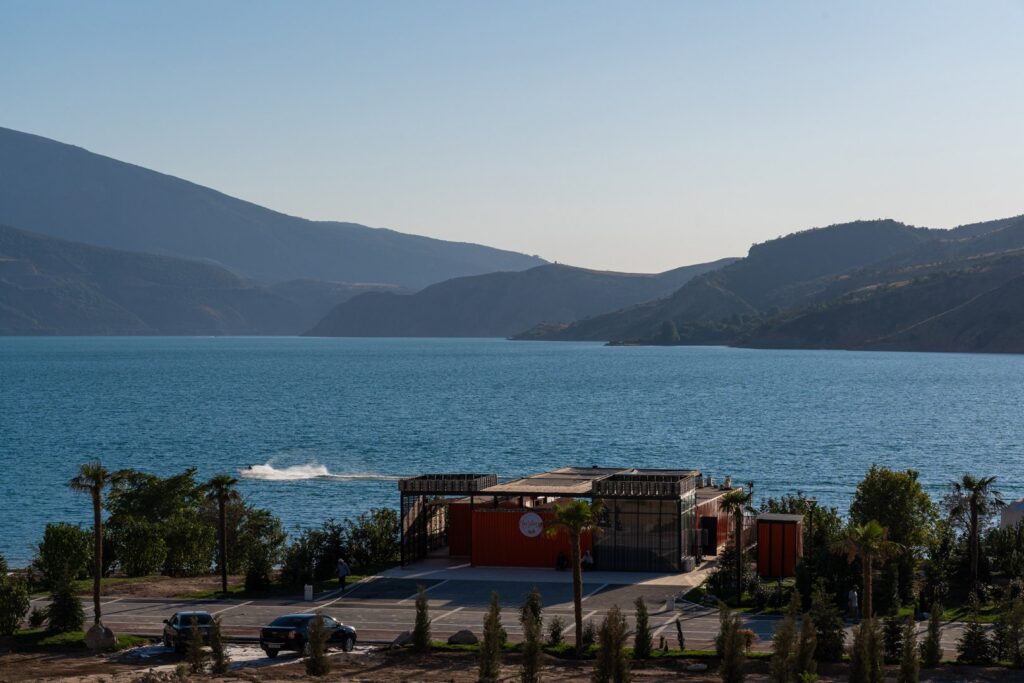

Sea Breeze Uzbekistan Clears Second Stage of Environmental Review

The $5 billion Sea Breeze Uzbekistan project has completed the first two stages of its environmental impact assessment, receiving positive state environmental opinions for both, according to the Ecology Committee. The controversial resort is planned for the shores of the Charvak Reservoir, one of the most popular recreation areas near Tashkent. Its location has made the project the subject of sustained environmental scrutiny. Uzbekistan’s National Committee for Ecology and Climate Change said the second-stage opinion was issued on September 10. The review will continue with a final assessment planned after construction is completed and before the complex is put into operation. The project is being developed by Azerbaijani businessman and singer Emin Agalarov, who spent more than two decades at Crocus Group, the property company founded by his father, Aras Agalarov. He left in 2023 to focus on his own development business. Agalarov was formerly married to Leyla Aliyeva, daughter of Azerbaijani President Ilham Aliyev. His flagship Sea Breeze resort is on Azerbaijan’s Caspian coast. Plans for the resort include hotels and residences alongside leisure and commercial facilities. The project also envisages a bridge across the reservoir and venues for year-round concerts and festivals. From Government Approval to Environmental Review In August 2025, the Uzbek government approved the direct lease of 577 hectares in the Bostanlyk district of Tashkent region to Sea Breeze Uzbekistan LLC for 25 years, with a preferential right to extend the lease. For critics of the project, the central issue from the outset has been water. Charvak plays an important role in the region’s water system and is used for water supply, irrigation, and hydropower. Its shores are also one of the main resort areas for residents of Tashkent. Construction of a large complex has raised concerns about pollution and the pressure it would put on the shoreline. The #SaveChorvoq campaign emerged on social media in 2025 as activists sought greater scrutiny of the plans. The first stage of the environmental review, approved in February 2026, required further hydrological and biodiversity studies. The second stage reviewed those findings and set more specific conditions for construction and operation. Its positive opinion was issued on September 10 and remains valid for three years. Public hearings were held in the Bostanlyk district on January 23, 2026, giving residents and environmental groups an opportunity to raise objections and proposals. Members of the Ecology Committee’s Public Council have also carried out site inspections, which the committee said have so far found no breaches of environmental requirements. Separate water-protection requirements apply to the project. Its wastewater is to be taken outside the coastal area and directed to a centralized treatment system, while construction must take place outside designated water-protection zones. The timing of the approvals has also drawn scrutiny. The government approved the investment project and land lease in August 2025, six months before the first-stage environmental opinion was issued. In August this year, authorities were still awaiting documents needed for the second stage, including details on wastewater infrastructure and the scale...