
• KGS/USD = 0.01144 0%
  • KZT/USD = 0.00208 0%
  • TJS/USD = 0.10414 -0.29%
  • UZS/USD = 0.00008 0%
  • TMT/USD = 0.28571 0%
  • KGS/USD = 0.01144 0%
  • KZT/USD = 0.00208 0%
  • TJS/USD = 0.10414 -0.29%
  • UZS/USD = 0.00008 0%
  • TMT/USD = 0.28571 0%
  • KGS/USD = 0.01144 0%
  • KZT/USD = 0.00208 0%
  • TJS/USD = 0.10414 -0.29%
  • UZS/USD = 0.00008 0%
  • TMT/USD = 0.28571 0%
  • KGS/USD = 0.01144 0%
  • KZT/USD = 0.00208 0%
  • TJS/USD = 0.10414 -0.29%
  • UZS/USD = 0.00008 0%
  • TMT/USD = 0.28571 0%
  • KGS/USD = 0.01144 0%
  • KZT/USD = 0.00208 0%
  • TJS/USD = 0.10414 -0.29%
  • UZS/USD = 0.00008 0%
  • TMT/USD = 0.28571 0%
  • KGS/USD = 0.01144 0%
  • KZT/USD = 0.00208 0%
  • TJS/USD = 0.10414 -0.29%
  • UZS/USD = 0.00008 0%
  • TMT/USD = 0.28571 0%
  • KGS/USD = 0.01144 0%
  • KZT/USD = 0.00208 0%
  • TJS/USD = 0.10414 -0.29%
  • UZS/USD = 0.00008 0%
  • TMT/USD = 0.28571 0%
  • KGS/USD = 0.01144 0%
  • KZT/USD = 0.00208 0%
  • TJS/USD = 0.10414 -0.29%
  • UZS/USD = 0.00008 0%
  • TMT/USD = 0.28571 0%

Viewing results 1 - 6 of 12

Anniversary of the Ashgabat Earthquake Tragedy

In every city's history, there are events that forever change its image and the fate of its inhabitants. The night of October 5-6, 1948, marked a turning point for Ashgabat, with a tragic event which still resonates in the hearts of those who lived through it. On that warm October evening, no one in Ashgabat could ever have predicted that the next few hours would forever change the fates of tens of thousands of people. Life in the city continued as usual, music played in the parks, lovers strolled along the streets, and students prepared for classes. The starry sky promised a peaceful night... Founded in 1881, when seismology was still young, Ashgabat grew and developed, oblivious to any impending danger. Traditional adobe construction —a mixture of clay and straw—seemed ideal for the dry climate. Year on year, residents renewed their clay roofs, adding new layers without considering that the increasing weight could be a death trap. “Only the stone building of the Central Committee of the Communist Party of Turkmenistan and a few other important buildings were made of quality bricks,” recalled one eyewitness. “It was these buildings, though damaged, that survived, while virtually the rest of the city was reduced to rubble.” [caption id="attachment_24231" align="aligncenter" width="300"] @mchs.gov.ru[/caption] “In the middle of the night - we heard- a menacing rumble, then rumbling and cracking as the ground shook and shimmered...” said one of the survivors, recalling the beginning of the tragedy. At 1.14 am on October 6, 1948, something happened that many Ashgabat residents believed was the start of a new war. Within but a few seconds, the city was a ruin. Academician Dmitry Nalivkin, who was at the epicenter of events, describes the harrowing event: “There was something incredible, impossible outside the window. Instead of a dark transparent starry night, there was an impenetrable milky-white wall in front of me, and behind it - horrible moans, screams, cries for help.” [caption id="attachment_24232" align="aligncenter" width="300"] @mchs.gov.ru[/caption] According to Nalivakin, the city was completely paralyzed. Telephone communications were interrupted, the train station turned into a pile of rubble, and the airfield was destroyed. Overnight, the capital of the republic was cut off from the outside world. In a matter of seconds, 98% of the city was rubble. Lieutenant Colonel of Medical Service Tikhon Boldyrev describes the first minutes after the catastrophe: “A deafening noise like a deep sigh swept through the city, and immediately there was dead silence. The air was filled with thick, suffocating dust. There was no sound, no cries for help, no animal sounds; it was as if every living thing had perished beneath the ruins.” In the darkness, in a dense veil of dust, survivors raked through the rubble with their bare hands, trying to save their loved ones. Alevtina Dubrovskaya, a resident of Ashgabat, recalls, “I found myself covered from head to toe with a mat hanging over my bed, but there was some space with air under it, which saved me from suffocation...” [caption...

Testing Limits: Marathoners Head For the Shrinking Aral Sea to Run in the Desert

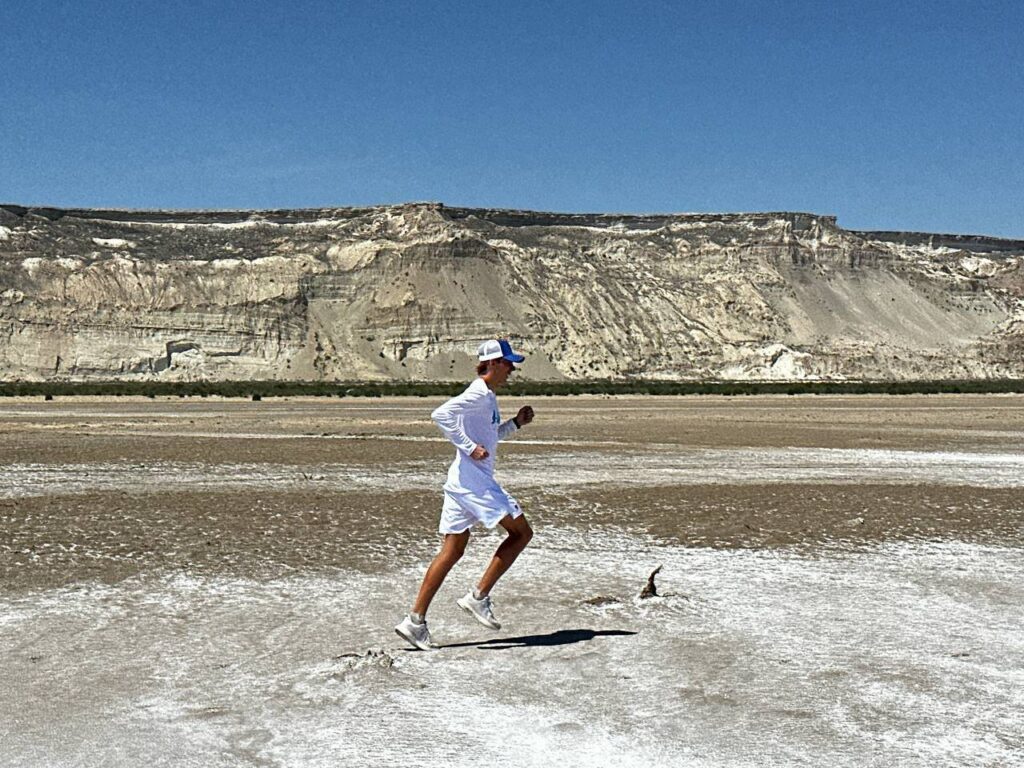
The dry bed of the Aral Sea, a symbol of ecological disaster in Central Asia, will host one of the world’s more extreme marathons on Sunday. Supported by aid stations and medical staff, a small band of athletes will run on sand, gravel and stones, inhaling salty air in scorching temperatures and bracing themselves against strong winds. The Aral Sea Eco Marathon is being held in Karakalpakstan, Uzbekistan and planners aim to draw attention to what was once the fourth biggest saltwater lake and is now about 10 percent of its original size. Race promoters also want to highlight the need for sustainable use of water. The marathon roughly coincides with the United Nations-designated day to combat desertification and drought, which falls on June 17.  Andrey Kulikov, founder of the ProRun running school in Uzbekistan, ran a marathon distance in the area last year with American ultramarathoner Dean Karnazes in 4:51:18. Kulikov planned this year’s event with the help of Aziz Abdukhakimov, Uzbekistan’s minister of ecology, environmental protection and climate change. A limit of 100 runners was set, though far fewer signed up. Still, Kulikov said participants are from countries including Japan, China, France, Pakistan, Kenya, Togo and the Philippines. He hopes to expand the event next year. Uzbek participant Denis Mambetov said in a text interview on Telegram that he is taking part because of “a passion for adventure, for something new and unusual, to test one’s strength, and, of course, to draw the attention of others to an environmental problem of global proportions.” The Aral Sea, which lies between northern Uzbekistan and southern Kazakhstan, began shrinking significantly in the 1960s when water from the rivers that fed it was rerouted for Soviet-led agricultural irrigation. The subsequent emergency of the Aralkum Desert and the sand and dust storms arising from the world’s newest desert have polluted the environment and severely affected health in local communities. There are regional and international efforts to restore the Aral Sea ecosystem, including seed-planting and the implementation of water-saving technologies. The five Central Asian countries - Uzbekistan, Kazakhstan, Kyrgyzstan, Tajikistan and Turkmenistan – formed a group three decades ago, soon after independence from Soviet rule, to address the problem. The gap between goals and results is wide, though the countries are recognizing the wider threat of water scarcity as the planet becomes hotter.  “Colleagues are well aware that the problem of water shortage in Central Asia has become acute and irreversible and will only worsen in the future,” Uzbek President Shavkat Mirziyoyev said at a regional meeting on the Aral Sea last year. “Experts believe that in some regions of Central Asia pressure on water resources will increase three times by 2040. Economic damage could eventually reach 11 percent of regional gross product.” Nurbek Khusanov, who will run the marathon on Sunday,  works at SQB, a top bank in Uzbekistan, and is a leader of its efforts to promote “green” policies that aid the environment. The marathon will “attract more people to the Aral...