Kazakhstan Participates in Negotiations on Global Treaty to Combat Plastic Pollution
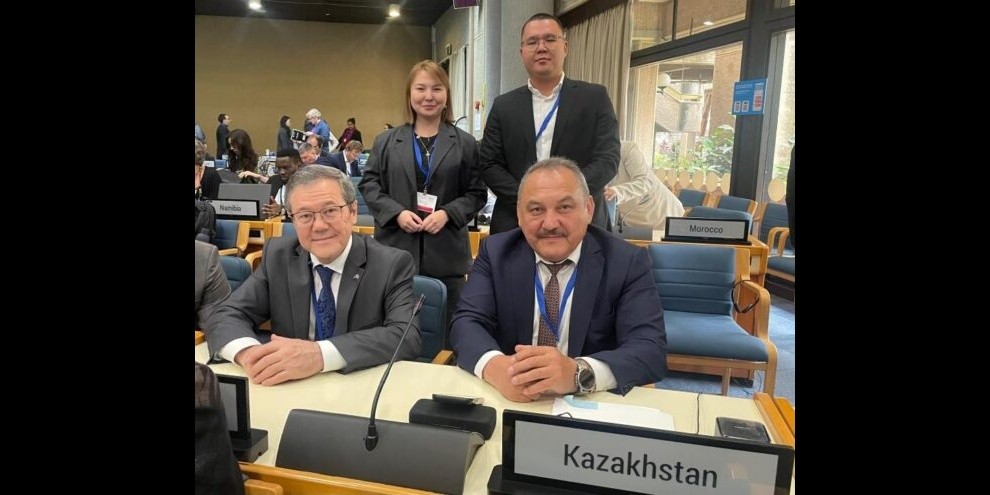
Kazakhstan set out its approach to a planned global treaty on plastic pollution at informal talks held from June 30 to July 3 at the United Nations Office in Nairobi, Kenya. Deputy Minister of Ecology and Natural Resources Zhomart Aliyev led Kazakhstan’s participation in the meeting of heads of delegation to the Intergovernmental Negotiating Committee, which is developing a legally binding international agreement to combat plastic pollution. Kazakhstan's delegation presented the country’s national approaches to the key elements of the future treaty and took an active part in discussions on possible ways of bridging differences among participating states. The Nairobi discussions will result in a reference document summarizing the proposals and positions of participating countries. The document will serve as the basis for further informal consultations scheduled for September 2026 and preparations for the resumed fifth session of the Intergovernmental Negotiating Committee, tentatively planned for March 2027. “Kazakhstan will continue to play an active role in the negotiation process, advocating the development of an effective and balanced international agreement to combat plastic pollution,” the Ministry of Ecology and Natural Resources said. The ministry also highlighted the successful development of the EcoQolday information system, which was launched in 2024 to digitalize waste collection and recycling processes, including plastic waste. According to the ministry, the volume of waste processed through the system has increased steadily. In 2024, 11,070 metric tons of waste were sent for recycling through EcoQolday. That figure rose to 49,340 tons in 2025, while during the first half of 2026 alone it reached 70,630 tons, reflecting both the system’s growing effectiveness and increasing business participation. Since the platform became operational in August 2024, a total of 131,040 tons of waste has been directed for recycling through EcoQolday. Paper accounted for the largest share at 92,050 tons, followed by glass at 28,860 tons. The platform has also facilitated the recycling of 8,740 tons of used tires, 1,320 tons of plastic waste, and 70 tons of composite-material waste. EcoQolday connects households and businesses with waste collectors and recycling companies. Individuals and companies submit requests to dispose of recyclable waste, while collectors provide service offers and receive government incentives for participating in the system. “Within approved budget allocations, participants in the system have received total incentive payments of $7.1 million,” the ministry said. “This included approximately $10,000 in 2024, $1.8 million in 2025, and about $5.2 million so far in 2026.” The ministry added that EcoQolday is increasingly engaging both businesses and the public. As of the reporting date, 1,081 waste disposal requests totaling 3,540.52 tons had been registered in the system. Of these, 629 requests came from individuals, who submitted 2,276.42 tons of waste for recycling, primarily glass, paper, and used tires. Another 452 requests were submitted by legal entities, accounting for 1,264.1 tons of waste, mainly paper and used tires. As previously reported by The Times of Central Asia, members of Kazakhstan’s parliament proposed introducing a “green” tax on environmentally unfriendly packaging last summer to help finance plastic waste recycling.